Best Weight Loss Weight Workout: Metabolic Resistance Frameworks, Compound Splits, and Home Floor Staging
Why Resistance Training Drives Sustainable Fat Loss
When structuring a routine for body composition management, metabolic resistance training serves as a fundamental pillar. While traditional cardiovascular training expends energy purely during the session itself, lifting weights stimulates muscular adaptation, preserving metabolically active lean tissue while operating under energy management protocols. Engaging in the best weight loss weight workout requires shifting focus from isolated calorie-burning toward mechanical tension, metabolic density, and movement efficiency.
Multi-joint compound movements recruit multiple large muscle groups simultaneously. This broad recruitment increases energy demand both during the session and across subsequent recovery windows. By prioritizing compound lifts over isolated machine exercises, lifters can maximize training efficiency, improve functional movement patterns, and sustain lean muscle during fat loss training phases.
Core Biomechanical Movements for Metabolic Resistance
An effective resistance routine for fat loss centers on primary human movement patterns: the squat, hinge, lunge, push, pull, and loaded carry. Lower-body multi-joint patterns such as goblet squats, Romanian deadlifts, and walking lunges demand substantial mechanical work from the quadriceps, glutes, and hamstrings. These movements form the cornerstone of weight lifting to lose fat by stimulating high systemic output.
Complementing lower-body patterns with upper-body push-pull pairings creates balanced structural development and sustained pacing. Overhead presses, dumbbell bench presses, bent-over rows, and pull-down variations recruit the upper back, chest, and shoulder girdle without placing excessive localized strain on single joints. Integrating gear from a dedicated strength training collection—such as resistance bands, varied dumbbell increments, and supportive handles—enables lifters to modify leverage, adjust resistance curves, and transition smoothly between movement complexes.
Structured Split Frameworks: Full-Body vs. Upper-Lower Splits
Choosing the right weekly layout depends on individual recovery capacity, weekly training availability, and experience level. Two primary structures excel when organizing the best weight training for weight loss:
- Three-Day Full-Body Split: Alternates training days with dedicated rest or light active recovery days (for example, Monday, Wednesday, Friday). Each session features a squat or hinge pattern, an upper-body push, an upper-body pull, and core or carry work. This approach maintains high weekly stimulus frequency per muscle group while allowing ample recovery.
- Four-Day Upper/Lower Split: Divides workouts into two upper-body and two lower-body sessions per week. This structure allows higher set volume per movement pattern during each workout while giving targeted muscle groups 72 hours of recovery before repeat exposure.
Lifters balancing resistance volume with high-density conditioning can draw inspiration from the metabolic sequencing detailed in this workout weights weight guide to structure workload balance across weekly blocks.
Rest-Density and Antagonist Superset Protocols
Training density—the amount of work completed within a given time frame—is a critical variable in fat loss resistance programs. Pairing non-competing exercises into antagonist supersets increases workout density without degrading lifting mechanics. For example, pairing a dumbbell Romanian deadlift directly with an overhead dumbbell press allows the lower-body musculature to recover while the shoulder girdle works, maintaining an elevated heart rate and steady output.
Strict rest-interval management prevents workouts from becoming either purely cardiovascular or excessively prolonged. Pacing protocols that utilize controlled rest intervals (such as 45 to 60 seconds between paired movements) provide an optimal balance between cardiovascular elevation and muscular force production. For cross-discipline strategies on pacing dynamic sets alongside controlled recovery intervals, review the pacing strategies in this workout weight loss guide.
Optimizing the Home Lifting Zone: Surface Stability and Protection
Executing dynamic lunges, heavy hinges, and aggressive compound supersets requires a reliable ground interface. Standard domestic flooring materials, such as hardwood or low-pile carpet, often lack the traction and shock absorption necessary for multi-directional resistance work. Insufficient footing can lead to subtle slip compensations that compromise lifting posture, while repeated dumbbell placement risks damaging subfloors.
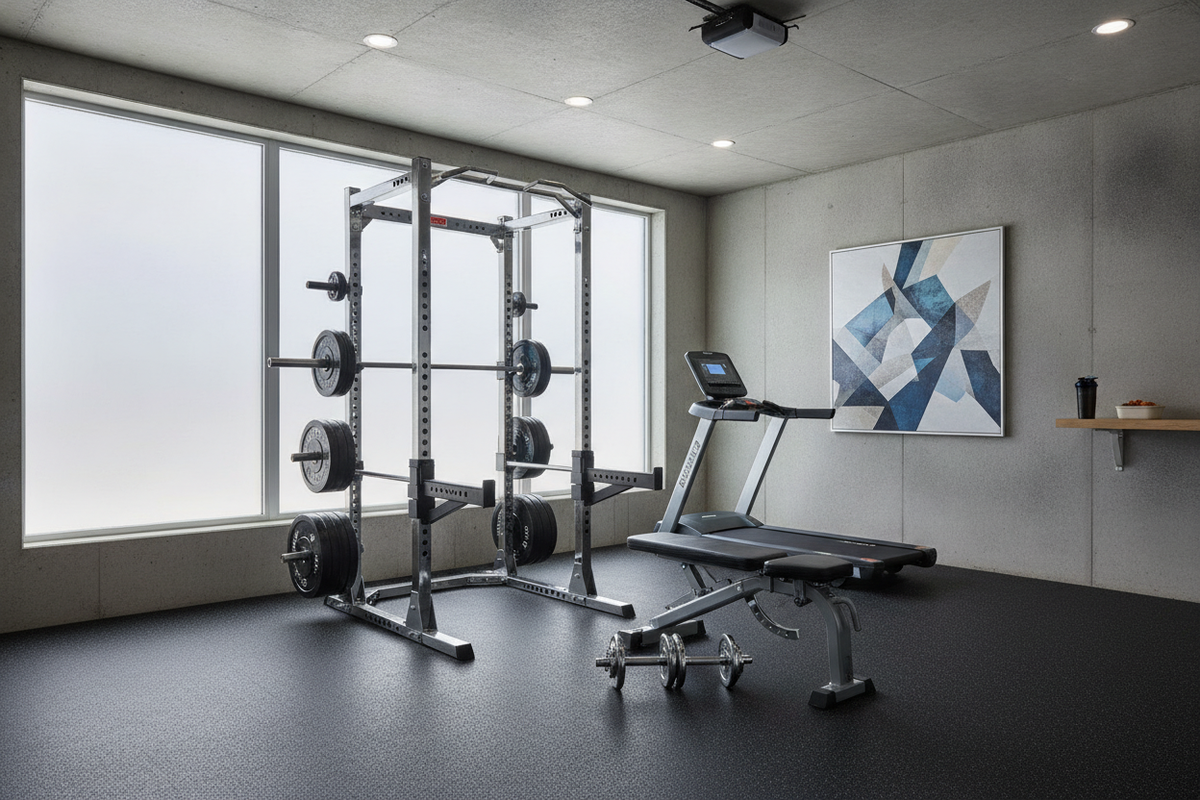
Deploying a dedicated exercise workout product creates an expansive, high-traction boundary that absorbs mechanical impact, isolates vibration, and provides consistent joint cushioning during grounded accessory work. When outfitting dedicated spaces with heavy racks or plate-loaded stations from a weight lifting collection, high-density flooring helps distribute localized weight loads, stabilizing the footprint and protecting domestic surfaces over extended training cycles.
Long-Term Progression and Recovery Architecture
Sustainable results from weight training to lose fat rely on systematic progression rather than random fatigue. As baseline fitness improves, progression can be applied across multiple parameters beyond merely increasing the load on the bar:
- Volume and Density Progression: Gradually reducing rest periods between paired supersets or adding a clean repetition per set without sacrificing movement control.
- Tempo Regulation: Slowing the eccentric (lowering) phase of a lift to extend time under tension and build joint stability.
- Technical Execution: Increasing range of motion and improving movement control during deep squatting or hinging variations.
Pairing systematic training progression with adequate sleep, baseline hydration, and structured rest days ensures long-term consistency. Maintaining an uncluttered, shock-absorbent training floor provides the stable environment needed to execute compound resistance training safely and effectively over months of structured fat loss programming.