
Best Glute and Leg Exercises: Biomechanical Movement Pillars, Training Splits, and Floor Staging
Foundational Biomechanics of Glute and Leg Training
Building balanced lower-body strength requires targeting multiple muscle groups across various planes of motion. The primary anatomical drivers of lower-body movement include the gluteus maximus, gluteus medius, quadriceps, hamstrings, and calves. These muscle groups work together through knee flexion, knee extension, hip flexion, hip extension, and pelvic stabilization.
Relying solely on single-plane isolation movements can leave gaps in overall functional development. A balanced lower-body routine combines compound and targeted movements to stimulate both the anterior and posterior chains while maintaining pelvic and spinal alignment.
The Four Core Movement Vectors for Complete Lower-Body Development
To ensure comprehensive development, the best glute and leg exercises can be organized into four foundational movement vectors: bilateral knee-dominant patterns, posterior-chain hip hinges, unilateral split stances, and horizontal hip extension movements.
Vector 1: Bilateral Knee-Dominant Squats
Squat patterns load the quadriceps and gluteal musculature through concurrent knee and hip flexion. Variations such as the goblet squat, front squat, and barbell back squat provide deep stretch under load and encourage upright torso mechanics. If you want to explore loaded barbell variations in detail, consult our legs leg exercise guide covering setup nuances.
- Goblet Squat: Holding a dumbbell or kettlebell against the chest reinforces an upright posture and encourages deep hip sink.
- Front Squat: Shifting the load to the front rack increases quadriceps engagement and demands significant thoracic extension.
- Back Squat: Placing the load across the upper back allows for progressive overload across the entire lower body.
Vector 2: Posterior-Chain Hip Hinges
The hip hinge shifts the primary axis of rotation to the pelvis, loading the hamstrings and glutes while minimizing forward knee travel. Exercises like the Romanian deadlift (RDL) and good morning emphasize loaded eccentric lengthening of the posterior chain. Lifters looking for lower-back management strategies during hinges can explore our legs leg exercise guide on spine-conscious variations.
- Romanian Deadlift: Maintaining soft knees while pushing the hips back creates sustained tension in the hamstrings and gluteus maximus.
- Good Morning: Using a bar or resistance band across the shoulders challenges posterior chain tension and trunk bracing throughout the hinge.
Vector 3: Unilateral and Split-Stance Variations
Unilateral exercises expose side-to-side strength discrepancies and heavily recruit the gluteus medius and inner thigh musculature for lateral pelvic stability.
- Bulgarian Split Squat: Elevating the rear foot increases the range of motion and isolates the lead leg's quadriceps and glutes.
- Walking Lunges: Stepping forward under control introduces dynamic deceleration, challenging balance and hip control on every repetition.
- Step-Ups: Driving through the whole foot on a stable box builds unilateral extension power without spinal compression.
Vector 4: Horizontal Hip Extension and Abduction
Unlike standing squats and hinges where peak tension occurs when muscles are stretched, horizontal extension movements place maximum mechanical tension at the shortened position of the glutes.
- Barbell Hip Thrust: Resting the upper back against a bench while driving through the heels isolates hip extension at peak lockout.
- Floor Glute Bridge: Performing bridges directly on the floor offers a bodyweight or banded alternative that emphasizes posterior control.
- Side-Lying or Banded Abduction: Moving the leg away from the midline activates the gluteus medius to support knee tracking and hip stability.
Designing the Best Leg and Glute Workout Frameworks
Structuring your weekly training depends on your overall schedule, recovery capacity, and specific strength priorities. You can organize your sessions into a dedicated full lower-body workout or split your volume across anterior and posterior emphasis days. For additional workout templates, review our comprehensive workout resource library.
- Full Lower-Body Session: Incorporate one exercise from each of the four vectors. Begin with a heavy compound squat or hinge, move into a unilateral movement, and finish with horizontal extensions and calf work.
- Anterior/Posterior Split: Dedicate one session to quad-dominant squats, forward lunges, and calf raises, followed later in the week by a session focused on hip hinges, split squats, and hip thrusts.
- Exercise Sequencing: Position heavy balance-demanding compound lifts early in your session when systemic energy is highest, reserving isolated burnout exercises for the conclusion.
Home Gym Floor Staging and Environmental Setup for Lower-Body Training
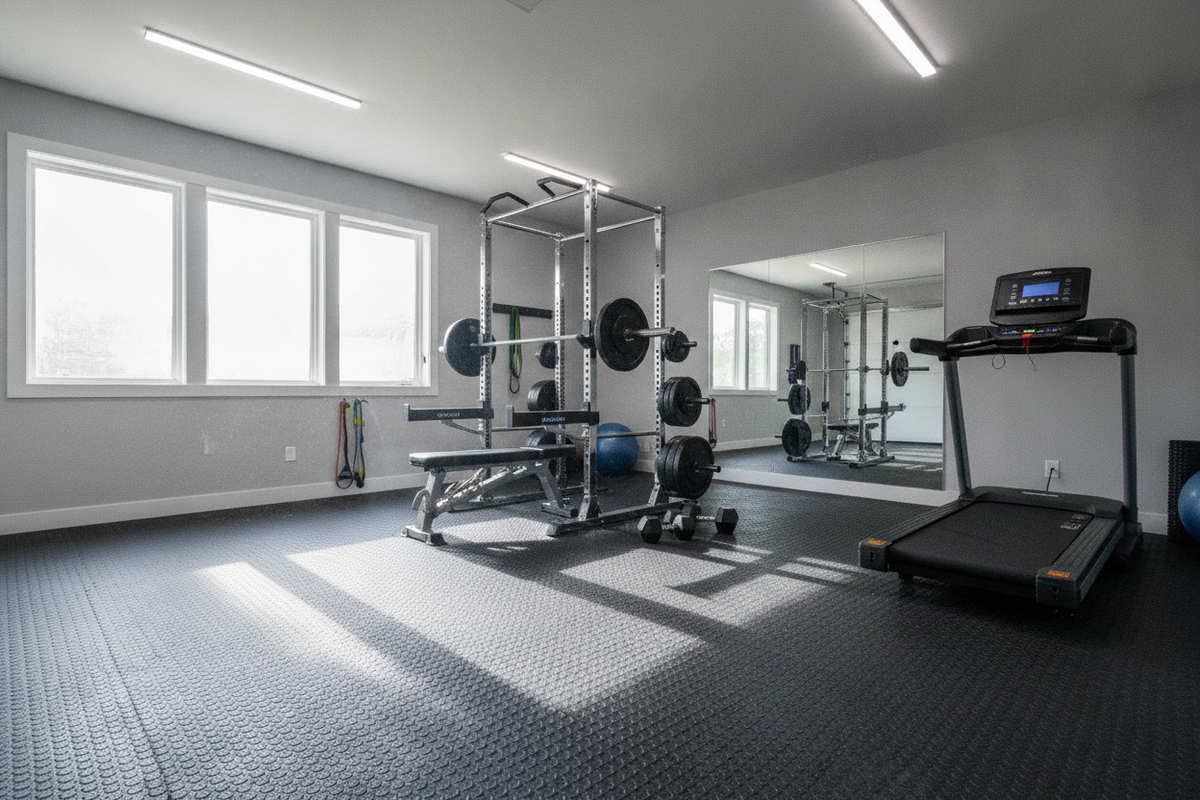
Executing heavy or dynamic lower-body movements requires a reliable, stable surface. Hard, slick subfloors can lead to foot slippage during wide-stance squats or aggressive lunge transitions, while bare concrete can cause discomfort during kneeling lunges or floor bridges.
Setting up a high-density mat or broad surface platform creates dependable foot traction, absorbs vibrations from set-down weights, and cushions joints during ground-based movements. Incorporating a dedicated workout product like a large high-density fitness mat provides clear perimeter boundaries, ensuring your bench, dumbbells, and footing remain stable throughout dynamic sets.
Common Technical Mistakes in Glute and Leg Workouts
Refining movement mechanics ensures that the intended muscle groups receive the training stimulus while keeping joint stress manageable.
- Lumbar Hyperextension: Overarching the lower back at the top of deadlifts or hip thrusts takes tension off the glutes. Maintain a neutral ribcage and engaged core at lockout.
- Knee Valgus Collapse: Allowing knees to cave inward during squats or lunges indicates underactive hip abductors. Cue your knees to track in line with your second and third toes.
- Heel Elevation: Rising onto the toes during squats shifts load excessively onto the knees. Keep weight distributed evenly across the tripod of the foot—heel, base of the big toe, and base of the pinky toe.


