Best Cardio and Strength Training Workout: Hybrid Movement Architecture, Circuit Blueprints, and Dedicated Floor Staging
Architectural Principles of the Best Cardio and Strength Training Workout
Designing the best cardio and strength training workout requires an understanding of hybrid programming. Traditional fitness splits often separate resistance lifting from cardiovascular conditioning across different training days or isolated blocks. A unified hybrid training model blends mechanical resistance tension with sustained cardiovascular elevation, creating an efficient and balanced regimen for home training spaces.
When structured systematically, pairing compound strength lifts with dynamic conditioning drills encourages balanced athletic development. Rather than exhausting isolated muscle groups, hybrid circuits emphasize full-body movement patterns. For athletes seeking structured interval blueprints, reviewing an established workout strength cardio guide can illustrate how load selection and interval duration interact across a complete session.
The primary advantage of an integrated approach is time density. By moving between complementary movement vectors—such as alternating an upper-body pressing pattern with a multi-planar cardiovascular burst—you maintain an elevated heart rate while allowing prime movers to recover briefly between loaded sets. This framework maintains training intensity without requiring prolonged sessions.
Structuring a Full-Body Hybrid Session: Phased Circuit Architecture
A well-balanced hybrid session relies on phased progression to manage fatigue, optimize technical execution, and prevent form breakdown. Structuring a session into distinct operational phases keeps the routine focused and structured:
- Dynamic Activation: Multi-joint mobility drills, hip openers, and unloaded movement patterning to prime the nervous system and lubricate joints.
- Primary Strength Complex: Paired compound resistance movements focusing on controlled eccentric phases and steady mechanical tension.
- Cardiovascular Intervals: High-tempo bodyweight drills, agility steps, or kettlebell flows designed to raise cardiovascular output.
- Core and Down-Regulation: Static holds, rotational carries, and diaphragmatic breathing to lower elevated heart rates and begin recovery.
Managing work-to-rest intervals is critical when executing a hybrid session. As cardiovascular fatigue accumulates, movement mechanics can degrade if recovery periods are too short. Alternating vertical loading patterns with horizontal ground-based movements helps balance the physical demand across muscle groups. Athletes focusing purely on resistance variations can consult a targeted strength workout cardio guide to evaluate differing pacing frameworks.
Core Movement Archetypes and Synergistic Pairings
Executing an effective hybrid workout requires selecting complementary exercises. Pairing high-demand compound lifts with simple, rhythm-based aerobic exercises prevents excessive neurological fatigue while keeping movement quality high.
Lower-Body Strength and Dynamic Conditioning
Foundational lower-body patterns, including goblet squats, Romanian deadlifts, and loaded lunges, pair effectively with bodyweight conditioning drills such as lateral skaters, mountain climbers, or skipping rope intervals. For athletes setting up specialized training stations, exploring a dedicated strength collection provides practical options for organizing resistance implements around open conditioning zones.
Upper-Body Resistance and Aerobic Transitions
Upper-body push-pull pairings, such as floor dumbbell presses alternating with bent-over rows, create balanced upper-torso stimulus. Following these lifts with fast-paced conditioning movements—like shadow boxing or high-knee drives—challenges cardiovascular capacity without compounding localized muscular exhaustion. Utilizing items from a strength training collection helps maintain quick transitions between loaded exercises and bodyweight movements.
Midline Stability and Multi-Planar Core Control
Dynamic workouts also benefit from multi-planar core stability. Integrating exercises such as farmer carries, hollow body holds, and bird-dogs reinforces trunk stiffness. These movements train the core to transfer force efficiently during both heavy compound lifts and rapid change-of-direction conditioning drills.
Home Gym Staging: Floor Protection, Impact Absorption, and Station Ergonomics
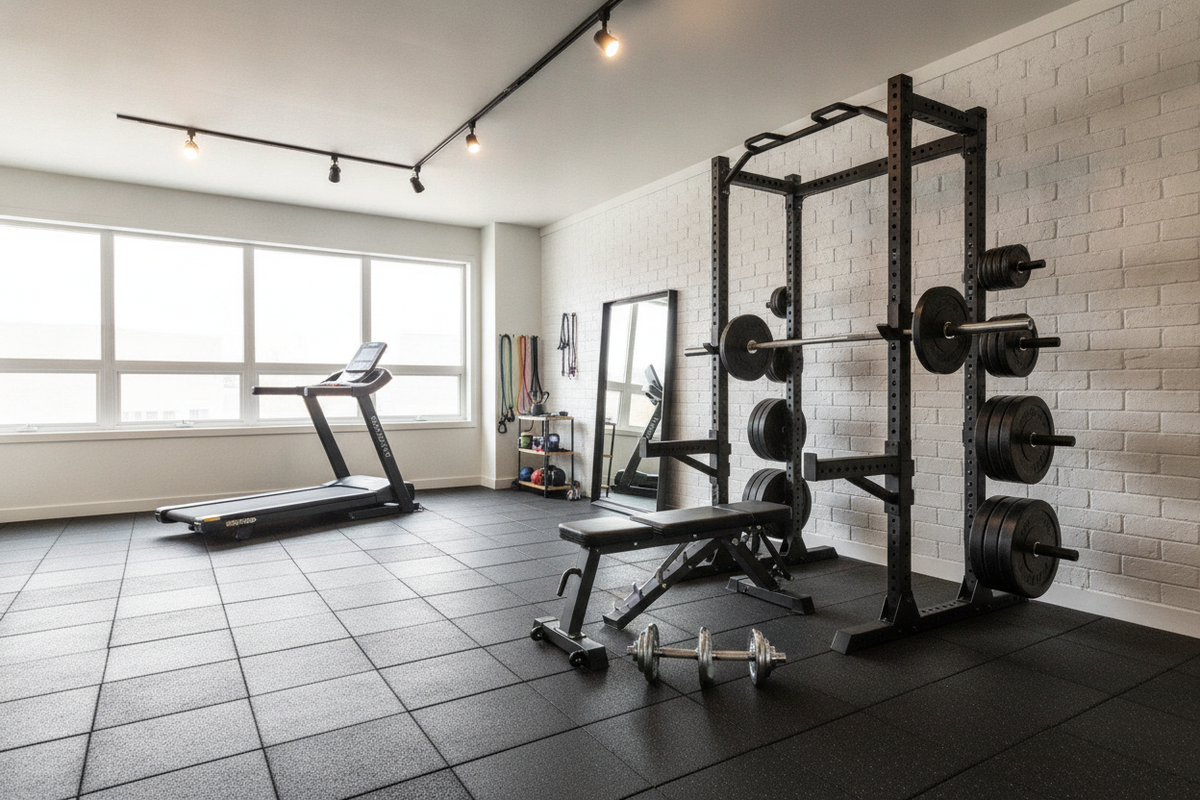
Hybrid training places dual demands on residential workout spaces. A successful home gym floor must provide a firm, unyielding foundation for heavy lifts while offering sufficient shock absorption and traction for plyometric and agility movements. Standard domestic flooring, such as hardwood, laminate, or bare concrete, often lacks the necessary resilience for repeated ballistic impacts and weight placement.
Deploying a heavy-duty, high-density surface such as a dedicated workout product creates a versatile footprint that protects subfloors and dampens vibrations from dropped dumbbells or landing forces. The textured top surface provides dependable shoe traction during rapid lateral transitions, while the dense underlayer resists compression under heavy free weights.
Ergonomic staging is equally important when planning hybrid circuits. To maintain smooth flow between intervals, arrange your resistance equipment along the perimeter of your mat while keeping the center zone clear for dynamic aerobic drills. This layout minimizes transition downtime, reduces tripping hazards, and maintains training rhythm.
Progression Frameworks, Safety Protocols, and Mat Maintenance
To ensure long-term development from a hybrid training program, apply progressive overload systematically across several variables:
- Density Progression: Complete the same volume of work in slightly less total time by shaving seconds off transition windows.
- Load Progression: Increase resistance on compound strength movements while holding cardiovascular intervals steady.
- Volume and Complexity: Introduce more complex movement variations, such as progressing from standard lunges to loaded rotational lunges.
Preserving joint comfort during high-frequency hybrid training requires listening to movement feedback. If dynamic jumps or plyometric drills cause joint discomfort, swap them for low-impact alternatives such as kettlebell swings, fast-paced shadow boxing, or cycling intervals.
Finally, maintaining your workout flooring ensures a safe, hygienic training environment. High-intensity hybrid sessions naturally generate sweat and foot traffic. Wipe down your workout mat after each session with a mild, non-abrasive soap and warm water solution. Avoid harsh chemical solvents that might degrade high-density foam or rubberized compounds. Keeping the surface clean preserves traction, prevents moisture accumulation, and extends the lifespan of your home gym setup.