
Best Booty Workouts: Glute Hypertrophy Frameworks, Movement Blueprints, and Home Floor Setup
Developing muscular strength and functional shape in the lower body requires an understanding of anatomy, vector mechanics, and progressive tension. Rather than relying on random exercise sequences, building the best booty workouts involves categorizing movements by how mechanical force is applied across the hip joints. Whether training in a commercial facility or structuring the best at home booty workouts, coordinating pelvic stability with appropriate workout staging ensures consistent physical adaptation.
Biomechanical Foundations of Targeted Glute Training
Effective glute programming relies on training the musculature through multiple planes of motion. The gluteal complex consists of three distinct muscle groups, each contributing to hip extension, abduction, external rotation, and pelvic stabilization.
Understanding Gluteus Maximus, Medius, and Minimus Roles
The gluteus maximus is the primary engine behind hip extension and outward femoral rotation. In contrast, the gluteus medius and minimus sit higher along the lateral hip, stabilizing the pelvis during single-leg stance phases and driving hip abduction. A complete routine integrates primary extension with supplementary abduction to maintain balance between aesthetic shape and joint function.
Force Vectors: Horizontal Hip Extension vs. Vertical Squatting Patterns
Glute exercises can be categorized by the direction of the load vector relative to the torso:
- Horizontal Loading: Movements such as hip thrusts and glute bridges place peak mechanical tension at full hip extension, where the glutes are in a shortened position.
- Vertical Loading: Traditional squats, lunges, and deadlifts place peak tension during the stretched position at the bottom of the movement.
- Lateral Loading: Banded lateral walks and abductions stress the upper hip musculature in the frontal plane.
Tension Curves and Pelvic Alignment Dynamics
Maintaining a neutral spine and controlled pelvic tilt prevents the lumbar spine from taking over during hip extension. Posterior pelvic tilt at the top of horizontal exercises allows the gluteus maximus to contract fully without excessive lower-back arching.
Essential Movement Blueprints for Glute Development
Selecting reliable movement patterns allows trainees to construct balanced sessions for home or gym use.
Horizontal Hip Hinges: Bridges and Hip Thrust Variants
Horizontal hip extension movements serve as central builders because they isolate hip extension with minimal knee flexion. Maintaining vertical shins at the top of a hip thrust ensures that the load remains centered on the glutes rather than shifting into the quadriceps or hamstrings. Reviewing practical execution strategies in a structured booty workout guide helps identify subtle alignment errors such as overarching the lower back.
Unilateral Loading: Split Squats, Deficit Lunges, and Step-Ups
Single-leg movements challenge the gluteus medius for stability while loading the lead glute through deep active ranges of motion. Leaning the torso forward at a slight forward angle shifts the mechanical leverage toward the posterior chain during Bulgarian split squats and walking lunges, making them core staples in any best butt workout for women and men alike.
Rotational and Lateral Abduction: Banded Walks and Kickbacks
Targeting the gluteus medius and minimus with resistance bands helps stabilize the hips and knees. Lateral monster walks and standing kickbacks provide continuous elastic tension throughout the outer hip complex.
At-Home Glute Routine Frameworks
Executing best at home butt workout protocols does not require an entire weight room. High-density bodyweight movements, resistance bands, and adjustable dumbbells provide ample mechanical tension when properly sequenced.
Bodyweight and Banded Activation Circuits
Prior to lifting external loads, targeted activation primes neuromuscular recruitment. A sample home activation sequence includes:
- Banded Glute Bridges: 2 sets of 15 repetitions with a two-second pause at peak contraction.
- Banded Clamshells: 2 sets of 12 repetitions per side.
- Lateral Monster Walks: 2 sets of 15 steps per direction.
Progressive Loading with Dumbbells and Resistance Bands
Progressing best booty exercises at home involves increasing time under tension, adding load, or extending repetition ranges. Integrating lower-body sessions alongside balanced upper-body routines outlined in an exercise full workout guide ensures symmetrical physical development.
Structuring Weekly Frequency and Volume Distribution
Distributing glute volume across two to three sessions per week allows for higher quality repetitions compared to performing all sets in a single day. Trainees seeking structured scheduling across different training disciplines can explore a dedicated workout resource to balance lower-body hypertrophy with recovery needs.
Surface Staging and Equipment Stability for Glute Work
A stable workout area is essential for proper force production during heavy lower-body exercises. Floor traction, subfloor protection, and joint cushioning determine both lifting comfort and movement control.
Traction Requirements for Lunges, Thrusts, and Hip Abduction
During deficit lunges, split squats, and lateral band walks, shoes require dependable grip against the floor. Slippery surfaces disrupt balance and reduce the amount of force the glutes can exert. Setting up a dedicated workout product provides non-slip footing and protects home flooring from shifting benches.
Joint Protection for Knees, Elbows, and Pelvis
Exercises performed on hands and knees, such as quadruped kickbacks and fire hydrants, place direct pressure on the patella and wrists. Integrating a supportive workout product distributes localized contact pressure, allowing trainees to maintain strict form without joint discomfort.
Bench, Mat, and Subfloor Integration Strategies
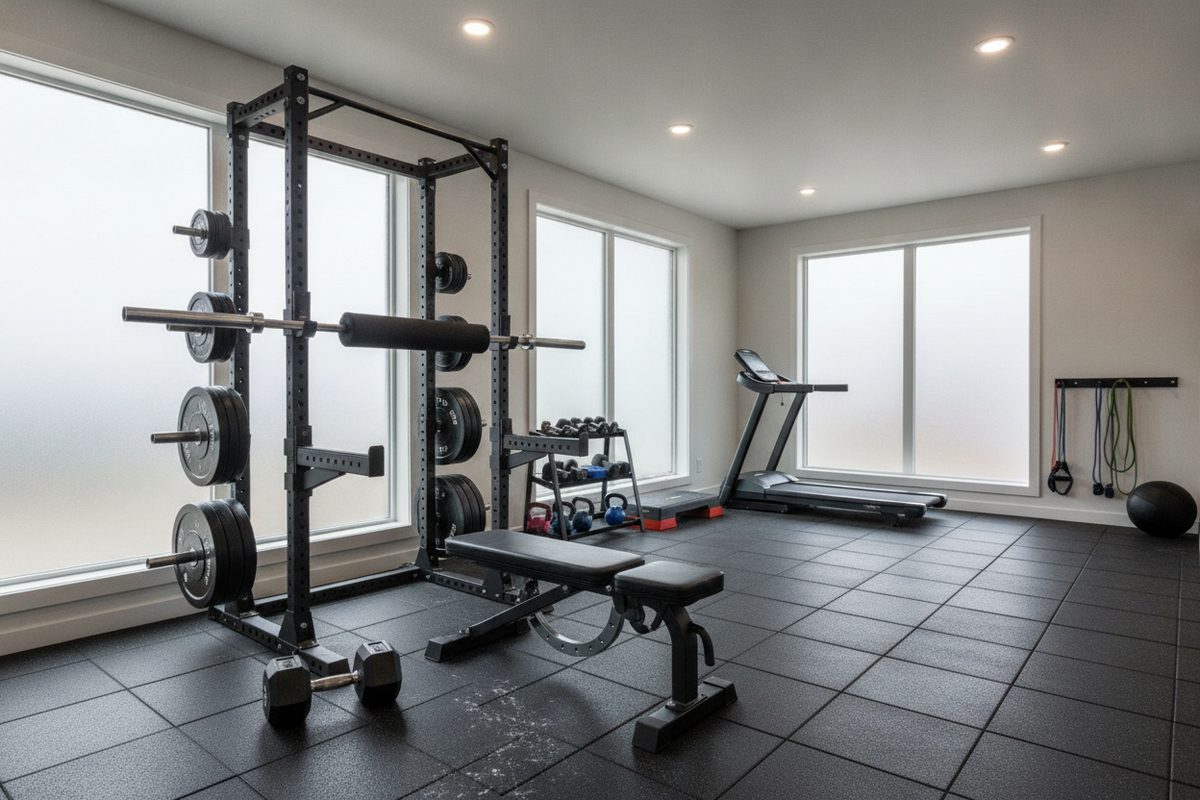
When performing barbell or dumbbell hip thrusts, the bench must remain anchored. Placing the bench and feet on a continuous high-density surface prevents the bench from sliding backward under heavy extension loads while protecting subfloors from dropped dumbbells.
Optimizing Recovery, Consistency, and Long-Term Progression
Long-term progress in any full booty workout regimen relies on systematic overload rather than frequent, unstructured exercise changes.
Mind-Muscle Connection and Tempo Control
Controlling the eccentric (lowering) phase for three seconds before driving into an explosive concentric contraction increases mechanical stimulus without requiring excessive external weight. Isometric holds at peak contraction reinforce neuromuscular control.
Managing Fatigue Across High-Frequency Training Cycles
Because the gluteus maximus is a powerful muscle group, adequate rest between strenuous sessions prevents excessive connective tissue fatigue. Alternating between heavier compound days and lighter banded tempo days allows consistent progression across weekly training blocks.


