Best Beginners Workout Routine: Progressive Frameworks, Movement Scalability, and Home Floor Staging
Starting a fitness journey often presents an overwhelming array of training splits, complex equipment, and conflicting philosophies. However, establishing the best beginners workout routine does not require complicated machinery or extreme physical exhaustion. A sustainable, entry-level regimen focuses on movement competency, structured progression, and creating a safe, comfortable training environment.
Core Architecture of a Sustainable Beginner Workout Routine
The primary goal of any novice training plan is building movement literacy and movement consistency. When evaluating what is the best workout program for beginners, the most reliable approach emphasizes full-body motor patterns rather than isolated muscle splits. Training major functional movement patterns multiple times per week encourages neuromuscular adaptation without generating excessive muscle soreness that could derail long-term consistency.
Novices benefit from keeping training sessions concise and focused. Structuring workouts around four to five foundational movements allows individuals to dedicate ample attention to proper posture, controlled tempo, and steady breathing. For additional context on pacing your early sessions, reviewing a dedicated workout routine beginners guide can help establish realistic expectations for early milestones.
Essential Movement Categories for Beginner Programming
A reliable and good basic workout routine organizes movements around fundamental human biomechanics. Incorporating these primary categories creates balanced physical development:
- Squat Pattern: Developing lower-body strength through hip and knee flexion (e.g., bodyweight box squats, goblet squats).
- Hinge Pattern: Reinforcing posterior chain engagement and hip drive (e.g., glute bridges, Romanian deadlifts with light resistance).
- Upper-Body Push: Building chest, shoulder, and triceps stability (e.g., incline push-ups, kneeling floor presses).
- Upper-Body Pull: Supporting posture and upper back control (e.g., resistance band rows, doorframe rows).
- Midline Bracing: Stabilizing the torso and pelvis during movement (e.g., bird-dogs, deadbugs, standard planks).
Focusing on these foundational categories creates a balanced baseline that prepares the body for advanced training variations later on, making it the best workout routine for beginner lifters.
Scaling Frameworks: Adapting Exercises to Your Starting Point
Every individual enters fitness with unique mobility baselines, body mechanics, and comfort levels. A good beginners workout routine incorporates accessible regressions and progressions so that movements remain challenging yet technically sound.
For example, if standard floor push-ups place excessive strain on the wrists or shoulders, elevating the hands on a sturdy bench or wall reduces the load while maintaining the proper plank alignment. Similarly, if bodyweight squats feel unstable, sitting back onto a chair or box teaches hip hinge mechanics and builds confidence in depth. Scaling should be viewed as an intelligent progression tool rather than a compromise.
Structuring Your Week: Weekly Frequency and Recovery Management
When determining what is a good workout plan for beginners, weekly frequency must account for adequate recovery. Training two to three non-consecutive days per week—such as Monday, Wednesday, and Friday—provides an optimal balance between training stimulus and soft-tissue recovery.
Between training days, light activity like walking or gentle mobility work supports circulation without adding systemic fatigue. Integrating mindful recovery habits and breath awareness, as highlighted in this good beginners workout guide, helps regulate exertion levels during both active sets and rest intervals.
Home Floor Staging and Environmental Setup for Novice Lifters
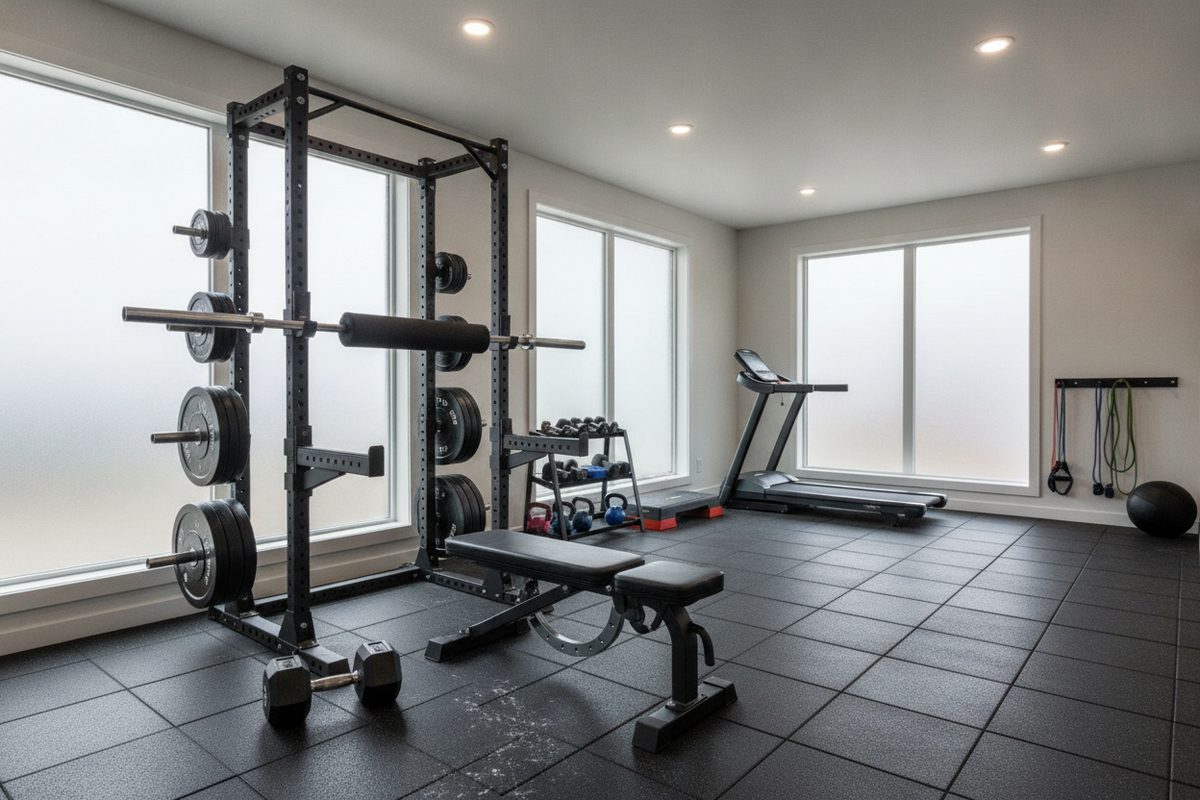
Executing bodyweight exercises, floor-based core work, and light resistance training requires a supportive and stable environment. Exercising directly on hard residential floors like hardwood, tile, or thin carpet can cause joint discomfort and elevate slip hazards during dynamic movements.
Staging a designated exercise area with a high-density, shock-absorbing workout product creates a stable surface that protects home subfloors while providing essential grip for feet and hands. A broad workout mat provides ample real estate for multi-directional lunges, kneeling core drills, and transitional floor work without sliding out of place.
Equipment Layout and Floor Boundary Considerations
Maintaining an organized workout zone reduces spatial distractions and allows for seamless movement transitions. When staging a beginner workout area:
- Keep hand weights, resistance bands, and hydration bottles along the perimeter of the mat.
- Ensure adequate overhead and lateral clearance for full arm and leg extension.
- Position a mirror or camera setup at an angle to allow self-monitoring of movement mechanics without straining the neck.
Common Beginner Pitfalls and Progressive Overload Principles
A frequent error among new trainees is prioritizing weight load or workout speed over movement control. Progression does not solely mean adding heavier dumbbells. In a beginner framework, qualitative overload can be achieved by:
- Increasing time under tension by slowing down the eccentric (lowering) phase of a repetition.
- Improving movement depth and range of motion while maintaining strict spinal alignment.
- Shortening rest intervals slightly as conditioning improves.
- Increasing total repetitions with crisp, repeatable form.
For curated exercise libraries and program structuring templates, exploring our comprehensive workout resource can assist in planning balanced training cycles.
Surface Maintenance and Routine Hygiene
A supportive exercise mat is an investment in your daily training habit, and proper care preserves both grip texture and material integrity over time. After completing a workout session, wiping down the mat surface with a damp microfiber cloth and mild soap removes sweat, body oils, and dust particles. Avoid harsh chemical solvents or abrasive brushes that could degrade the non-slip top layer, ensuring your workout foundation remains clean, stable, and ready for every session.