Best Booty Exercises at the Gym: Movement Blueprints, Equipment Setups, and Floor Staging
Biomechanical Movement Vectors for Glute Development
Building a well-developed lower body requires a structured approach that addresses how the gluteal muscles generate force across multiple planes of motion. Rather than relying on random machine selection, organizing training around distinct biomechanical vectors ensures comprehensive stimulation of the gluteus maximus, gluteus medius, and gluteus minimus.
Axial Loading: Squats and Split Squat Patterns
Axial loading movements place vertical resistance downward through the spine and pelvis. When performing barbell back squats, front squats, or deep split squats, the hip joint experiences significant flexion at the bottom of the range of motion. This deep stretch places high mechanical tension on the gluteus maximus fibers. Modifying stance width, pointing toes slightly outward, and allowing a moderate forward torso angle can emphasize hip extension demands while maintaining comfortable knee tracking.
Anteroposterior Loading: Bridges, Thrusts, and Hinges
Anteroposterior exercises apply horizontal resistance relative to the body's upright orientation. In movements like the barbell hip thrust and glute bridge, peak resistance occurs at full hip extension, where the glutes are shortened and maximally contracted. Hinge patterns, such as the Romanian deadlift, bridge the gap between axial and anteroposterior forces by challenging the glutes and hamstrings in a lengthened position while demanding rigid trunk stability.
Lateral and Transverse Loading: Cable and Machine Abduction
The upper portion of the glute complex, primarily the gluteus medius and minimus, stabilizes the pelvis during single-leg stance and drives femoral abduction. Incorporating seated machine abduction, standing cable hip abduction, and lateral band walks provides targeted tension across the transverse and frontal planes. These movements complement heavy compound lifts and help maintain balanced pelvic control during dynamic locomotion.
Essential Glute Exercises and Equipment Staging in the Gym
Executing high-quality lower-body movements depends heavily on proper station setup, barbell positioning, and personal alignment. When structuring individual lifting sessions, refer to our comprehensive booty exercise gym guide to refine rep pacing and joint alignment.
Barbell and Machine Hip Thrust Execution
The hip thrust is widely recognized as a cornerstone movement for glute hypertrophy. To set up properly:
- Position a flat bench across the lower edge of the shoulder blades to create a stable pivot point.
- Use a dense barbell pad to distribute pressure across the hips comfortably.
- Place feet flat on a non-slip floor surface at roughly shoulder-width, ensuring shins remain vertical at the top of the contraction.
- Drive through the midfoot and heel, locking out the hips without arching the lumbar spine.
To correct common setup errors such as hyperextending the lower back during thrusts, consult our foundational booty workout gym guide.
Romanian Deadlifts and Deficit Hinges
The Romanian deadlift (RDL) develops the posterior chain by loading hip extension from a stretched position. Lifters should maintain a soft bend in the knees, push the hips backward as if touching a wall behind them, and keep the bar tight against the thighs and shins. Performing RDLs on a flat, firm surface prevents unwanted foot shifting, allowing the lifter to focus entirely on deep hip hinge mechanics.
Bulgarian Split Squats and Step-Ups
Unilateral exercises expose and correct left-to-right strength discrepancies while placing intense demands on hip stabilizers. For Bulgarian split squats, resting the rear foot on a bench or padded roller allows the working front leg to move through a full range of motion. Leaning the torso forward slightly shifts the emphasis toward the glute of the working leg, whereas an upright torso places more load onto the quadriceps.
Cable Kickbacks and Standing Abduction
Cable stations provide continuous tension throughout an exercise's entire range of motion. Attaching an ankle strap and setting the cable pulley to lower or mid-height allows lifters to perform kickbacks angled outward at approximately thirty to forty-five degrees. This slight diagonal path matches the natural fiber orientation of the gluteus maximus, producing strong contraction without excessive lower back rotation.
Translating Gym Glute Movements to a Dedicated Home Space
Many lifters look to replicate commercial gym protocols within a home or garage gym setup. Recreating these movement patterns requires thoughtful equipment choices, particularly regarding footing stability and flooring durability.
Bench Stability and Subfloor Protection Under Heavy Thrusts
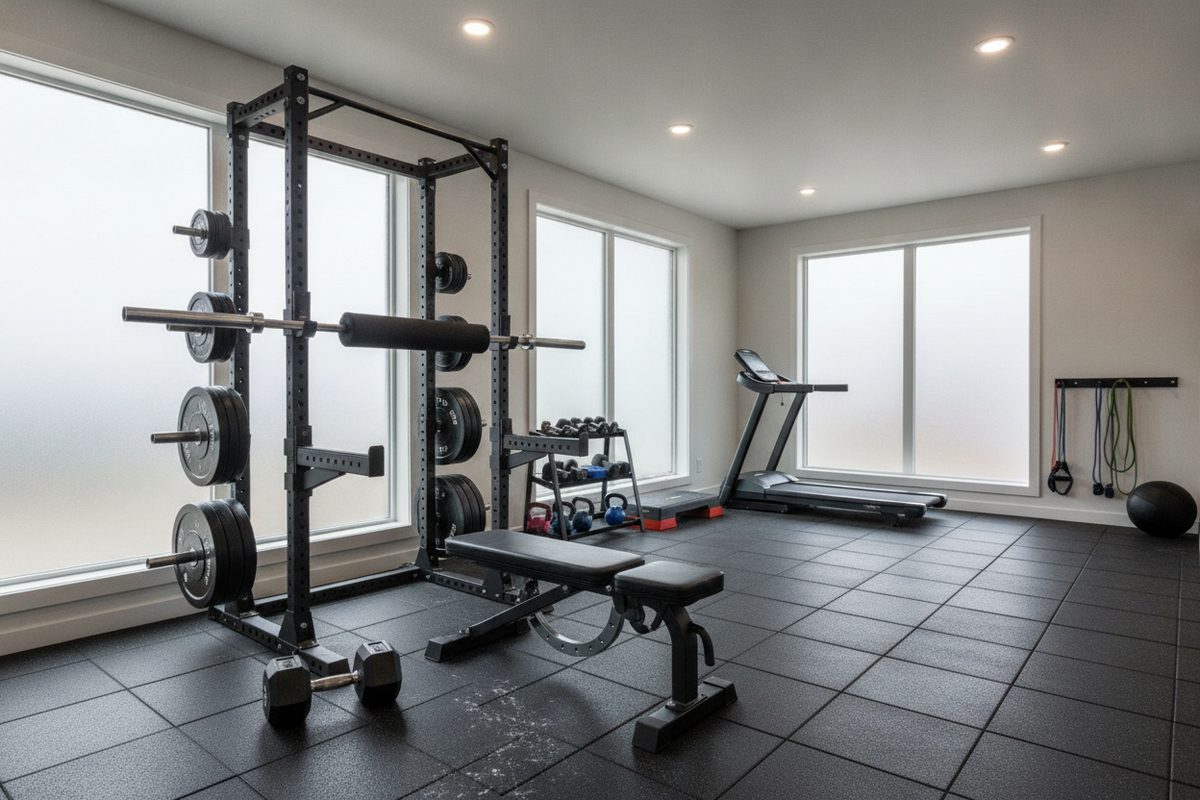
During heavy hip thrusts, the bench absorbs substantial horizontal shearing force as the lifter bridges the load. On smooth concrete or hardwood, unanchored benches can easily slide backward, disrupting movement mechanics. Staging your adjustable bench on a heavy-duty gym workout product ensures zero sliding and cushions the floor against dropped weights.
Traction Requirements for Lunges and Stiff-Leg Hinges
Dynamic lower-body movements such as walking lunges, lateral step-ups, and heavy hinges require dependable grip underfoot. Slippery floors can compromise balance and alter joint angles. Textured, high-density matting provides a stable, shock-absorbing base that keeps footwear firmly planted throughout high-load repetitions.
Structuring a Balanced Weekly Glute Training Protocol
An effective glute routine balances horizontal, vertical, and lateral movements across the training week while managing overall fatigue. For additional training templates and lower-body programming frameworks, visit our complete workout resource.
- Primary Compound Day: Focus on heavy anteroposterior and axial movements such as barbell hip thrusts and Romanian deadlifts.
- Unilateral & Accessory Day: Emphasize split squats, walking lunges, cable kickbacks, and lateral abduction exercises to target stability and hypertrophy.
- Volume and Recovery: Allow adequate rest between demanding lower-body sessions to support muscle tissue rebuilding and consistent lifting performance.
Surface Maintenance and Long-Term Workout Space Care
Flooring and exercise mats endure significant wear from high-friction movements, heavy weight plates, and aggressive shoe treads. Maintaining a clean, textured gym workout product preserves grip integrity through high-rep dynamic sets. Wipe surfaces regularly with mild soap and water, sweep away loose debris, and avoid dragging sharp metal equipment across mat seams to extend the life of your training area.