Stop Doing the Best Booty Workouts at Gym Wrong (Read This)
You have likely seen the Instagram influencers moving incredible weight, yet when you try to replicate their routine, you feel it entirely in your quads or lower back. That is the most common frustration I hear from clients. Finding the best booty workouts at gym setups isn't just about selecting the right exercises; it is about execution and intention.
Building glutes requires a specific approach that differs from general leg training. If you are tired of spending hours on the squat rack with minimal posterior growth to show for it, we need to adjust your strategy immediately.
Key Takeaways
- Volume over Ego: Glutes respond better to controlled time-under-tension than sloppy heavy lifting.
- Compound First: Prioritize Hip Thrusts and RDLs as your primary builders.
- The Mind-Muscle Connection: If you cannot squeeze the glute at the top of the movement, the weight is too heavy.
- Frequency Matters: Training glutes 2-3 times a week yields better results than one massive "leg day."
The Anatomy of Glute Growth
To understand why certain moves work, you have to look at the muscles. The glutes are not one single slab of meat. They are composed of the Maximus (the size builder), the Medius (the upper shelf), and the Minimus.
Many lifters unknowingly neglect the Medius. If you want that rounded look, you cannot rely solely on sagittal plane movements (forward and backward) like squats. You need abduction work.
The "Big Two" Compound Movements
While variety is nice, two specific movements reign supreme for raw mass.
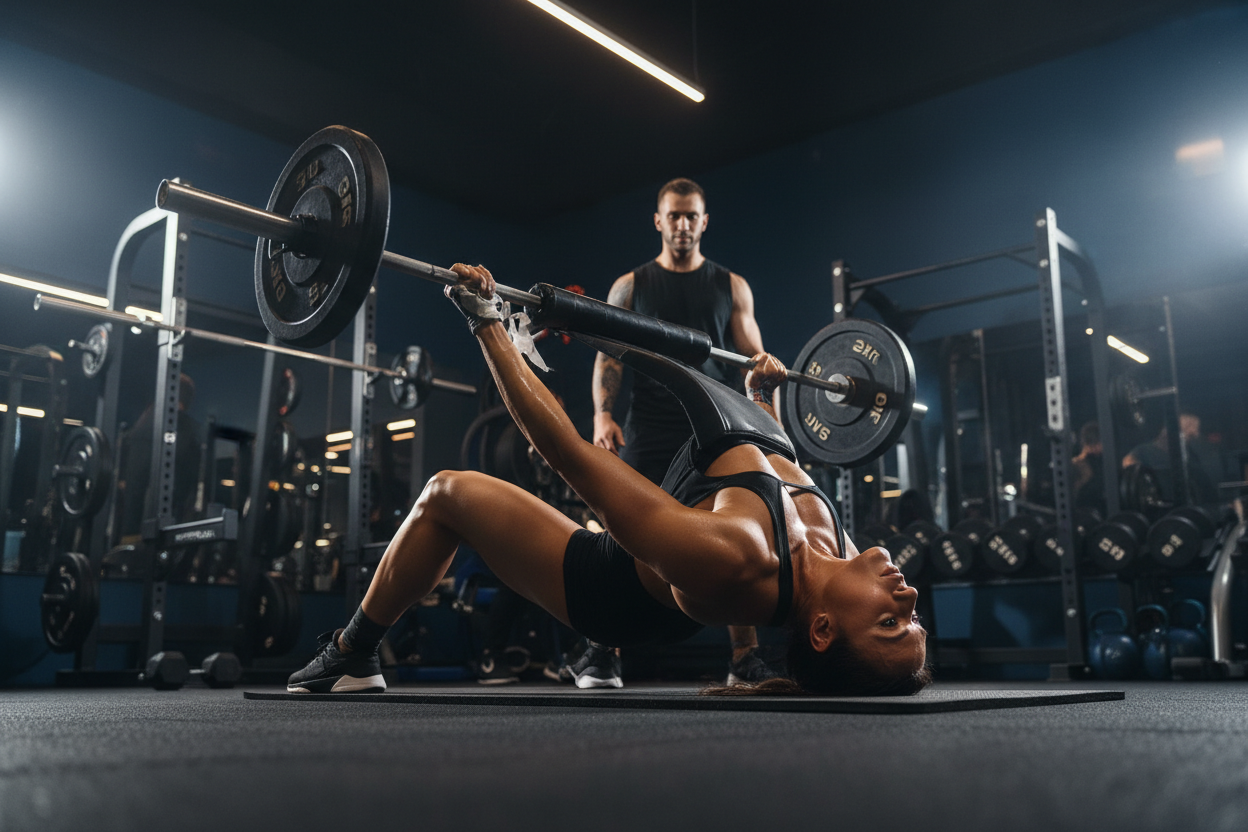
1. The Barbell Hip Thrust
This is widely considered the best gym booty workout for pure hypertrophy. Unlike squats, where the glutes are only maximally tensioned at the bottom (the stretch), the hip thrust keeps constant tension on the glutes, specifically at the peak contraction.
The Form Fix: Keep your chin tucked to your chest. Looking up at the ceiling hyperextends your lower back, shifting the load to your spine rather than your glutes. Drive through your heels, not your toes.
2. The Romanian Deadlift (RDL)
The RDL focuses on the stretch component. Muscle damage, which signals growth, often happens most effectively during the eccentric (lowering) phase of a lift. The RDL stretches the glutes under a heavy load.
The Science: Keep a slight bend in your knees but do not turn it into a squat. Push your hips back as if you are trying to close a car door with your butt. Once your hips stop moving back, stop lowering the bar. Going lower just rounds your back.
Isolation: The Best Gym Workout for Buttocks Shaping
Once the heavy lifting is done, you need to fatigue the muscle fibers with isolation work. This is where the "pump" happens.
Cable Kickbacks
These target the upper glutes. The trick here is stability. If your torso is swinging, you are using momentum, not muscle. Lean forward slightly, brace your core, and kick back at a 45-degree angle rather than straight back to hit the glute medius effectively.
Seated Abduction Machine
Often dismissed, this machine is vital for the "side glute" area. To make this the best gym workout for buttocks width, try leaning forward while performing the movement. This changes the angle of the hip and places more stress on the glute max and medius combined.
My Training Log: Real Talk
I want to be transparent about what this training actually feels like. I remember vividly when I first started taking hip thrusts seriously. I loaded up 225 lbs, thinking I was ready.
I wasn't using a proper barbell pad—just a thin yoga mat wrapped around the bar. Big mistake. The next day, I had deep, dark bruises on my hip bones that made wearing jeans excruciating. It wasn't "good pain"; it was just bone trauma. Furthermore, on my last set of RDLs, my grip gave out before my glutes did.
The lesson I learned? Buy a high-density foam pad for the bar, and do not be too proud to use lifting straps for your deadlifts. If your hands fail before your glutes do, you are leaving growth on the table.
Conclusion
Building a strong posterior chain isn't about confusion or constantly changing your routine. It is about mastering the best booty workouts at gym environments provide—specifically the Hip Thrust and RDL—and executing them with surgical precision. Drop the ego, increase the tension, and the results will follow.
Frequently Asked Questions
How often should I train my glutes?
For most intermediate lifters, 2 to 3 times per week is optimal. The glutes are a large muscle group that can handle significant volume, but they need at least 48 hours of recovery between heavy sessions.
Are squats necessary for glute growth?
Technically, no. While squats are an excellent leg exercise, they are often quad-dominant for many people. If your goal is strictly glute hypertrophy, Hip Thrusts and RDLs generally offer better glute activation than standard back squats.
Why do I feel glute exercises in my lower back?
This usually indicates poor core bracing or hyperextension. During movements like the kickback or hip thrust, ensure you are not arching your spine to get the weight up. Keep your ribs tucked down and move only from the hip joint.