Hiring Companies That Build Home Gyms: A Guide to Your Dream Setup
You have likely realized that tossing a yoga mat in the corner of the garage doesn't cut it anymore. You want a sanctuary—a place where focus meets function. But here is the friction point: finding the right companies that build home gyms is vastly different from hiring a standard renovation crew or an interior designer.
A general contractor knows drywall and plumbing. They rarely understand the tensile strength required for a wall-mounted rig or the acoustic dampening needed when you drop 300 pounds of deadweight on a second-floor slab. Building a training facility requires a specialized intersection of structural engineering, athletic design, and equipment logistics. If you get this wrong, you end up with a beautiful room that you can't actually train hard in.
Key Takeaways: What to Look For
- Specialized Acoustic Engineering: Professional builders understand how to mitigate vibration transfer, not just airborne noise.
- Structural Load Capacity: Expert firms calculate floor load limits for heavy racks and dynamic movements before installation.
- Electrical Nuances: Cardio equipment often requires dedicated 20-amp circuits to prevent breaker trips, a detail often missed by generalists.
- Workflow Design: The layout must prioritize movement patterns (supersetting) over pure aesthetics.
- Equipment Partnerships: The best builders have direct lines to major manufacturers for custom calibration and installation.
Why General Contractors Struggle with Gyms
It is tempting to let your house builder handle the gym room, but this is usually a mistake. Standard residential code does not account for the specific stresses of a weight room. I have seen beautiful luxury homes where the gym mirrors crack because the wall flexed during a heavy squat session.
Custom home gym builders operate differently. They focus on the "invisible" infrastructure. This includes reinforcing studs for wall-mounted cable machines and installing sub-flooring that absorbs impact rather than reflecting it back into your joints. If a company suggests standard laminate flooring for a weight room, that is your cue to walk away.
The Science of Flooring and Acoustics
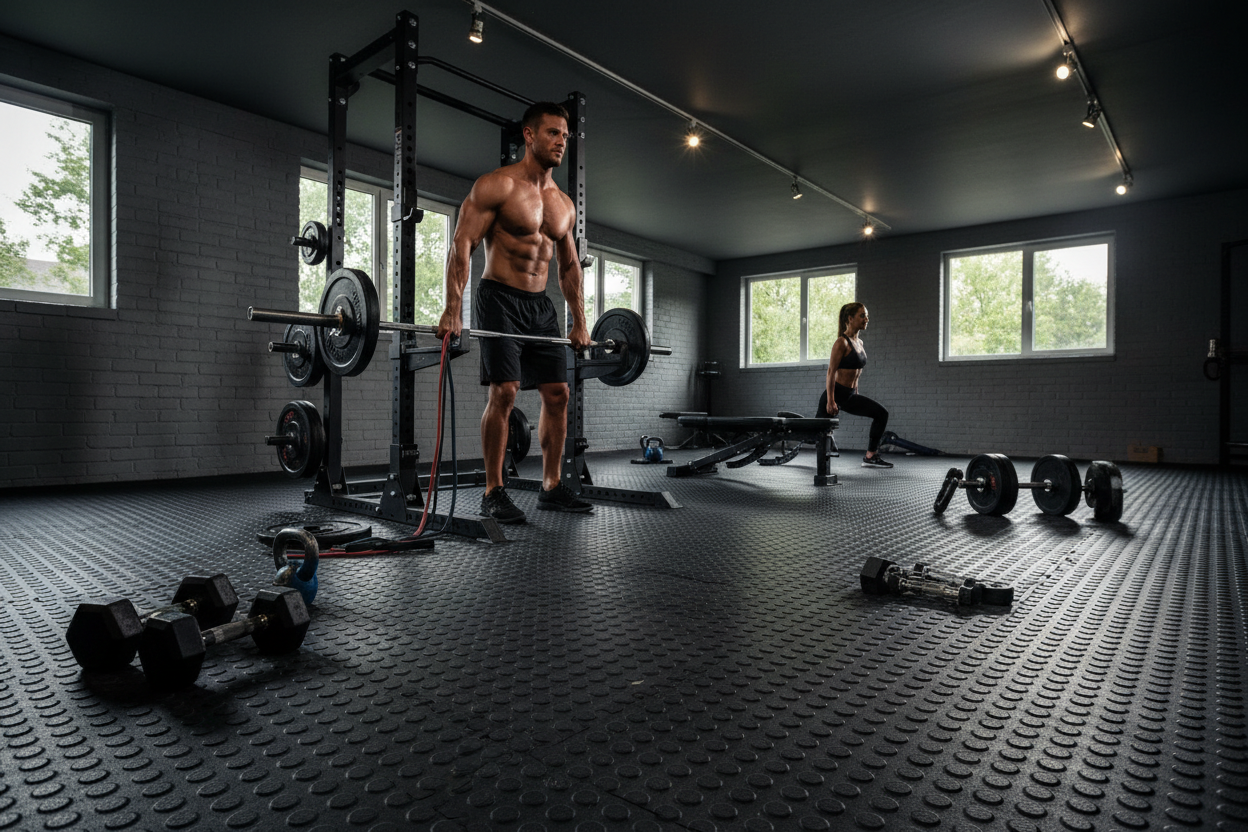
Flooring is the foundation of the gym, literally and figuratively. A specialized builder won't just sell you rubber tiles. They will analyze the subfloor. If you are building on concrete, you need moisture barriers to prevent mold growth under the mats. If you are on a suspended wood floor (like a second story), you need distinct layers to decouple the floor from the joists to stop the whole house from shaking when you drop a barbell.
Designing for Flow and Function
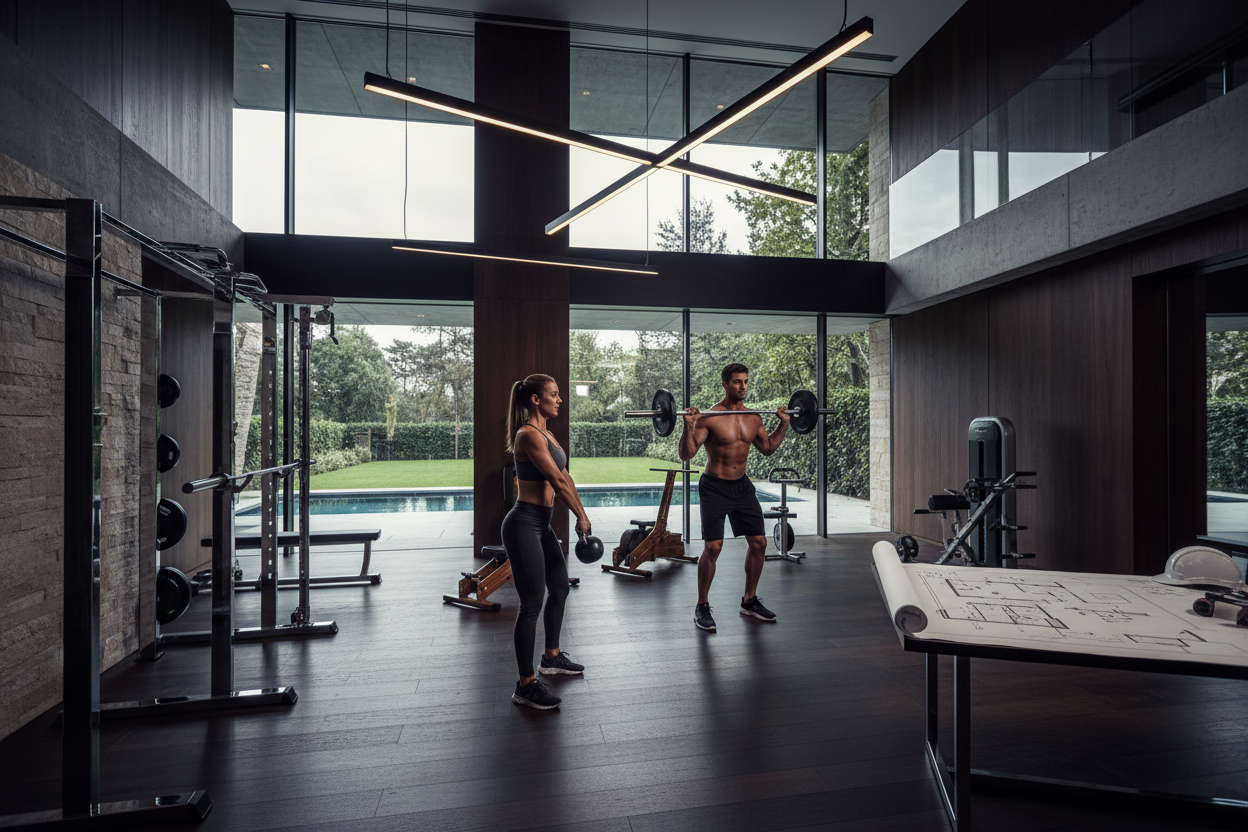
The biggest difference between a commercial facility and a home setup is space efficiency. Companies that specialize in this niche know how to maximize square footage without making the room feel claustrophobic.
They utilize vertical storage solutions and plan "active footprints." This is the empty space required around a machine to use it safely. A general designer might place a treadmill too close to a wall, ignoring the rollback safety zone. A pro knows you need at least six feet of clearance behind a treadmill for safety.
HVAC and Air Quality
Gyms generate heat and humidity. A standard residential HVAC return vent is rarely sufficient for a room where high-intensity interval training happens. Specialized builders will often install dedicated mini-splits or high-velocity exhaust systems to cycle air rapidly, preventing that stagnant "locker room" smell from permeating the rest of your home.
My Personal Experience with companies that build home gyms
I want to share a specific failure from my own training log to illustrate why expertise matters. Years ago, I hired a general renovation team to convert a spare bedroom. They installed what they called "heavy-duty" rubber flooring. It looked sleek and black.
Three weeks later, I noticed a distinct, chemical off-gassing smell that got worse when the room heated up. It wasn't the normal "new gym smell"; it was a headache-inducing petroleum stench. Worse, during a heavy deadlift session, I felt the floor squish—not compress, but squish. The rubber was too soft. It destabilized my lift, and I tweaked my lower back trying to compensate for the wobble.
When I finally brought in a dedicated gym builder to fix it, they pulled up the floor. The previous contractors had used low-density playground tiles meant for swingsets, not high-density vulcanized rubber meant for barbell impact. The difference in stability was night and day. That wobble disappeared, and the air quality issues vanished immediately with the right material.
Conclusion
Building a home gym is an investment in your longevity. Don't compromise the utility of the space by treating it like a standard room addition. Vet your builders. Ask about their experience with heavy loads, acoustics, and electrical requirements for cardio gear. When you hire the right team, you aren't just buying equipment; you are buying a frictionless environment where the only resistance you face is on the bar.
Frequently Asked Questions
How much do companies that build home gyms typically charge?
Costs vary wildly based on scope. A basic garage conversion might start at $5,000 for flooring and installation, while a luxury, custom-designed room with structural reinforcement and high-end equipment often ranges from $30,000 to over $100,000.
Do I need a permit to build a home gym?
If you are altering the structure (moving walls), adding electrical circuits, or changing HVAC, you generally need a permit. Specialized gym builders usually handle the permitting process as part of their project management service.
Can custom home gym builders work with small spaces?
Yes, this is where they shine. Pros can design wall-mounted folding racks, recessed storage, and multi-functional layouts that allow a single car garage or small bedroom to function as a full-scale training facility.