Best Age to Lift Weights: Lifespan Progression Guide, Movement Readiness, and Home Floor Staging
Redefining the Best Age to Lift Weights Through Movement Readiness
Determining the best age to lift weights involves looking beyond simple chronological milestones. In practical training environments, readiness depends far more on motor control, postural awareness, and the ability to follow structured instruction than on a specific birthday. When physical activity focuses on sound mechanics, resistance training can serve individuals across a wide spectrum of ages, from adolescence through retirement.
Rather than viewing weight training as an activity reserved exclusively for competitive athletes or fully grown adults, modern fitness planning treats resistance as a scalable tool. When loaded movements match a person's current coordination level, lifting weights supports balanced musculoskeletal development, movement confidence, and long-term functional physical capacity.
What Age Should You Start Working Out With Weights? Life-Stage Frameworks
When considering what age should you start working out with weights, it helps to organize training concepts into distinct life-stage frameworks. Each phase introduces unique movement goals, structural priorities, and loading parameters.
Youth and Teen Training: Motor Control, Technique, and Foundation Building
For younger participants, early engagement with resistance focuses primarily on learning foundational movement patterns. Bodyweight squats, lunges, hinge movements, and basic pushing or pulling variations establish solid neuromuscular coordination before significant external loads are added. Introducing light dumbbells, medicine balls, or resistance bands allows young lifters to develop rhythm, balance, and spatial awareness.
Structured supervision remains essential during this stage to ensure proper posture and controlled tempos. Trainees benefit when routines emphasize deliberate movement quality over maximum resistance. Reviewing a working out should guide provides additional perspective on structuring early movement sequences methodically rather than rushing into complex compound lifts.
Adult and Senior Strength: Joint Longevity, Balance, and Muscle Preservation
For adults entering midlife and older ages, lifting weights shifts toward maintaining functional mobility, posture, and movement resilience. Resistance exercise supports everyday activities by reinforcing core stability, lower-body balance, and upper-body carrying strength.
Older adults can train effectively with controlled cable movements, kettlebells, dumbbells, and supportive machine stations. The priority at this stage is sustainable progression, deliberate rest intervals, and exercises that allow natural joint paths without excessive joint stress.
Whats a Good Age to Start Lifting Weights at Home? Readiness Checklist
When asking whats a good age to start lifting weights in a home setting, the deciding factor is often self-regulation, attention to detail, and a properly organized environment. Before introducing dedicated resistance tools into a residential space, evaluate the following readiness criteria:
- Movement Competency: Can the lifter complete basic bodyweight squats, hinges, and planks with consistent balance and controlled breathing?
- Instruction Adherence: Is there a clear understanding of warm-up protocols, controlled lifting tempos, and designated rest periods?
- Spatial Discipline: Does the lifter maintain an uncluttered workspace, store loose implements after each set, and respect clear perimeter boundaries?
- Progressive Intent: Is the trainee focused on steady, repeatable form rather than jumping abruptly to heavier external resistance?
Consulting a good weights guide can help home lifters explore versatile loading variations while keeping movement control at the center of their weekly plan.
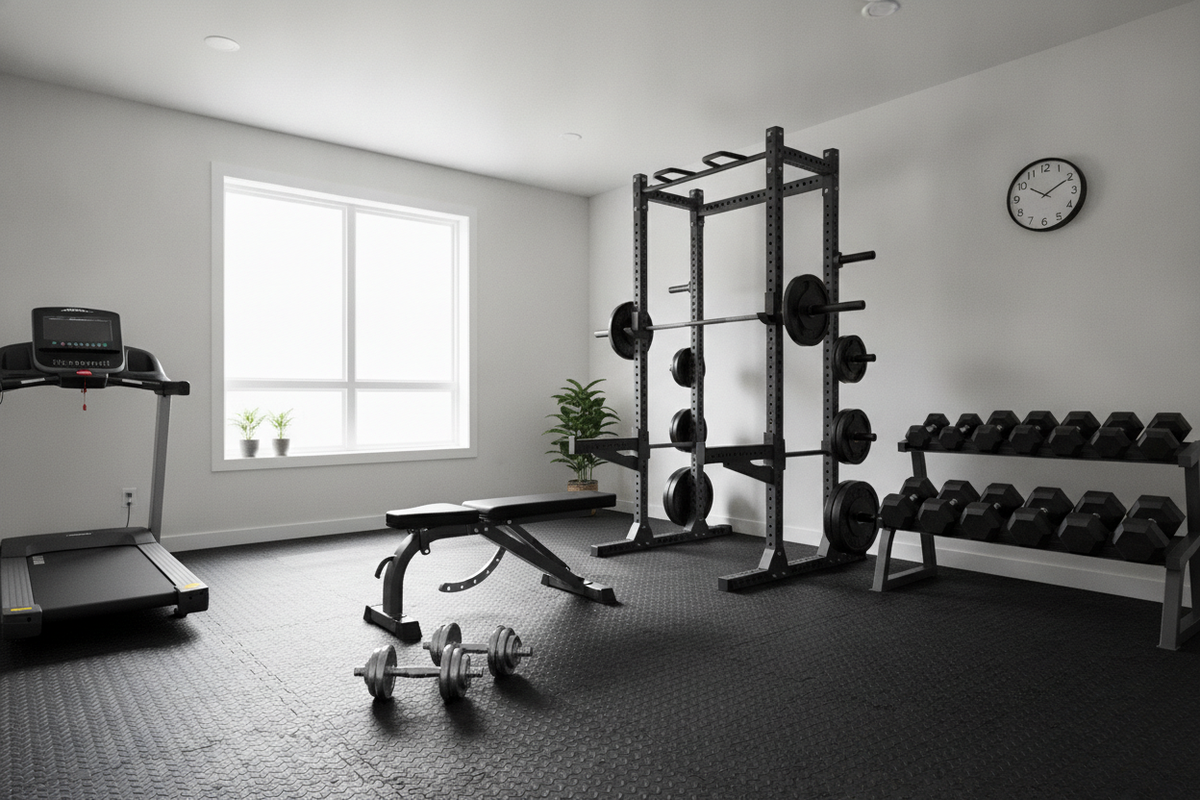
Home Gym Staging: Equipment Placement, Subfloor Protection, and Mat Selection
Creating a home training environment suitable for multiple ages requires thoughtful layout planning and durable surface protection. Heavy iron, selectorized equipment, and repetitive footwork place distinct demands on residential subfloors, making high-density gym flooring a foundational requirement.
When laying out your training area, consider how different pieces interact with floor surfaces:
- High-Impact Free Weight Zones: Areas designated for dumbbells, kettlebells, and barbell training benefit from dense rubber mats that disperse localized impact force and protect underlying concrete, tile, or hardwood.
- Stationary Machine Footprints: Dedicated stations from a lifting collection should be positioned on level, non-slip protective matting to prevent frame shifting and avoid surface indentation over time.
- Perimeter Clearances: Maintain open walkways between storage racks, benches, and open movement zones so lifters of all ages can navigate the room safely without tripping hazards.
Routine floor maintenance, including sweeping away abrasive dust and wiping surfaces with mild cleaners, preserves surface traction and supports clean footing for dynamic lifts.
Progressive Training Strategies and Surface Stability Across Decades
Lifelong resistance training is built on sustainable progression, patience, and consistent physical habits. Whether introducing a teenager to their first set of light dumbbells or helping an older adult maintain functional mobility, success relies on repeatable form, steady incremental loading, and a stable footing foundation.
Pairing structured programming with helpful resources, such as a comprehensive working out guide, ensures that your home gym remains an adaptable, supportive space for strength development across every decade of life.