Am I Building Muscle? Key Indicators of Muscle Growth, Progress Tracking, and Home Floor Staging
Understanding the Signals: Am I Building Muscle or Just Experiencing Weight Changes?
Stepping onto a bathroom scale often creates confusion for individuals dedicated to regular strength training. When your goal is muscular development, the number on the scale offers only a single, incomplete data point. A common question among lifters is, am i building muscle or simply fluctuating in body water and tissue mass? Because muscle tissue possesses a higher density than adipose tissue, physical dimensions and body composition can shift dramatically even when scale weight remains relatively steady.
Understanding what happens when you gain muscle involves observing neuromuscular coordination, resting tissue firmness, and mechanical performance over extended periods. Relying solely on short-term weight metrics can lead to premature adjustments in training routines. To gain clearer visibility into your physical trajectory, pairing structured workout tracking with reference resources such as a detailed building muscle weight guide allows you to evaluate genuine physiological adaptation without guesswork.
Key Indicators of Muscle Growth: Performance and Mechanical Feedback
Long before noticeable structural changes appear in mirror reflections, your central nervous system and muscular fibers demonstrate measurable functional adaptation. Recognizing these movement-based indicators of muscle growth provides immediate validation that your training stimulus is effective.
- Increased Repetition Quality: Completing working sets with steady cadence, controlled eccentrics, and minimal technical breakdown.
- Load Progression Across Fixed Repetition Ranges: Moving heavier resistance over identical ranges of motion without compromising posture.
- Reduced Perceived Effort on Baseline Weights: Warm-up sets and moderate working loads feeling significantly lighter and smoother in transit.
- Enhanced Mind-Muscle Connection: An improved ability to consciously contract, stabilize, and recruit targeted muscle groups throughout compound movements.
Tracking Progressive Tension and Movement Execution
When asking how can you tell if you're gaining muscle, your training logbook serves as primary evidence. Progressive tension overload—the systematic increase of mechanical tension over time—drives hypertrophic adaptation. If you are consistently performing more total work with stable mechanics, muscle tissue adaptation inevitably follows. Analyzing lower-body patterns, hip hinges, and pressing mechanics through a comprehensive building bigger muscles guide helps you verify that targeted muscle groups are bearing the primary workload rather than secondary joint structures.
Sensory and Physical Changes: How to Tell If Your Muscles Are Getting Bigger
Beyond the numbers logged during training sessions, physical markers provide direct feedback on muscular adaptations. Understanding how to know if your muscles are getting bigger requires observing both resting muscle tone and everyday physical interactions.
- Firmness at Rest: Developing muscle tissue exhibits increased passive tension and density, feeling firmer to the touch even when not actively flexed.
- Clothing Fit Adjustments: Shirts fitting tighter across the upper back, shoulders, or chest while remaining loose around the waistline indicates localized hypertrophy.
- Postural Alignment: Strengthened posterior chain muscles, upper back musculature, and core stabilizers naturally support a more upright, balanced posture throughout daily tasks.
- Joint Stability During Everyday Tasks: Carrying heavy loads, climbing stairs, and standing for prolonged intervals feeling noticeably more effortless.
Muscle Fullness, Firmness, and the 'Sudden Muscle Growth' Sensation
Many lifters report sensations of sudden muscle growth or an intense sensation that I can feel my muscles growing shortly after beginning a structured program. In the initial phases of training, muscles increase glycogen storage capacity and intra-cellular hydration to support elevated energy demands. This creates a fuller, tighter physical presence often referred to as enhanced muscle fullness. Over continuous training cycles, this acute cellular response transitions into permanent structural myofibrillar development.
Beyond the Scale: Measuring Real Composition Changes at Home
To accurately determine how to know if you're gaining weight or muscle, establish objective assessment methods that bypass daily scale fluctuations caused by sodium intake, hydration shifts, and digestion.
- Circumference Measurements: Use a flexible measuring tape to track consistent landmarks, such as the mid-thigh, upper arm, chest, and hips, recording measurements every few weeks under standardized conditions.
- Standardized Progress Photography: Capture photos in identical lighting, distance, and poses at consistent times of day to visually monitor changes in definition and muscular proportions.
- Movement Range and Dynamic Control: Assess joint comfort and movement depth under load, as muscular development supports stable joint articulation across full ranges of motion.
Creating the Optimal Environment: Home Gym Floor Staging for Progressive Overload
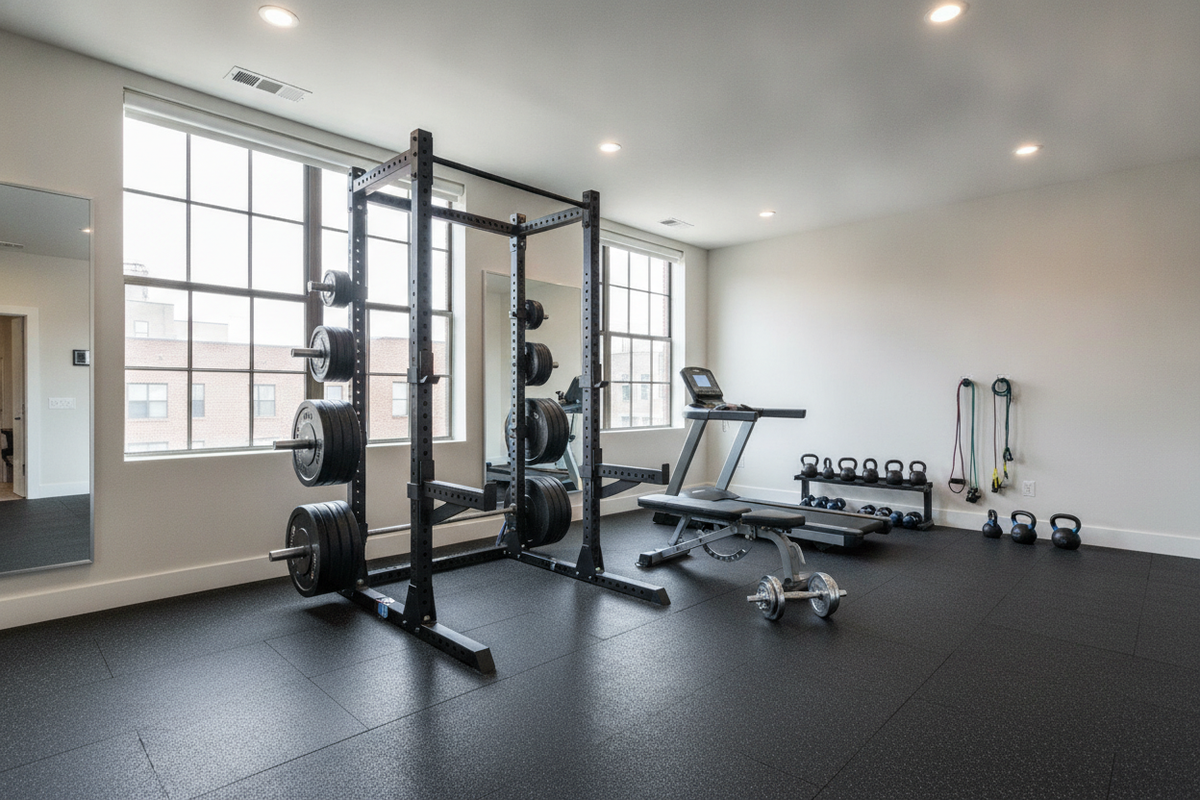
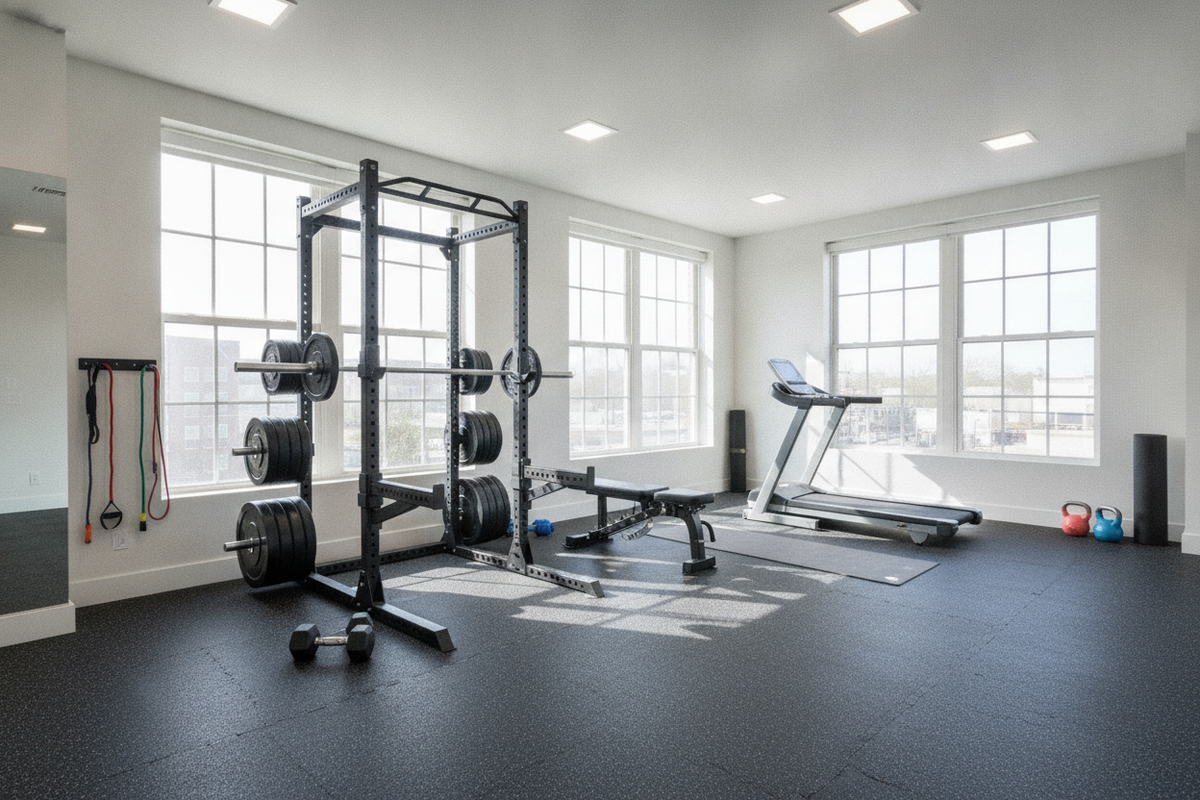
Sustaining the training intensity required for continuous muscular development depends heavily on your physical training environment. Executing heavy compound lifts, explosive jumps, and high-volume sessions demands a stable, supportive floor surface that facilitates uncompromised force transfer.
Surface Grip, Foot Plant Stability, and Force Transfer
Lifting heavy dumbbells, barbells, or kettlebells requires rigid ground contact. Soft, squishy surfaces absorb energy and create micro-instabilities in the ankles, knees, and hips, reducing lifting efficiency and disrupting balance. High-density rubber gym matting provides the firm base necessary to root your feet firmly during squats, deadlifts, and overhead presses, ensuring that force generated by your muscles transfers directly into the resistance load. Pairing stable footing with structured movement strategies from a weight muscle growth guide ensures that every working set maximizes mechanical stimulus.
Subfloor Protection, Acoustic Damping, and Equipment Layout
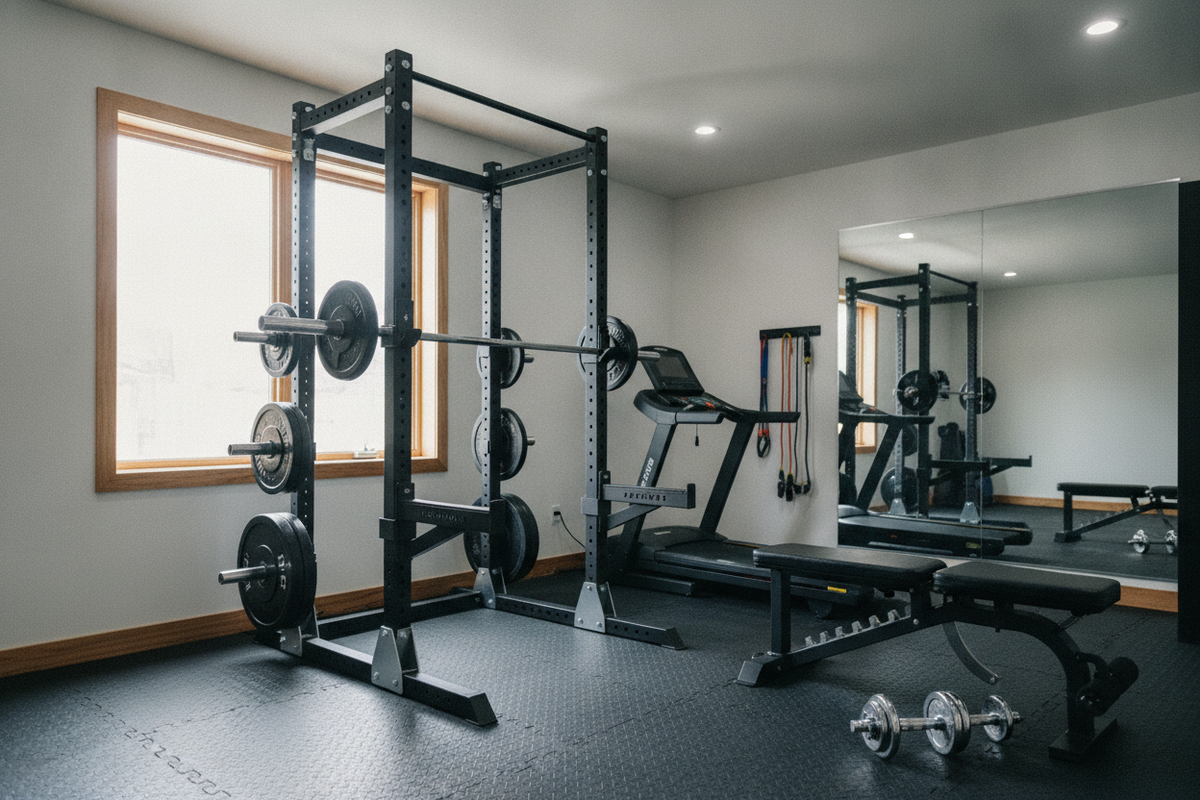
A properly staged home training area protects your underlying subfloor from the cumulative stress of heavy free weights and equipment. Staging your training space with modular or seamless high-density mats provides several practical advantages:
- Impact Distribution: Dense rubber dissipates localized weight pressure, protecting concrete, hardwood, or tile floors beneath heavy racks and benches.
- Vibration and Noise Reduction: High-density surfaces absorb acoustic resonance and mechanical vibration from dropped equipment or footwork, maintaining a quiet household environment.
- Dedicated Movement Zones: Defining distinct zones for lifting, mobility work, and equipment storage keeps your training space organized, safe, and clear of tripping hazards.
- Moisture and Sweat Resistance: Quality non-porous mat materials resist sweat absorption and allow straightforward cleaning, maintaining hygienic conditions over long-term use.
Summary Checklist: Evaluating Your Muscle-Building Trajectory
Assessing muscular development requires a balanced view across performance, physical indicators, and structured self-tracking. Keep the following checklist in mind as you progress:
- Track progressive load and volume improvements across multi-joint compound exercises.
- Rely on consistent circumference measurements and photos rather than daily scale numbers.
- Observe qualitative cues such as resting muscle firmness, enhanced posture, and improved movement control.
- Ensure your home workout floor provides the firm traction, stability, and impact protection necessary to train consistently with progressive overload.