All About Strength Movie Blueprint: Translating Strength Culture into Home Gym Training and Floor Staging
Introduction: From Strength Media to Real-World Training Application
Cinematic portrayals of athletic discipline capture the dedication, focus, and energy inherent in physical conditioning. Whether viewing an all about strength movie or watching an episodic all about strength tv show, these narratives highlight the drive to overcome physical limitations and achieve consistent personal progress. While dramatic visual stories often showcase peak lifts and intense montage sequences, translating that enthusiasm into a residential setting requires a thoughtful approach centered on consistency, proper mechanics, and sound room preparation.
Bringing the motivation seen on screen into your everyday environment begins with designing an accessible workout space. A successful home setup bridges the gap between ambitious training goals and practical daily habits, allowing lifters to pursue progressive resistance work safely and steadily over time.
Deconstructing Strength Culture: Cinematic Portrayals vs. Functional Lifting
In an all about strength full movie, visual narratives emphasize monumental efforts and maximal exertion. However, real-world development relies on repeatable movement patterns, deliberate pacing, and gradual physical adaptation rather than constant maximum-effort attempts. Building foundational capability demands an understanding of sustainable training concepts over dramatic, single-session spectacles.
Sustainable strength practices prioritize controlled tempo, joint-friendly mechanics, and gradual progression. By adopting these foundational principles, lifters can establish habits that support long-term development while minimizing unnecessary physical strain. Grounding your training in methodical programming helps maintain steady progress and balanced conditioning.
Foundational Movement Pillars for Home Strength Progression
A balanced strength routine centers on fundamental movement patterns that recruit multiple muscle groups simultaneously. Incorporating compound movements ensures efficient training sessions that build functional capacity throughout the body:
- Squat Variations: Develop lower-body power and knee-hip stability through goblet squats, front squats, or bodyweight progressions, as explored in this strength all guide.
- Hinge Mechanics: Target the posterior chain with deadlifts, hip thrusts, and kettlebell swings to build strong hips and back stability.
- Upper-Body Pushing and Pulling: Balance presses and rows to reinforce shoulder health, posture, and upper-body control.
- Loaded Carries and Core Bracing: Improve grip endurance and core stability by integrating farmer carries and static holds into routine circuits.
Integrating dynamic conditioning formats, such as those found in a full strength guide, provides variety and reinforces stamina alongside foundational resistance movements.
Home Gym Staging: Equipment Placement and Subfloor Protection
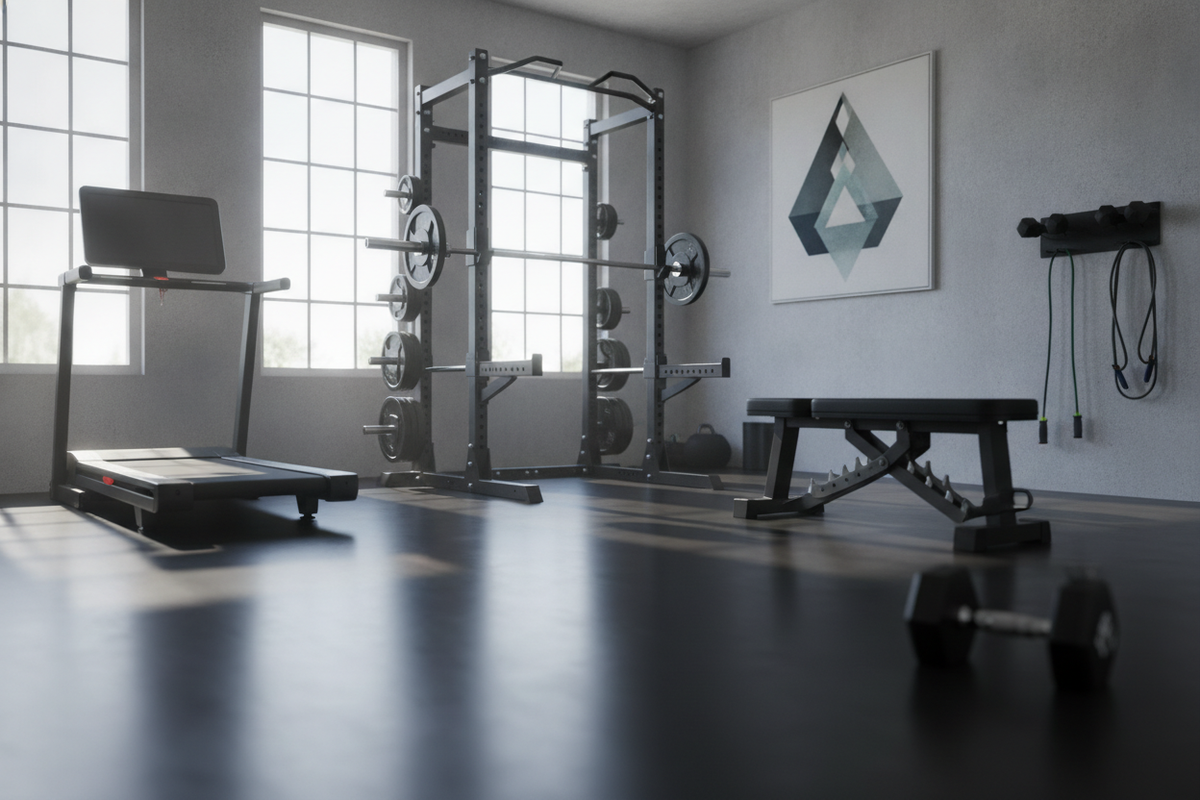
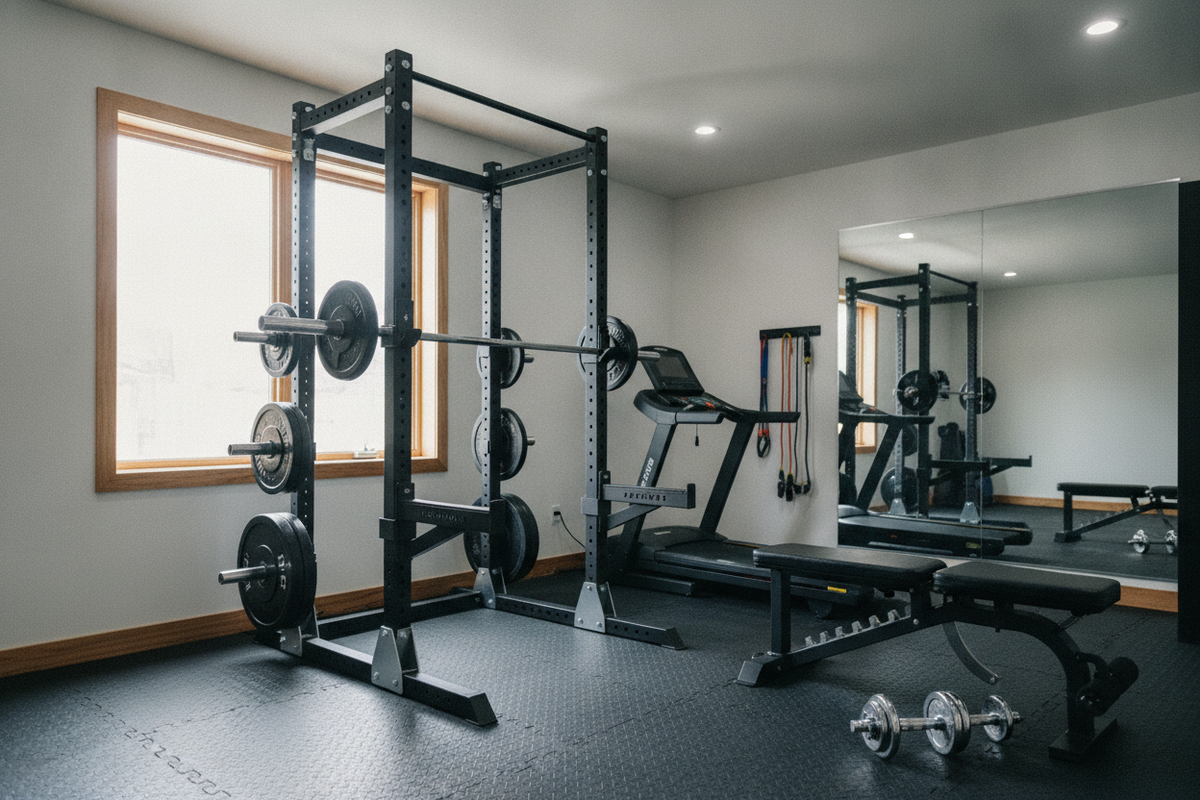
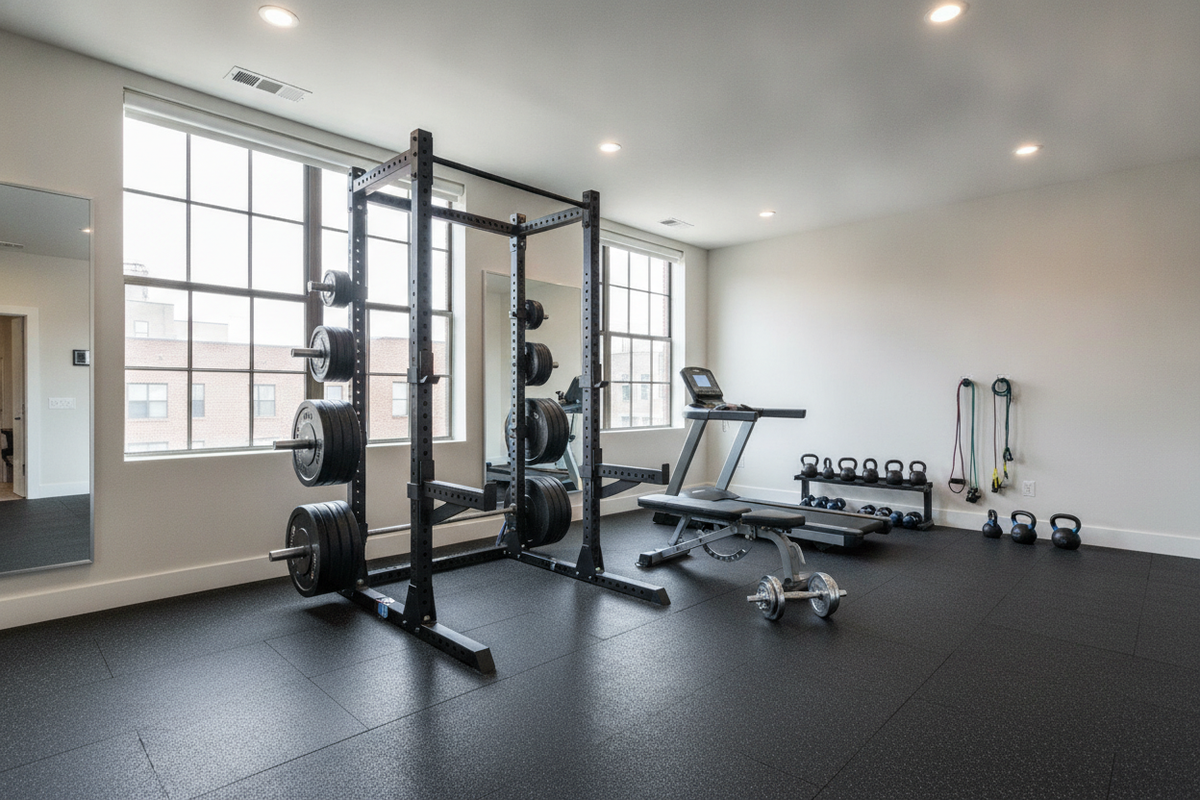
Transforming inspiration into a functional workout area requires careful room layout and subfloor staging. Heavy resistance equipment places concentrated pressure on residential floors, making protective high-density matting an essential element of any lifting zone.
When planning your layout, consider the following layout principles:
- Dedicated Lifting Zones: Position racks, barbells, and free weights over dense rubber flooring to distribute weight evenly and minimize impact on the underlying subfloor.
- Apparatus Organization: Select specialized gear from a dedicated strength collection to keep plates, dumbbells, and benches organized, maintaining clear pathways for movement.
- Vibration Dampening: High-density mats help reduce noise and minor floor vibrations during dynamic exercises and dumbbell set-downs.
- Clear Perimeter Clearance: Ensure adequate clearance around stations to allow full ranges of motion during dynamic lifts and lunges.
In our editorial experience, setting up a defined perimeter before purchasing heavy gear makes maintaining an uncluttered, motivating training space significantly easier.
Structuring Your Weekly Strength Cadence and Recovery Routine
Consistency relies on a balanced schedule that blends resistance training, cardiovascular intervals, and active recovery. A structured weekly template helps balance training stimulus with adequate rest:
- Upper-Body Strength Focus: Dedicate specific sessions to pressing and pulling mechanics to build upper-body capability.
- Lower-Body and Trunk Day: Focus on squat and hinge variations paired with anti-rotational core work.
- Conditioning and Dynamic Movement: Integrate hybrid cardio-resistance circuits, such as a strength full guide session, to build work capacity.
- Active Mobility and Rest: Reserve dedicated days for light mobility drills, stretching, and tissue recovery to prepare for subsequent training cycles.
Balancing intense training with deliberate recovery allows the body to adapt progressively, creating sustainable fitness habits that endure well beyond temporary motivation.
Conclusion: Building a Lasting Strength Sanctuary at Home
Cinematic media can ignite a passion for personal betterment, but long-term physical achievement depends on practical execution. By understanding foundational movement pillars, staging your training space with durable protective matting, and following a structured weekly schedule, you can translate the energy of strength culture into a sustainable home workout sanctuary. Create a focused environment, train with steady intent, and enjoy the ongoing process of building balanced, real-world capability.