Am I Physically Strong Quiz: Functional Movement Self-Audit and Home Floor Staging
When asking how strong am i physically, many individuals focus entirely on the maximum amount of external weight they can lift for a single repetition. However, real-world physical strength encompasses a much broader spectrum of capabilities. True functional capacity involves moving your own bodyweight with control, stabilizing joints across various planes of motion, maintaining midline posture under load, and producing force without relying on compensatory momentum.
A practical self-audit provides clear visibility into your current physical baseline without requiring specialized laboratory equipment or arbitrary numeric thresholds. By evaluating basic movement archetypes—pushing, pulling, squatting, hinging, and isometric bracing—you can identify functional strengths as well as movement gaps that require structured attention.
Understanding Physical Strength Beyond Raw Maximums
Physical strength is fundamentally about movement competency and relative body control. An individual who can move external resistance on a fixed machine may still struggle to control their own torso during a suspended plank or decelerate smoothly into a unilateral lunge. To build a complete picture of your physical baseline, practical assessments look at how well muscular stamina, joint mobility, and neuromuscular coordination work together. Exploring comprehensive endurance strength frameworks can further clarify how continuous movement capacity supports absolute force generation.
Evaluating your functional baseline involves auditing five primary movement pillars. Each pillar tests your ability to maintain mechanical alignment, recruit stabilizing muscles, and resist rotational or compressive forces across common movement planes.
The Functional Movement Strength Quiz: Core Movement Tiers
This self-assessment quiz is structured as a series of diagnostic movement checks. Perform each movement with strict attention to posture, tempo, and control. Note which tier best describes your current ability for each category.
Self-Assessment Pillar 1: Relative Upper-Body Push and Pull Capacity
Upper-body strength requires balanced force production between the anterior chest and shoulders and the posterior upper back and lats. Evaluate your control with these movement benchmarks:
- Pushing Control: Can you perform standard floor push-ups with a rigid, hollow-body plank alignment, full elbow extension at the top, and chest lowering smoothly without your lower back arching?
- Vertical and Incline Pushing: Can you support your full bodyweight in an isometric dip or elevated plank hold without shoulder shrugging or anterior head drift?
- Pulling Integrity: Can you perform inverted horizontal rows or controlled pull-ups with your shoulder blades actively retracting and depressing before elbow flexion begins?
Mastering these foundational positions relies on understanding bodyweight movement archetypes, where clean mechanics always take precedence over rapid repetition counts.
Self-Assessment Pillar 2: Lower-Body Mechanics and Single-Leg Balance
Lower-body functional strength centers on knee tracking, hip stability, and the ability to control unilateral forces during dynamic transitions:
- Bilateral Squat Mechanics: When performing a bodyweight squat, do your heels stay planted, knees track over your mid-toes, and torso remain upright through a full, comfortable range of motion?
- Deceleration and Tempo: Can you descend into a squat over three seconds, pause at the bottom without resting on your joints, and stand back up with smooth acceleration?
- Single-Leg Balance: In a split squat or reverse lunge, can you lower the rear knee smoothly toward the floor without lateral hip shifting, knee wobble, or relying on hand support?
Self-Assessment Pillar 3: Posterior Chain and Core Bracing Endurance
The posterior chain and trunk musculature provide the foundational stability for transferring force between the upper and lower body:
- Hip-Hinge Alignment: Can you execute a Romanian deadlift pattern with bodyweight or light resistance, maintaining a neutral spine while sending your hips backward until you feel hamstring tension?
- Glute Bridge Endurance: Can you hold a single-leg glute bridge with the pelvis level and hips fully extended without cramping in the hamstrings or arching the lumbar spine?
- Trunk Anti-Rotation and Anti-Extension: Can you sustain an active forearm plank or side plank with straight body alignment and steady diaphragmatic breathing without torso rotation?
Interpreting Your Quiz Results: Strength Baseline Profiles
Review your performance across the three assessment pillars to determine your current functional strength tier:
- Tier 1: Foundational Mobility and Base: If you experienced balance loss, joint discomfort, or broken posture during bodyweight movements, your priority is developing movement patterns, joint mobility, and base core endurance before adding heavy resistance.
- Tier 2: Functional General Strength: If you performed standard push-ups, controlled squats, and stable plank holds with consistent form, you possess a solid baseline of functional strength capable of supporting progressive overload.
- Tier 3: Advanced Movement Mastery: If you demonstrated strict control over unilateral lunges, paused squats, smooth pull-up mechanics, and anti-rotational core holds, your neuromuscular coordination and relative strength are well-developed.
Progressive Strength Development: Structuring Your Next Steps
Once you have identified your functional baseline, the next objective is establishing a structured routine to advance your capabilities. Progressive strength development requires consistent application of resistance training principles, adequate recovery, and systematic volume adjustments.
For those aiming to increase muscular density and structural strength, consulting a dedicated guide to muscle building provides clear roadmaps for exercise selection, split design, and loading parameters. Concurrently, regular physical check-ins and tracking muscle progress ensure your training produces measurable improvements over time.
Floor Staging and Substrate Stability for Accurate Strength Testing
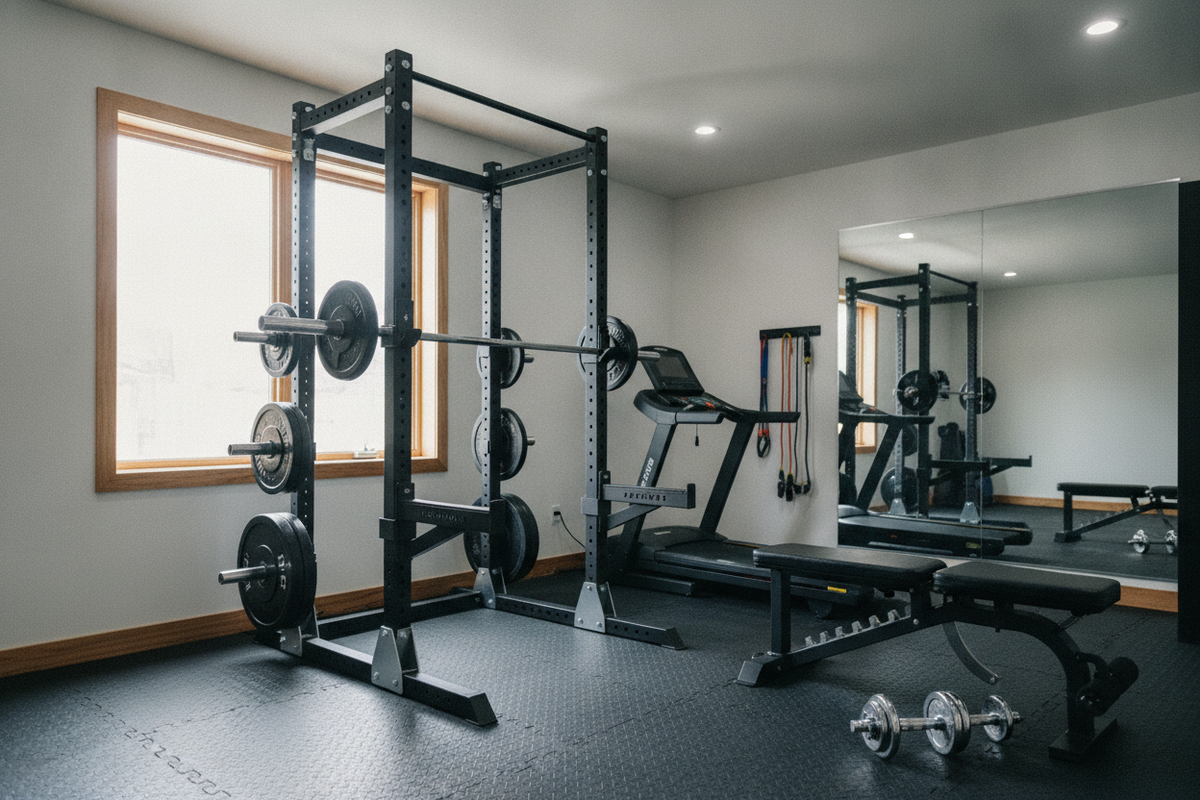
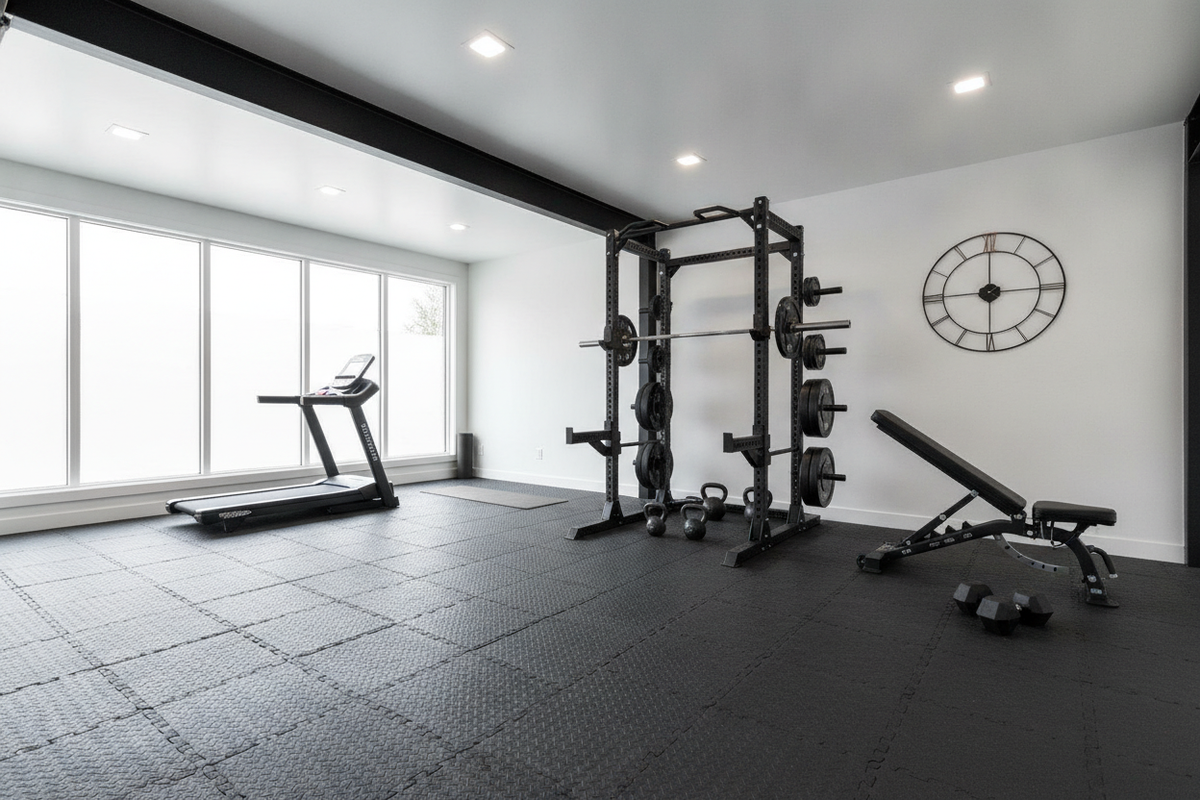
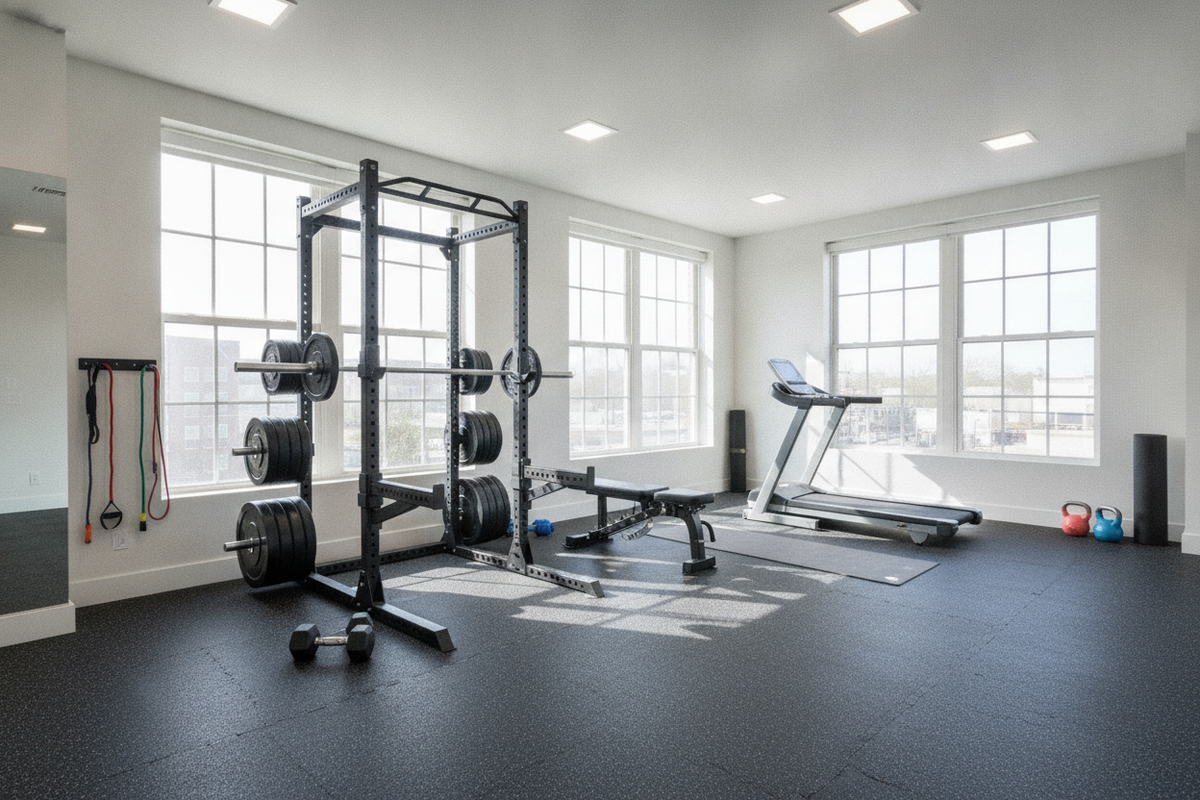
Accurate self-assessment and safe strength training depend heavily on the surface beneath your feet. Performing dynamic lunges, isometric planks, or bodyweight hinges on slippery hardwood, unstable rugs, or bare concrete introduces significant friction variables and contact discomfort.
A dedicated high-density exercise mat or gym flooring creates a stable, non-slip foundation that supports precise movement execution:
- Traction and Energy Transfer: Secure floor grip prevents foot sliding during unilateral lunges and push-ups, allowing you to focus on muscular tension rather than slip management.
- Joint Cushioning: Dense padding protects wrists during ground-based pushing holds and cushions knees during split squats and floor transitions.
- Substrate Protection: Dedicated protective flooring shields home surfaces from wear while defining a clean, focused workout zone.
By pairing a structured movement quiz with proper floor staging, you establish an effective, repeatable system for measuring and building real-world physical strength at home.