20-Minute Intense Workout Blueprint: Low-Impact Sequencing, Movement Density, and Home Floor Staging
Redefining Workout Intensity Without High-Impact Joint Stress
High-intensity training often carries the misconception that peak cardiovascular and muscular conditioning requires aggressive jumping, relentless plyometrics, and heavy floor collisions. However, achieving a true workout intense experience does not depend on pounding your joints against hard domestic surfaces. Instead, real training density comes from managing time-under-tension, extending active intervals, controlling eccentric phases, and eliminating passive downtime between movements.
By shifting from ballistic jumping to continuous multi-joint coordination, you can sustain an intense hiit workout that challenges systemic stamina while keeping joint stress manageable. Exploring a structured intense hiit workout guide reveals how structured work-to-rest ratios and steady movement cadences create substantial metabolic output without requiring jarring heel strikes or explosive rebounds.
The Core Biomechanics of Joint-Friendly High-Intensity Training
Executing an extreme exercise at home routine without high-impact collisions relies on biomechanical principles that increase muscular recruitment and oxygen demand:
- Controlled Eccentric Deceleration: Lowering slowly into lunges, squats, or floor walkouts forces muscle fibers to sustain continuous mechanical tension, elevating heart rate without dynamic impact.
- Continuous Muscle Tension: Avoiding complete joint lockouts at the top of pressing or squatting motions keeps targeted muscle groups engaged throughout the entire working interval.
- Multi-Planar Movement Vectors: Moving across sagittal, frontal, and transverse planes engages stabilizing muscles around the hips, core, and shoulders, creating a comprehensive conditioning stimulus.
- Ground-to-Standing Transition Flow: Rapidly alternating between standing postures and prone floor positions forces cardiovascular adjustments to shifting body orientations.
20-Minute Low-Impact Workout Framework: Block-by-Block Breakdown
This 20-minute training template balances movement density with joint-friendly mechanics. To maximize output, move through each block with deliberate focus and continuous pacing, referencing a comprehensive workout intense guide whenever you want to adjust baseline conditioning schemes.
Block 1: Dynamic Primer (Minutes 0 to 4)
Prepare the major joints and warm core musculature with continuous mobility drills performed at a steady rhythm:
- Inchworm walkouts with hip openers
- Pivoting torso rotations with overhead reaches
- Bodyweight hinge-to-squat transitions
- Lateral floor slides with core bracing
Block 2: Density Conditioning Circuit A (Minutes 4 to 10)
Perform each exercise for forty seconds of continuous movement, followed by twenty seconds of active transition. Complete two full rounds without extended rest:
- Squat to Alternating Overhead Reach: Drive through the mid-foot into a deep squat, extending one arm overhead with a controlled torso pivot at the top.
- Low-Impact Lateral Skater Reaches: Step wide laterally while dropping the hips, tapping the trailing foot lightly behind without jumping.
- Bear Plank to High Plank Walkouts: Maintain a neutral spine and level pelvis while stepping hands forward and back on a cushioned surface.
Block 3: Density Conditioning Circuit B (Minutes 10 to 16)
Follow the same forty-second work and twenty-second transition cadence for two rounds:
- Reverse Lunge to High Knee Drive: Step back into a deep lunge, driving the knee up into a controlled balance pause without bounding.
- Tempo Mountain Climber Holds: Move knees forward in a deliberate rhythm, pausing for one second at peak contraction beneath the chest.
- Pillar Bridge Rotations: Transition smoothly between forearm side planks, focusing on ribcage alignment and core tension.
Block 4: Downshift and Reset (Minutes 16 to 20)
Conclude with low-intensity diaphragmatic breathing, quad stretches, child's pose extensions, and supine spinal twists to facilitate systemic down-regulation and joint decompression.
Analyzing Movement Execution in Digital Training Formats
Many home athletes follow along with an intense exercise video or stream virtual classes. While an intense workout video provides pacing inspiration, it is essential to prioritize your own movement fidelity over keeping up with the screen's speed.
When viewing an intense workout videos library or following an extreme workouts video, look for technical markers demonstrated by skilled instructors. Pay attention to neutral spinal alignment during hinging drills, ensure knees track over the second toe during lunges, and maintain shoulder stability during plank sequences. Slowing down your tempo slightly to preserve stable joint alignment consistently yields superior physical adaptations compared to rushing with compromised form.
Home Gym Floor Staging: Subfloor Protection and Joint Cushioning
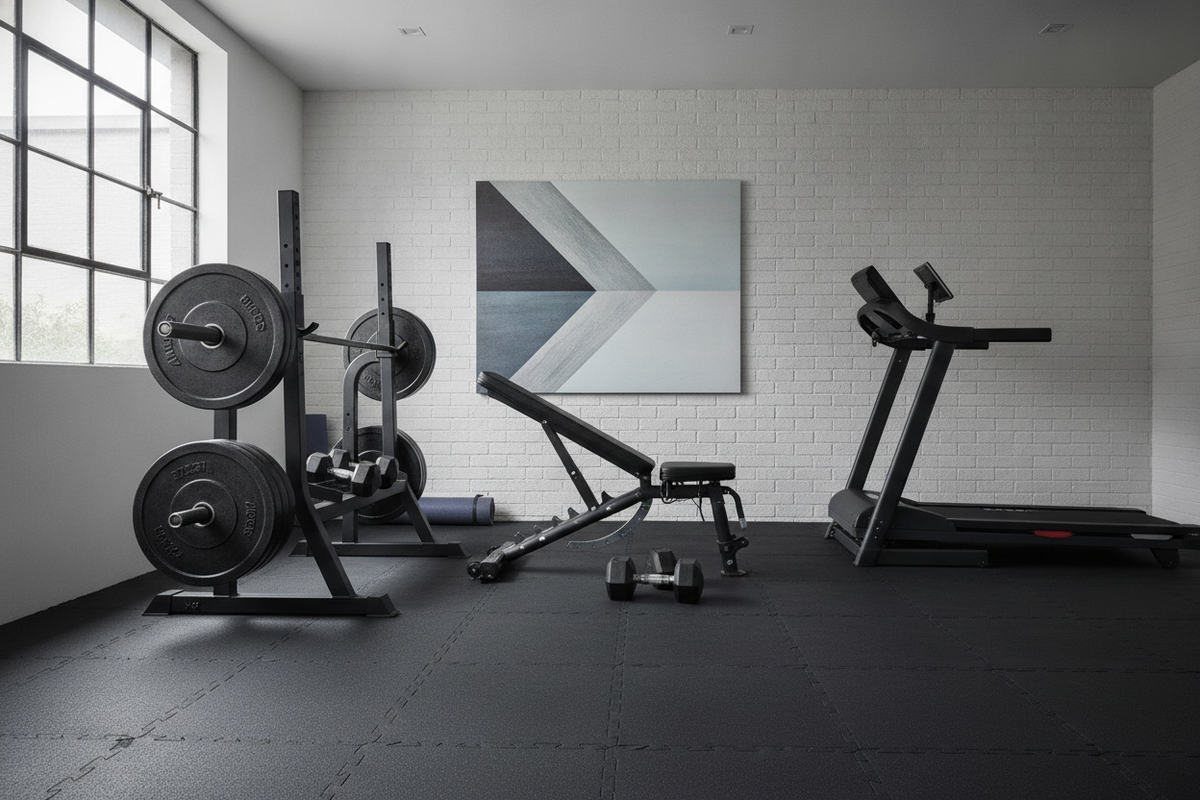
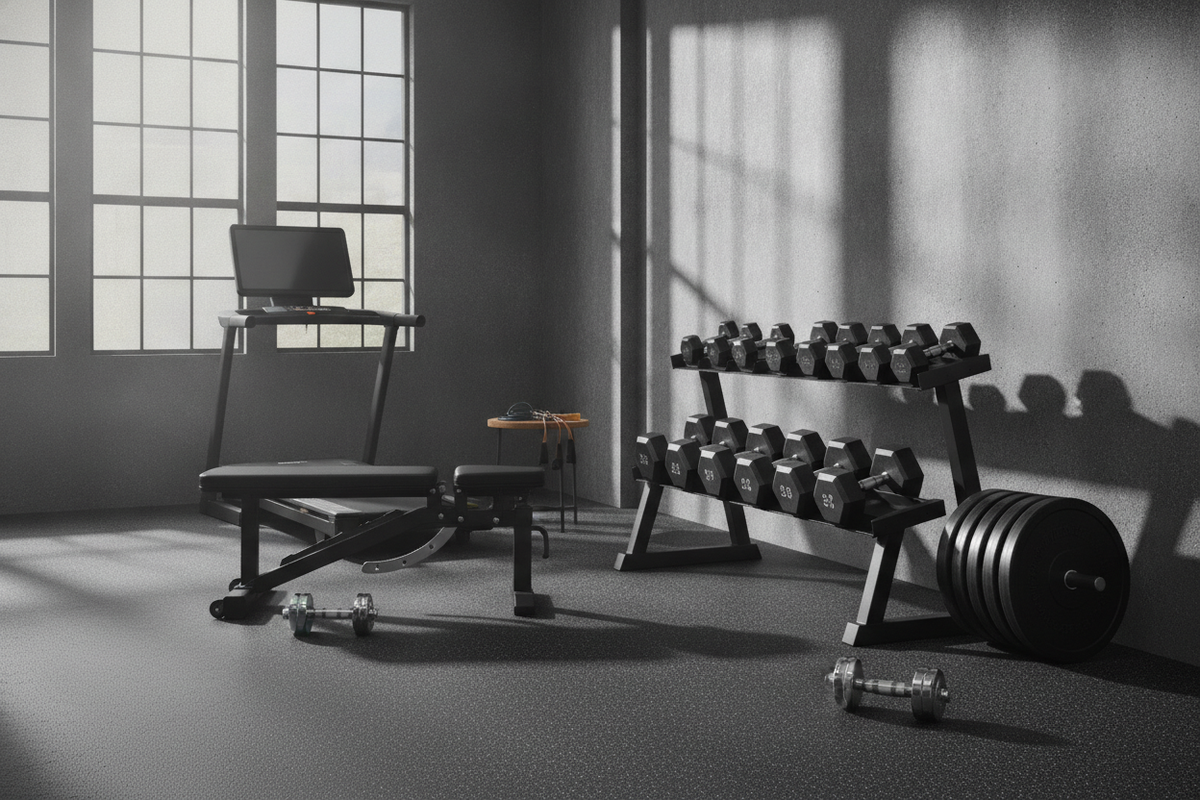
Staging an appropriate home training area is essential when executing demanding fitness routines. Hard subfloors such as concrete, tile, or unpadded hardwood reflect direct ground forces back into the ankles, knees, and lumbar spine during floor-based exercises. Installing high-density flooring from a shock-absorbing exercise collection provides a stable, resilient platform that absorbs foot pressure and dampens floor vibrations throughout dynamic movement changes.
Quality matting also creates dependable non-slip traction during rapid multi-directional steps, preventing slips and allowing you to push against the floor with confidence. Furthermore, a dedicated large-format mat protects delicate residential surfaces from moisture, friction, and scuffing caused by rapid footwork.
Equipment Layout, Mat Maintenance, and Space Optimization
Executing an effective home routine requires a dedicated training perimeter clear of physical hazards. Using a spacious exercise workout product establishes clear spatial boundaries, allowing you to perform sprawling lateral lunges, bear crawls, and plank rotations without feeling confined or stepping off the padded boundary.
Keep free weights, resistance bands, and hydration bottles stored along the outer perimeter of your floor space. To maintain optimal surface grip, wipe down your workout mat regularly with mild soap and water or a gentle mat cleaner, removing perspiration and dust build-up. Ensure the mat is completely dry before beginning your next training session to preserve reliable friction.
Progressive Overload and Intensity Adjustments Over Time
Progressing your home conditioning does not require adding high-impact jumps. You can systematically elevate difficulty using sustainable progression methods:
- Shorten Transition Intervals: Gradually shift from forty seconds of work and twenty seconds of rest toward forty-five seconds of work and fifteen seconds of transition.
- Incorporate Isometric Pauses: Add a two-second hold at the deepest point of squats or lunges to eliminate momentum and maximize muscular recruitment.
- Expand Range of Motion: Deepen your movement trajectories where joint mobility permits, increasing the distance traveled per repetition.
- Introduce Light External Resistance: Hold compact dumbbells, kettlebells, or resistance bands to increase total mechanical work without altering joint mechanics.
By relying on structured density, deliberate eccentric control, and a properly staged home flooring setup, you can build a resilient, demanding home training practice that challenges your conditioning while respecting long-term joint health.