
2 Months of Lifting Weights: Progressive Strength Blueprints, Adaptation Milestones, and Home Floor Stability
The 60-Day Strength Trajectory: What to Expect from 2 Months of Lifting Weights
Committing to 2 months of lifting weights creates a noticeable transformation in movement quality, posture control, and overall training confidence. The initial eight-week window represents an essential bridge between introductory gym exploration and sustained, progressive strength development. During this timeframe, your body moves through distinct adaptation phases, shifting from basic motor learning toward structural capacity.
Rather than chasing rapid fatigue, approaching 2 months of weight training with an organized plan establishes repeatable movement mechanics. When you understand the physiological and logistical needs of an eight-week training cycle, you can build a resilient foundation that supports long-term progression without unnecessary setbacks.
Phase 1: The First 30 Days – Motor Patterning and Neuromuscular Efficiency
When starting out by lifting weights for 30 days or lifting weights for a month, the primary adaptation is neuromuscular. The nervous system learns how to recruit muscle fibers more synchronously, balance stabilizing muscles, and maintain tension throughout compound ranges of motion. Early performance gains during this month stem largely from technical efficiency rather than substantial structural muscle growth.
Key priorities during the first month include:
- Mastering Bar and Body Path: Focus on consistent squat depth, balanced hip hinges, and controlled pressing trajectories.
- Core Bracing Mechanics: Learn intra-abdominal pressure generation to support the spine under load before adding aggressive resistance.
- Managing Initial Soreness: Allow adequate spacing between working sets and training sessions to help connective tissues acclimate.
Before purchasing advanced loads, reviewing a detailed weight lifting weights guide can help you select versatile initial gear that matches your foundational phase.
Phase 2: Days 31 to 60 – Structured Overload and Hypertrophy Foundations
Moving into the second half of an eight-week cycle allows you to introduce structured progressive overload. With movement patterns established, you can steadily increase working resistance, introduce small rep variations, or slightly increase training density. This phase provides the foundation for muscle hypertrophy and joint resilience.
During this stage, logging training variables becomes essential. Tracking working sets, rep execution quality, and recovery intervals prevents random effort and ensures you are applying systematic stimulus across major muscle groups.
Frequency vs. Recovery: Why Consistent Weekly Splits Outperform Lifting Everyday
Beginners occasionally assume that rapid progress requires extreme frequency, such as attempting lifting everyday for a year. However, daily heavy resistance work can quickly overwhelm recovery capacity, leading to accumulated joint irritation, technical breakdown, and mental fatigue.
A balanced three-day or four-day weekly split provides superior balance for most lifters. Scheduling non-consecutive lifting days ensures that active muscles, tendons, and the central nervous system have adequate time to recover, allowing each session to be executed with high technical precision and intent.
Home Gym Foundation: Flooring Dynamics, Heavy Load Distribution, and Surface Grip
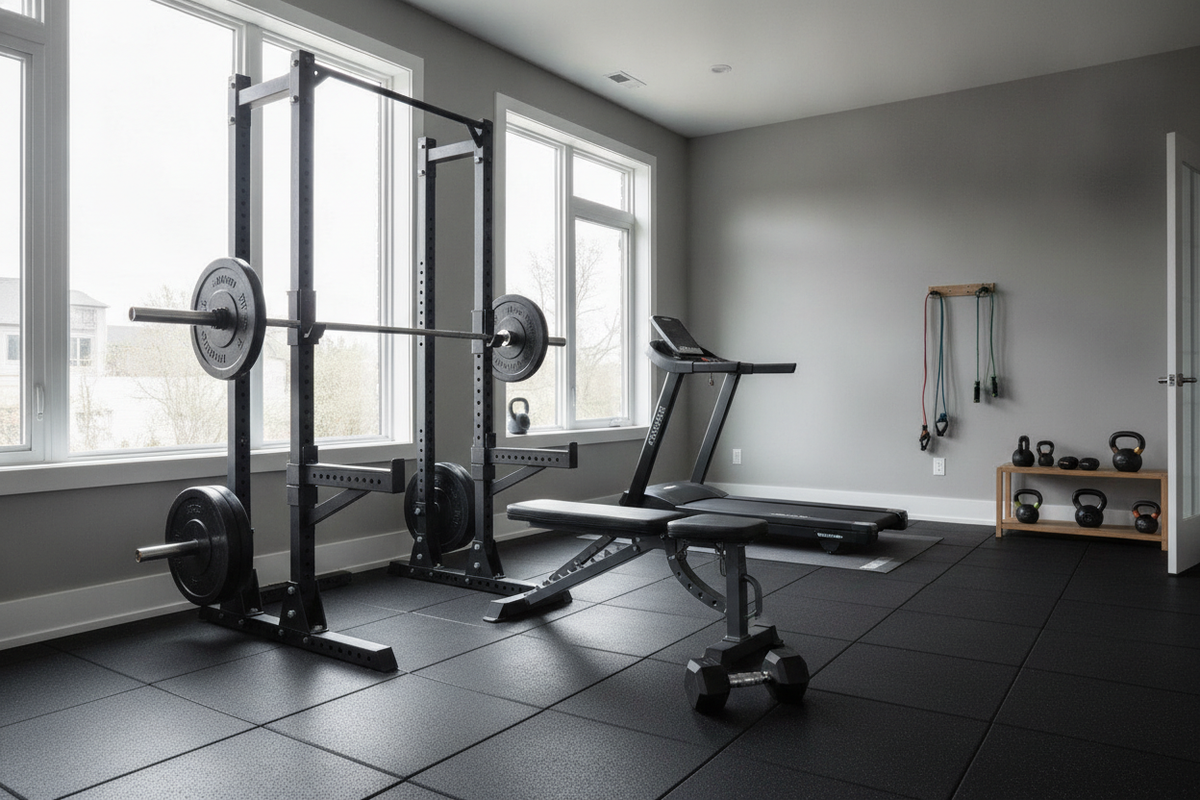
Executing an eight-week lifting program at home requires a stable, protective foundation. Free weights, kettlebells, and heavy racks exert localized pressure that can damage bare flooring or create unstable footing under load.
High-density rubber gym mats provide several essential benefits for home lifting zones:
- Subfloor Protection: Heavy rubber absorbs kinetic energy from dropped dumbbells and plates, safeguarding concrete, tile, or hardwood underneath.
- Firm Footing and Traction: Unlike plush exercise mats, dense rubber resists compression, ensuring firm surface contact during heavy squats and overhead presses.
- Vibration and Noise Dampening: Quality flooring mitigates sound transmission through home floors and walls.
If you train in a compact living space, consulting a dedicated weight training guide can assist with footprint planning. Equipping your training space with supportive tools from a dedicated training collection further optimizes bar stability, plate organization, and surface safety.
Essential Movement Archetypes for an 8-Week Home Routine
A well-rounded two-month resistance program revolves around core movement archetypes rather than isolated single-joint exercises. Building your sessions around foundational patterns ensures comprehensive muscular balance and practical functional strength.
- Squat Pattern: Goblet squats, front squats, or box squats for lower-body extensor power.
- Hinge Pattern: Romanian deadlifts and hip thrusts for the posterior chain.
- Upper-Body Push: Overhead presses, floor presses, or dumbbell bench presses.
- Upper-Body Pull: Barbell rows, dumbbell single-arm rows, and lat pulldowns.
- Loaded Carry: Farmer carries to build grip endurance and core stability.
To integrate these patterns into a broader training strategy, explore a comprehensive weight lifting guide. When you are ready to expand your training setup with versatile multi-station apparatus, browsing a curated weight lifting collection offers practical options for progressive resistance.
Key Milestones and Next Steps Beyond the Two-Month Mark
Reaching the end of two months marks a transition from beginner orientation to intermediate progression. Indicators of a successful initial block include consistent workout adherence, refined lifting mechanics, improved grip confidence, and predictable recovery between sessions.
Following an initial eight-week phase, consider scheduling a light deload week where volume is reduced by half before beginning your next progressive block. This brief reduction in training stress consolidates adaptation gains, refreshes your joints, and prepares you for continued strength development over the months ahead.


