10 Minutes of Cardio After Weights: Routine Frameworks, Modality Selection, and Home Floor Stability
Adding a short conditioning block at the end of a resistance training session is a popular way to build aerobic capacity without dedicating entire days to endurance work. Many lifters ask whether 10 minutes of cardio after weights provides meaningful training adaptations or if a longer session is necessary. When programmed with intention, a brief cardio finisher can deliver targeted cardiovascular stimulus, encourage active recovery, and fit seamlessly into busy home workout routines.
Is 10 Minutes of Cardio After Weights Enough? Understanding the Strategic Finisher
When assessing whether is 10 minutes of cardio enough after weight training, the answer depends entirely on your primary training objective. If your goal is to support baseline aerobic conditioning, promote circulatory recovery, and accumulate weekly cardiovascular volume without blunting hypertrophy or strength gains, ten focused minutes is a practical and effective duration.
For lifters concerned with the interference effect—where extensive endurance bouts compete with cellular signaling for muscle growth—a concise post-lift segment provides a favorable compromise. Asking is 10 minutes of cardio after weights enough for marathon preparation yields a different answer, but for general health, body composition maintenance, and work capacity, a short finisher avoids excessive joint fatigue while delivering a solid metabolic boost.
Primary Benefits of a 10-Minute Post-Lift Cardio Session
Integrating a post-strength cardio segment offers several distinct advantages over separate two-a-day sessions or skipping conditioning altogether:
- Promotes Active Circulation: Light-to-moderate cardio immediately following resistance exercises helps circulate blood through fatigued muscle groups, clearing accumulated metabolic byproducts.
- Time-Efficient Caloric Output: A focused ten-minute window allows you to elevate heart rate and expend additional energy without extending your total gym time beyond reasonable limits.
- Preserves Strength Adaptations: Keeping the duration short prevents the prolonged muscular breakdown associated with lengthy endurance sessions performed under pre-fatigued conditions.
- Down-Regulates the Central Nervous System: A structured, decreasing-intensity cardio cool-down helps transition the body from high-tension lifting to a restful state.
Cardio Modality Selection: Low-Impact Flush vs. High-Intensity Bursts
Choosing the right style of cardio depends heavily on the intensity and volume of the lifting session you just completed. Matching your cardio modality to your daily lifting split helps prevent overtraining and excessive joint wear.
Low-Intensity Steady-State (LISS) Flush
A steady-state protocol at a conversational pace is ideal following demanding compound lifting days, such as heavy squat or deadlift sessions. Modalities such as incline walking, stationary cycling, or light rowing promote blood flow without placing further eccentric stress on taxed connective tissues. For those interested in blended conditioning concepts, exploring a cardio weights weight guide can provide additional perspective on low-impact pacing strategies.
High-Intensity Interval Training (HIIT) Bursts
If your strength session was focused on isolated upper-body muscle groups or moderate-volume hypertrophy, a short interval finisher can ramp up cardiovascular output. Protocols like 20 seconds of work followed by 40 seconds of active recovery across ten rounds challenge your anaerobic threshold. Those interested in structured interval structures can review a dedicated cardio weights guide to see how short interval ratios function in practice.
Sample 10-Minute Cardio Finishers for Common Lifting Days
Here are three practical ten-minute post-lift frameworks tailored to different strength splits:
Option 1: The Low-Impact Flush (Post-Leg Day)
- Minutes 0:00–2:00: Easy spin on a stationary cycle or flat treadmill walk to re-establish a steady breathing pattern.
- Minutes 2:00–8:00: Moderate-pace cycling or incline walk maintaining a conversational heart rate.
- Minutes 8:00–10:00: Gradual reduction in speed and resistance to facilitate full active cool-down.
Option 2: The Calisthenic EMOM (Post-Upper Body Day)
- Every Minute on the Minute (EMOM) for 10 Minutes:
- Odd Minutes: 12–15 kettlebell swings or dumbbell clean-and-presses, resting for the remainder of the minute.
- Even Minutes: 40 seconds of jump rope or low-impact step taps, resting for 20 seconds.
Option 3: The Shadowboxing & Agility Ladder (Post-Full Body Day)
- Minutes 0:00–10:00: Alternate 60 seconds of continuous shadowboxing or lateral footwork drills with 30 seconds of slow walking recovery across six total cycles, finishing with a one-minute breathing reset.
Home Gym Floor Setup and Joint Protection for Cardio Transitions
Transitioning from stationary, heavy lifting to dynamic or rhythmic cardio creates new demands on your workout area. While heavy strength work relies on firm footing under static loads, post-lift cardio involves continuous repetitive impacts, rapid direction changes, or equipment movement.
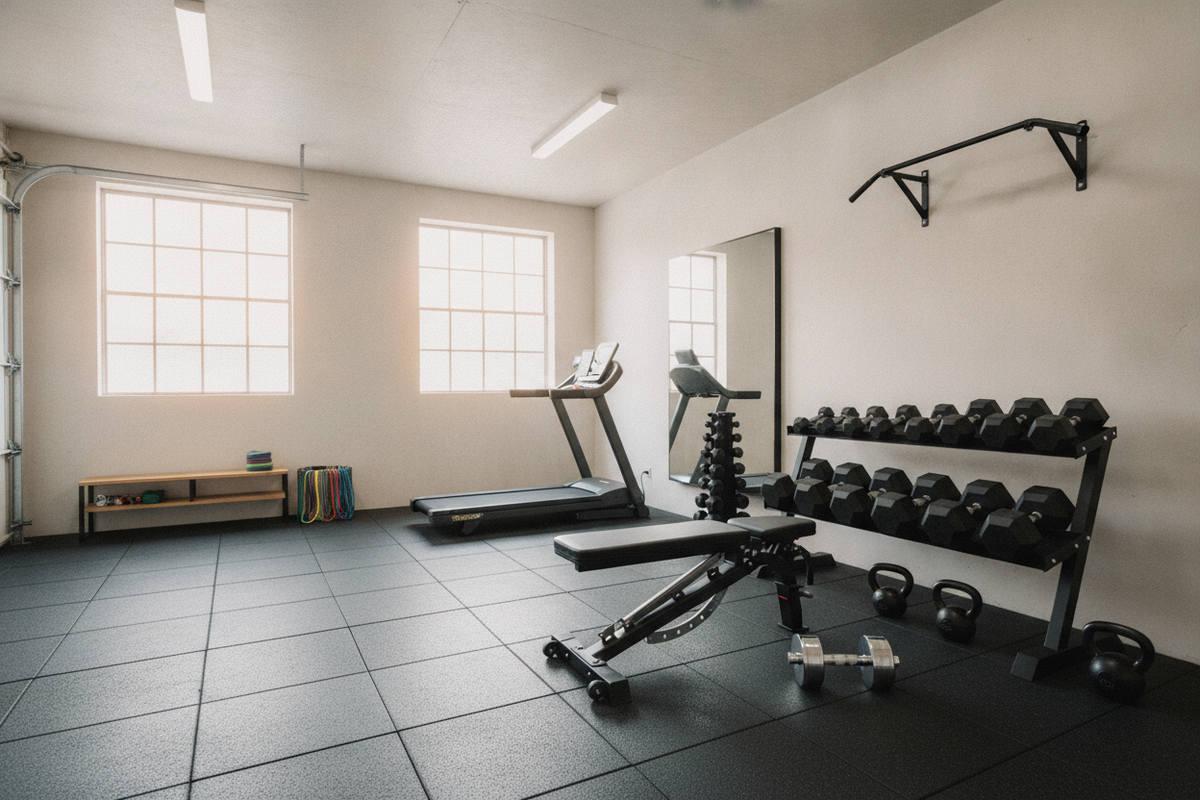
A durable, high-density exercise surface provides crucial joint protection by attenuating landing forces during jump roping, agility drills, or bodyweight intervals. High-grip textured surfaces prevent slipping when moving quickly between stations. Selecting durable flooring and complementary accessories from a reputable training collection helps protect your subfloor against dropped gear and ensures a secure foundation during tired, post-lift transitions.
Common Programming Pitfalls to Avoid
To get the most out of a ten-minute cardio finisher without interfering with your strength progress, avoid these common mistakes:
- Starting with Excessive Intensity: Spiking your heart rate instantly after lifting heavy weights can lead to technique breakdown and dizziness. Always use the first minute or two as an acclimation phase.
- Ignoring Footwear Suitability: If you lift in rigid, flat-soled powerlifting shoes or bare feet, switch to supportive footwear or choose low-impact modalities like stationary cycling that do not stress foot mechanics.
- Neglecting Post-Workout Hydration: Combining heavy lifting with cardio increases sweat rate; replenish fluids and electrolytes immediately following the session.
- Compromising Recovery: If you feel central nervous system exhaustion or joint ache, treat the ten-minute window as a light walk rather than forcing high-intensity intervals.