Your Range of Motion is Ruining the Best Workout Build Muscle Plan
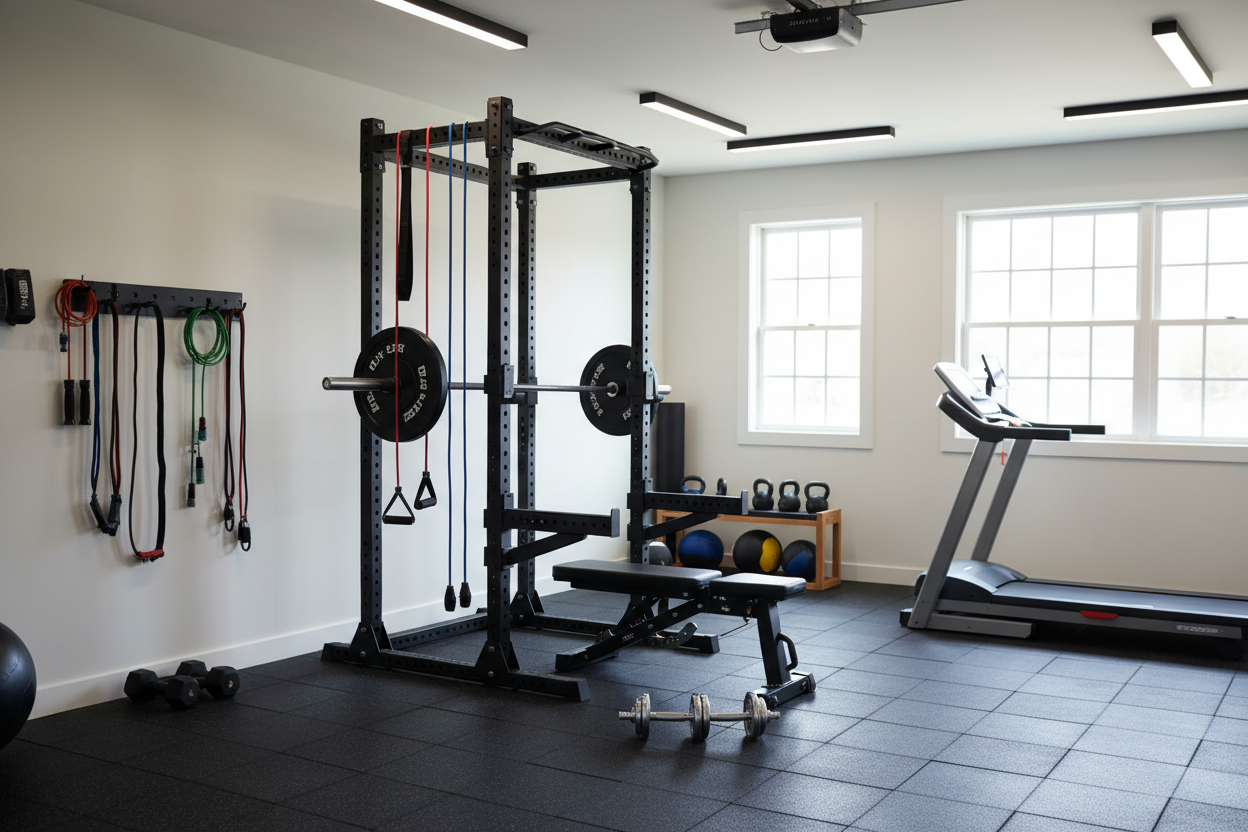
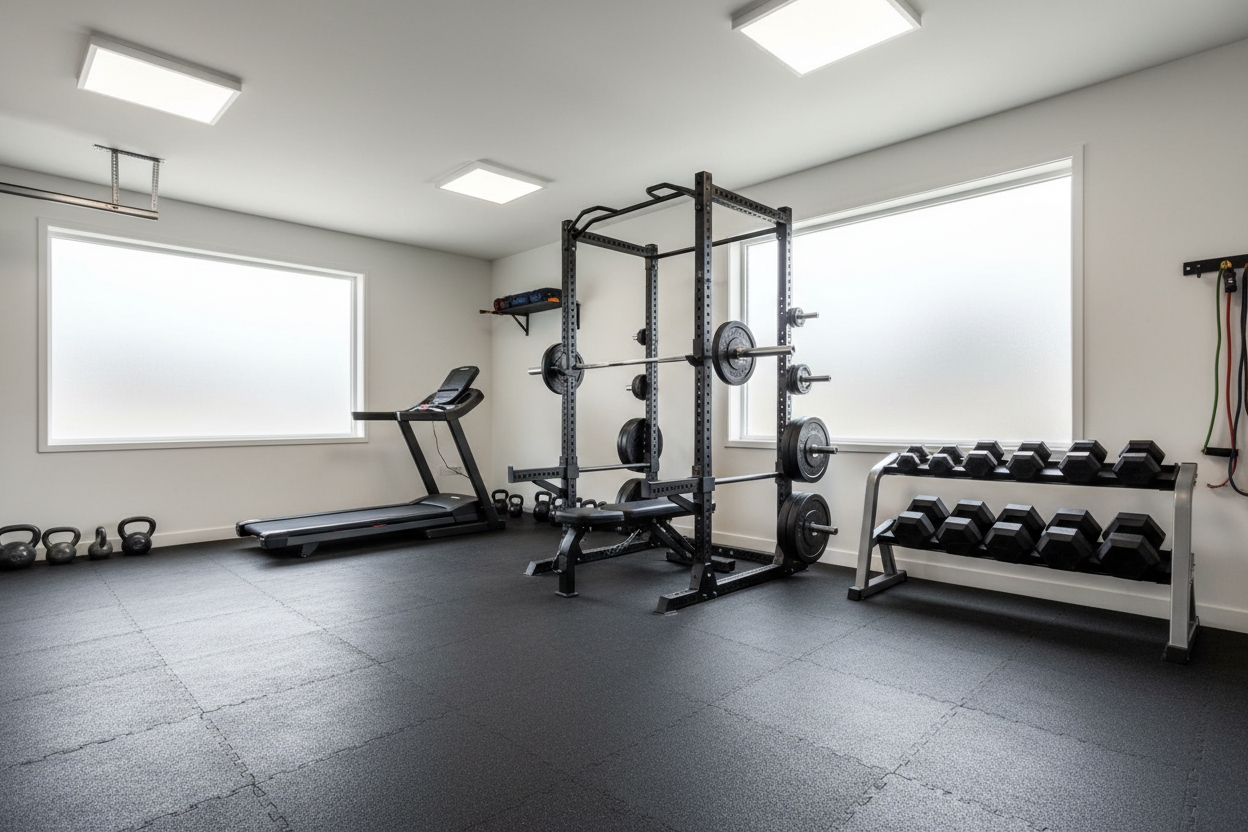
I spent three years obsessed with 'perfect' form. I made sure every bench press rep locked out until my elbows clicked and every squat looked like a textbook illustration. I was following what I thought was the best workout build muscle plan, but my physique was stuck in neutral. My garage gym was full of high-end gear, yet I looked like I barely lifted.
The problem wasn't my consistency or my caloric intake. It was my range of motion. I was chasing the 'squeeze' at the top of the movement and completely ignoring the most violent biological trigger for growth: the deep, agonizing stretch at the bottom. If you want to stop spinning your wheels, you need to stop worrying about the lockout and start living in the basement of your lifts.
Quick Takeaways
- Muscle grows significantly more when challenged in its longest state.
- Locking out reps often shifts the load from your muscles to your joints.
- Pausing for 2 seconds at the bottom of a lift is the fastest way to break a plateau.
- Simple garage gym hacks like deficit platforms can double your hypertrophy potential.
Stop Trying to Make Your Reps Look Perfect
We’ve been lied to by the 'full range of motion' police. While moving a weight from point A to point B is the goal in powerlifting, it’s often the enemy of the best workout for gaining muscle. When you lock out a press or a leg extension, the tension leaves the muscle and settles into your joints and connective tissue. Your bones are literally holding the weight for you.
To trigger real growth, you need to keep the muscle under tension where it’s weakest. For most movements, that’s the 'stretched' position. If you’re doing chest flyes and you’re clinking the dumbbells together at the top, you’re just wasting energy. The real work happens when those bells are pulling your shoulders apart at the bottom. Start thinking of the top third of your reps as optional 'rest' periods you should probably avoid.
The Science of the Stretched Position (And Why It Hurts)
There’s a concept called stretch-mediated hypertrophy. In plain English: your muscles have sensors that freak out when they are loaded while fully lengthened. This mechanical tension signals the body to add new sarcomeres (muscle units) to protect itself. This is why a paused squat feels three times harder than a bounce-and-go rep—it’s the best training to gain muscle because it removes momentum and forces the fibers to do all the heavy lifting.
If you want to maximize this, you need gear that doesn't get in its own way. When I’m scouting the best home workout equipment, I look for dumbbells with a slim profile or benches that allow for a slight deficit. A massive, bulky adjustable bench might look cool, but if the padding is so wide it prevents your shoulders from retracting during a press, it’s actively stealing your gains.
How to Hack Your Garage Gym for Deeper Stretches
You don't need a $5,000 functional trainer to find the best workouts for building muscle. You just need to create 'deficits.' A deficit is simply increasing the distance the weight has to travel so your muscle stretches further than it would on flat ground. For pushups, this means putting your hands on two stacks of plates or a pair of parallettes so your chest can drop below your hands.
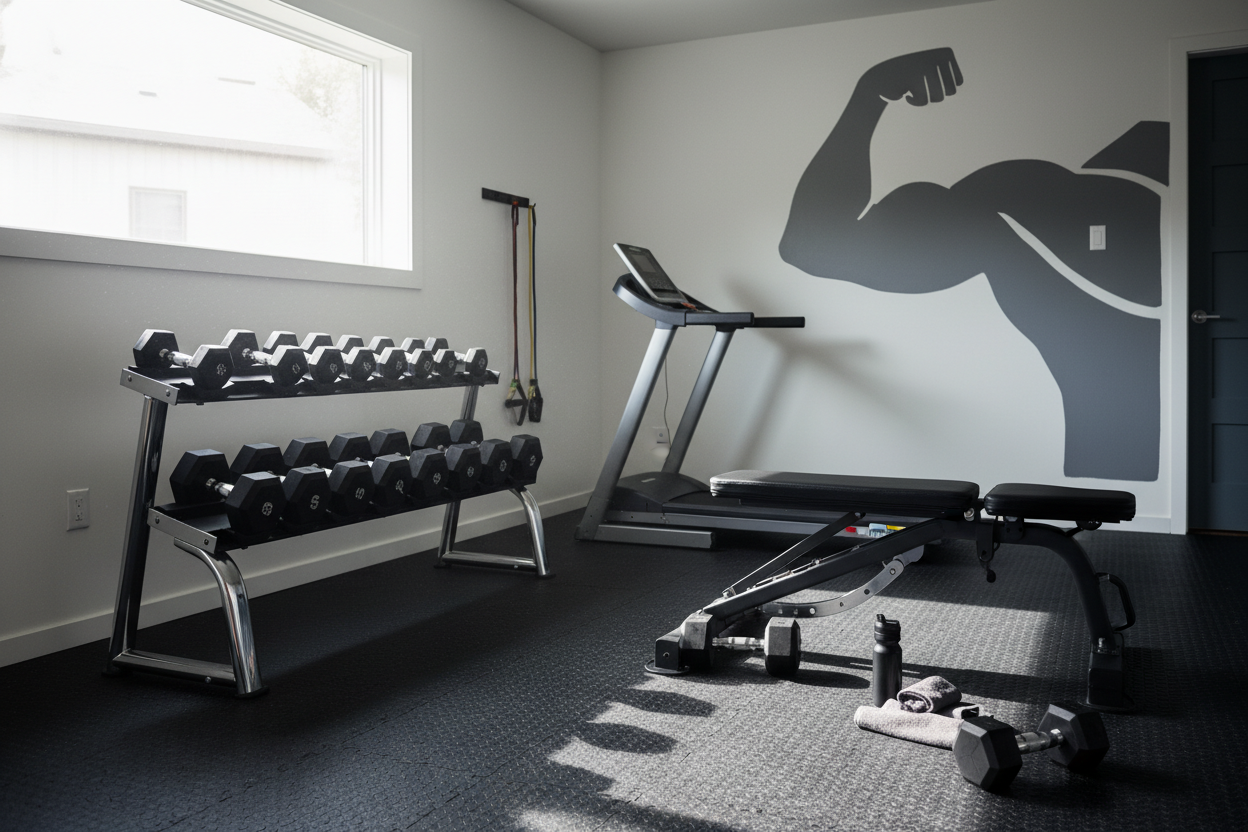
Safety is the only catch here. If you’re doing deficit lunges or pushups on a slick concrete floor, you’re asking for a trip to the ER. I use a high-density thick gym flooring to anchor my setups. You can even fold a portion of a heavy mat to create a makeshift 2-inch platform for your front foot. That extra two inches of depth on a split squat is the difference between a 'meh' leg day and walking like a newborn giraffe the next morning.
Swapping Out Your Staples for Stretch-Focused Variations
Most of the best workouts to build muscle mass are just standard lifts with one small tweak: more depth. Instead of standard lunges, try the deficit Bulgarian split squat. By elevating your front foot, you force the glute and quad into a much deeper stretch at the bottom. This is arguably the best leg workout to build muscle because it hits the fibers that standard squats often miss.
Other swaps include doing Romanian Deadlifts with a 2-second pause at the bottom (just above the floor) rather than traditional pulls. Or try 'long-length partials' on your cable rows. When you reach failure on full reps, keep doing the first half of the movement—the part where your lats are fully stretched—until you can’t move the weight anymore. It’s brutal, but it works.
Squeezing This Strategy Into Your Current Split
You don’t need to throw away your entire program to see results. The best gym workouts to gain muscle are usually built on a foundation of basic movements; you just need to sprinkle these stretch-focused techniques in. Start by picking one 'stretch' exercise per muscle group. For chest, it’s deep dumbbell flyes. For hamstrings, it’s the paused RDL.
Be warned: your recovery will take a hit initially. Training in the stretched position causes more muscle damage than standard training. Don't go 100% on day one. Start with lighter weights than you're used to, focus on the 2-second pause at the bottom, and let the hypertrophy take care of itself. You’ll find that you don’t need 20 sets per workout when the 5 sets you do are actually challenging the muscle where it counts.
My Personal Take: The 'Ego' Mistake
I used to ego-lift 100-lb dumbbells on the incline press. My range of motion was garbage—maybe 4 inches of movement. I felt strong, but my chest stayed flat. One day, I swallowed my pride, dropped to 60-lb bells, and focused on letting the dumbbells sink as low as my shoulders would allow. I paused for a count of two at the bottom. I couldn't even finish 8 reps. Within a month, my chest had more thickness than it did in the previous year of heavy, shallow pressing. Depth beats weight every single time.
FAQ
Does training in a deep stretch cause injury?
Only if you're ego-lifting. If you use a controlled tempo and weights you can actually handle, the deep stretch actually strengthens your tendons and improves long-term joint health. Don't bounce at the bottom; that's where the danger lies.
How long should I pause at the bottom?
A 1 to 2-second pause is the sweet spot. It’s long enough to kill the 'stretch reflex' (the bounce) and ensure the muscle is doing the work to move the weight from a dead stop.
Can I do this with every exercise?
Most, but not all. Exercises like the bench press, squat, and RDL are perfect for this. Movements where the tension drops off at the bottom—like a standing bicep curl—aren't as effective for stretch-mediated growth unless you're using cables or specific machines.