Your Over 50 Bodybuilding Routine Is Probably Wrecking Your Joints
I spent my morning moving a 300-lb rack across my garage, and my lower back let me know exactly how it felt about it. Ten years ago, I would have tossed those uprights around like toothpicks. Now? I need a coffee and a heating pad just to think about heavy triples. If you are still trying to run the same over 50 bodybuilding routine that you used in your twenties, you are not being 'hardcore'—you are just being stubborn, and your tendons are paying the price.
- Prioritize Tension: Switch from moving max weight to maximizing time under tension.
- Modify Depth: Stop chasing 'ass to grass' if your knees feel like they are filled with broken glass.
- Floor Matters: Standing on bare concrete is a recipe for chronic hip and lower back fatigue.
- Safety First: A cluttered gym is a hazard when your recovery time has tripled.
The Delusion of the 'Ageless' Garage Gym Lifter
We have all seen the guys on Instagram. Sixty years old, ripped to the bone, pulling 600 pounds. They are the outliers, not the rule. For the rest of us, an effective over 50 bodybuilding workout has to account for the fact that our collagen production has dipped and our recovery windows have stretched. I used to think that if I wasn't adding five pounds to the bar every week, I was failing. That is a young man's game.
The goal now is hypertrophy with longevity. You want to look like you lift without needing a cortisone shot to get out of bed. This means shifting your mindset from 'how much can I lift' to 'how well can I stimulate the muscle.' If you can get the same growth from a 40-lb dumbbell by slowing down the tempo and hitting a peak contraction as you would from a 60-lb dumbbell thrown with momentum, the 40-lb choice is the smarter play every single time. Your joints have a finite number of 'heavy' miles on them; stop wasting them on ego sets.
Why 'Ass to Grass' Might Be Destroying Your Knees
There is a weird dogmatism in the lifting community that says if your hip crease doesn't go below your knee, the rep doesn't count. That is fine if you are competing in a powerlifting meet. If you are a 52-year-old guy trying to keep his quads from disappearing, it is often bad advice. For many of us, that deep bottom position puts an immense amount of shear force on the patellar tendon and the meniscus.
I have found that cutting my squat depth just a few inches short of 'full' range keeps the tension firmly on the muscle belly and off the connective tissue. The same applies to pressing. Touching the bar to your chest on a bench press might be 'full range,' but if your shoulders scream for three days afterward, you are doing it wrong. Try stopping two inches above the chest. You will find that you can actually squeeze the pecs harder because you aren't relying on the 'bounce' or the stretch reflex of the tendons. You are bodybuilding, not weightlifting. The muscle doesn't know the range of motion; it only knows the mechanical tension it is under.
Concrete Floors: The Silent Killer of Older Joints
If you are training in a garage, you are likely standing on a four-inch slab of unforgiving concrete. It doesn't look like much, but when you are doing standing overhead presses or heavy lunges, that lack of give travels straight up your kinetic chain. Over a long over 50 bodybuilding routine, that micro-trauma adds up to nagging hip and ankle pain that most people blame on 'getting old.' It is actually just poor equipment choices.
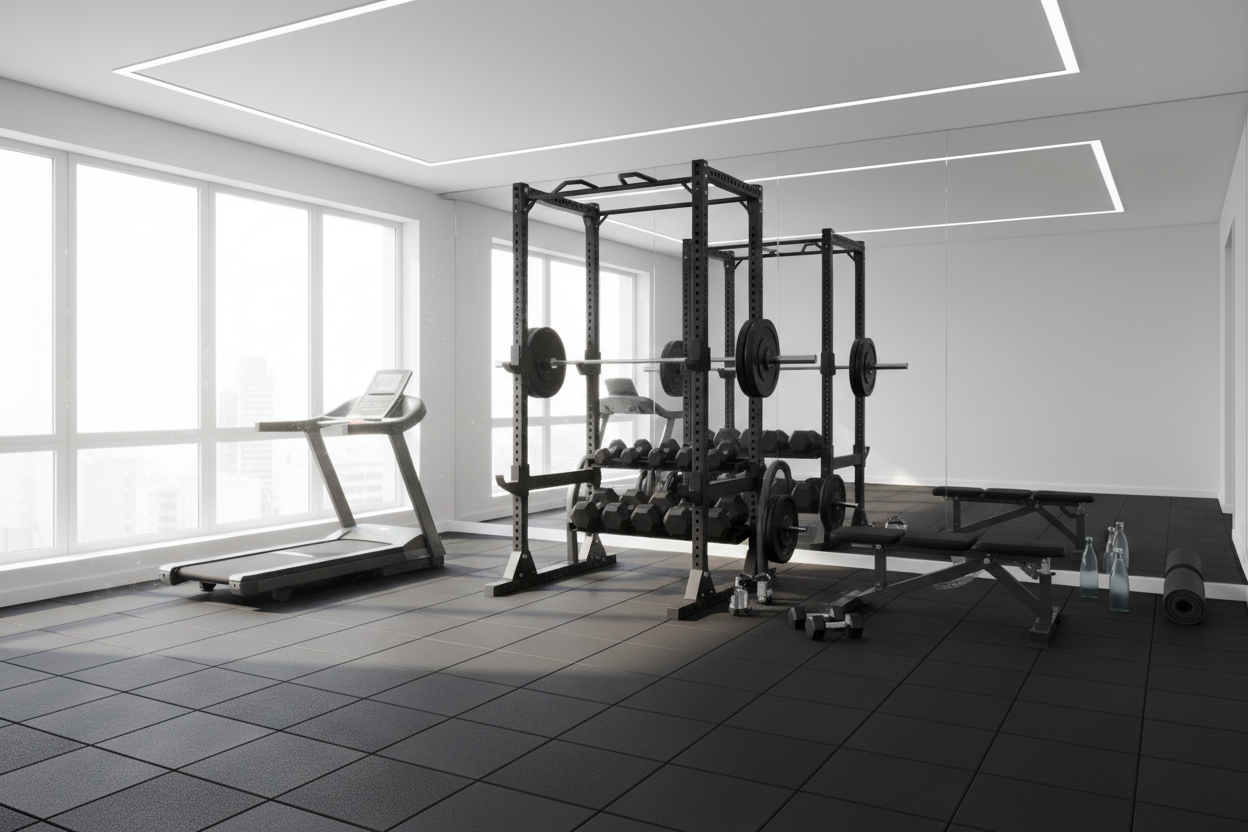
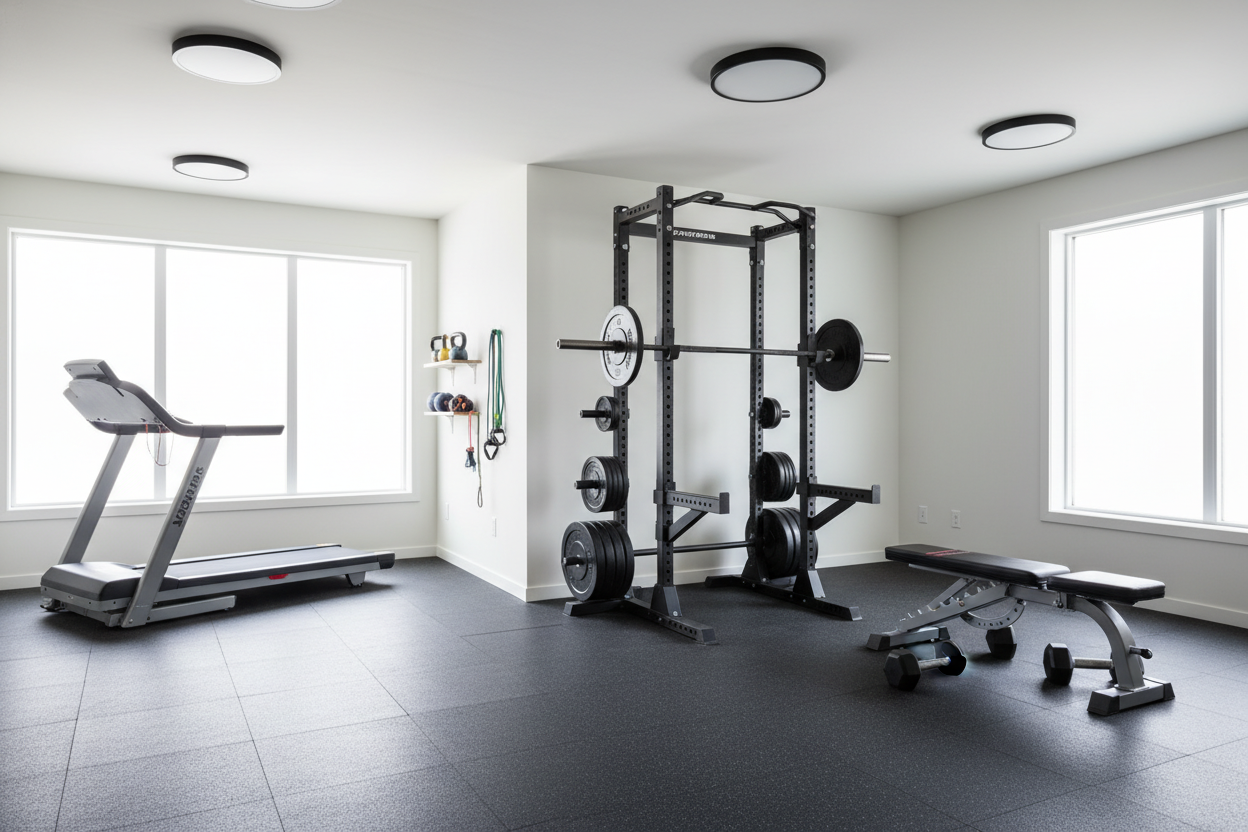
I finally got smart and laid down a high-density 6x8ft exercise mat gym flooring right over the slab. The difference in how my knees feel after a leg day is night and day. You don't need a soft, squishy surface—that is actually dangerous for stability—but you do need something that absorbs the shock of your weight plus the barbell. A solid rubber mat provides that critical layer of protection that lets you stand and grind out reps without feeling like your spine is being compressed into the earth.
Eliminating Clutter to Prevent Dumb Injuries
When you are 22, you can trip over a 25-lb plate, roll, and be back at the rack in five seconds. When you are 55, a trip can mean a torn labrum or a broken wrist. Recovery takes longer now, which makes 'stupid' injuries the biggest threat to your progress. A messy gym is a dangerous gym. I have seen too many guys leave their adjustable dumbbells scattered across the floor only to catch a toe during a set of walking lunges.
Organization isn't just about being neat; it is a safety protocol. If you don't have the cash for a high-end commercial rack, spend a Saturday building a rock solid DIY dumbbell rack to keep your gear off the floor. Clearing your walking paths and having a dedicated 'home' for every plate and collar ensures that the only thing you are stressing about during your workout is the weight on the bar, not where you are stepping.
The Minimum Effective Dose for Late-Stage Hypertrophy
The biggest mistake I see older lifters make is 'junk volume.' They do five sets of ten for four different chest exercises because that is what they read in a magazine in 1998. Your body can't recover from that much systemic stress anymore. You are better off doing two or three high-intensity, high-quality sets where you take the muscle close to failure, and then moving on. If you do it right, you don't need more.
Focus on big, stable movements and keep the total working sets per muscle group low. On days when you feel beat up, don't just sit on the couch. Use a 30 minute all over body workout as an active recovery session. It gets the blood moving and helps flush out the soreness without adding more load to your central nervous system. Bodybuilding over 50 is about being a sniper—hit the target with precision and get out before the counter-attack begins.
My Personal Take
I learned this the hard way. I spent three months hobbling around because I refused to stop doing heavy, deep back squats. I thought I was 'winning' by sticking to the old-school rules. My knees eventually got so inflamed I couldn't even walk up the stairs to my office. I had to swallow my pride, switch to Bulgarian split squats and hack squats with limited range, and guess what? My legs actually grew more because I could finally train them consistently without pain. Don't let your ego write checks your joints can't cash.
FAQ
Should I stop lifting heavy after 50?
No, but you should redefine 'heavy.' Aim for the 8-12 rep range where you reach technical failure. Going for 1-3 rep maxes is high risk for very little hypertrophy reward at this age.
How often should I train?
Most lifters over 50 do best with 3 or 4 days a week. You need those extra rest days for your central nervous system and tendons to recover. Quality over frequency is the secret.
Are machines better than free weights?
They aren't 'better,' but they are safer for high-effort sets. Machines provide stability, allowing you to push the muscle to failure without worrying about your stabilizing joints giving out first.