Your Muscle-Building Exercises for Beginners Are Way Too Slow
I remember unboxing my first set of adjustable dumbbells—the kind with the threaded collars that take an eternity to change. I spent my first six months in my garage meticulously counting to four on every single rep, convinced that 'time under tension' was the holy grail of growth. I wasn't getting bigger; I was just getting really good at moving slowly. If you are looking for muscle-building exercises for beginners, the biggest mistake you can make is thinking that 'slow and controlled' applies to the way up.
Stop training like you are moving through molasses. The guy in the $2,000 power rack next to you might look like he is struggling with a heavy bar, but I guarantee he is trying to move it as fast as humanly possible. Here is why your tempo is killing your gains.
- Intent is King: Trying to move the weight fast recruits more muscle fibers than moving it slowly on purpose.
- Fast-Twitch Focus: Your biggest, most explosive fibers only wake up when you demand speed or high force.
- Controlled Descent: Speed is for the way up; control is for the way down.
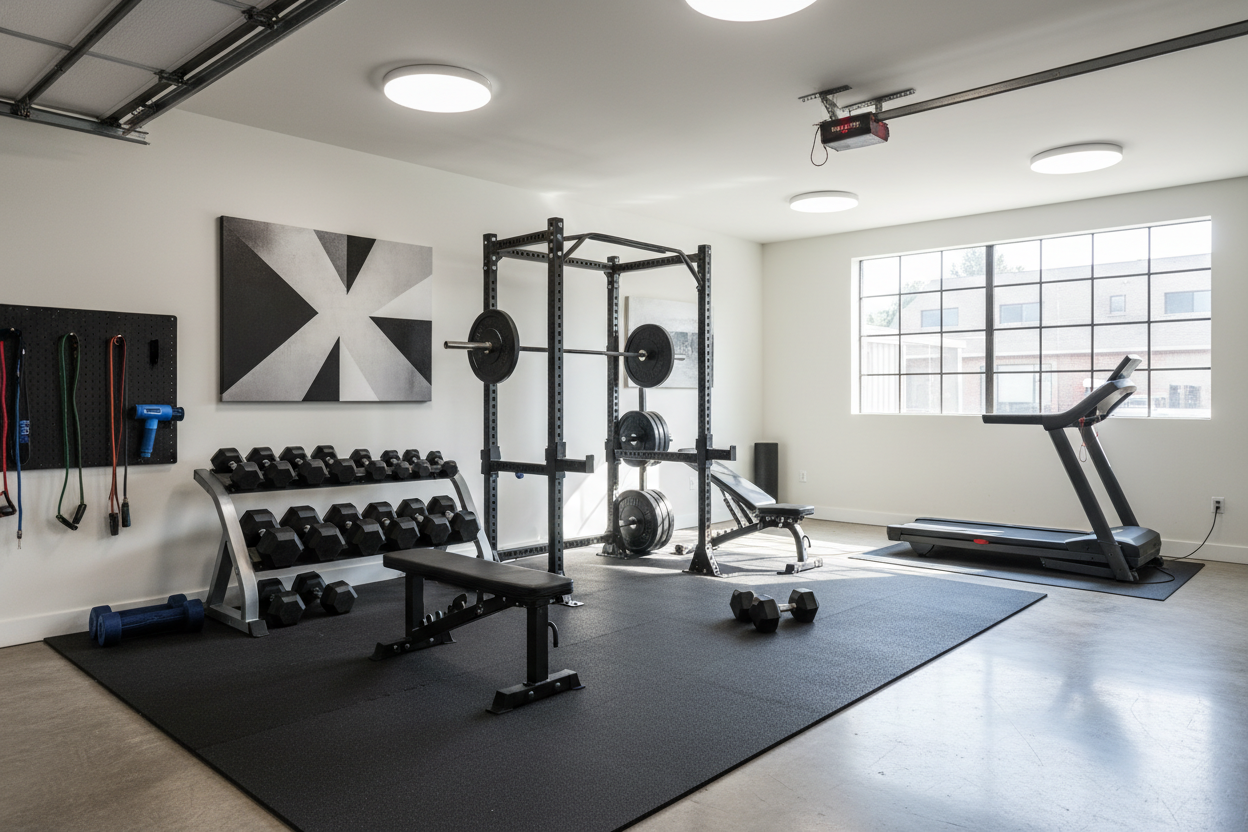
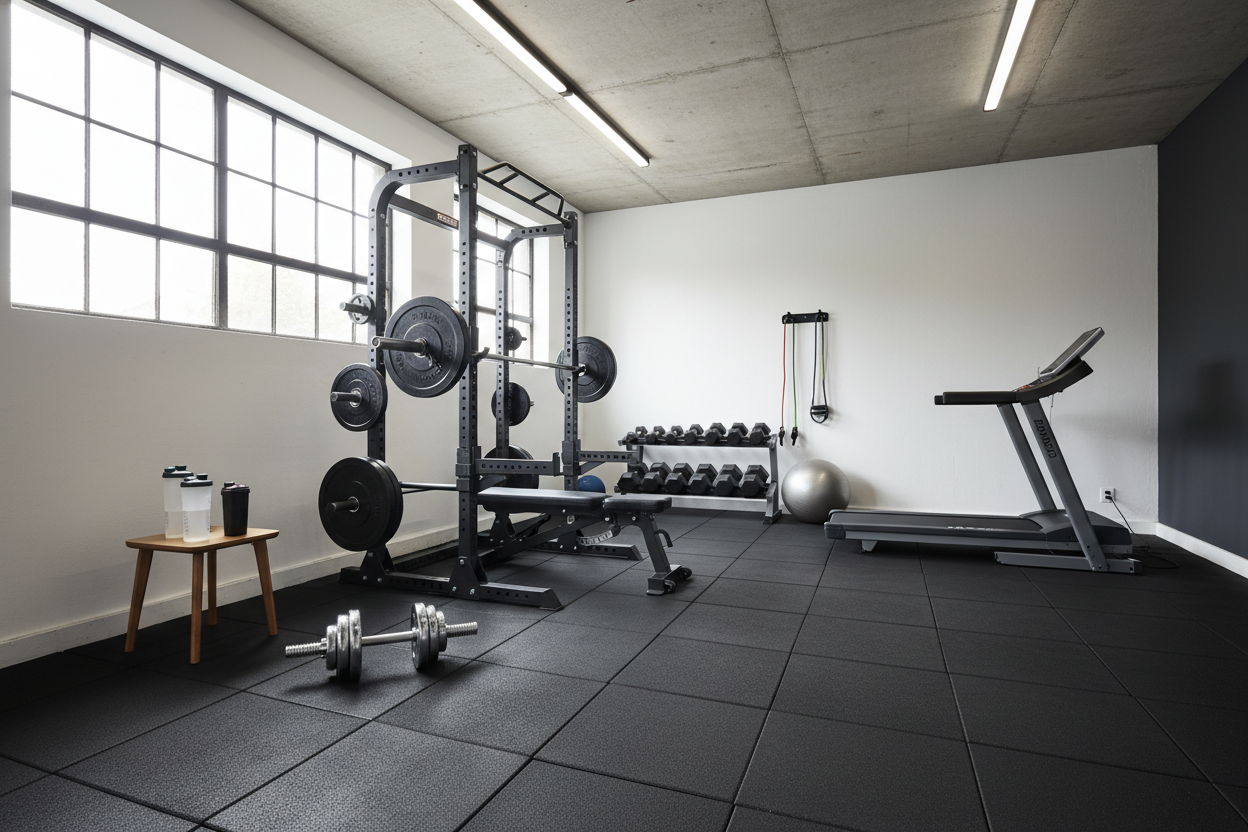
- Safety First: Explosive intent requires a stable base, like a high-quality 3/4-inch rubber floor.
The 'Time Under Tension' Trap Ruining Your Newbie Gains
The fitness industry loves a good buzzword, and 'Time Under Tension' (TUT) is the king of them. It sounds scientific. It makes you feel like you are doing more work because your muscles burn more. But here is the cold, hard truth: the burn is mostly metabolic waste, not a direct signal for growth. When you artificially slow down the lifting phase of a rep, you are actually reducing the amount of force your muscles have to produce.
Think about it. If you can lift a 25-lb dumbbell slowly, you aren't using all your strength. You are holding back. In the context of good muscle building workouts for beginners, holding back is the last thing you want to do. By slowing down the concentric (the 'up' part), you bypass your high-threshold motor units. Those are the fast-twitch fibers that have the most potential for growth. If you don't use them, they don't grow. Period.
I see beginners all the time doing 3-second concentric phases on a bench press with a 15-lb dumbbell. They are essentially doing cardio for their chest. You want mechanical tension, and the best way to get that is to recruit every single fiber available by trying to move that weight with some actual aggression.
Why Fast Reps Equal Bigger Muscles (The Science of Intent)
Let's talk about 'Concentric Intent.' This is the mental effort of trying to move a load as fast as possible. Even if you are squatting a weight that is so heavy the bar barely moves, the *intent* to move it fast is what matters. This tells your central nervous system to fire everything it has. It’s the difference between a flickering candle and a blowtorch.
Your muscle fibers are recruited according to Henneman's Size Principle. Small, weak fibers (Type I) are recruited first. As the demand for force increases, your body brings in the big guns (Type II). When you intentionally lift slowly, your body realizes it doesn't need the Type II fibers, so it keeps them on the sidelines. You are basically leaving half of your muscle mass in the locker room.
When you focus on explosive intent, you maximize the tension on the muscle from the very first inch of the rep. This is especially vital when you are using home gym gear like 52.5-lb max per handle adjustable dumbbells where you might eventually run out of weight. If the weight is 'light,' moving it fast is the only way to make it heavy enough for your brain to care.
Fast Concentric vs. Controlled Eccentric
Now, don't take this as a license to be a spaz. There is a massive difference between moving with intent and being reckless. You want a 'Fast Concentric' (the push/pull) and a 'Controlled Eccentric' (the lowering). If you just let gravity take the weight back down, you are skipping the part of the rep that actually causes the most muscle damage and subsequent growth.
Think of it like a spring. You control the weight down, loading the tension into your muscles and tendons, and then you explode upward like the spring was just released. This isn't about 'throwing' the weight; it's about 'driving' it. You should still be in total control of the path the weight takes, but the speed of that path should be as high as your form allows.
Applying Speed to Good Muscle Building Workouts for Beginners
How do you actually do this without ending up in an ER? It starts with exercise selection. When you are running good muscle building workouts for beginners, you want to focus on big, compound movements where you can safely move with power. For example, when you are performing effective chest workouts for building lean muscle fast, focus on the 'punch' at the bottom of a floor press or dumbbell bench. Don't just guide the weight up; drive it toward the ceiling like you're trying to throw it through the roof.
The same logic applies to your lower body. When mastering leg muscle building exercises for mass, like the goblet squat or the Romanian deadlift, the 'up' portion should be a violent hip drive. If you are squatting, imagine you are trying to jump, even though your feet never leave the floor. This explosive intent turns a standard squat into a full-body central nervous system wake-up call.
If you are using a 300-lb weight capacity bench in your garage, make sure you are planted. If your feet are sliding or your butt is wiggling, you can't transfer force efficiently. This is where the 'speed' becomes dangerous. If your base is solid, the speed is your best friend.
Setting Up Your Space to Train Explosively and Safely
You cannot train explosively on a slippery garage floor or a cheap, thin yoga mat. I’ve tried. I once tried to do explosive lunges on a bare concrete floor and nearly blew out my groin when my lead foot kept sliding forward. To move weight fast, you need a high friction coefficient between your shoes and the floor. You need to be anchored.
Investing in a large exercise mat for home gym use is probably the most underrated 'gains' purchase you can make. It’s not just about protecting the floor; it’s about force transfer. If your floor absorbs the energy you're trying to put into the bar, or if you're subconsciously holding back because you're afraid of slipping, you'll never hit that maximal fiber recruitment. A 6x8 ft space with a dense, non-slip surface allows you to plant your heels and drive with everything you've got.
The One Rep Speed Rule to Take Into Your Next Session
If you remember nothing else, remember this: Control the descent, dominate the ascent. Every single rep should be a battle to see how fast you can move the load without losing your technique. If the rep starts to slow down because you are tired, that is fine—that is 'grinding.' But never let the rep be slow because you *chose* to make it slow.
My Biggest Mistake
Early on, I fell for the 'super-slow' training craze. I was using a pair of 25-lb hex dumbbells and doing 10-second curls. I did this for three months. My arms didn't grow a millimeter, but my joints started aching from the weird, prolonged tension. The day I switched to heavy, explosive sets of 8, my shirts started fitting tighter within three weeks. I learned the hard way that muscles respond to tension and speed, not just boredom and burning.
FAQ
Is lifting fast dangerous for beginners?
Only if you lose form. The 'speed' should come from internal effort, not from swinging your body or using momentum to cheat the range of motion. Keep your joints in line and fire the muscles hard.
What if the weight is too heavy to move fast?
That is actually the goal. As long as you are *trying* to move it fast, your brain will recruit the same fast-twitch fibers as if the bar were actually flying. The intent is what triggers the nervous system.
Does this apply to isolation moves like curls?
Yes, but be careful with the tendons. You can still explode on a curl, but don't jerk your shoulders or lower back to do it. Focus the 'explosion' entirely in the target muscle.