Why Rushing the Descent Ruins Your Bodybuilding Program
I remember staring at my 50-pound adjustable dumbbells, realizing I had officially maxed them out on chest presses. I didn't have the cash for the expansion kit, and my ego was bruised because I couldn't 'go heavier.' I was bouncing the weights off my chest like they were rubber balls just to hit my rep targets. That is when I realized my bodybuilding program wasn't stalled because of my gear; it was stalled because I was being lazy on the way down.
- The Goal: Maximize mechanical tension without needing a 1,000-lb plate collection.
- The Method: Implementing a strict 3-to-4 second eccentric (lowering) phase.
- The Gear: High-traction flooring and stable benches are non-negotiable for slow reps.
- The Result: Significant hypertrophy gains using 30% less weight than your 'ego max.'
The Half-Rep Epidemic Destroying Garage Gym Gains
Walk into any commercial gym and you will see it: guys fighting for their lives to curl a barbell up, only to let it crash back down to their thighs in a fraction of a second. They are doing half the work and expecting a full result. If you are running a program for bodybuilding, you have to realize that a rep has two distinct parts. When you ignore the descent, you are essentially throwing away 50% of your growth potential. It is the equivalent of buying a high-end power rack and only using the pull-up bar.
In a home gym environment, this habit is even more toxic. Most of us don't have a full commercial run of dumbbells from 5 to 150 pounds. We have to make the most of what we own. When you rush the negative, you rely on momentum and gravity rather than muscle fiber recruitment. I have seen guys 'plateau' for months, thinking they need a new routine, when all they really need to do is stop treating the downward phase like a rest period. You aren't just 'resetting' for the next rep; you are supposed to be working.
Why Gravity Might Be Your Best Hypertrophy Tool
Let's talk shop about what is actually happening in your muscle. When you lift a weight (the concentric), your muscle fibers shorten. When you lower it (the eccentric), those same fibers are being stretched while under load. This stretching-under-tension is the 'secret sauce' for muscle growth. Science tells us that the eccentric phase actually causes more micro-tears in the muscle tissue than the lift itself. These tears are exactly what trigger the body to repair and grow back bigger.
This is one reason why home gym machines for strength and bodybuilding are so effective for isolation. A well-built cable tower or leg extension machine provides constant tension. Unlike a barbell, where the weight might feel 'light' at the bottom of a movement due to leverage, a cable machine keeps pulling against you. If you don't fight that pull on the way back, you are leaving gains on the garage floor. I personally found that slowing down my cable rows to a four-second negative did more for my back thickness than adding another 45-lb plate ever did.
How to Force Growth When Your Weights Feel Too Light
The biggest struggle for the home trainee is outgrowing their equipment. You might have a 300-lb capacity bar or a set of dumbbells that stops at 52.5 lbs. Once you can hit 12 reps easily, most people think they are done. They aren't. By applying a strict tempo, you can make 50 pounds feel like 80 pounds. This is called increasing the 'Time Under Tension' (TUT). Instead of a 1-second drop, try a 4-second descent. You will find that you can barely hit 6 reps with the same weight you used to toss around for 12.
Even if you have the top gym equipment for bodybuilding, your tempo dictates the actual mechanical tension. I used to think my squat was elite because I could move three plates. Then I tried a 5-second eccentric squat. I collapsed at 185 pounds. It was a wake-up call. My muscles weren't strong; my momentum was. By slowing down, you eliminate the 'bounce' at the bottom of the lift, forcing your muscles to do 100% of the work from a dead stop. This is how you build a physique that actually looks as strong as the numbers on your logbook.
The 3-Second Rule That Fixed My Lifts
I want you to try this for the next four weeks: The 3-Second Rule. On every single exercise—from bench press to bicep curls—count 'one-thousand-one, one-thousand-two, one-thousand-three' on the way down. Do not cheat. If you can't maintain that tempo for the full set, the weight is too heavy. It is a brutal way to train, and your ego will take a hit when you have to strip plates off the bar, but the pump you get will be unlike anything you have experienced with 'speed reps.'
Building a Base That Supports Slow, Brutal Sets
Slowing down the eccentric phase puts a massive amount of stress on your stability. When you are moving fast, you can mask a lot of technical flaws. When you move slow, every wobble is magnified. If your bench is rocking or your feet are sliding, your nervous system will sense that instability and 'turn off' your power to protect you. You cannot produce maximum force on an unstable surface.
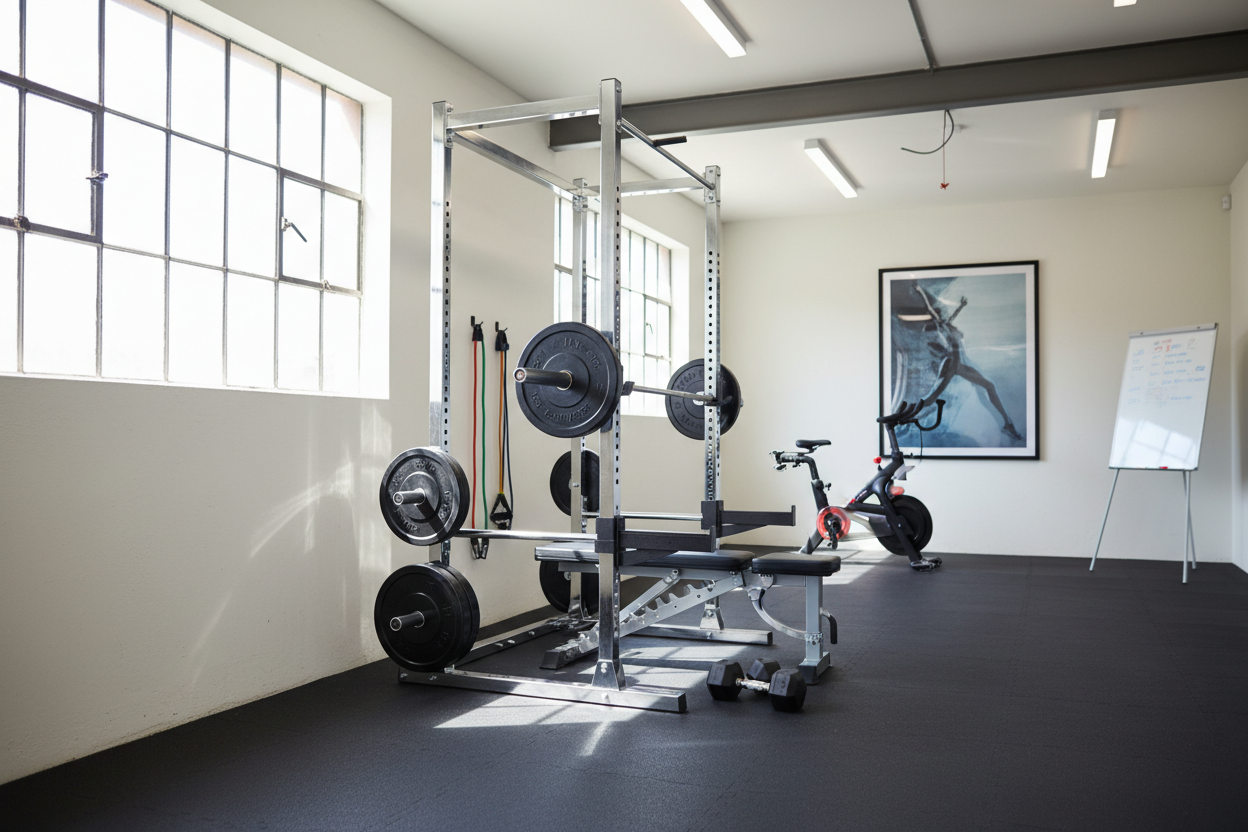
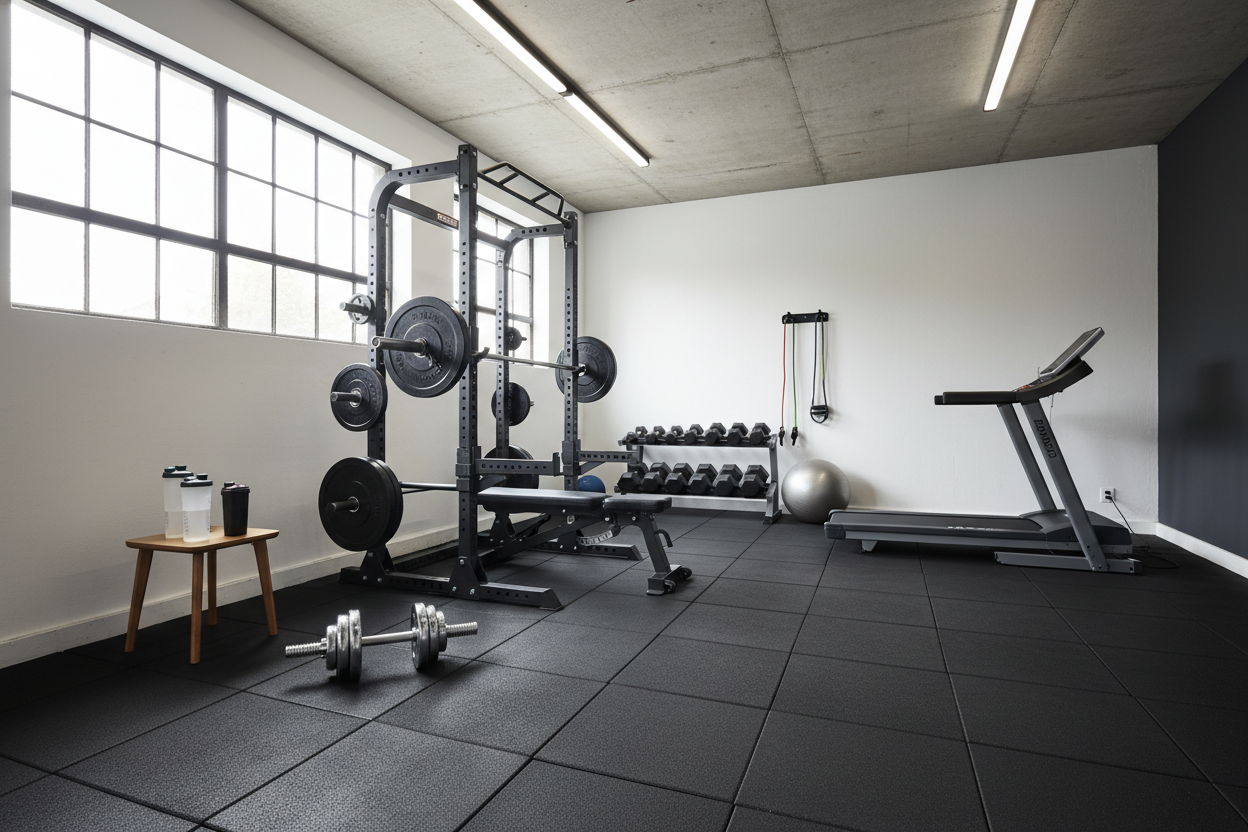
This is why I tell people that a large exercise mat for home gym is a performance tool, not just floor protection. When you are doing an agonizingly slow Bulgarian split squat, you need your lead foot glued to the ground. If you are sliding on bare concrete or cheap, thin foam tiles, you will spend more energy trying not to fall over than you will building your quads. Invest in high-traction flooring so you can focus entirely on the burn of the eccentric phase.
Rebuilding Your Routine Around Tension, Not Just Weight
You do not need to scrap your entire workout plan to start seeing these results. Keep your current exercises, but rewrite your goals. Instead of 'Bench Press: 3 sets of 10,' write 'Bench Press: 3 sets of 8 with a 4-second negative.' You will likely have to drop your working weight by 20-30%. That is fine. Your muscles don't have eyes; they don't know if the plate is iron or plastic, and they don't know the number stamped on the side. They only know tension.
Integrate this slowly. Start with your isolation movements—curls, lateral raises, and leg extensions. Once you master the discipline there, move it into your big compounds like squats and rows. You will find that your joints feel better, your mind-muscle connection is through the roof, and you are finally growing again without having to buy a single new piece of equipment.
Personal Experience: The Ego Check
I spent two years trying to bench 315 lbs. I hit it, but my shoulders felt like they were full of broken glass and my chest looked exactly the same as it did when I benched 225. I was 'elbow-flaring' and dropping the bar like a stone just to get it back up. I finally swallowed my pride, dropped back to 185 lbs, and focused on a 3-second descent with a pause at the bottom. My chest grew more in three months than it had in the previous two years. It turns out, I didn't need more weight; I needed more control.
FAQ
Will slow negatives make me more sore?
Yes. Eccentric loading is the primary driver of Delayed Onset Muscle Soreness (DOMS). Expect to feel like you have been hit by a truck for the first two weeks. It gets better as your body adapts.
Can I use this for powerlifting?
While powerlifters need to practice the specific 'up' phase of a lift, many use slow eccentrics in their off-season to build the structural integrity and muscle mass needed to support heavier loads later on.
Should I do this on every single set?
I recommend it for your 'working sets.' You can move faster on warm-up sets to get the blood flowing, but once the real work starts, the 3-second rule should be in full effect.