Your 'Most Effective Workout Routine for Building Muscle' Is Junk Volume
I remember standing in my garage at 11:30 PM, staring at a 300-lb barbell and wondering why my t-shirts still fit the same as they did last year. I was doing everything the magazines told me: five exercises per body part, four sets of twelve, chasing a pump until my skin felt tight. I was exhausted, but I wasn't growing. The truth is, the most effective workout routine for building muscle isn't about how much you can endure; it's about how much you can recover from.
- Junk volume is any set that doesn't provide a growth stimulus but still eats into your recovery.
- Mechanical tension—heavy weight through a full range of motion—beats metabolic 'burn' every time.
- If you can't beat your logbook from last week, you're likely doing too much.
- Stability is king; if your feet are sliding, your muscles aren't firing at 100%.
The Epidemic of Junk Volume in Home Gyms
In the quiet of a garage gym, it's easy to fall into the trap of 'more is better.' You've got the rack, the plates, and no one waiting for the bench, so you just keep going. This leads to junk volume—sets that feel hard because you're tired, but don't actually trigger hypertrophy. If you're doing five different variations of a dumbbell flye, you're not building a chest; you're just practicing getting tired.
Real growth happens when you stop equating sweat with progress. I've seen guys spend two hours in their gym and leave with less muscle-building stimulus than the person who did three heavy sets of squats and went inside to eat. Your body has a limited 'recovery checkbook,' and junk volume is a series of small, useless withdrawals that eventually leave you bankrupt.
Why More Sets Don't Equal More Mass
Muscle growth is primarily driven by mechanical tension. When you overload a muscle with a heavy load, those fibers have to adapt. Many lifters think they need to hit the muscle from 'every angle' with high reps, but they're really just creating metabolic fatigue. Fatigue feels like growth, but it's often just waste products building up in the tissue.
I eventually reached a point where I stopped adding weight to my workout and started focusing on the quality of every single rep. By stripping away the fluff and focusing on two or three high-intensity sets, I saw more progress in three months than I did in the previous year of high-volume 'bro splits.' You don't need a dozen exercises; you need three that you can absolutely crush.
The 'Perfect Workout Routine to Gain Muscle' Myth
There is no magic sequence of exercises that unlocks growth. The perfect workout routine to gain muscle is simply the one that allows you to train with maximum intensity and recover before the next session. If you're chasing a specific 'pro split' but your form is breaking down by the second exercise, the routine is failing you. Execution and proximity to failure are the only metrics that truly matter.
How to Audit Your Current Lifting Program
Take a hard look at your training log. If you see exercises where the weight hasn't moved up in a month, or where you're just 'getting the reps in,' that's junk. Audit your program by identifying the 'Big Movers'—your squats, presses, and rows. Everything else should be secondary. If an accessory movement is making you too tired to progress on your main lifts, cut it.
I often point people toward a streamlined Body-Solid workout routine as a baseline. It focuses on the fundamentals: heavy compounds and enough recovery time to actually let the muscle repair. When you simplify, you can put 100% of your energy into the sets that actually move the needle, rather than 60% energy into a dozen mediocre sets.
Protecting Your Base When Pushing to True Failure
To see real results, you have to push sets to within one or two reps of total failure. This is dangerous and ineffective if your environment is unstable. I've tried doing heavy Bulgarian split squats on a slick concrete floor, and my focus was 90% on not slipping and 10% on my quads. That's a wasted set.
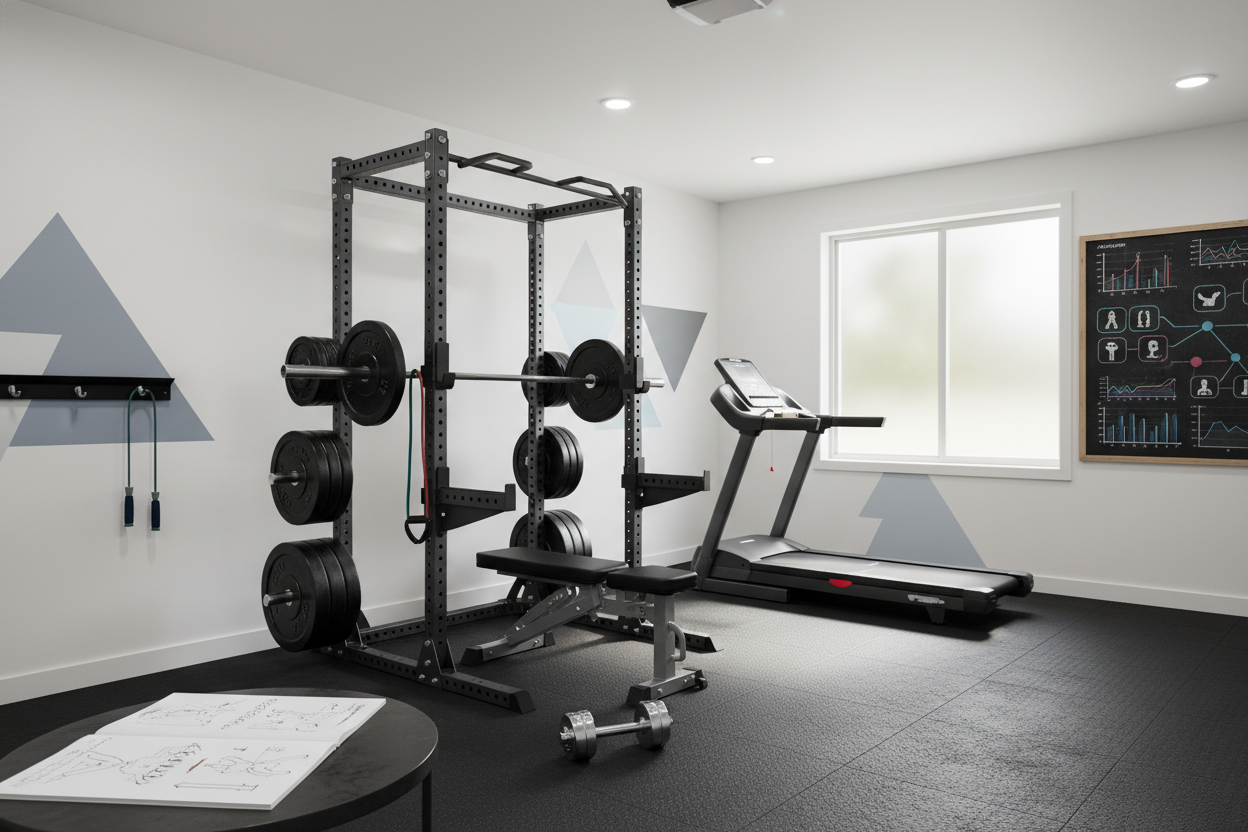
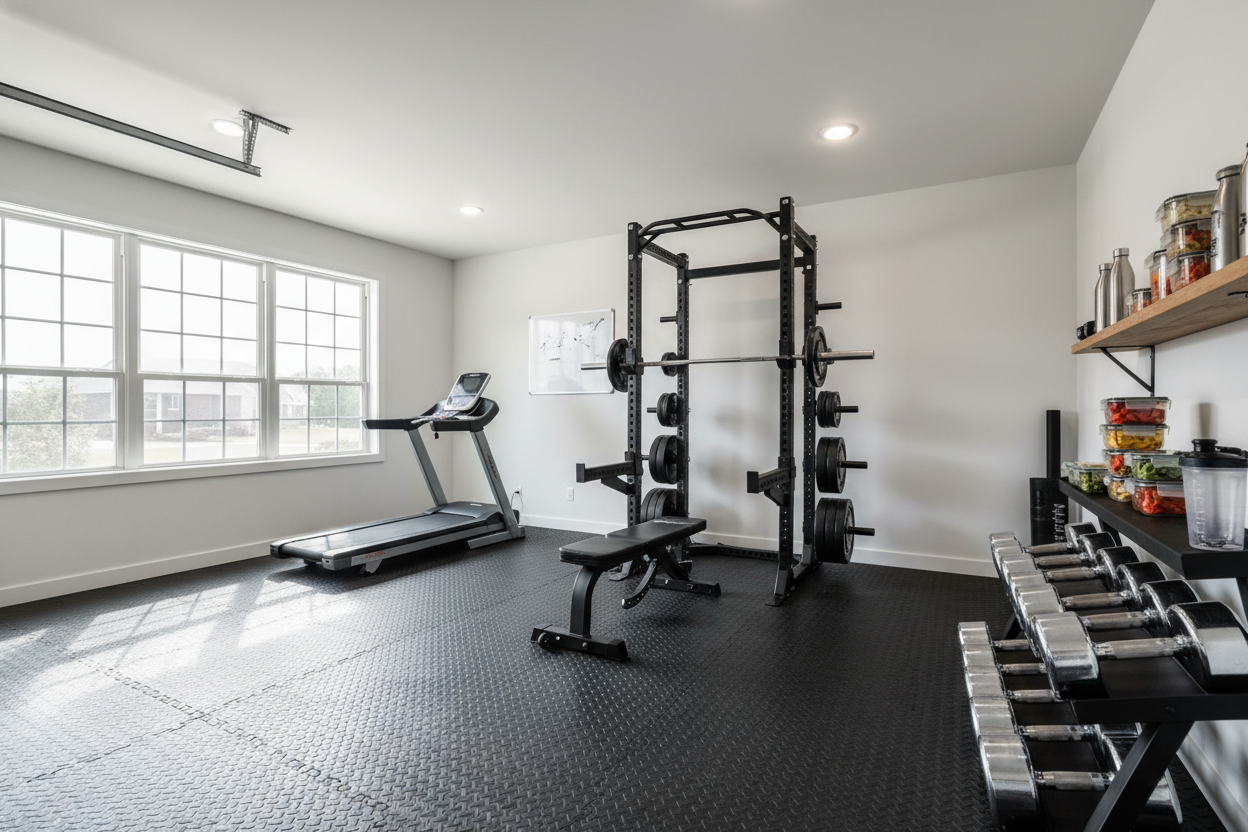
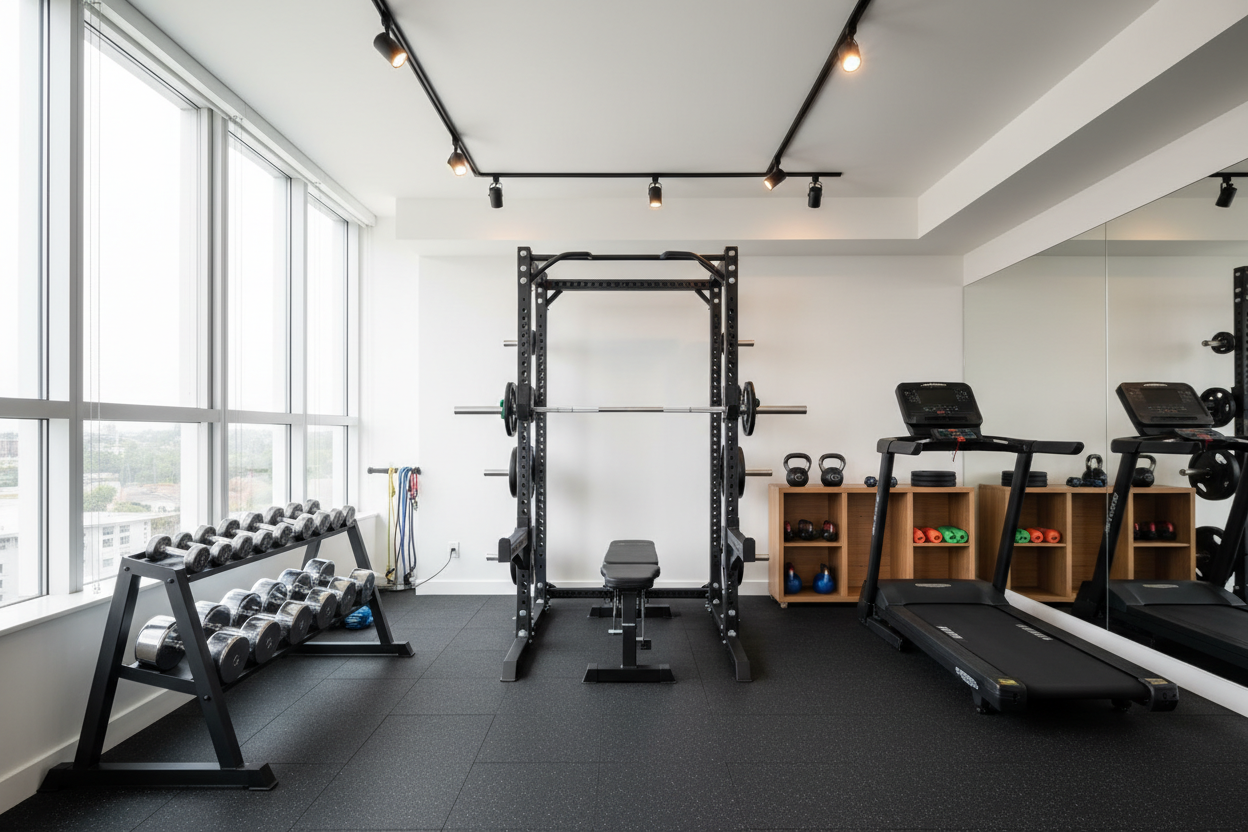
Investing in high-quality gym flooring for home workout setups isn't just about protecting the subfloor; it's about creating a high-traction environment where you can exert maximum force. If your feet are locked in, your nervous system feels safe enough to recruit every available muscle fiber. Don't let a $50 savings on flooring be the reason your $500 squat session fails.
A Bare-Bones Framework You Can Start Tomorrow
Stop overcomplicating it. A solid framework for a garage gym lifter is a 3 or 4-day split. Each session should have one primary compound lift, one secondary compound, and maybe two isolation movements. That’s it. If you can’t get the job done in 45 minutes, you’re likely talking too much or doing too much junk. You can find more structured versions of this in our workout hub, but the core principle remains: intensity over quantity.
My 2-Hour Mistake
A few years back, I convinced myself that more volume was the only way to break a plateau. I was spending two hours every night in my garage, hitting 25+ sets per workout. I was constantly sore, my joints ached, and I was perpetually irritable. It wasn't until I cut my volume by 50% and focused on beating my previous weight or reps on every single set that my physique finally changed. I learned the hard way that you can train hard or you can train long, but you can't do both.
FAQ
How do I know if a set is 'junk volume'?
If you aren't within 2-3 reps of failure and the weight is light enough that you're just 'going through the motions' without intense focus, it's junk. Delete it.
Can I build muscle with only 3 days a week?
Absolutely. For most natural lifters, 3 days of high-intensity full-body or upper/lower training is superior because it allows for maximum recovery and systemic growth.
Should I ever do high reps?
High reps are fine for isolation work (12-15 reps), but they should still be taken to near failure. The rep range matters less than the effort you put into the final few inches of the movement.