How to Build Real Muscle With a Body Solid Workout Routine
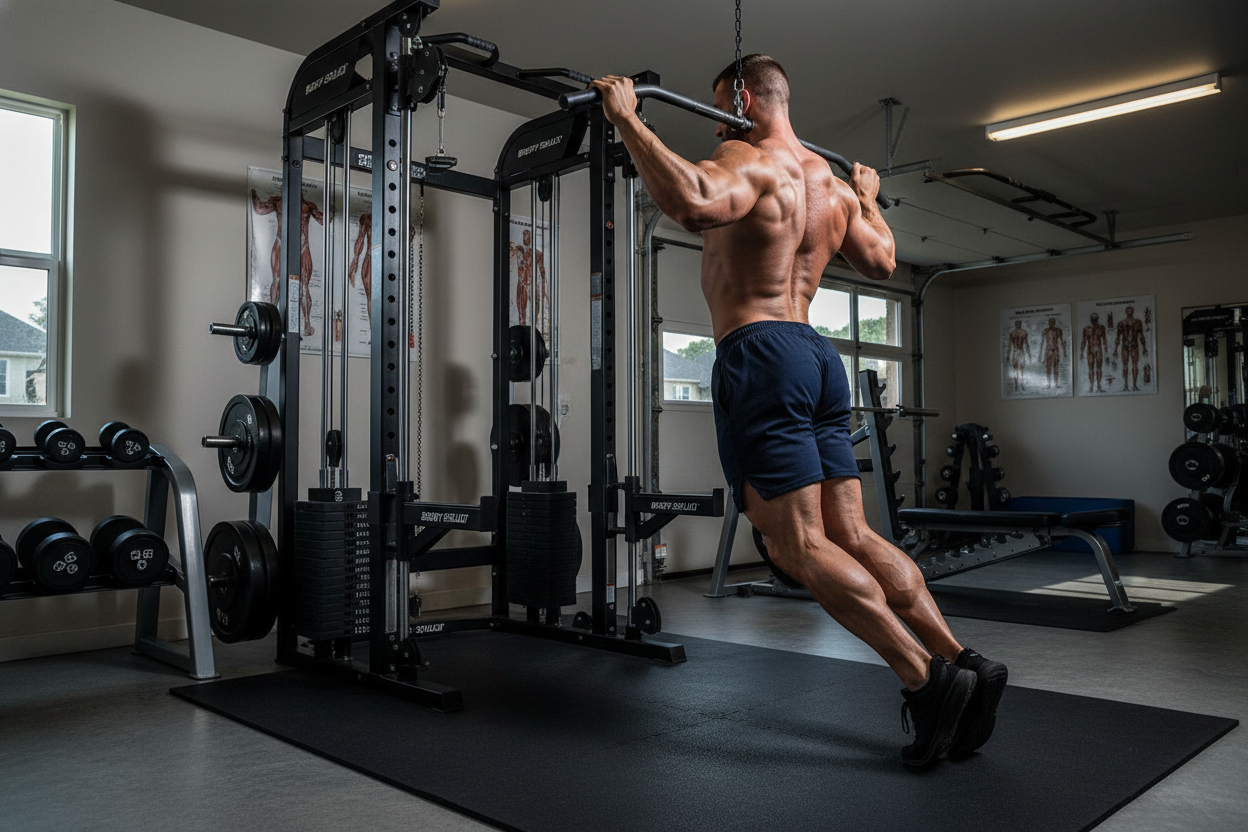
You invested in the equipment. It’s sitting in your garage or spare room, looking sturdy and capable. But having the machine is only half the battle; knowing how to extract results from it is the other. Many home gym owners stall because they treat their multi-station machine like a clothes hanger rather than a tool for hypertrophy. A proper body solid workout routine requires understanding constant tension and mechanical advantages, not just moving a pin up and down the weight stack.
Key Takeaways
- Focus on Time Under Tension (TUT): Machines stabilize the weight for you, so you must create intensity by slowing down the eccentric (lowering) phase.
- Use an A/B Split: To minimize changing attachments, alternate between two full-body sessions rather than isolating single muscle groups.
- Micro-loading is Essential: Weight stacks often jump by 10-15 lbs. Use magnetic fractional plates or "gym pins" to bridge the gap.
- Volume over Ego: Cable-driven machines have friction. Focus on higher rep ranges (12-15) for metabolic stress rather than low-rep maxes.
Understanding the Machine Advantage
Body Solid equipment, particularly their G-series or EXM lines, utilizes a fixed plane of motion. Critics often say this ignores stabilizer muscles. They aren't entirely wrong, but they miss the point.
Because the machine stabilizes the load, you can push your muscles to absolute failure safely without a spotter. You can't drop a barbell on your neck here. This allows you to train with a level of intensity that is often too risky for solo free-weight training.
The A/B Full Body Routine
We are going to structure this as two alternating workouts. Perform these 3 to 4 days a week (e.g., Mon, Wed, Fri). This setup ensures you hit every muscle group frequently while allowing recovery.
Workout A: Push & Quad Focus
This session emphasizes the "pushing" muscles of the upper body and the anterior chain of the legs.
- Seated Chest Press: 3 sets of 12 reps. (Focus on a hard squeeze at the peak).
- Leg Extensions: 3 sets of 15-20 reps. (Do not lock out your knees; keep tension constant).
- Cable Tricep Pushdowns: 3 sets of 15 reps. (Keep elbows glued to your sides).
- Seated Shoulder Press (if available) or Front Delt Cable Raise: 3 sets of 12 reps.
- Cable Crunches: 3 sets of 20 reps.
Workout B: Pull & Hamstring Focus
Here we target the posterior chain. This is crucial for posture and balancing out the pressing movements.
- Lat Pulldowns: 3 sets of 12 reps. (Drive elbows down, not back).
- Seated Cable Rows: 3 sets of 12 reps. (Allow a slight stretch in the lats at the bottom).
- Standing Leg Curls: 3 sets of 15 reps. (Control the weight on the way down; don't let the plates slam).
- Face Pulls (using high pulley): 3 sets of 20 reps. (Vital for shoulder health).
- Bicep Curls (low pulley): 3 sets of 12 reps.
The "Friction Factor" and Progressive Overload
One nuance of using a cable-based home gym is drag. The pulleys and guide rods create friction. This means 50lbs on a Body Solid machine might feel heavier than a 50lb dumbbell, especially on the negative portion of the rep.
To progress, don't just jump to the next plate. That 10lb jump is massive for smaller muscle groups like delts or biceps. Instead, increase reps first. Once you can hit the top of the rep range (e.g., 15 reps) with perfect form, then increase the weight and drop the reps back down to the bottom of the range (e.g., 10 reps).
My Personal Experience with Body Solid Workout Routine
I spent about six months training exclusively on a Body Solid EXM3000LPS when I didn't have access to a commercial facility. The glossy brochures show people smiling while lifting, but here is the gritty reality I learned quickly: silicone spray is your best friend.
I remember vividly doing leg curls and feeling this stuttering, jerky motion halfway through the rep. It wasn't my muscle failing; it was the guide rods being dry. The friction was actually robbing me of a smooth contraction. Once I started wiping down the chrome guide rods with silicone lubricant every Sunday, the feel changed completely. Also, there's a specific "clack-thud" sound the weight stack makes if you let it drop too fast—my family hated it. I had to learn to control the eccentric phase (lowering the weight) purely to keep the noise down, which accidentally ended up being the best thing for my muscle growth because it forced a strict 3-second negative on every single rep.
Conclusion
Your home gym is capable of building a physique that rivals anything built in a commercial club. The secret isn't in the variety of machines, but in the consistency of your effort. Stick to the A/B split, respect the friction of the cables, and keep those guide rods lubricated. The results will follow the resistance.
Frequently Asked Questions
Can I build significant muscle mass with just a Body Solid machine?
Absolutely. Muscle tissue responds to mechanical tension and metabolic stress. It does not know if that tension is coming from a rusty iron plate or a selectorized weight stack. As long as you apply progressive overload (increasing volume or weight over time) and eat enough protein, you will grow.
How often should I change my routine?
Avoid "muscle confusion." Stick to the routine outlined above for at least 8 to 12 weeks. You need to perform the same movements repeatedly to improve your neurological efficiency and track strength gains accurately. Changing exercises too often masks whether you are actually getting stronger.
What if the weight jumps are too big for me?
This is a common issue with stack machines. If the jump from 40lbs to 50lbs is too heavy, you can buy 2.5lb or 5lb "adder weights" (often magnetic or pin-loaded) that sit on top of the stack. Alternatively, increasing the number of repetitions or slowing down the rep speed is a valid form of progression without adding weight.