Your High-Volume Workout Plan for Muscle Gain Is Keeping You Skinny
I remember scrolling through forums at 2 AM, looking at 6-day bodybuilding splits and wondering why my 155-pound frame hadn't budged in six months. I was doing everything the pros did—20 sets for chest, drop sets until my vision went blurry, and enough cable flyes to power a small city. I was exhausted, my joints ached, and I looked exactly the same. I thought I was a 'hardgainer,' but the truth was simpler: I was outworking my ability to recover.
If you're a naturally thin guy trying to follow a workout plan for muscle gain designed for someone with professional-grade genetics (or 'assistance'), you're spinning your wheels. Your body has a limited capacity to repair tissue. When you blast it with high volume, you aren't building muscle; you're just digging a recovery hole so deep you'll never climb out. To actually grow, you have to do less—but do it with significantly more violence.
Quick Takeaways
- High volume is the enemy of the naturally skinny lifter.
- Limit yourself to 2 'work sets' per exercise to maximize recovery.
- Focus on heavy, multi-joint movements that allow for micro-loading.
- If you aren't getting stronger in the 6-10 rep range, you aren't growing.
Why Doing More Sets Is Actually Shrinking You
The hardgainer dilemma is a recovery issue, not a 'lack of effort' issue. Most guys think that if three sets are good, six sets must be better. In reality, for the average trainee, those extra sets are just 'junk volume.' They create systemic fatigue without providing any additional stimulus for growth. You end up burning the very calories your body needs to actually build new tissue.
Standard magazine routines are built for people whose full-time job is recovery. For us, a 3 week workout plan to gain muscle often works best when we slash the volume by half. I found that by paring down my routine to the absolute essentials, my weight finally started moving north. You have to stop training like a pump-chaser and start training like you're trying to survive a heavy barbell.
The Biological Bare Minimum You Actually Need
Hypertrophy is a survival response. Your body doesn't want to carry extra muscle—it's metabolically expensive. To force its hand, you need to provide a reason. That reason is high-intensity tension. Science shows us the 'minimum effective dose' is surprisingly low. You only need 1 or 2 brutal, high-effort sets taken near failure to trigger the growth mechanism.
This muscle gain training plan isn't about being lazy; it's about being efficient. Instead of doing five mediocre sets of bench press, you do one warm-up and then two sets where you fight for every single micro-inch of movement. When you cap your volume, you can put 100% of your mental and physical energy into those few sets. That is where the growth happens.
Building the Low-Volume Setup in Your Garage Gym
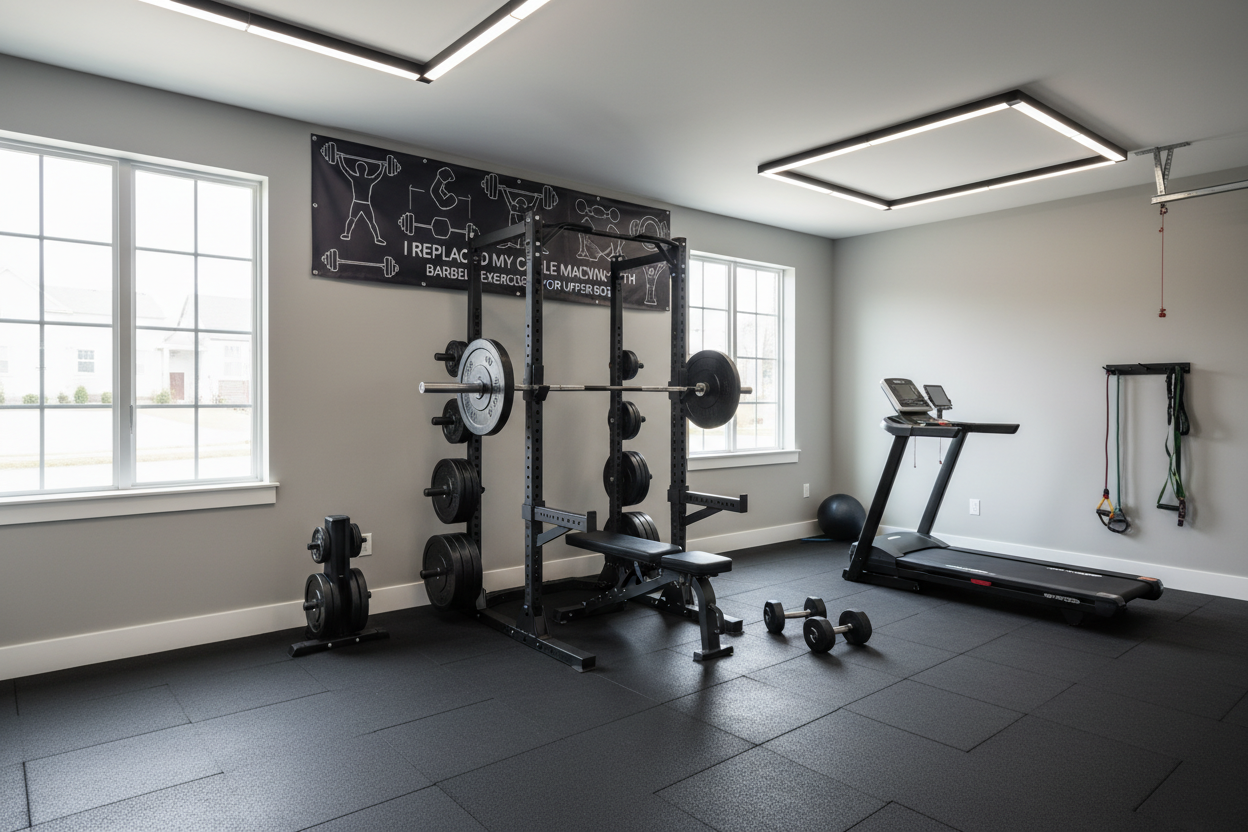
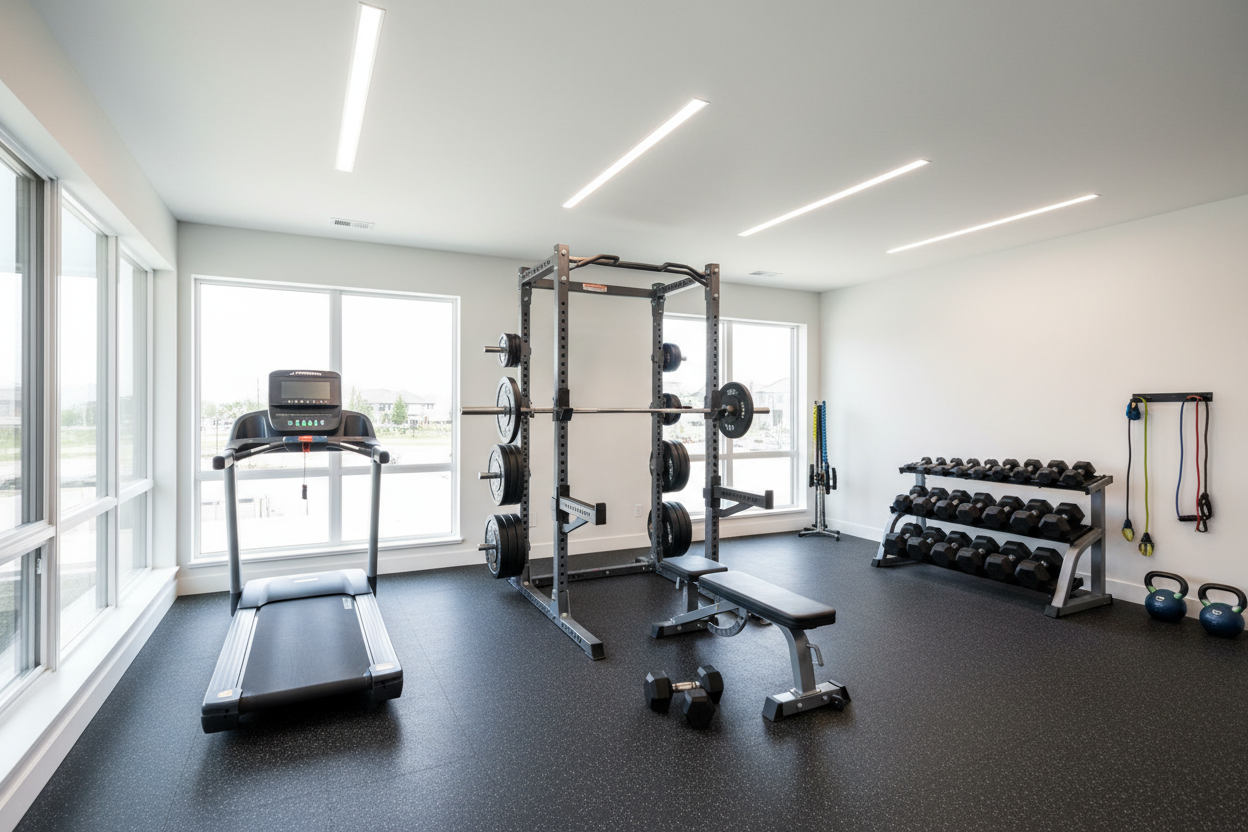
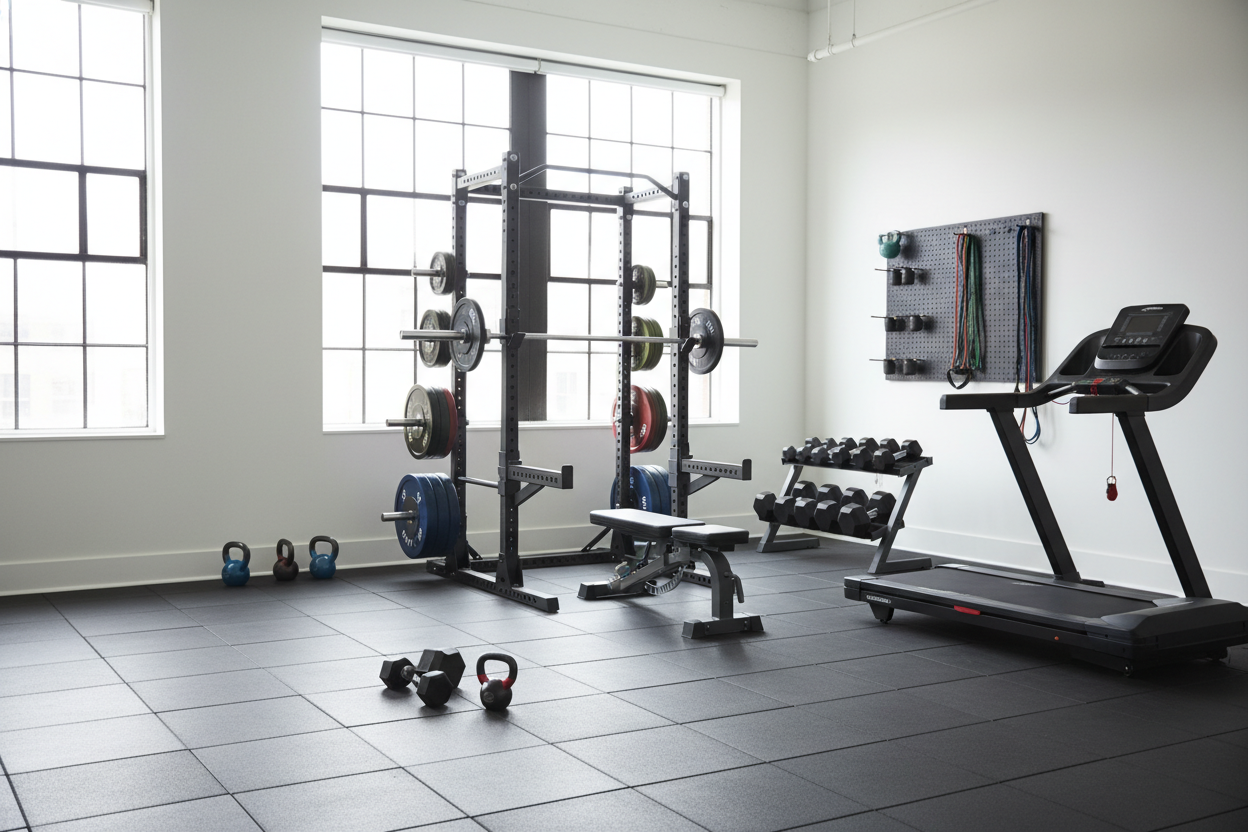
You don't need a 20-machine circuit. You need a rack, a barbell, and a floor that won't give way when you're grinding out a heavy set of squats. Exercise selection is key here. Every movement in a men's workout plan to gain muscle should be a 'big' lift—squats, deadlifts, overhead presses, and rows. These movements recruit the most muscle mass and trigger the largest hormonal response.
Stability is everything when you're pushing near failure. I've seen guys try to lift heavy on cheap, squishy foam mats, and it's a recipe for a snapped ankle. Invest in proper gym flooring for home workouts to ensure you have a non-slip, dense base. If your feet are sliding during a max-effort row, you aren't building muscle; you're just practicing a circus act. You need to be bolted to the ground.
The Hardest Part: Leaving the Gym While You Still Feel Fresh
The psychological trap is real. You'll finish your two sets of heavy presses, and because you aren't 'totally crushed,' you'll feel the urge to add 'just one more.' Don't do it. The goal isn't to leave the gym on a stretcher; it's to stimulate the muscle and then get out so you can eat and sleep. This is what is the best workout schedule to build muscle: the one you can actually recover from.
I eventually stopped adding weight to my workout just for the sake of ego and focused on the quality of the contraction and the recovery. Growth happens while you're sitting on your couch, not while you're doing your 15th set of lateral raises. If you leave the gym feeling like you could have done a little more, you've done it right. That 'extra' energy is what your body uses to build the muscle.
The Exact 3-Day Schedule for Hardgainers
This weekly workout routine to build muscle follows a Monday/Wednesday/Friday split. It is a workout plan to gain muscle and weight that respects your central nervous system. Keep total working sets under 10 per session. If you're doing it right, 10 sets will feel like a marathon.
- Monday: Squats (2 sets), Overhead Press (2 sets), Weighted Pull-ups (2 sets).
- Wednesday: Deadlifts (1 set top effort), Incline Bench (2 sets), Barbell Rows (2 sets).
- Friday: Romanian Deadlifts (2 sets), Dips (2 sets), Chin-ups (2 sets).
Stick to the 6-10 rep range. If you hit 10 reps on both sets, add 2.5 to 5 pounds next time. This a workout plan to gain muscle only works if you are obsessively chasing progressive overload. For more specific templates and gear recommendations, check out our home gym workout hub for workout plans for men to build muscle.
Personal Experience: My 12-Pound Breakthrough
I spent three years weighing 160 lbs. I was convinced I had 'bad genetics.' I was training 5 days a week, doing 25 sets per workout. I finally got fed up and cut my training down to 3 days a week, 6 sets per workout. I felt like a fraud for the first two weeks because I wasn't 'sore.' But then, my bench press went up 10 pounds in a week. Then my squats jumped. Four months later, I hit 172 lbs. My biggest mistake was adding 'arm days' back in too early. As soon as I added that extra volume, my strength gains stalled. Less is truly more when you're a hardgainer.
FAQ
Is 3 days a week really enough to grow?
Yes. For a natural lifter, protein synthesis usually lasts 36-48 hours. A 3-day full-body or alternating split ensures you're hitting muscles frequently enough while providing 48-72 hours of total systemic rest between sessions.
Should I go to complete failure on every set?
Go to 'technical failure'—the point where you can't do another rep with perfect form. Don't engage in 'cheating' reps that put your lower back at risk. One rep shy of total collapse is the sweet spot.
What if I don't feel sore the next day?
Soreness (DOMS) is a terrible indicator of growth. It usually just means you did something your body wasn't used to. The only indicator that matters is if the weight on the bar is going up over time.