Your First Week Working Out Will Ruin You (Here's the Fix)
I remember my first time back in the rack after a two-year hiatus. I loaded the bar to what I used to 'warm up' with, banged out five sets of ten, and felt like a god for exactly forty-five minutes. Two days later, I had to use the bathroom counter to lower myself onto the toilet because my quads had turned into literal wood. It was a stupid mistake that nearly made me quit before I even started. If you are planning your first week working out, stop looking at high-intensity interval timers and start looking at the exit sign.
Quick Takeaways
- Stop every set when you feel like you have 4 or 5 reps left in the tank.
- Prioritize movement quality over the amount of weight on the bar.
- Invest in a dedicated floor space before buying heavy iron.
- Consistency in month one is more valuable than intensity in week one.
The Wednesday Wall: Why Day Three Destroys Beginners
Monday is easy. You have the 'new year, new me' adrenaline pumping through your veins. You hit the gym, do way too many sets, and go home feeling accomplished. Tuesday you feel a little tight, but you push through a walk. Then Wednesday hits. This is the 'Wednesday Wall,' where Delayed Onset Muscle Soreness (DOMS) peaks and your central nervous system decides it hates you.
Surviving your first week in the gym isn't about how much you sweat; it's about managing fatigue so you actually show up for week two. Most novices quit by Wednesday because they treated Monday like an Olympic final. If you can't walk up a flight of stairs without groaning, you didn't 'work hard'—you just overreached. The goal of week one is to prime the pump, not drain the tank.
The 'Minimum Viable Dose' Strategy for Week One
You don't need a six-day PPL (Push/Pull/Legs) split right now. You need a two-day, ultra-light strategy. I tell people to do exactly 50 percent of what they think they are capable of. If you think you can do 20 pushups, do 10. If you think you can squat the empty bar, do bodyweight squats instead.
This isn't being lazy; it's being a tactician. Your muscles adapt quickly, but your tendons and ligaments take much longer to catch up. By keeping the volume low, you condition your joints without frying your nervous system. You want to finish your workout feeling like you could have done the whole thing over again. That 'leftover' energy is what fuels your motivation to return on Friday.
Why Your Floor is Better Than a Machine Right Now
Commercial gyms love machines because they are easy to explain, but they often lock your body into unnatural paths of motion. Before you start pulling pins on a selectorized stack, you need to master your own bodyweight. I've spent thousands on power racks and specialized bars, but the foundation of my training always comes back to the floor.
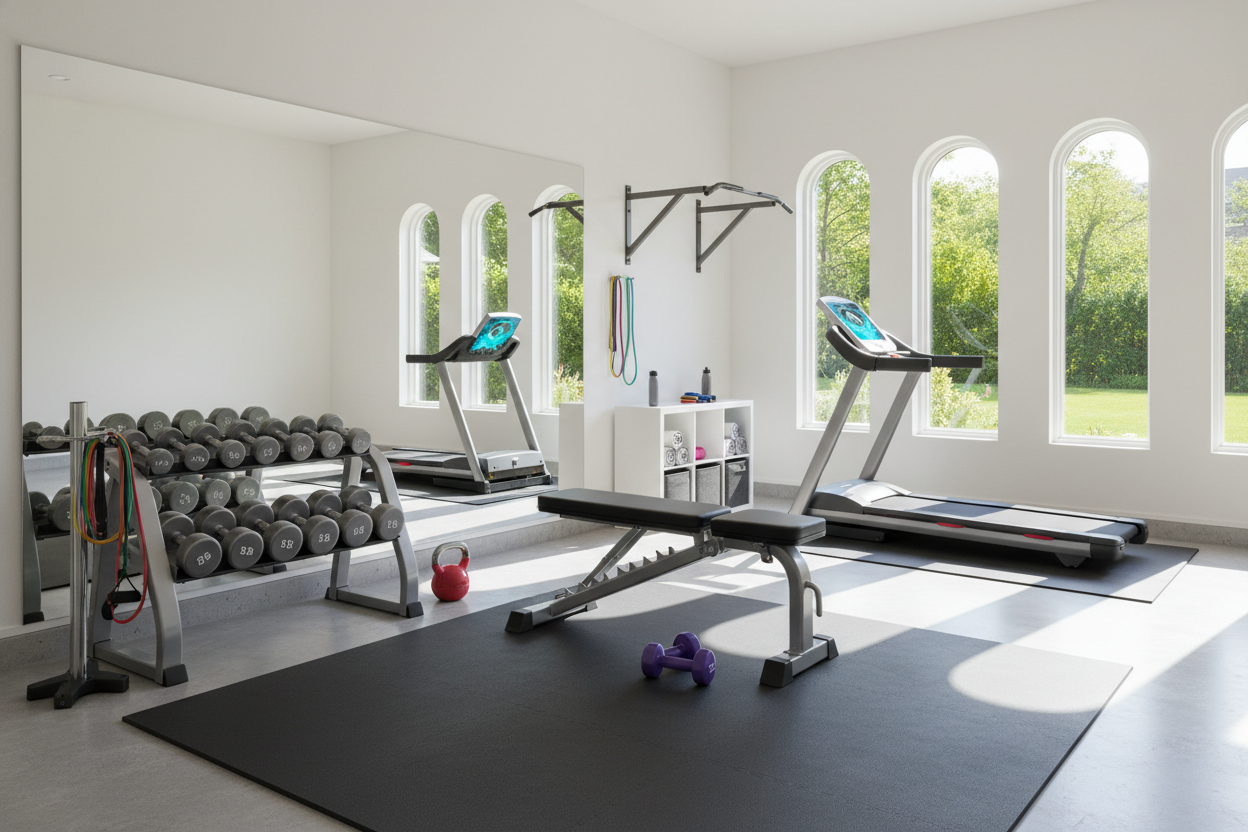
You need a dedicated, forgiving surface. Doing lunges or planks on cold, hard concrete or thin carpet is a recipe for joint pain. A high-quality large exercise mat for home gym use provides the shock absorption your knees and wrists need during this initial conditioning phase. I personally prefer a 6x8 exercise mat because it gives you enough room to move laterally without stepping off the padding. It turns a garage or a living room into a 'safe zone' where you aren't worried about slipping or bruising your tailbone during sit-ups.
Gearing Up Without Getting Ripped Off
The fitness industry wants you to believe you need a $3,000 smart bike and a full rack of dumbbells to start. They are lying. Your first week gym experience should be about minimalism. Don't go out and buy a full set of adjustable weights that go up to 90 lbs when you haven't even mastered a proper air squat yet.
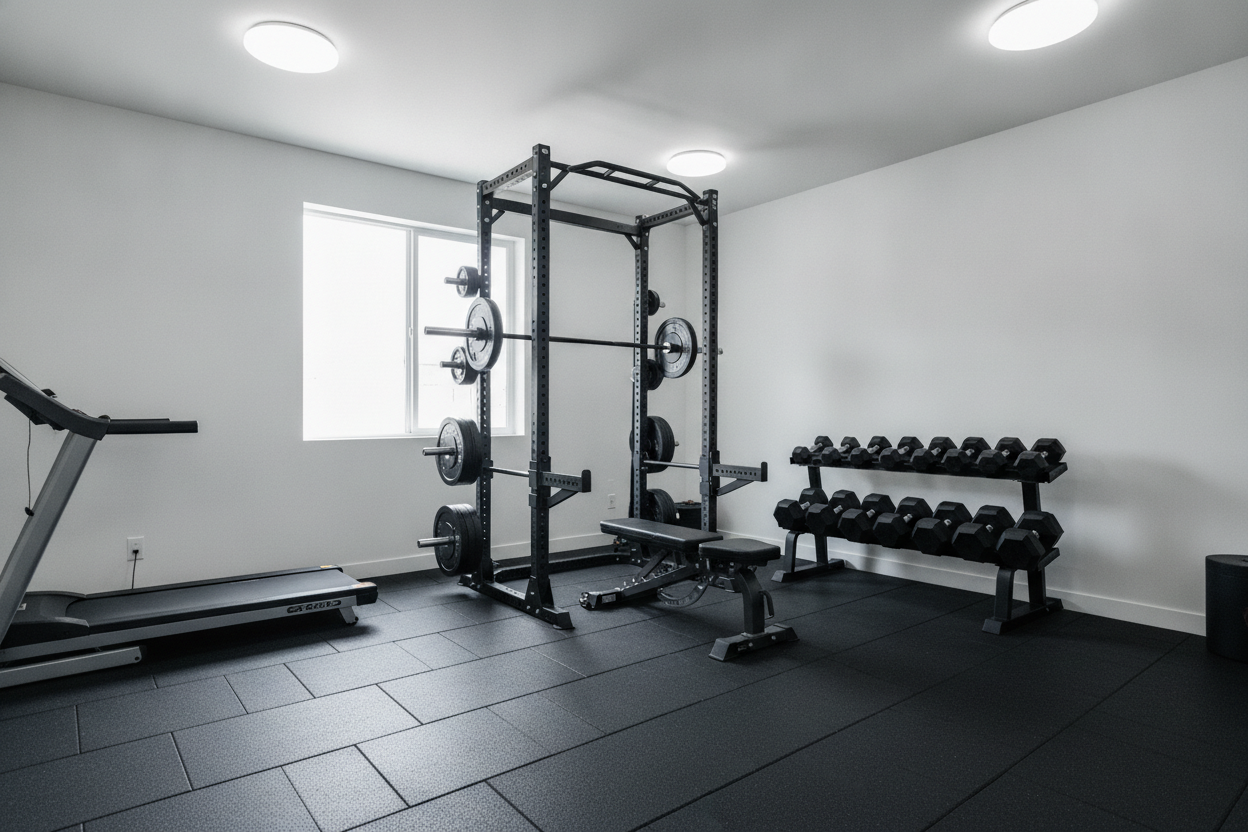
The first step in a gym for beginners is establishing the habit, not accumulating hardware. Focus on the basics: a good mat, a pair of shoes that don't hurt your arches, and maybe some light resistance bands. Once you've proven to yourself that you can stick to a schedule for 30 days, then you can look at how to build your first home gym with more permanent fixtures like a bench or a barbell. Buy quality once, rather than cheap junk twice.
Redefining a 'Good Workout'
We've been brainwashed by montage videos to think a workout only counts if you're collapsing on the floor afterward. That is garbage. A good workout in your first month is any session where you moved well and didn't injure yourself. If you leave the gym feeling like you could have done more, you did it perfectly.
That 'extra' energy is your secret weapon. It’s what prevents the Wednesday Wall from stopping your progress. You are playing the long game now. If you can survive the first seven days without the crippling soreness that makes you dread movement, you've already beaten 90% of the people who started on Monday.
Personal Experience: My $200 Mistake
Early in my lifting career, I bought a 'complete' weight set from a big-box retailer because it was cheap. The barbell was a two-piece bolt-together mess that flexed under 100 pounds, and the plates were filled with sand that leaked on my floor. I spent more time cleaning up grit and worrying about the bar snapping than I did actually training. I learned the hard way: if you're going to buy gear, buy the stuff that can actually take a hit. I eventually sold that junk for pennies and started over with a high-density mat and a real Olympic bar. Don't rush the purchase; rush the habit.
FAQ
How sore should I feel after day one?
You should feel 'aware' of your muscles, not 'pained' by them. If you can't straighten your arms or sit down without help, you did too much. Scale back by 30% next time.
Can I skip the mat and just use a towel?
You can, but you'll regret it. Towels slide on hard floors, which is a great way to pull a groin muscle. A dedicated 7mm or 9mm mat provides the grip and cushion necessary for safe movement.
Should I do cardio or weights first?
During week one, it doesn't matter. Just move for 20 minutes. If you're fresh, do some bodyweight movements. If you're tired, go for a brisk walk. Just don't sit on the couch.