Can't Reach the Top Shelf? Real Senior Upper Body Exercises
I remember watching my neighbor, a retired carpenter with hands like granite, struggle to put a simple box of cereal on the top shelf of his pantry. He’d spent forty years swinging hammers, but a few years of 'taking it easy' had turned his shoulders into rust. He was doing what most people recommend: sitting on a chair and waving 2-pound pink dumbbells around. It wasn't working. If you want to maintain your independence, you need senior upper body exercises that actually mimic the demands of a real life.
- Isolation moves like curls are secondary; functional patterns like pushing and pulling come first.
- Unilateral (one-sided) training is the secret to fixing the imbalances that cause falls.
- A firm, non-slip floor is more important for safety than a fancy weight bench.
- Progressive overload is for everyone—if the weight doesn't challenge you, your bones won't get stronger.
The 'Top Shelf' Test: Why Standard Routines Fall Short
Most upper body exercises for elderly trainees are designed for 'toning,' a word I’ve grown to hate. Toning doesn't help you push yourself up if you trip in the yard. It doesn't help you lift a 15-pound cast iron skillet out of a low cabinet. When we talk about an upper body workout for elderly adults, we need to stop thinking about muscles and start thinking about movements. Your body doesn't care about your biceps; it cares about its ability to reach, pull, and stabilize.
Standard seated routines often neglect the core and the back, focusing instead on the front of the arms. This creates a rounded-shoulder posture that actually makes reaching overhead harder. Real upper body exercises elderly folks need are those that open the chest and force the shoulder blades to move correctly. If you're only doing seated curls, you're missing 70% of the equation. We need to train the ability to transfer force from the ground, through your torso, and into your arms. That is how you stay capable.
Why You Should Train One Side at a Time
Over the decades, we all develop a 'dominant' side. You probably carry your bag on the same shoulder or reach for the door with the same hand every time. This creates massive imbalances. When you use a barbell or a machine where both hands move together, your strong side overcompensates for the weak side. For upper body strength training for seniors, this is a recipe for joint pain.
Unilateral training—working one arm at a time—forces your nervous system to wake up. When you hold a weight in just your right hand, your left-side obliques and spinal stabilizers have to fire to keep you upright. This turns a simple press into a full-body stability drill. I’ve found that the best exercises for upper body strength don't use both hands because they build 'anti-rotational' strength. This is exactly the kind of upper body strength for seniors that prevents a stumble from becoming a hip fracture.
Building a Safe, Stable Foundation at Home
I see people trying to do upper body exercises for seniors at home while standing on a plush living room rug or sitting on a soft sofa. That is a mistake. If your base is squishy, your brain sends a signal to your muscles to 'throttle down' the power to keep you from falling. You can't build upper body strength for older adults if your foundation is unstable.
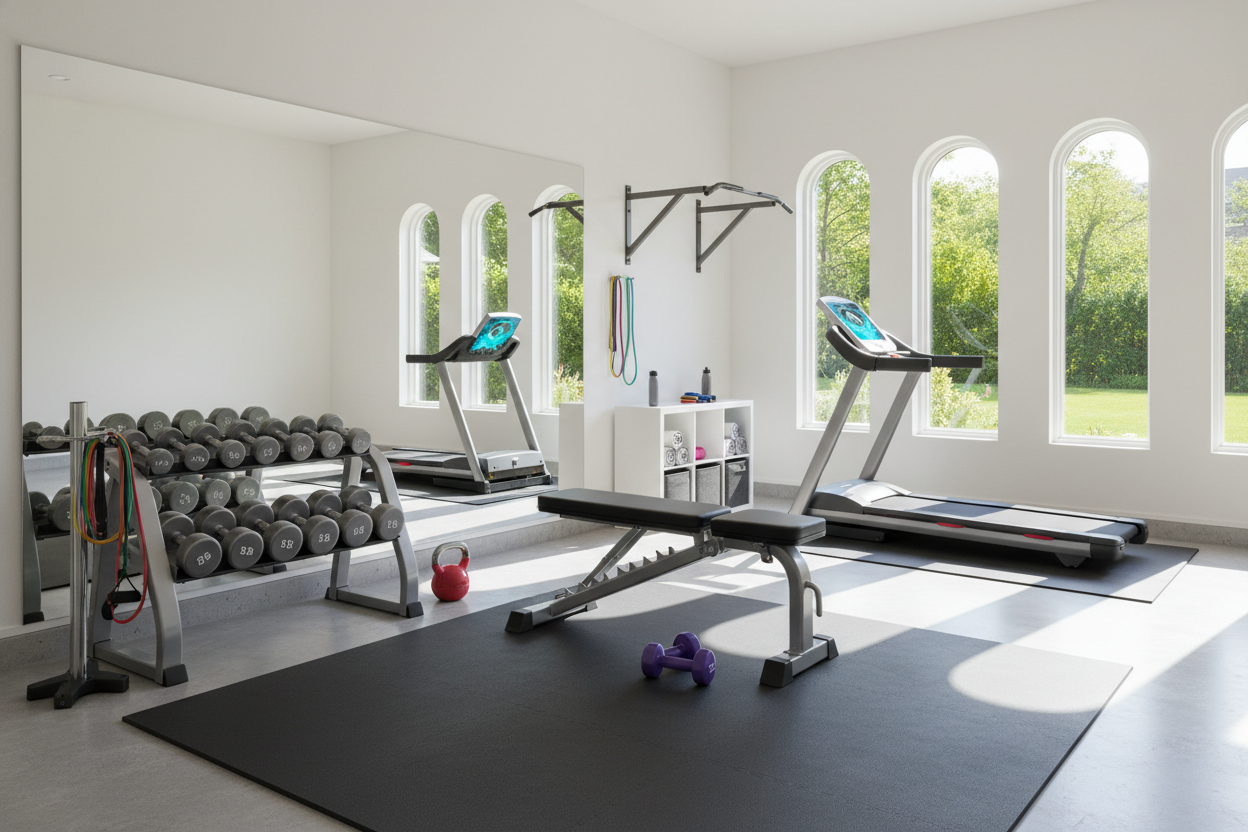
You need a dedicated space with zero slip. I’m a huge advocate for a firm, dense surface. A 6X8Ft Exercise Mat Yoga Mat is perfect for this. It’s large enough that you aren't constantly stepping off the edge, and it provides enough 'bite' for your shoes to stay planted. Whether you’re doing a senior upper body strength exercise standing up or lying down for a floor press, that stability allows you to focus on the lift rather than your balance. Don't compromise on the floor; it's the most important piece of equipment you own.
4 Moves That Actually Translate to Daily Life
If you want a senior upper body workout that works, forget the complicated machines. Stick to these four pillars. First, the Floor Press. Instead of a bench press which can overstrain the shoulders, lie on your mat and press dumbbells up from the floor. This protects the shoulder joint while building the chest and triceps. To truly boost your upper body strength, this move is non-negotiable for chest exercises for older adults.
Second, the Supported Row. Lean one hand on a sturdy table and pull a weight to your hip with the other. This builds the 'pulling' muscles you need to open heavy doors or pull a lawnmower cord. Third, the Overhead Reach. Even if you don't use weight, practicing the motion of reaching high while keeping your ribs tucked is essential upper body strengthening for seniors. Finally, the Suitcase Carry. Hold a weight in one hand and walk. It’s the ultimate upper body workout with weights for seniors because it builds grip strength and core stability simultaneously. These are the best upper body exercises for seniors because they look like real life.
Knowing When to Go Heavier
The biggest mistake in upper body strength exercises for elderly populations is staying with the same light weights for years. Your body is an adaptation machine. If you lift the same 5-pound weight every day, your body has no reason to get stronger or build bone density. You don't need to become a bodybuilder, but you do need progressive overload.
Here is my simple rule for an upper body workout for older women or men: if you can finish 12 repetitions with perfect form and feel like you could easily do five more, the weight is too light. You should finish your set feeling like you could maybe do two more reps, but not three. That 'buffer' ensures safety while still forcing the muscle to grow. This is how you build a upper body strength workout for seniors that actually moves the needle on your health markers.
My Personal Take: The 'Heavy' Realization
I remember training my mother-in-law. She was terrified of 'bulking up' or hurting her back. We started with 3-pound weights. For six months, she made zero progress. She still struggled with the groceries. I finally convinced her to try a 10-pound dumbbell for her rows. She was shocked that she could do it. Within three weeks, she told me she carried all the groceries in one trip without her shoulders aching. The lesson? We often underestimate what the 'older' body is capable of. Don't be afraid of the weight; be afraid of the weakness that comes from not lifting it.
FAQ
Is it safe to lift weights if I have arthritis?
Yes, and it’s usually recommended. Strength training lubricates the joints and strengthens the muscles surrounding them, taking the pressure off the bone-on-bone areas. Just stay within a pain-free range of motion.
How many times a week should I do an upper body workout?
Two to three times a week is the sweet spot. Your muscles and central nervous system need about 48 hours to recover between sessions. Quality of movement beats frequency every time.
What if I can't get down on the floor?
You can perform the 'floor press' on a firm mattress or a dedicated weight bench. However, working on your ability to get up and down from the floor is actually a vital part of functional mobility for seniors.