The Only 7 Pieces of Equipment You Need to Build Your First Home Gym
Building a home gym doesn't require a second mortgage or converting your entire garage into a fitness warehouse. After spending years working out in commercial gyms and eventually creating my own workout space at home, I've learned that most equipment collects dust while a handful of essentials get used daily. The right basic at home gym equipment can transform any corner of your house into an effective training area without breaking the bank or overwhelming your space.
The beauty of starting simple is that you'll actually use what you buy. I've seen countless people invest thousands in elaborate setups, only to realize they gravitate toward the same few pieces repeatedly. Understanding which simple home gym equipment delivers the most value helps you avoid buyer's remorse and creates a foundation you can build on as your fitness journey evolves.
What Makes Equipment Essential vs. Optional
Before diving into specific items, it helps to understand what separates truly useful equipment from trendy gadgets. The best home gym essentials for beginners share three characteristics: versatility, durability, and the ability to support progressive overload. Versatile equipment serves multiple purposes—a single item that works for dozens of exercises beats five specialized tools that each do one thing. Durability matters because quality basics last decades, while cheap alternatives need replacement within months.
Progressive overload, the principle of gradually increasing difficulty, is what drives actual results. Your equipment needs to grow with you. That's why adjustable options typically win over fixed-weight alternatives, even if they cost slightly more upfront.
The Adjustable Dumbbell Set
If you only buy one piece of equipment, make it adjustable dumbbells. These compact tools replace an entire rack of fixed-weight dumbbells, saving both money and floor space. Modern adjustable sets let you change weight in seconds, supporting everything from light shoulder raises to heavy goblet squats.
A quality set ranging from 5 to 50 pounds per hand covers the needs of most beginners and intermediate lifters. You can perform hundreds of exercises: presses, rows, curls, lunges, and countless variations. The investment pays for itself quickly compared to gym memberships, and unlike machines that lock you into specific movement patterns, dumbbells force your stabilizer muscles to work, building functional strength.
A Reliable Resistance Band Set
Resistance bands might look simple, but they punch well above their weight class. A set with varying resistance levels costs less than a nice dinner out yet provides a completely different training stimulus than free weights. Bands create constant tension throughout each movement, challenging your muscles in ways dumbbells can't replicate.
They're particularly valuable for warm-ups, mobility work, and rehabilitation exercises. When I tweaked my shoulder last year, bands allowed me to keep training while heavier weights were off-limits. Loop bands work great for lower body exercises like glute bridges and lateral walks, while handled bands excel at upper body pulling movements.
The Yoga Mat Foundation
A thick, non-slip yoga mat serves as your home gym's foundation—literally. Beyond yoga and stretching, it provides cushioning for floor exercises, core work, and bodyweight movements. The right mat protects your floors from equipment, reduces noise for downstairs neighbors, and creates a designated workout zone that psychologically prepares you to train.
Look for mats at least 6mm thick for adequate cushioning. Extra length helps if you're tall, and textured surfaces prevent slipping during planks or push-ups. This seemingly basic item gets used in virtually every workout, making it one of the smartest purchases you'll make.
A Sturdy Pull-Up Bar
Pull-ups and chin-ups build back strength like nothing else, and doorway pull-up bars install in minutes without permanent modifications. These simple frames support your bodyweight for vertical pulling exercises that balance out all the pushing movements most people do.
Can't do a pull-up yet? That's fine. The bar doubles as an anchor point for resistance bands, letting you perform assisted pull-ups and various stretches. As you get stronger, you can add weight with a backpack or dip belt. The progression potential is enormous, and the space requirement is minimal.
An Adjustable Bench
An adjustable workout bench transforms your dumbbell exercises from good to great. Incline presses, decline movements, seated exercises, and supported rows all require a bench. The adjustability matters because hitting muscles from different angles drives better development and keeps workouts interesting.
A flat bench costs less, but spending extra for adjustability expands your exercise library significantly. Look for stable construction with a weight capacity well above your current needs. A wobbly bench isn't just annoying—it's dangerous when you're pressing heavy dumbbells overhead.
The Humble Jump Rope
For cardiovascular conditioning, few tools match the efficiency of a jump rope. This pocket-sized equipment delivers serious calorie burn, improves coordination, and requires minimal space. Ten minutes of jumping rope can replace a 30-minute jog, making it perfect for time-crunched schedules or bad weather days.
Speed ropes with adjustable lengths accommodate different heights and skill levels. The learning curve is gentle—even if you haven't jumped rope since elementary school, you'll regain the rhythm quickly. It's also the most portable item on this list, easily tucked into a drawer or suitcase for travel workouts.
A Foam Roller for Recovery
Recovery equipment often gets overlooked by beginners focused solely on the workout itself, but a foam roller might be the wisest investment for long-term consistency. This cylindrical piece of foam helps release muscle tension, improves flexibility, and speeds recovery between sessions.
Using a foam roller for just five minutes after workouts can dramatically reduce next-day soreness. The self-massage technique, called myofascial release, works out knots and adhesions in muscle tissue. Beyond recovery, rolling before workouts serves as an effective warm-up that prepares your body for movement.
Building Your Space Strategically
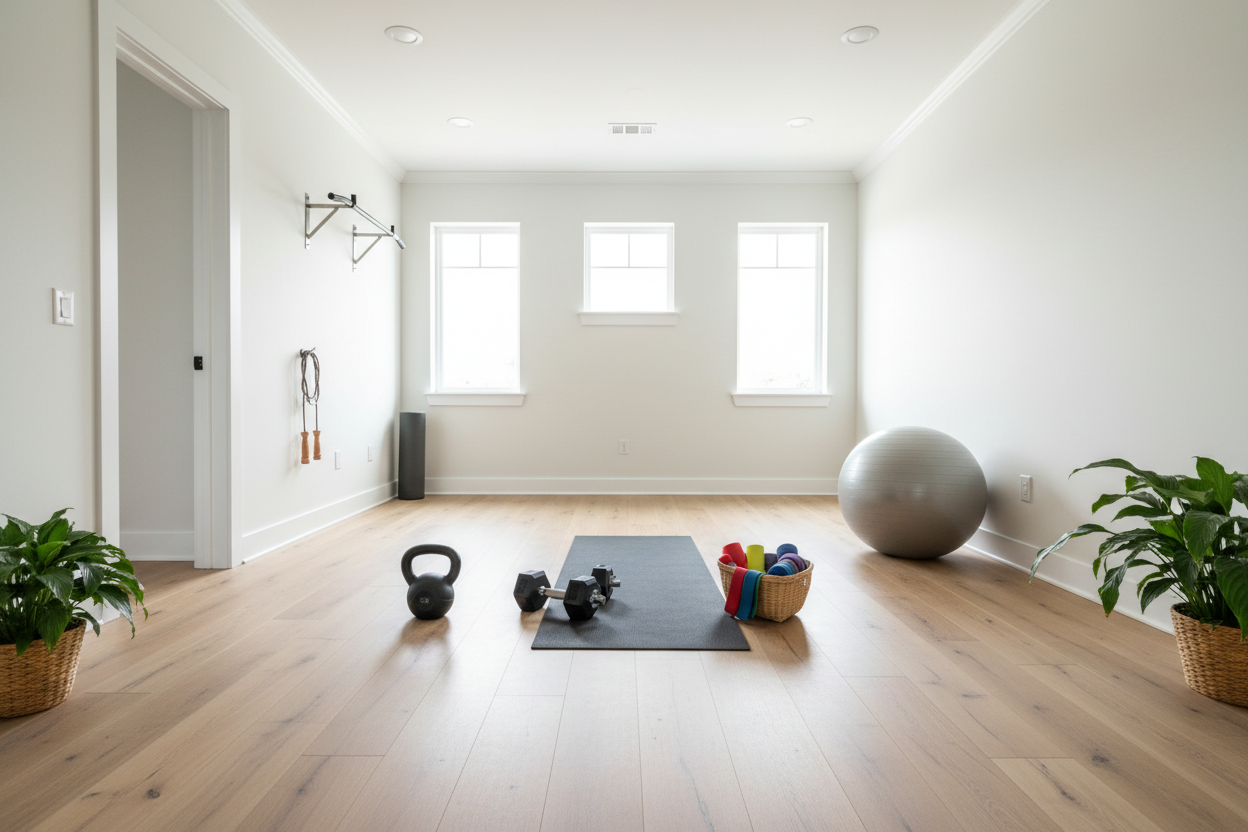
With these seven items, you have everything needed for comprehensive full-body workouts. The total investment typically runs $300-600 depending on quality levels you choose, which pays for itself in 3-4 months compared to most gym memberships. More importantly, you've avoided the trap of buying equipment that seemed useful but rarely gets touched.
Start with what you'll actually use consistently. Maybe that's just dumbbells and a mat for the first month. There's no rule saying you must buy everything at once. As you develop a routine and identify what you enjoy, adding the remaining pieces makes more sense. The goal is creating a sustainable practice, not filling a room with stuff.
Your home gym should evolve with your needs. These basics provide the foundation, but they're not the ceiling. As you get stronger and more experienced, you might add a barbell setup, a rowing machine, or specialized tools for specific goals. The difference is you'll be making informed decisions based on actual experience rather than guessing what might be useful.
Frequently Asked Questions
How much space do I actually need for a basic home gym?
You can create an effective workout space in as little as 6x6 feet. This allows room to lie down fully extended on a mat with enough clearance for exercises like jumping rope or dumbbell movements. A spare bedroom corner, garage section, or even a cleared living room area works perfectly fine.
Should I buy everything at once or build gradually?
Building gradually makes more sense for most people. Start with one or two essentials like dumbbells and a mat, then add equipment as you identify gaps in your workouts. This approach prevents overspending on items you might not use and lets you spread the cost over several months.
Is expensive equipment always better than budget options?
Not always, but quality matters for items you'll use frequently. Adjustable dumbbells and benches benefit from higher-quality construction because they take more abuse. Simple items like resistance bands and jump ropes perform well even at budget price points, though they may need replacement sooner than premium versions.