Your Fear of Getting Pinned Is Ruining Your Beginner Bench Press
I remember the first time I tried a heavy set in my garage. It was 9:00 PM, my wife was asleep, and the only sound was the hum of a space heater. I stared at the bar, realizing that if I failed this rep, there was nobody to help me. That hesitation—that tiny seed of doubt—is exactly what kills a beginner bench press before the bar even leaves the rack.
Quick Takeaways
- Safety pins are your only mandatory training partner when lifting solo.
- The 'fear gap' (stopping the bar short of your chest) ruins your strength gains.
- Always wrap your thumb; the thumbless grip is an unnecessary risk for beginners.
- Mastering the 'Roll of Shame' is a prerequisite for heavy lifting.
The Elephant in the Garage: Lifting Alone
The fear of getting trapped under a barbell is a rational one. Most 'how-to' guides assume you have a spotter standing over you, ready to help. When you're alone in a garage, that advice is useless. This fear actively ruins your mechanics. You start cutting the range of motion short, or you rush the eccentric phase because you just want the rep to be over.
To truly master a bench press for beginners, you have to eliminate the 'what if' from your brain. If you're constantly worried about a trip to the ER, you'll never stay tight enough to actually move weight. You need to know, with 100% certainty, that failure is safe. Without that mental green light, your bench will always be mediocre.
Setting Up Your Safety Net Before You Touch the Bar
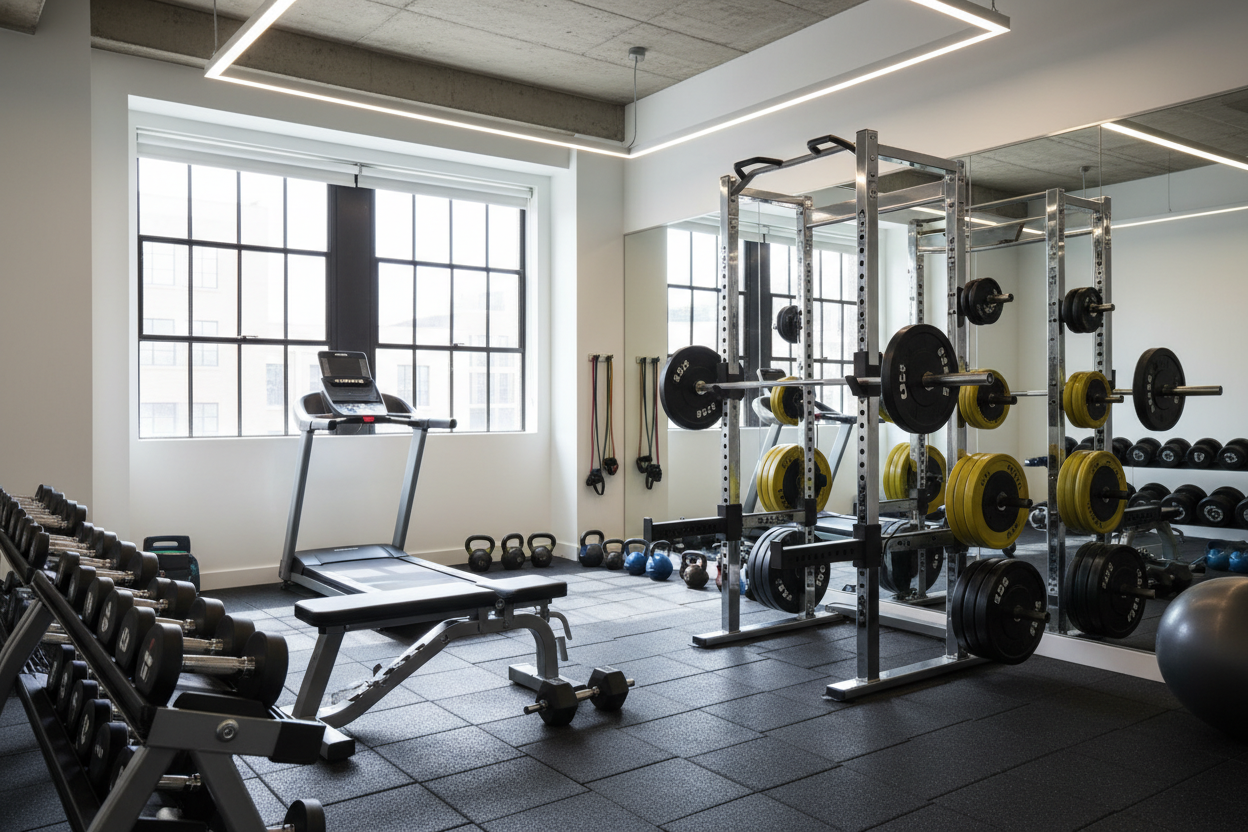
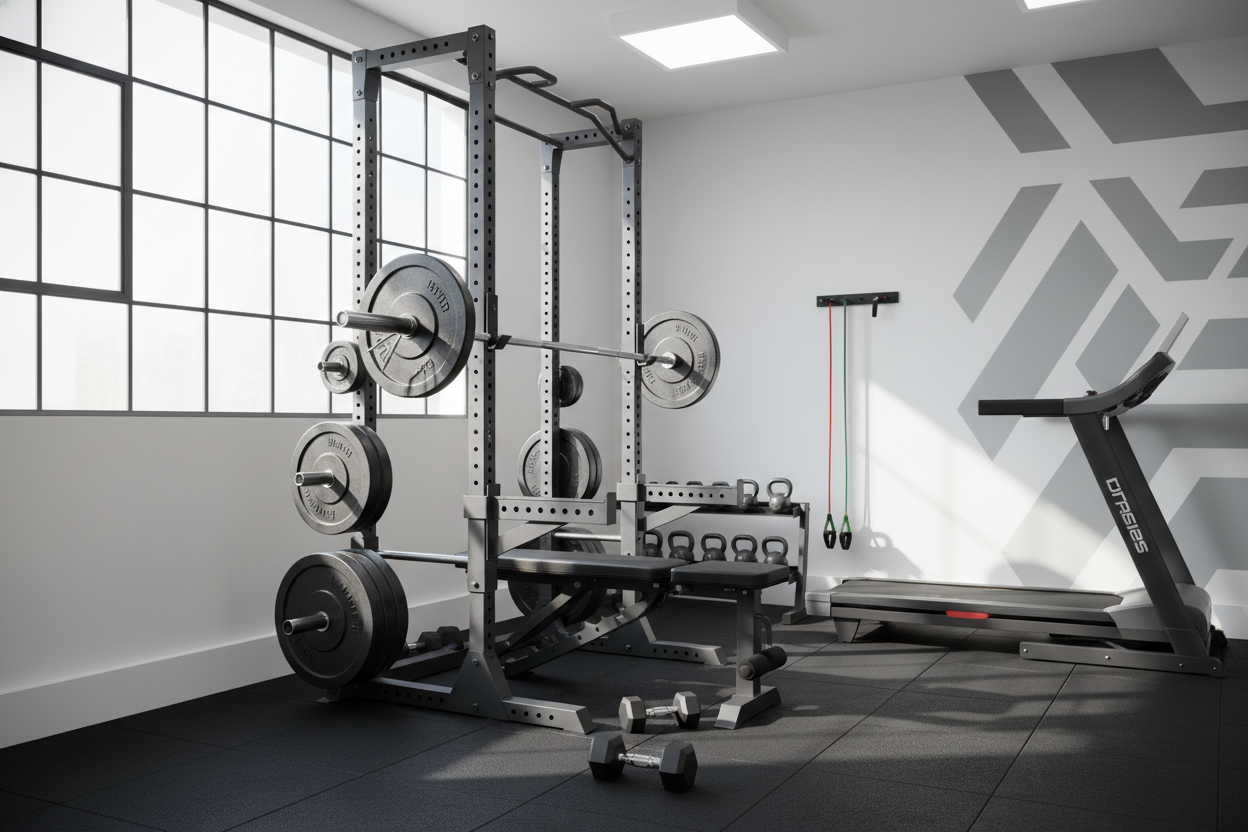
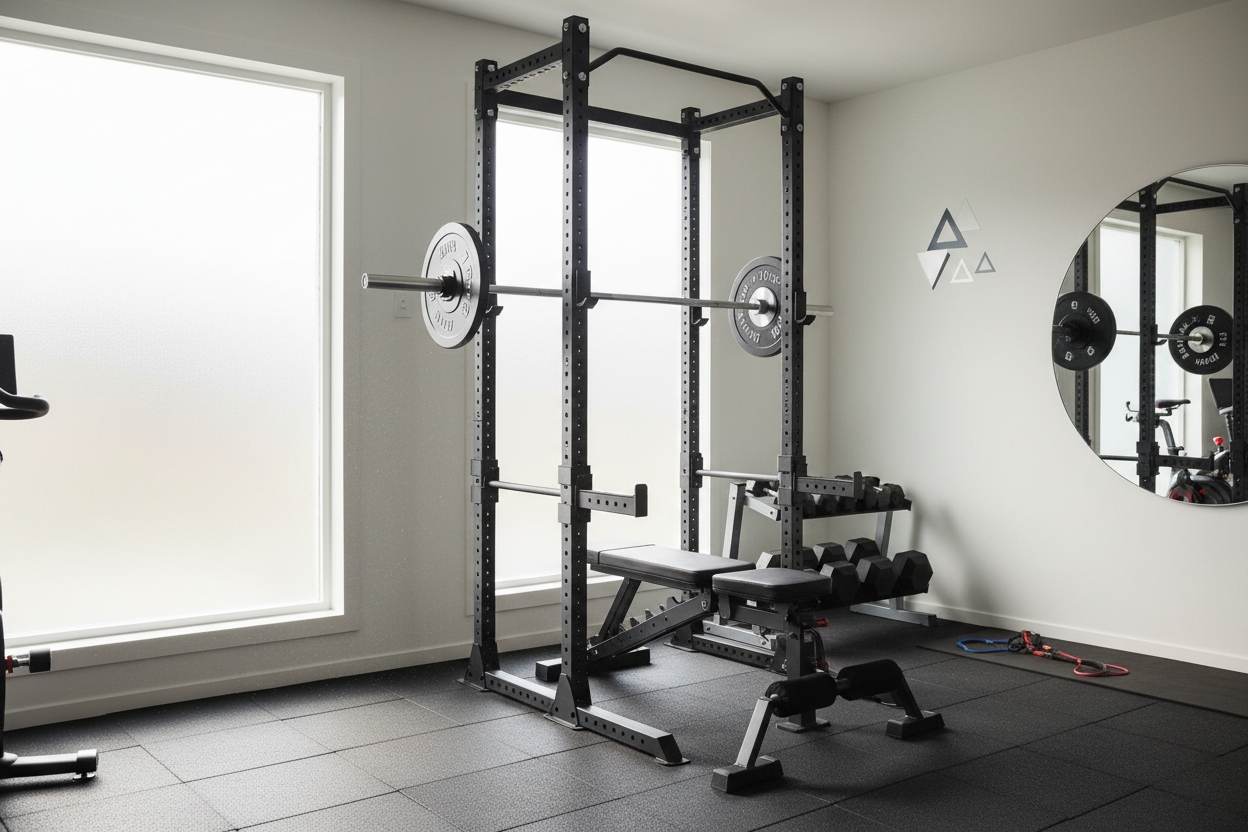
If you are serious about a barbell bench press for beginners, you need a rack with safeties. Period. I’ve seen guys try to bench on those old-school independent stands with no catch arms—it’s a recipe for disaster. Set your safety pins or spotter arms about an inch below your chest height when you have a slight arch in your back. If you fail, you just deflate your lungs, and the bar rests on the pins, not your throat.
If you're still shopping for gear, look for a power rack weight bench barbell package that includes adjustable spotter arms. Having that physical steel barrier between the bar and your ribcage changes the entire psychology of your workout. It allows you to actually push to failure, which is where the real growth happens in a bench press beginner workout.
Form Tweaks That Actually Keep You Safe
Most beginners treat the bench like they’re lying on a beach towel. You need to be active. Retract your scapula—imagine trying to pinch a pencil between your shoulder blades. This creates a thick shelf of muscle for you to lie on and protects your rotator cuffs. It also slightly reduces the distance the bar has to travel.
Leg drive is the most misunderstood part of a bench press workout for beginners. Your feet shouldn't be dancing around. Plant them hard. Drive your heels into the floor like you’re trying to push your body off the top of the bench. This tension stabilizes your torso, making the bar path more predictable. A predictable bar path is a safe bar path.
Why the 'Suicide Grip' is a Death Sentence
You’ll see some pro bodybuilders use a thumbless grip, often called the 'suicide grip.' Don't do it. When you start benching, your grip strength and wrist stability aren't fully developed yet. All it takes is one sweaty palm for the bar to slide forward and drop. Whether you are using a standard Olympic bar or a specialized matrix bench press bar, wrap your thumb around the steel. You want a full, white-knuckle grip to ensure that bar stays exactly where it belongs.
How to Bail Out When Things Go Wrong
Even with safeties, you should know how to bail. The 'Roll of Shame' is the standard solo-lifter survival move. If you get stuck and don't have pins, lower the bar to your lower chest/upper stomach. Slowly roll it down your abdomen to your hips. It’s going to bruise, and it’s going to hurt your pride, but you’ll be alive. Sit up, and then deadlift the bar off your lap.
To practice this safely (with light weight first!), you need a reliable weight set and bench that won't tip over when the weight shifts toward the foot of the bench. I once used a cheap, lightweight bench that nearly flipped when I sat up with the bar on my lap. Don't cheap out on the foundation of your gym. Stability is safety.
A Bench Press Program for Beginners (That Won't Kill You)
How to start benching effectively? Don't max out every day. Follow a simple bench press routine that prioritizes frequency over intensity. I recommend a 3x5 (three sets of five reps) approach, performed twice a week. Start with just the bar. If the form feels perfect, add 5 lbs next time. This slow crawl allows your tendons to catch up to your muscles.
In your first bench press sessions, focus on the 'touch and go' vs. 'paused' debate. I tell all my clients to pause for a one-second count on the chest. It removes momentum and proves you have total control over the weight. This is the core of any solid beginner bench press program. Once you can pause 135 lbs for five reps with zero fear, you’re no longer a beginner.
FAQ
How many times a week should a beginner bench press?
Two times a week is the sweet spot. It gives your chest and shoulders enough time to recover while providing enough practice to master the 'how to start bench pressing' mechanics.
Should I use a wide or narrow grip?
For a basic bench press, start with your hands just outside shoulder width. Your forearms should be vertical when the bar touches your chest. Too wide puts stress on the shoulders; too narrow makes it a triceps exercise.
Is the bench press safe for someone with bad shoulders?
If you tuck your elbows to about 45 degrees and keep your shoulder blades retracted, it’s generally safe. If it still hurts, try a floor press or a Swiss bar to change the angle.