Intimidated by Iron? What Is Free Weight Training, Really?
I remember the first time I walked into a local powerhouse gym. I spent forty minutes on the leg press and chest press machines because the squat rack looked like a medieval torture device. I was terrified of looking like a clown while trying to balance a bar. But after three months of zero progress, I realized I had to figure out what is free weight training and why every strong person I knew swore by it.
- Total Freedom: No fixed tracks or pulleys dictate your movement.
- High Efficiency: One barbell can replace ten different machines.
- Core Integration: Your abs work on every single rep just to keep you upright.
- Scalability: You can progress in increments as small as 1.25 lbs.
The Short Answer: What Are We Actually Talking About Here?
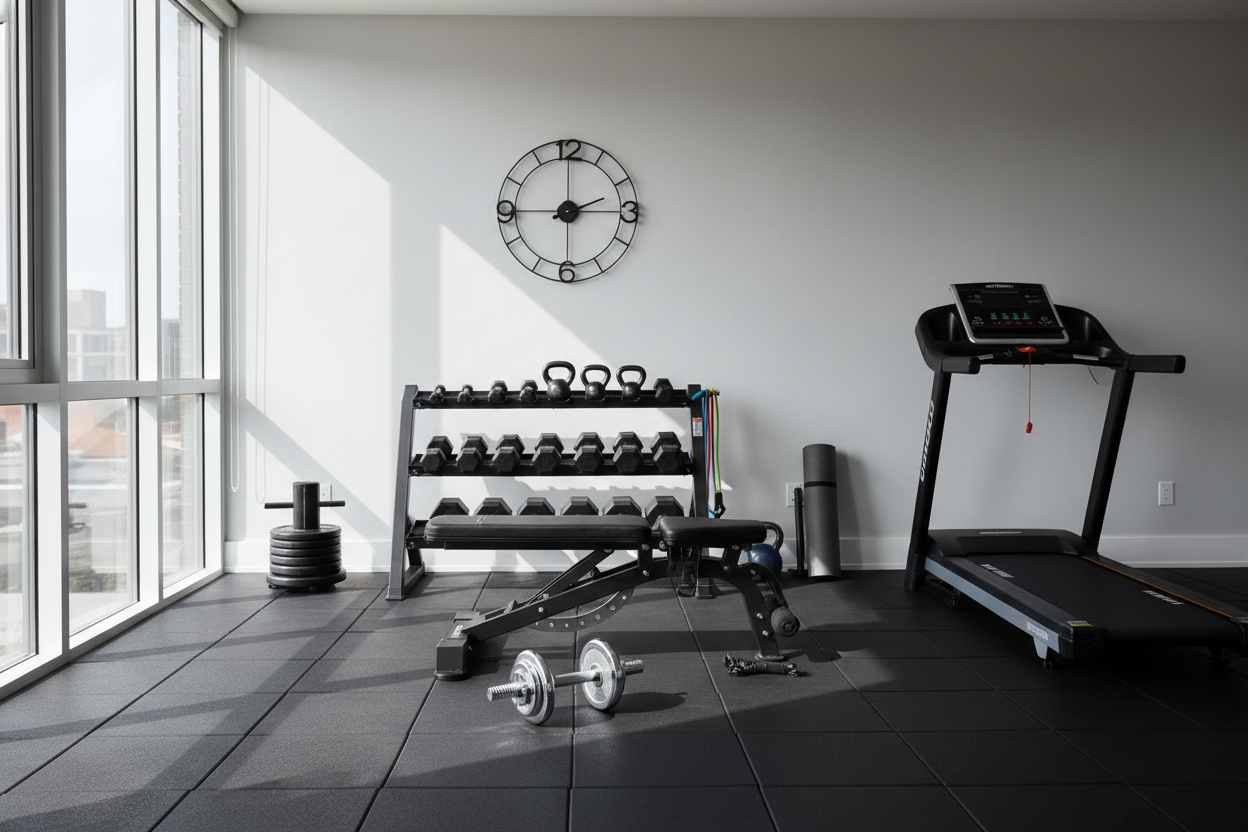
So, what is free weight training? Simply put, it is any exercise where the resistance is not attached to a fixed track or a cable system. It is just you versus gravity. If you pick an object up and you are responsible for its balance and direction, you are using free weights. Beginners often ask me, are dumbbells free weights? Yes, they are the gold standard, along with barbells, kettlebells, and medicine balls. For a deeper look at how to organize your own space for these tools, check out our complete home gym guide to free weights.
The Huge Advantages of Free Weight Training Over Machines
The primary advantages of free weight training come down to biomechanics. When you use weight lifting machines, the manufacturer has already decided the path your joints should take. The problem? Your shoulders and hips don't move in a perfect straight line. Free weights allow your body to move through its natural 'groove,' which usually leads to significantly less joint wear and tear over the long haul. Plus, you aren't limited by the stack height of a machine.
The Stabilizer Effect: Why You Feel It Everywhere
One of the biggest advantages of free weights is the recruitment of stabilizer muscles. When you bench press with a barbell, your chest does the heavy lifting, but your triceps, shoulders, and even your lats are firing to keep that bar from crashing into your teeth. On a machine, the machine does the balancing for you. By forcing your body to stabilize the load, you develop a level of 'thickness' and structural integrity that machines simply cannot replicate.
Real-World Strength That Actually Transfers
The benefits of free weights are most obvious when you leave the gym. Life doesn't happen on a fixed track. When you're lifting a heavy box of flooring or a sleeping toddler, you're performing a functional movement. Free weight exercises like the squat, deadlift, and overhead press mimic these natural human patterns. This builds 'usable' strength that protects your lower back and joints during everyday activities.
Are the Benefits of Free Weight Training Worth the Learning Curve?
I won't lie to you: the benefits of free weight training come with a price. That price is a steeper learning curve. It is much easier to sit in a machine and push than it is to master a proper hip hinge. However, the payoff is infinite progression. You will never 'outgrow' a barbell. While a machine might only go up to 200 lbs, you can keep adding plates to a bar for decades. The space-saving aspect is also massive; a single rack takes up a fraction of the floor space required by five different selectorized machines.
The Bare-Bones Gear You Need to Start
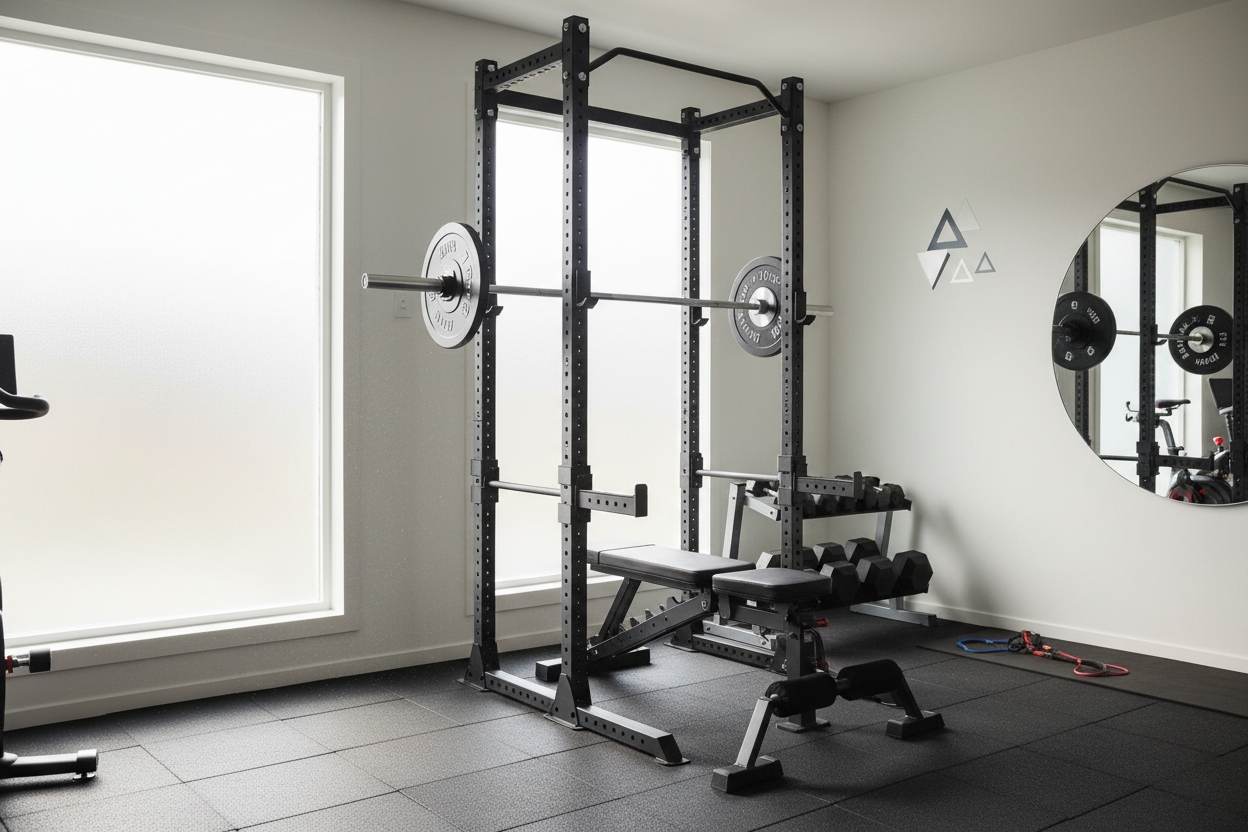
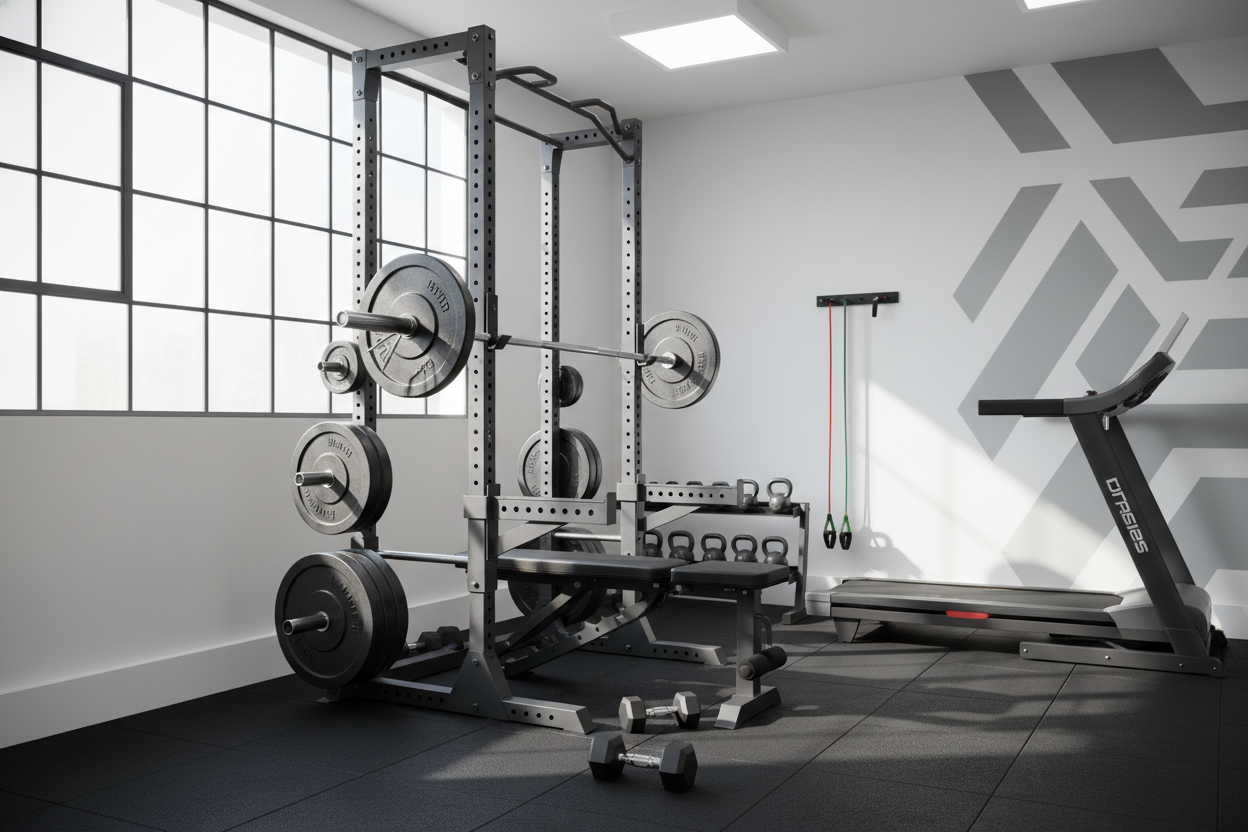
You don't need a commercial-grade facility to get results. To do this right at home, I recommend starting with a power rack and weight bench package. The rack provides the safety of spotter arms, which is non-negotiable if you're training alone. You will also need a versatile adjustable weight bench that can handle at least 600 lbs of total capacity. Add a 20kg Olympic bar and a set of iron plates, and you have everything you need to build a world-class physique in a 10x10 space.
How to Start Lifting Without Wrecking Yourself
Leave your ego at the door. My biggest mistake was trying to load 135 lbs on the bar before I knew how to keep my back flat. Start with the empty 45-lb bar. Record your sets on your phone and compare them to form videos. Focus on mechanical tension—feeling the muscle stretch and contract—rather than just moving the weight from point A to point B. If the bar is shaking, don't panic. That's just your nervous system learning how to coordinate. It gets steady fast.
FAQ
Do I need a spotter for free weights?
Not if you have the right gear. If you use a power rack with safety pins or spotter arms, you can safely 'fail' a lift without the bar pinning you. Always set your safeties just below your active range of motion.
Are free weights better for fat loss?
Yes. Because free weights require more muscle groups to stabilize the load, they create a higher metabolic demand. You burn more calories during the set and more during the recovery phase compared to isolated machine work.
How heavy should my first set of dumbbells be?
For most beginners, a pair of 15-lb or 20-lb dumbbells is a solid starting point for upper body movements. If you can't do 8 clean reps, it's too heavy. If you can do 15 without breaking a sweat, it's too light.