Your Exercise for Different Body Parts Fails Without Floor Feedback
I remember the first time I tried to do a standing dumbbell lateral raise in my garage. I was swinging like a pendulum, hitting my traps, and wondering why my delts looked like flat pancakes. It is the curse of the home gym: we lack the fancy $4,000 selectorized machines that lock our hips in place. If you are chasing an effective exercise for different body parts, you have probably realized that 'winging it' with free weights usually results in joint pain and zero muscle pump.
Quick Takeaways
- Machines provide stability; floors provide tactile feedback.
- Stop using momentum; start using the ground to brace your core.
- Dead-stops on the floor kill the stretch reflex and force muscle recruitment.
- A high-density mat is non-negotiable for protecting your elbows and spine.
The Problem With Free Weight Isolation at Home
Most garage lifters treat isolation like a circus act. Without a preacher bench, your curls become 'swing curls.' Without a cable crossover, your chest flyes turn into weird half-presses that do more for your front delts than your pecs. We lack the 'tension routing' that a dedicated machine provides.
When you are standing, your whole body acts as a shock absorber. Your knees micro-bend, your hips sway, and your lower back compensates. This steals tension from the muscle you are actually trying to hit. Trying to find the right workouts for different body parts while standing on a slick concrete floor is a recipe for mediocrity.
Without a way to lock your body in place, you are just moving weight from point A to point B. You aren't actually training a muscle; you are just performing a feat of balance.
Why Your Floor Is Your Best Piece of Isolation Equipment
This is where the floor comes in. Think of your floor as the ultimate, unyielding back pad. By lying down, you eliminate the 'body English' that ruins most isolation attempts. The ground provides immediate feedback—if your lower back arches or your hips shift, you feel it instantly.
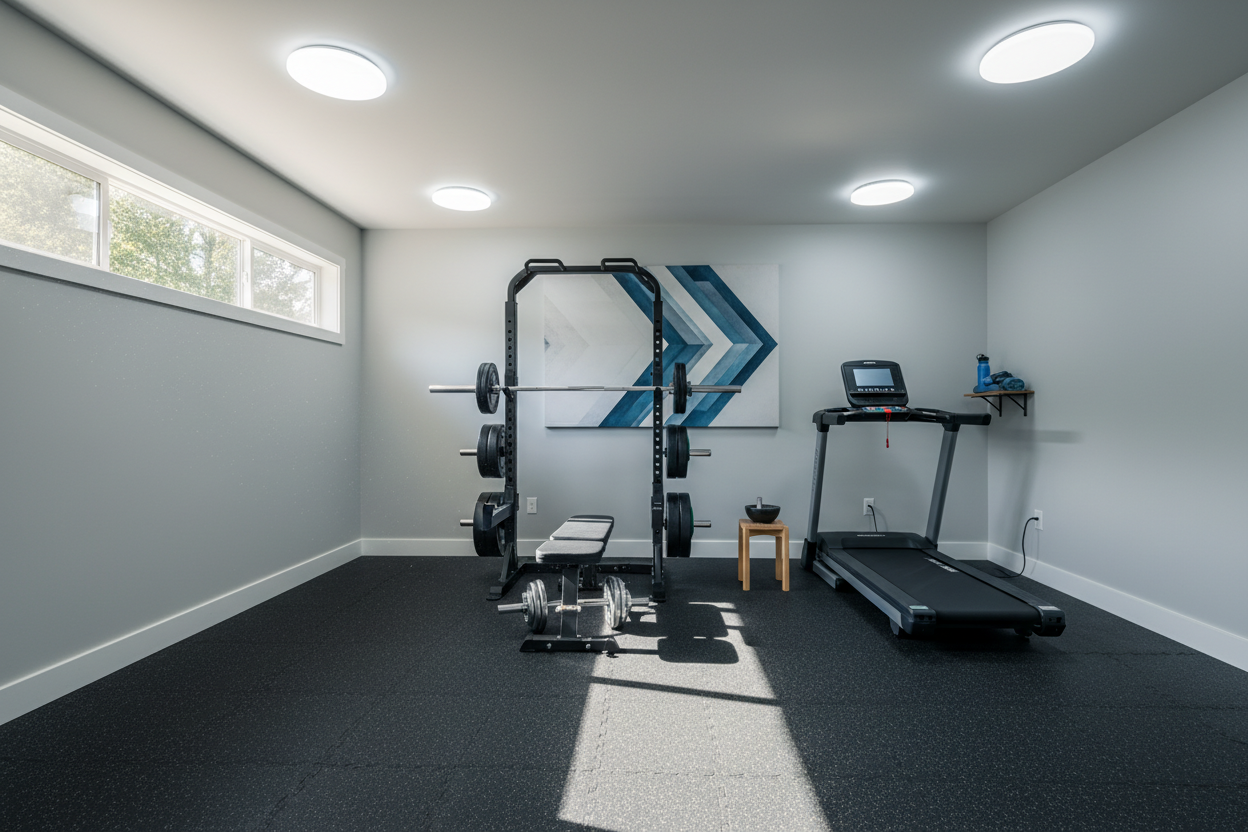
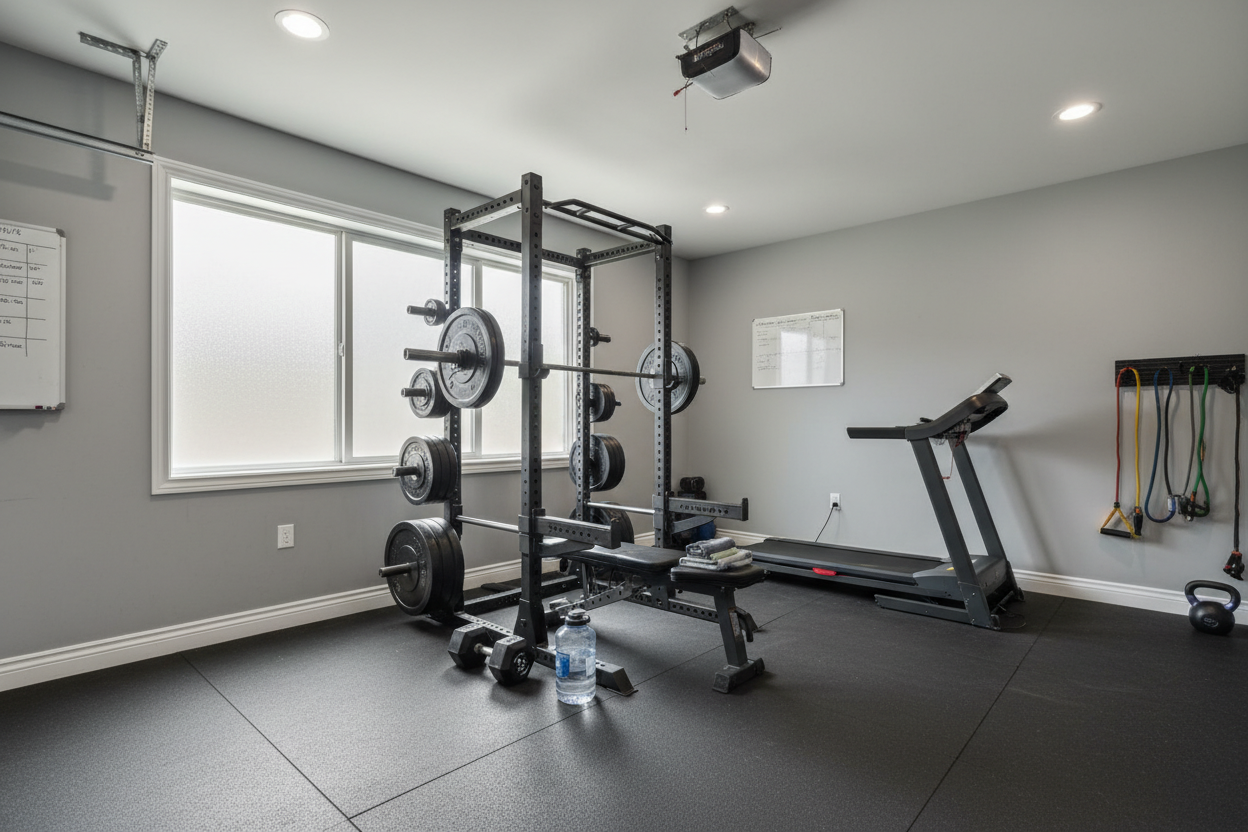
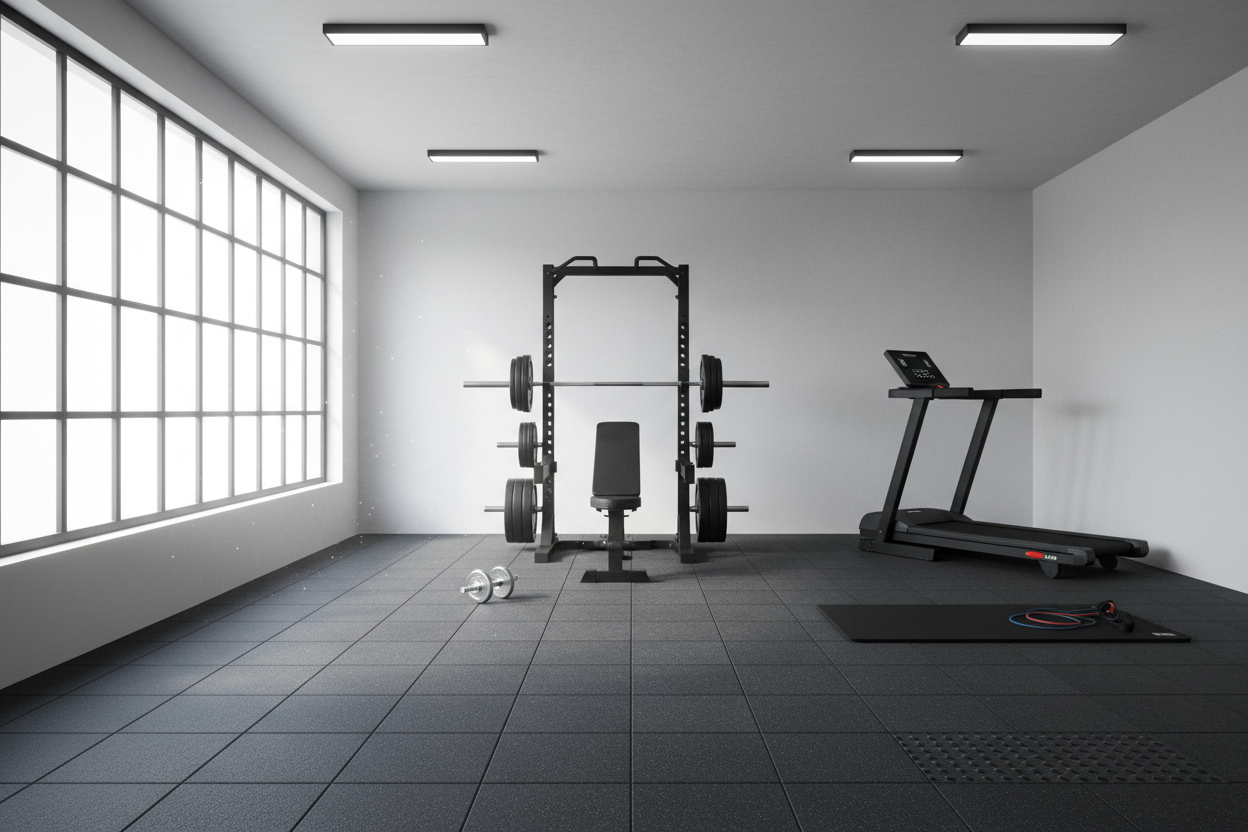
I have found that a Large Exercise Mat For Home Gym is the foundation of this setup. You need enough real estate to sprawl out without your head hitting cold concrete or your heels slipping during a heavy press. A dedicated space transforms a cold garage into a functional lab for hypertrophy.
For heavy floor work, I recommend something like the 6X8Ft Exercise Mat Yoga Mat Gym Flooring For Home Workout. It is 7mm thick, which is the sweet spot. It is dense enough to support 100-lb dumbbells without bottoming out, saving your elbows and tailbone during those high-intensity sets that would otherwise leave you bruised.
Upper Body: Routing Tension on the Mat
Let us talk movements. The Floor Press is the king of chest isolation for home lifters. By lying flat, you cannot arch your back into a bridge or use leg drive. You are forced to use your pecs and triceps to move the weight from a dead stop. It truncates the range of motion just enough to protect the shoulders while maximizing tension on the mid-range.
The same logic applies to skull crushers. Instead of letting the weights dangle behind your head in mid-air, touch them to the floor behind you. This 'reset' kills the momentum and forces the triceps to work from a cold start. It is significantly harder than the traditional version and much easier on the tendons.
If you want to dive deeper into the mechanics of why these angles matter, check out this Mastering Exercise For Different Body Parts A Complete Anatomical Guide. Understanding the 'why' behind the floor contact makes the 'how' much more effective.
Structuring Your Workouts for Different Body Parts
Do not build your entire session on the floor. Start with your heavy standing compounds—squats, overhead presses, or heavy rows. These are your 'meat and potatoes' moves. Then, move to the mat for your exercise for specific body parts to finish the job.
For example, after a heavy bench session, move to the floor for dumbbell flyes. The floor acts as a safety stop, preventing you from over-stretching the shoulder capsule while allowing you to squeeze the pecs at the top. This structure ensures you get the heavy loading first and the targeted isolation second.
If you are wondering what else to include in your weekly split, this Exercise Body Parts List The Definitive Guide For Hypertrophy covers the minor groups like rear delts and calves that often get ignored in a basic garage setup. Use the floor for anything that requires strict bracing.
The Hard Truth About Exercise for Specific Body Parts
Here is the reality check: if you cannot feel your lats or your triceps working when you are literally pinned against the floor, adding another 10 lbs to the bar will not help. Floor feedback is honest. It tells you exactly when you are cheating. If your hips pop up during a floor press, you are failing the movement.
Stop chasing the heaviest dumbbells in the rack and start chasing the best connection. Use the ground to anchor your ego. If you can master the art of routing tension while supported by a solid mat, you will grow more in six months than you did in three years of 'swinging' weights in the center of the room.
Personal Experience: The Mat Mistake
I spent years trying to grow my triceps using standing overhead extensions. My elbows barked at me every single session. It was not until I started doing floor-based 'JM Presses' on a high-density mat that I actually saw real growth. The downside? I initially bought a cheap, squishy foam mat from a big-box store. Within three weeks, the edges of my 50-lb hex dumbbells had sliced right through the foam. Do not go cheap on the density. Get a mat with a tough top layer, or you will be vacuuming up blue foam bits for a month.
FAQ
Can I just use a yoga mat for floor presses?
No. Yoga mats are designed for grip and light cushioning, not for supporting heavy external loads. You will feel the concrete right through it, and it will likely tear the first time you drop a dumbbell.
Why is the floor better than a weight bench for some moves?
A bench allows for a full range of motion, which is great, but the floor offers a hard stop. This 'dead-stop' training removes the stretch reflex, making the muscle work harder from a stationary position. It is also safer for people with history of shoulder impingement.
Does floor training limit my range of motion too much?
For some exercises, yes. That is why we use it for isolation. You do not do your primary heavy lifting on the floor, but for targeting specific muscles without cheating, the restricted range is actually a benefit, not a drawback.