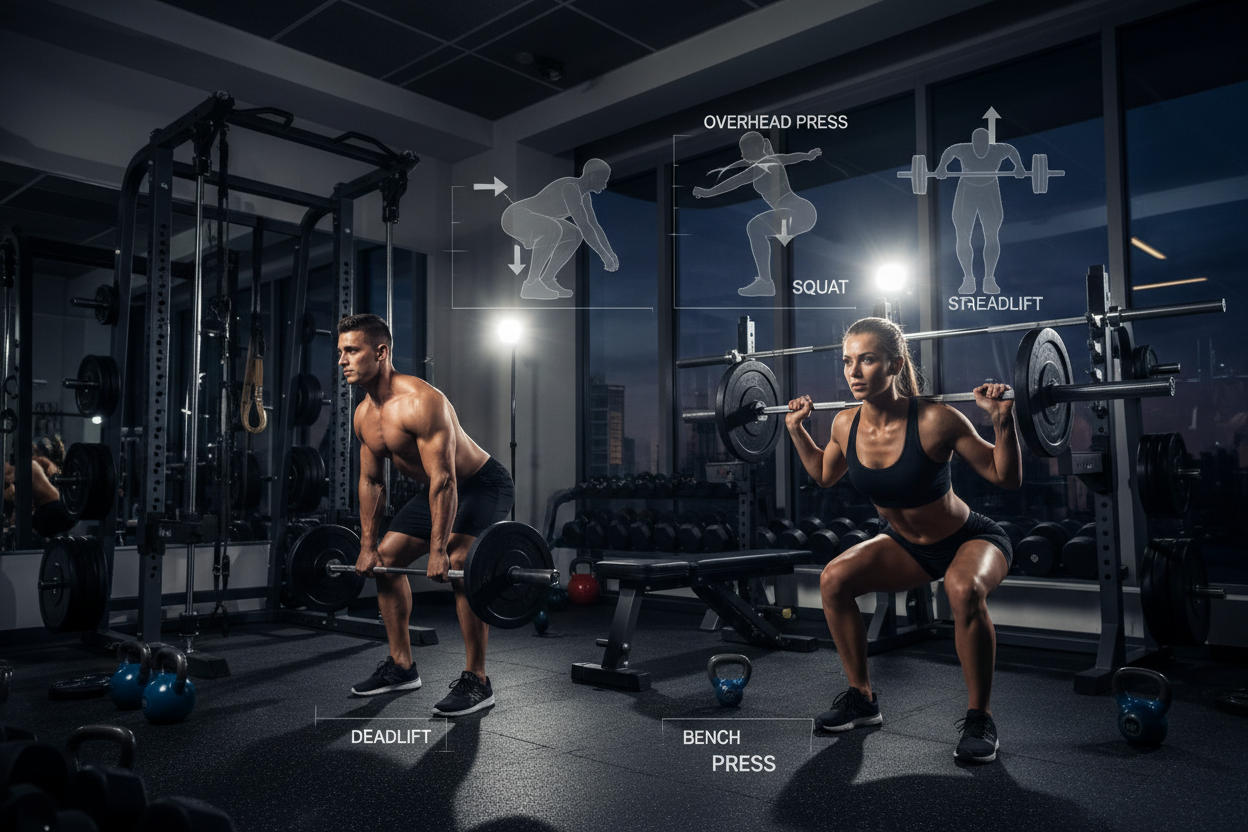
Mastering Exercise for Different Body Parts: A Complete Anatomical Guide
Walking into the weight room without a plan is like trying to bake a cake by throwing random ingredients into a bowl. You might get a workout, but you won't get the physique or performance you want. Most people struggle because they don't understand the anatomy behind the movements. They mimic what they see on social media without knowing why they are doing it.
To build a balanced, functional physique, you need to categorize your training based on movement patterns and muscle groups. This guide breaks down the science of exercise for different body parts to help you stop guessing and start growing.
Key Takeaways
- Group by Function: Categorize exercises by movement patterns (Push, Pull, Hinge, Squat) rather than just muscle names.
- Compound First: Always prioritize multi-joint movements (like squats or rows) before isolation work (like curls).
- Mind-Muscle Connection: Effective training requires feeling the target muscle contract, not just moving weight from point A to point B.
- Balance is Key: For every pushing exercise, ensure you have a pulling movement to prevent posture issues.
The Philosophy: Movement Patterns vs. Muscle Isolation
Before we dissect specific muscles, you need to understand the hierarchy of training. Beginners often obsess over exercises for different parts of the body, specifically looking for "arm" or "abs" moves. However, the body is designed to move as a unit.
Your routine should rely on the four main movement patterns:
- Push: Moving resistance away from the body (Chest, Shoulders, Triceps).
- Pull: Drawing resistance toward the body (Back, Biceps, Rear Delts).
- Squat: Knee-dominant leg movements (Quads, Glutes).
- Hinge: Hip-dominant leg movements (Hamstrings, Lower Back).
Upper Body Breakdown
The Push Chain (Chest, Shoulders, Triceps)
When you perform a pushing movement, the pectorals usually take the lead, assisted by the anterior deltoids and triceps. To target the chest effectively, you need to consider the angle of the press.
A flat bench targets the sternal head (middle chest), while an incline shifts the tension to the clavicular head (upper chest). The most common mistake here is flaring the elbows out at 90 degrees, which puts immense strain on the rotator cuff. Tuck them slightly to keep the tension on the muscles, not the joints.
The Pull Chain (Back and Biceps)
Your back is a complex web of muscles. To hit the lats (the muscles that give you width), you need vertical pulling movements like pull-ups or lat pulldowns. To target the rhomboids and traps (which give you thickness), you need horizontal rowing movements.
Many people fail here because they pull with their biceps. Think about your hands as hooks and drive the movement by driving your elbows back. This small mental shift changes a generic pull into a targeted exercise for specific body parts.
Lower Body Breakdown
The Anterior Chain (Quads)
The quadriceps are the primary movers in squat variations. Whether you are doing a goblet squat, front squat, or leg press, the goal is knee flexion. Depth matters here. Partial reps yield partial results because the muscle is most active at the bottom of the movement.
The Posterior Chain (Hamstrings and Glutes)
This is the most neglected area for the average gym-goer. Developing the backside requires hip hinging. Exercises like the Romanian Deadlift stretch the hamstring at the hip while keeping the knee relatively soft. If you only focus on leg curls (knee flexion), you are missing half the function of the hamstring.
My Training Log: Real Talk
I want to share a specific realization I had regarding exercise for different body parts during a hypertrophy block last year. On paper, my split looked perfect: Chest on Monday, Back on Tuesday, Legs on Wednesday. But reality hit me during my back sessions.
I noticed that during heavy barbell rows, my grip was failing before my lats were even fatigued. I’d feel this distinct, burning cramp in my brachioradialis (forearm) and the knurling of the bar would start slipping toward my fingertips, forcing me to rack the weight early. I wasn't training my back; I was just torturing my forearms.
I had to swallow my pride and start using lifting straps for my heaviest sets. The difference was immediate. The moment I took the grip factor out of the equation, the soreness the next day shifted entirely from my forearms to my lats. It taught me that sometimes, "isolating" a body part means using tools to neutralize the weak links.
Conclusion
Building a physique isn't about doing random acts of fitness. It requires a systematic approach to selecting exercises for different parts of the body. Focus on heavy compounds to build the foundation, use isolation movements to fix imbalances, and listen to your body's feedback.
Frequently Asked Questions
Can I train all body parts in one session?
Yes, full-body workouts are highly effective, especially for beginners or those with limited time. They allow you to hit muscle groups more frequently (3x a week) but with less volume per session compared to a body-part split.
What is the best exercise for specific body parts like belly fat?
You cannot spot-reduce fat. Doing crunches will strengthen the abdominal muscles, but it will not burn the fat covering them. Fat loss occurs systemically through a calorie deficit, not through specific exercises.
How many exercises should I do per body part?
For larger muscle groups (Legs, Back, Chest), aim for 2–4 exercises per session. For smaller groups (Biceps, Triceps, Calves), 1–2 exercises are usually sufficient, as they get significant stimulation during compound movements.