Stop Confusing Sweating Hard With Real Lifting Intensity
I remember finishing a session two years ago, lying flat on my stall mats, soaked in sweat. My heart was hammering, my lungs were burning, and I felt like a hero. Three months of those 'heroic' sessions later, my squat hadn't moved five pounds. I was chasing a feeling, not lifting intensity.
Quick Takeaways
- Sweat is a cooling mechanism, not a metric for muscle growth.
- True intensity is defined by the load on the bar relative to your maximum capacity.
- Most lifters stop sets 4-5 reps too early because of 'the burn.'
- Training alone requires the right safety gear to safely reach high-effort thresholds.
The Difference Between Being Tired and Getting Stronger
If you do 50 air squats in a row, you'll be out of breath and your quads will feel like they are on fire. If you do 5 heavy back squats at 85% of your max, you might not even break a sweat until the set is over. One of these builds endurance and burns a few calories; the other forces your central nervous system and muscle fibers to adapt and grow.
We have a bad habit of equating 'exhaustion' with 'productivity.' A 20-rep set of jump squats might make you want to puke, but it won't drive the same structural changes as a heavy barbell. To get stronger, you need mechanical tension, not just metabolic stress. Being tired is easy; being intense is a choice.
What Does Lifting Intensity Actually Mean?
In the strength world, intensity isn't how loud you grunt or how much you throw the weights around. It is a specific term: the percentage of your one-rep max (1RM). If your max bench is 200 lbs, then 100 lbs is 50% intensity. It is cold, hard math.
Whether you are deep in the weightlifting or weight lifting debate, the biological reality remains identical. Your body needs a reason to change. That reason is weightlifting intensity—moving loads that actually threaten your ability to finish the rep with good form. If the weight is too light, your high-threshold motor units stay asleep.
Why You're Probably Sandbagging Your Sets
Here is the uncomfortable truth: you are probably faking it. Most lifters rack the bar the second the movement slows down or the muscle starts to sting. Research shows most people estimate they are 1-2 reps from failure when they actually have 5 or 6 left in the tank.
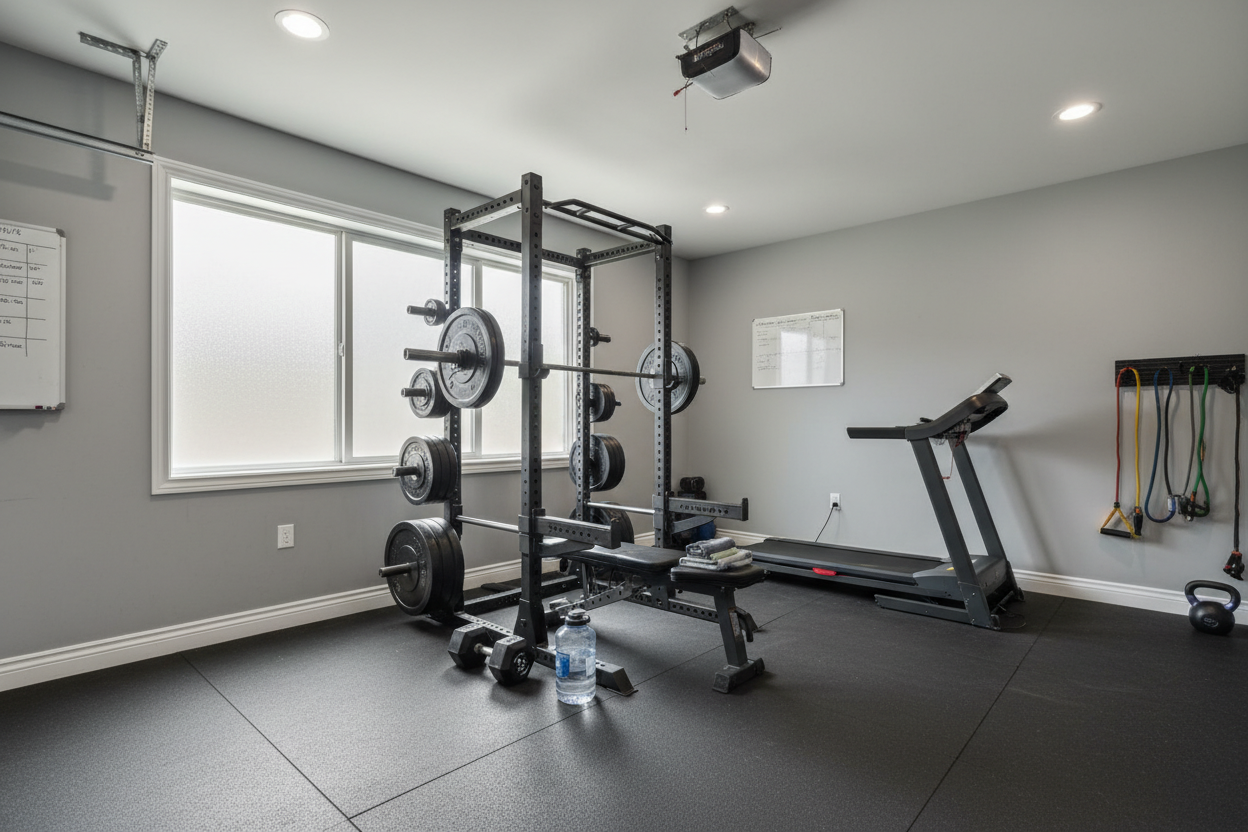
This is often a psychological barrier. When you are training in a garage, the fear of getting pinned is real. It is why I always tell people to invest in reliable home strength equipment. When you trust your rack's weight capacity and your safety bars, you lose the 'fear' and start finding your actual limits. If you aren't slightly worried about the last rep, you aren't training hard enough.
How to Safely Test Your True Limits Alone
Testing your limits doesn't mean being reckless. In my gym, I use a 'safety-first' hierarchy. For the big compounds, the safety pins in my power rack are non-negotiable. I set them just below my chest on the bench and just below parallel on the squat. If I fail, the steel catches the weight, not my neck.
When I'm hitting heavy glute exercises for mass, like a heavy squat or a RDL, I prioritize technical failure over absolute failure. The moment my back rounds, the set is done. However, for that final 'burnout' where I want to hit absolute muscular failure without a spotter, I often turn to weight lifting machines. Using a cable stack or a dedicated press machine allows me to go until the muscle literally stops moving without the risk of a barbell-related disaster.
The Dead-Simple Way to Track Your Effort
You don't need a lab. Use RPE (Rate of Perceived Exertion). It’s a scale of 1 to 10. A 10 is a max effort where another millimeter of movement was impossible. An 8 means you could have done two more reps. A 5 is basically a warm-up.
Stop counting reps as the only goal. Start aiming for a target RPE. If your program says '3 sets of 10,' but you finish the 10th rep feeling like you could do 10 more, you didn't do a set of 10—you did a warm-up. Adjust the weight until that 10th rep feels like an RPE 8 or 9. That is where the gains live.
My Personal Lesson in Intensity
I spent a year doing 'high volume' training with light weights because I was scared of a nagging shoulder injury. I was doing 15-20 reps and finishing every workout drenched in sweat. I felt like I was working harder than ever. When I finally got back under a heavy bar, I had lost 30 lbs off my max. I had plenty of 'sweat equity,' but zero actual intensity. I had to learn the hard way that being out of breath is not the same as being strong.
FAQ
Does sweating more mean I'm burning more fat?
Not necessarily. Sweating is just your body's way of staying cool. You can burn more calories in a cold room doing heavy deadlifts than you will sitting in a sauna doing nothing.
How often should I go to total failure?
Rarely. Going to absolute failure (RPE 10) on every set will fry your nervous system. Aim to stay 1-2 reps away from failure (RPE 8-9) for the majority of your work.
Is RPE better than using percentages?
Percentages are great if you just hit a new max, but RPE is better for daily training. It accounts for things like bad sleep, stress, or poor nutrition that might make 80% feel like 100% on a given day.