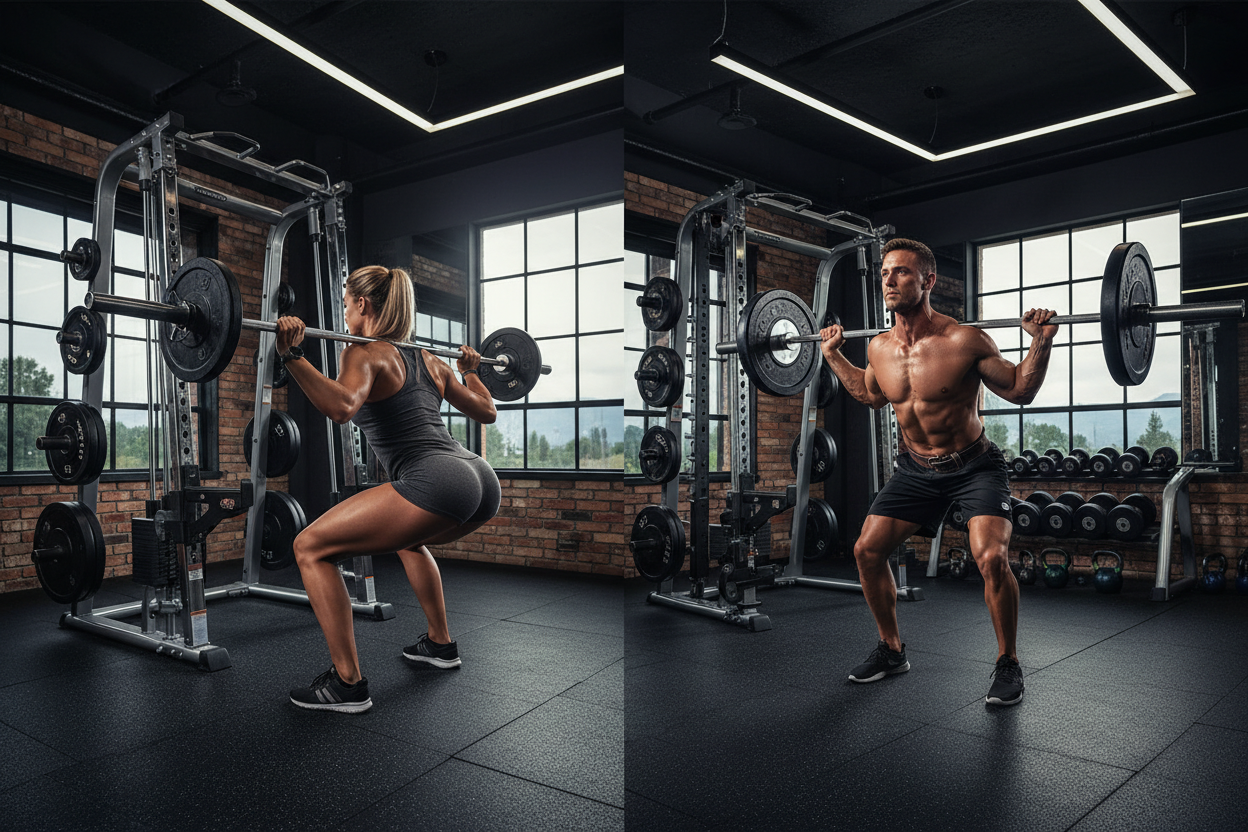
Glute Exercises Weightlifting: The Blueprint for Mass & Strength
You have likely spent hours doing kickbacks with ankle weights or lateral band walks until your hips burned, only to look in the mirror and see minimal change. Here is the hard truth: the glutes are the largest muscle group in the human body. To force them to grow, you need significant mechanical tension.
That means moving heavy iron. Glute exercises weightlifting protocols are not just about aesthetics; they are about building the posterior engine that drives your deadlift, your sprint speed, and your spinal health. If you are ready to trade the burn for actual structural change, you need to start lifting with intent.
Key Takeaways: The Hierarchy of Glute Growth
- The King of Isolation: The Barbell Hip Thrust is biomechanically superior for peak glute contraction.
- The Stretch Focus: Romanian Deadlifts (RDLs) target the glutes in the lengthened position, essential for hypertrophy.
- The Unilateral Essential: Bulgarian Split Squats fix imbalances and place massive load on a single glute.
- The Progressive Overload Rule: You must add weight or reps every week to see results; high reps with light weights yield diminishing returns.
The Science: Why Heavy Weights Are Non-Negotiable
Your glutes are comprised of Type II fast-twitch muscle fibers. These fibers respond best to heavy loads and explosive movements. While bodyweight exercises have their place in rehabilitation or activation, they rarely provide enough stimulus to trigger significant hypertrophy (muscle growth) in trained individuals.
To stimulate these fibers, you need intense glute workout with weights. We aren't looking for a "pump" here; we are looking for muscle damage and mechanical tension that forces the body to repair the tissue thicker and stronger.
The Best Barbell Exercises for Glutes
1. The Barbell Hip Thrust
This is arguably the most effective movement in your arsenal. Unlike squats, where the hardest part is at the bottom, the hip thrust challenges the glutes most at the top, where they are fully shortened.
Form Tip: Keep your chin tucked and your ribs down. If you arch your back, you are shifting the load to your lumbar spine. Drive through your heels until your hips are fully locked out.
2. Romanian Deadlift (RDL)
When looking for best glute exercises weights can offer, the RDL is critical because it loads the muscle while it stretches. This causes high levels of micro-tearing, which leads to growth.
Form Tip: Don't think about lowering the bar. Think about shoving your hips back toward the wall behind you. Stop when your hips can't go back any further.
Unilateral Training: Weight Bench Glute Exercises
You cannot build a complete physique with two-legged movements alone. Glute lifts with weights performed on one leg ensure that your dominant side isn't doing all the work.
The Bulgarian Split Squat
This is often the most dreaded day in a lifter's program because of the intensity. By elevating your rear foot on a bench, you place nearly all the load on the front glute.
Execution: Lean your torso slightly forward (about 45 degrees). An upright torso targets the quads; a forward lean shifts the leverage to the glute.
How to Grow Glutes at Home With Weights
You don't always need a squat rack. If you have dumbbells or kettlebells, you can execute a booty building workout with weights right in your living room.
Dumbbell Sumo Squat
Hold a heavy dumbbell between your legs. Take a wide stance with toes pointed out. This stance opens up the hips and recruits more glute max than a narrow stance.
Single-Leg Hip Thrusts
Use your couch as the bench. Place a dumbbell on your working hip. Because you are on one leg, a 20lb dumbbell will feel like 50lbs. This is one of the most effective workouts with weights for glutes when you have limited equipment.
My Training Log: Real Talk
I want to be honest about the reality of heavy glute training—specifically the Barbell Hip Thrust. Influencers make it look graceful, but my experience is usually far from it.
The first time I pushed past 315lbs on the thrust, the biggest issue wasn't my strength; it was the pain on my hip bones. Even with a standard foam pad, the bar dug in so hard I had deep purple bruises on my iliac crests for a week. I eventually had to buy an extra-thick squat sponge specifically for this lift.
Also, setting up is awkward. Sitting on the floor in a busy gym, rolling a loaded barbell over your legs while trying not to pinch your thighs, and then shimmying your shoulders onto the bench is a clumsy process. But the moment you lock out that heavy weight and feel the glutes contract harder than any other lift? That is when you know the awkward setup is worth it.
Conclusion
Building a strong posterior chain isn't about fancy angles or complicated machinery. It comes down to basic mechanics: lengthen the muscle under load, shorten the muscle under load, and progressively make it heavier. Whether you are doing booty exercises with barbell movements or utilizing dumbbells at home, consistency with heavy resistance is the secret.
Frequently Asked Questions
How often should I train glutes with heavy weights?
For most lifters, 2 to 3 times per week is optimal. Glutes are large muscles that can handle high volume, but heavy weightlifting requires at least 48 hours of recovery between sessions to prevent central nervous system fatigue.
Can I grow my glutes without squats?
Yes. While squats are excellent, they are primarily a quad-dominant movement for many people. You can build massive glutes strictly using Hip Thrusts, RDLs, and Lunges if squats cause you pain or don't feel effective.
Why don't I feel my glutes working during heavy lifts?
This is often due to "glute amnesia" or tight hip flexors. Before your weightlifting for glutes session, do 5 minutes of activation work (like bodyweight bridges) to establish a mind-muscle connection before grabbing the heavy iron.