Stop Doing Sets of 5: The Real Best Workout to Gain Strength
I remember the exact moment I realized my standard 5x5 routine was failing me. I was pinned under a 315-pound barbell in my garage, staring at the ceiling and wondering why my fifth rep looked like a slow-motion car crash while my first rep felt like air. I had the muscle, but my stabilizers were checking out early. The best workout to gain strength isn't about grinding through ugly, continuous reps until your form evaporates into a puddle of sweat on your stall mats.
If you have ever felt your lower back round on a heavy deadlift or your elbows flare on a bench press just to finish a set, you are not actually training for peak force. You are training for fatigue. Real power comes from the quality of the rep, not the desperation of the set. To get truly heavy, we need to stop treating our sets like a cardio session and start using the biological cheat code: cluster sets.
Quick Takeaways
- Cluster sets involve 10-20 second 'micro-rests' between individual repetitions.
- This protocol prevents stabilizer muscles from failing before your prime movers.
- You can move 5-10% more weight for the same total volume compared to traditional sets.
- It is the most effective way to maintain perfect technique under near-maximal loads.
Why Your Standard 5x5 Routine is Holding You Back
We have been told for decades that five sets of five is the gold standard. But here is the reality: by rep four of a heavy squat, your core is screaming, your heart rate is 160, and your nervous system is starting to misfire. Your quads might have the capacity to move that weight, but your 'support system'—those tiny stabilizer muscles and your lungs—is hitting the wall. This leads to what I call 'junk reps.' You finish the set, but the last two reps were ugly, inefficient, and arguably dangerous.
When you perform continuous heavy reps, cardiovascular fatigue sets in faster than you think. This isn't a problem if you're training for a 5k, but if you want to move 400+ pounds, it is a massive roadblock. Your technique breaks down because your body is trying to find the path of least resistance to survive the set. You start 'stripper squatting' or 'hitchy deadlifting.' This doesn't just limit your gains; it builds bad habits into your motor patterns. If every fifth rep of your training career is a technical disaster, you are essentially practicing how to fail under load.
Enter Cluster Sets: The Best Workout to Gain Strength
Cluster training flips the script. Instead of doing five reps in a row, you do one rep, rack the bar for 15 seconds, and then do the next. You repeat this until you've finished your 'cluster.' This 15-second window is the sweet spot for ATP (adenosine triphosphate) regeneration. It is just enough time for your muscles to replenish the immediate energy needed for a maximal effort, but not so long that your nervous system cools down. This is the best workout to build strength because it allows you to treat every single rep as the first rep of the set.
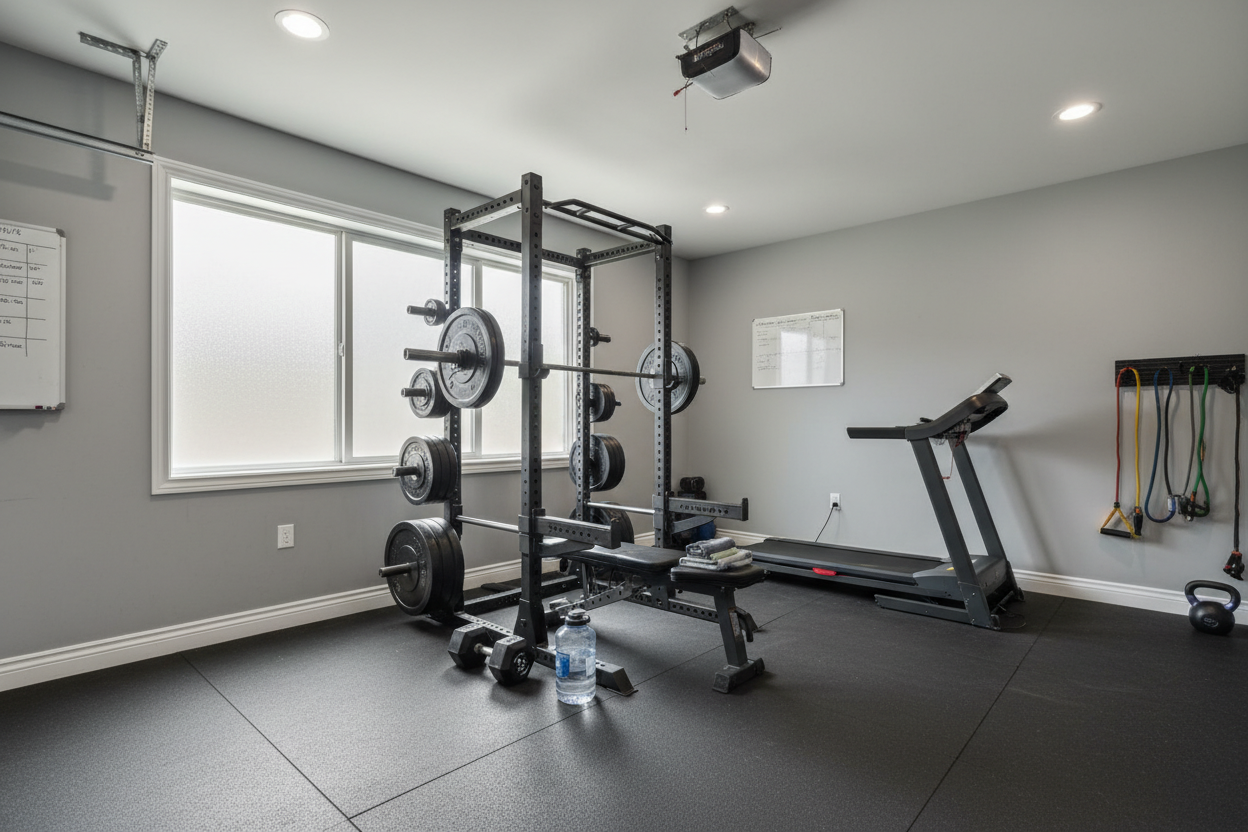
Think about the mental difference. Instead of dreading a heavy set of five where you know the last two will be a struggle, you focus on one perfect rep at a time. Because you are fresher for each rep, you can actually increase the intensity. If your traditional 5-rep max is 300 pounds, you can likely perform a cluster set of 5 reps at 315 or 320 pounds. Over a six-month training block, that extra 5-10% load adds up to massive PRs. To do this safely, you need quality strength equipment. When you are racking and un-racking a bar every 15 seconds near your absolute limit, you need a rack with rock-solid J-cups and spotter arms that won't give way if you misjudge a rep.
How to Program the Best Workout to Build Strength
Transitioning to clusters doesn't mean you need a whole new philosophy; you just need to change the structure of your main lifts. A solid 4-day split—Squat, Bench, Deadlift, and Overhead Press—works perfectly here. Instead of 5 sets of 5, try 4 clusters of 5 reps. Each rep is separated by 15-20 seconds of rest. Between the clusters themselves, take a full 3 to 5 minutes to let your central nervous system recover. This isn't a circuit; it’s a power clinic.
During these heavy sessions, I highly recommend using strength training accessories like a 10mm lever belt or high-quality lifting straps. Since you're handling heavier loads than usual, you don't want your grip to be the reason you miss a deadlift rep. A good belt provides that internal pressure you need to stay rigid during the micro-rest periods, ensuring you don't 'lose your tightness' between the individual reps of the cluster. Focus on the big four movements and keep the accessory work light and high-volume to balance the intensity of the clusters.
Why the Squat and Deadlift Thrive on Micro-Rests
Lower body compound movements are where cluster sets truly shine. The squat is widely considered the best exercise to gain strength, but it is also the most taxing on your lungs and spine. By adding a 15-second rest between reps, you remove the 'cardio' element of the squat. You can take a massive breath, reset your feet, and ensure your bracing is 100% before descending again. This prevents the dreaded 'rounding' that happens when a lifter gets winded mid-set.
Deadlifts benefit even more. Most people bounce their deadlifts or use the stretch reflex on the way down, which isn't true strength. Racking the bar or even just letting go of it for 15 seconds forces you to pull every single rep from a 'dead' stop with perfect positioning. If you want to dive deeper into the mechanics of why this works for your posterior chain, check out this science-backed leg workout guide. It breaks down the force-velocity curve in a way that makes the benefits of micro-rests even more obvious.
Ditch the Burn: Why the Best Workout to Get Stronger Feels Different
We have been conditioned to believe that if we aren't gasping for air or feeling a massive 'pump,' we aren't working hard enough. That is bodybuilding logic, not strength logic. The best workout to get stronger often feels 'easy' in the traditional sense because you aren't reaching that point of metabolic failure. You won't feel the burn; you will feel the weight. Your goal is force production—moving a heavy object as fast and efficiently as possible.
When I first switched to clusters, I felt like I was cheating. I finished my squat session and I wasn't drenched in sweat. But two weeks later, I hit a 20-pound PR. My nervous system was fresh, my joints weren't inflamed from sloppy reps, and my confidence under the bar was at an all-time high. Stop chasing the fatigue and start chasing the weight. If you want to be the strongest person in your zip code, stop doing sets of five and start building clusters.
Personal Experience: The Day My Rack Saved Me
I learned the importance of gear during a cluster set of heavy bench presses. I was using a cheap, bolt-together rack from a big-box store that had way too much sway. On my third 'micro-rest' rep, I went to rack the bar and the whole unit shifted about two inches. It was terrifying. I eventually upgraded to a rack with 3x3-inch 11-gauge steel and 1-inch hardware. Now, when I'm doing clusters, I can slam that bar into the J-cups with zero hesitation. My mistake was thinking any rack would do; the reality is that high-intensity training requires equipment that stays exactly where you put it.
FAQ
How long should I rest between the individual reps?
Stay between 10 and 20 seconds. Any shorter and you aren't getting the ATP recovery; any longer and the set takes an hour to finish. I find 15 seconds is the sweet spot for keeping the momentum while shedding fatigue.
Can I do cluster sets for every exercise?
You could, but it’s overkill. Save clusters for your 'big' lifts—squats, deadlifts, bench, and overhead press. For accessory work like curls or rows, stick to traditional sets of 8-12 to get some blood flow and hypertrophy.
Will cluster sets help me lose weight?
Not directly. Cluster sets are designed for maximum force production. While lifting heavy burns calories, the rest periods are too long for a significant 'afterburn' effect. This is a tool for power, not for leaning out for a bodybuilding show.