Your Exercise and Fitness Equipment Is Ruining Your Floor
I remember the first time I dropped a 315-pound deadlift on my garage floor. I didn't have mats yet—just raw, naked concrete that I assumed was indestructible. The sound wasn't a satisfying thud; it was a sickening, high-pitched crack. When I rolled the bar away, a silver-dollar-sized chunk of the slab was missing. That was the day I realized that buying exercise and fitness equipment is only half the battle. If you don't respect the foundation of your house, your home gym will eventually eat your mortgage.
We spend weeks obsessing over knurling, sleeve rotation, and cable ratios, but we treat flooring like an afterthought. Most people scroll through a home workout store and grab whatever is cheapest, thinking a half-inch of foam will save their subfloor. It won't. I've spent a decade testing fitness home equipment in garages, basements, and second-story spare rooms, and I've seen exactly what happens when heavy iron meets residential flooring without a proper barrier.
- Concrete isn't permanent: Repeated vibrations from exercise gym equipment will eventually cause spalling and deep structural cracks.
- Foam is for kids: Soft puzzle mats compress to nothing under a heavy rack, leaving your floor unprotected.
- High-density is king: You need at least 1/2-inch to 3/4-inch of vulcanized rubber to actually absorb shock.
- Vapor barriers matter: Trapping moisture between a mat and your floor is a recipe for mold and rot.
The Silent Damage Happening Under Your Power Rack
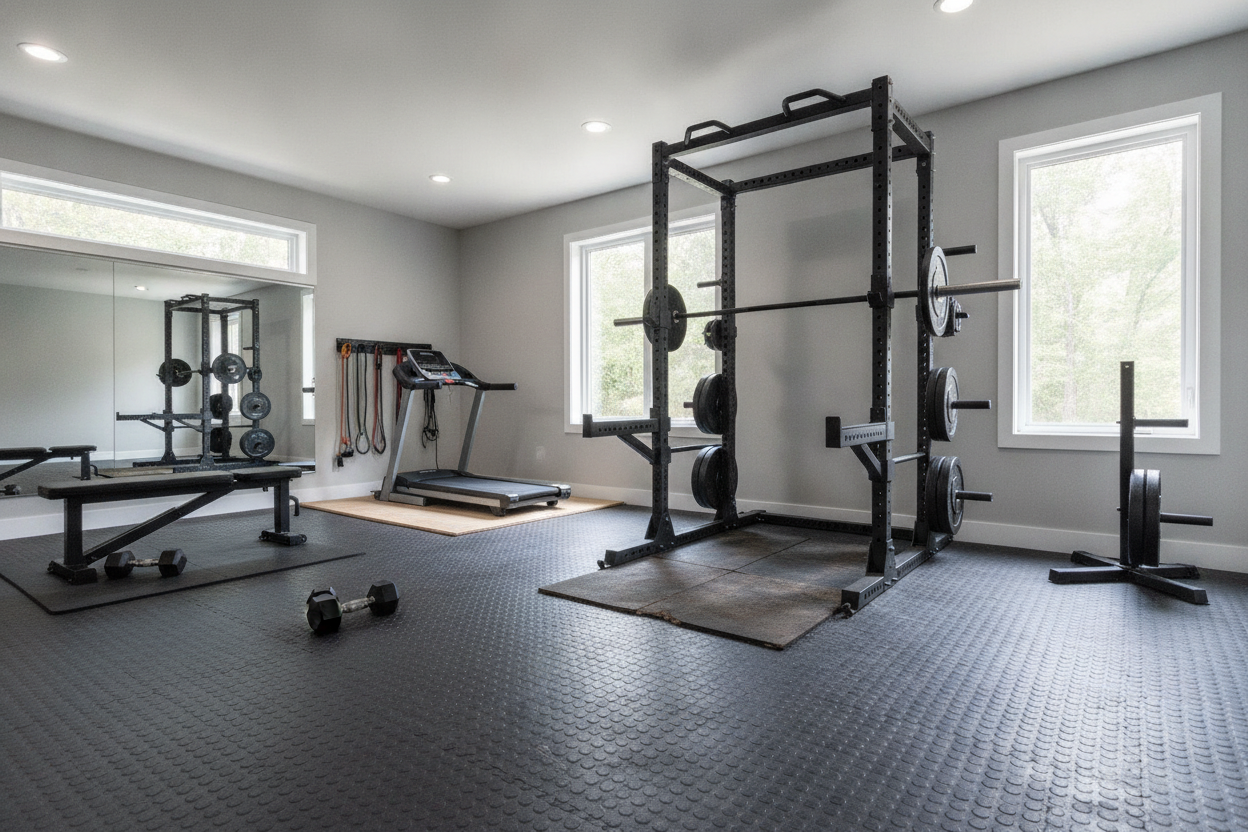
When you set up a heavy rack, you aren't just placing a couple of hundred pounds on the floor. You are creating a concentrated point of high pressure. Every time you re-rack a heavy squat or drop a kettlebell, that force travels through the frame and into the floor. This is a massive amount of kinetic energy that has to go somewhere. If your workout tool doesn't have a medium to absorb that energy, the floor takes the hit. In a garage, this manifests as pulverizing the concrete into fine dust—a process called spalling.
If you're training in a spare room with wood joists, the problem is even worse. Wood flexes. Repeatedly slamming any heavy fitness product onto a wood floor causes micro-fractures in the joists over time. I once consulted for a guy who had a full power rack on a second-story floor with zero protection. After two years of heavy training, his ceiling downstairs started to sag. He thought he was saving money on online exercise equipment, but he ended up spending five figures on structural repairs. Concrete is brittle, and wood is organic; neither was designed to withstand the violent impact of 500 pounds of iron being dropped from hip height.
Even if you aren't a powerlifter, the constant vibration from a treadmill or a heavy rowing machine can be destructive. These machines create a rhythmic resonance that can loosen floor nails and cause permanent squeaks. You might not see the damage today, but every session is a tiny hammer blow to your home's integrity. High-quality exercise & fitness equipment requires a high-quality landing zone, or you're just renting your gym space from the future repairman.
Why Cheap Foam Puzzle Mats Are Basically Useless
We’ve all seen them: the bright blue or grey foam tiles at the local home workout store. They’re cheap, they look clean, and they’re easy to assemble. But here’s the cold truth: foam is almost entirely useless for serious lifting. Foam is mostly air. When you put a 200-pound man and a 300-pound barbell on top of it, that foam compresses until it's paper-thin. At that point, you might as well be lifting on the bare floor. It offers zero shock absorption for the slab and zero stability for your feet.
Squatting on foam is like trying to lift while standing on a mattress. Your ankles will wobble, your force transfer will suck, and you're begging for an injury. If you’re just doing bodyweight movements or some light yoga, then sure, a 6X4Ft Yoga Mat Exercise Mat is a great choice for a dedicated mobility area. It provides enough cushion for your joints without pretending to be a structural shield. But don't mistake that comfort for the heavy-duty protection needed under a squat stand or a set of dumbbells.
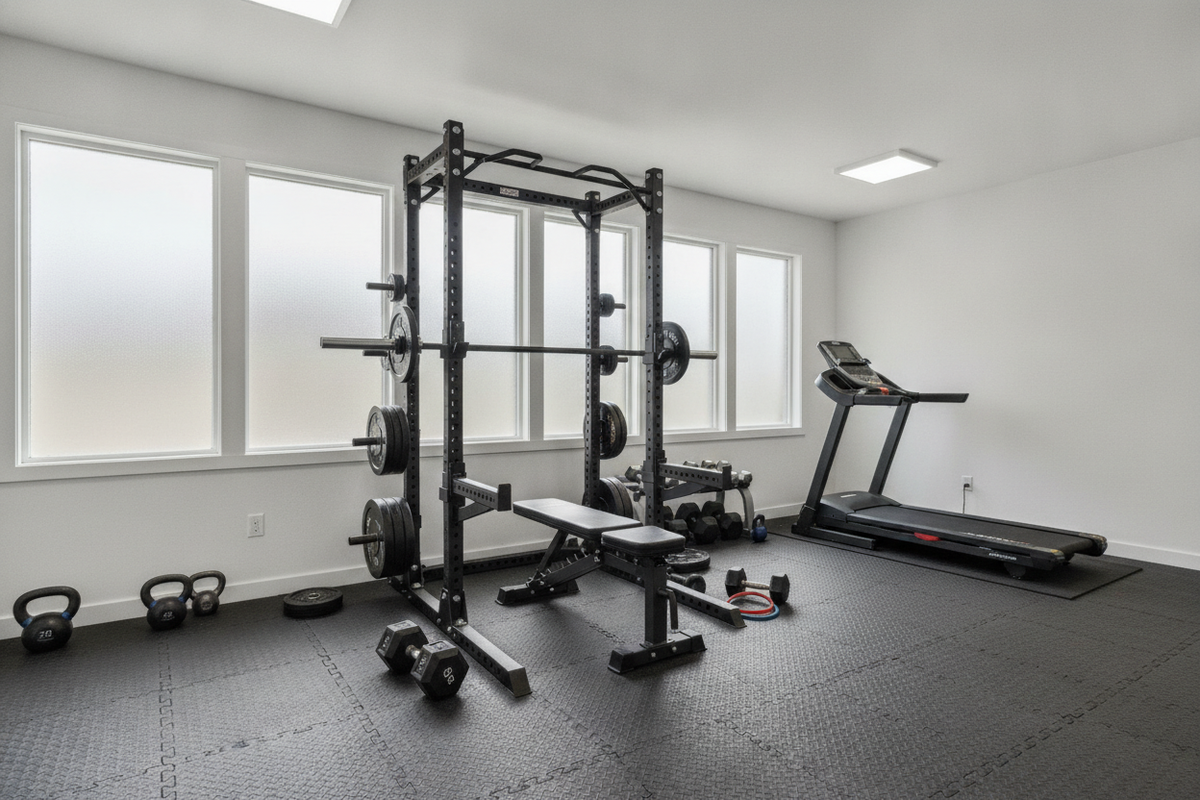
True workout fitness equipment flooring needs to be made of high-density rubber. The difference is in the weight. A single 4x6 foot rubber stall mat weighs about 100 pounds. A whole pack of foam tiles weighs about five. That mass is what stops the vibration. When you drop a weight on rubber, the material deforms and rebounds, dispersing the energy laterally. Foam just gets crushed. If you're shopping for fitness retail options, skip the 'soft' section and go straight to the vulcanized rubber. Your shins, your floor, and your PRs will thank you.
The Exact Mats I Use to Protect My Concrete Slab
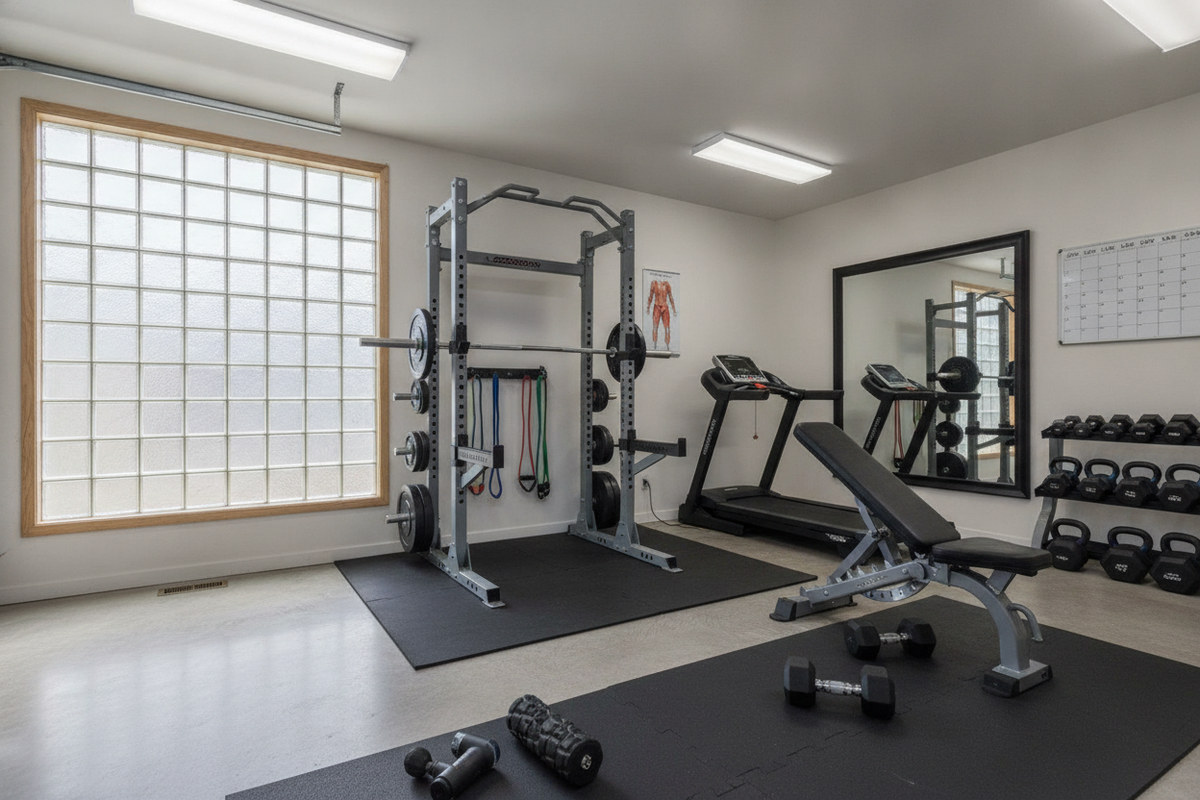
After ruining my first garage floor, I got serious about specs. Now, I don't let a single piece of workouts equipment touch my floor unless there is at least 3/4-inch of recycled rubber underneath it. For a full-scale lifting area, I recommend a large-format solution like the 6X8Ft Exercise Mat Gym Flooring. A mat this size is heavy enough to stay in place without adhesive, and it covers the entire footprint of a standard power rack plus the 'drop zone' in front of it.
The density is the spec that matters. You want something with a high shore hardness rating. If you can dig your fingernail into the mat and it feels squishy, it’s too soft. You want it to feel like an automobile tire—firm, slightly textured, and incredibly durable. This density is what protects your physical fitness equipments from getting dinged up, too. When you drop an expensive urethane-coated dumbbell on a hard floor, the internal cast iron can crack. A high-density mat protects both the floor and the tool itself.
In my current setup, I use a dual-layer approach for deadlifts. I have my base layer of 3/4-inch rubber, and then I use 'drop pads' or a secondary mat for high-impact movements. This isn't just about the floor; it's about noise. If you have neighbors or a family, the 'thud' of a heavy set of plates can be felt through the whole house. High-density rubber turns a house-shaking boom into a dull, manageable thud. It makes the gym a much more neighbor-friendly environment while ensuring your concrete doesn't turn into gravel over the next five years.
How to Budget for Flooring When Outfitting Your Space
People always ask me, 'how much is workout equipment going to cost?' and they usually only count the bars and plates. I tell them to take their total budget and carve out 15-20% specifically for flooring. It sounds like a lot until you realize that a single crack in a post-tension slab garage floor can cost $2,000 to $5,000 to professionally inject and repair. Spending $400 on premium rubber is the cheapest insurance policy you will ever buy for your home.
You can find deals if you know where to look. While a high-end fitness equipment shop might charge a premium for branded mats, you can often find Home Gym Equipment Deals that bundle flooring with racks or plates. Another pro-tip: check local agricultural supply stores for horse stall mats. They are essentially the same as gym mats, though they tend to have a stronger sulfur smell and might be slightly less uniform in thickness. If you have the budget, go for the gym-specific mats to avoid the 'barn' smell in your house.
Don't try to save money by only matting the area where you stand. You need to account for the 'drift' of a dropped barbell. If you miss a lift and the bar rolls off your tiny 3x3 mat, it’s going straight into the floor. Cover the entire active workout area. If you're on a tight budget, buy the flooring first and the fancy adjustable dumbbells later. You can always add more iron, but you can't easily undo the damage to your foundation.
Keep Your House Intact While Building Your Dream Setup
Building a home gym is one of the best investments you can make for your health, but don't let it become a liability for your property value. I've seen too many guys treat their spare bedroom like a commercial warehouse, only to be shocked when they move out and find the floorboards splintered and the subfloor rotted from trapped sweat and moisture. Being a smart lifter means thinking about the environment you're training in as much as the weight on the bar.
Once you have your flooring locked down, you can start filling the space with the Top Home Fitness Machines And Equipment without worrying about every drop or vibration. A solid floor gives you the confidence to train hard. You don't want to be thinking about your floor tiles when you're grinding out a final rep. Lay the rubber, secure the rack, and then get to work. Your house will stay in one piece, and your joints will feel better for it.
Personal Experience: My $1,200 Mistake
Early in my lifting career, I thought a thick shag rug was enough protection for my 50lb dumbbells in a rental apartment. I dropped one during a set of seated presses. It went right through the rug, through the padding, and put a three-inch dent into the hardwood. I lost my entire security deposit and had to pay extra for the floor refinishing. Since then, I never trust anything but 3/4-inch rubber. It was a painful lesson in physics that I don't want you to repeat.
FAQ
Do I need flooring if I only use bumper plates?
Yes. Bumper plates are better for the bar, but they still transfer massive amounts of force to the ground. In fact, because they bounce, they can actually apply force over a wider area or roll into unprotected spots more easily. You still need rubber mats.
Will rubber mats smell up my house?
Cheap recycled mats can have a strong 'new tire' smell for a few weeks. To mitigate this, wash them with a mixture of Simple Green and water, then let them air out in the sun for 48 hours before bringing them inside. High-quality vulcanized mats have almost zero odor.
Can I put a treadmill directly on carpet?
I wouldn't. The heat from the motor can singe carpet fibers, and the vibration will ground dust and dirt deep into the pile, ruining the carpet. Use a thin, high-density PVC mat to create a barrier and keep the machine stable.