Your Cardio Sucks: Try These Brutal Dumbbell HIIT Exercises Instead
I spent years staring at a treadmill screen, watching the 'calories burned' ticker crawl while my knees sent me hate mail. I was doing 'cardio' because that's what the magazines said to do, but I was just getting softer and weaker. My strength plummeted, and I looked like a slightly smaller version of my out-of-shape self. That's when I ditched the steady-state slog for dumbbell hiit exercises.
Quick Takeaways
- Bodyweight cardio often leads to muscle loss; dumbbells provide the tension needed to keep your gains.
- High-intensity intervals with weights create a massive metabolic disturbance in half the time of a run.
- Proper flooring is non-negotiable to protect your joints and your home's foundation.
- Simple movements are better than complex ones when you are gasping for air.
Why Your Standard Bodyweight Circuit Is Failing You
Most bodyweight HIIT is just aerobic dancing with a better marketing team. If you're only doing air squats, jumping jacks, and burpees, your body has zero incentive to hold onto muscle tissue. It sees that muscle as expensive fuel it doesn't need for such a low-resistance task. You end up in a 'skinny-fat' trap where you're technically fit but look like you've never touched a barbell.
Beyond the aesthetics, the repetitive pounding of bodyweight plyometrics on bare concrete is a recipe for tendonitis. I've seen more guys blow out their Achilles or develop chronic 'jumper's knee' trying to do 100 burpees for time than I have in the squat rack. You need resistance to force an actual athletic adaptation.
The Muscle-Saving Magic of Dumbbell HIIT Exercises
Adding a pair of 35s or 50s to your intervals changes the metabolic demand entirely. High intensity interval training workouts with dumbbells create an oxygen debt that a treadmill simply can't match. When you're swinging or pressing heavy iron, your heart rate doesn't just spike; it stays pinned because your entire posterior chain is screaming for blood.
This isn't just about burning fat. Hiit training with dumbbells forces your nervous system to stay 'on' under load. You are preserving strength while stripping away the fluff. By the time you finish a db hiit workout, your muscles are engorged with blood and your metabolism is revved for hours, not just the duration of the session.
Protect Your Joints (And Your Concrete Floor)
Fatigue is a liar. It tells you your form is fine when your lower back is actually rounding like a fishing pole. When you're deep into a high intensity workouts with dumbbells session, you are going to drop weights. It’s not a matter of if, but when. I've personally seen a 50-lb hex dumbbell chip a garage slab because the lifter thought a thin yoga mat was enough protection.
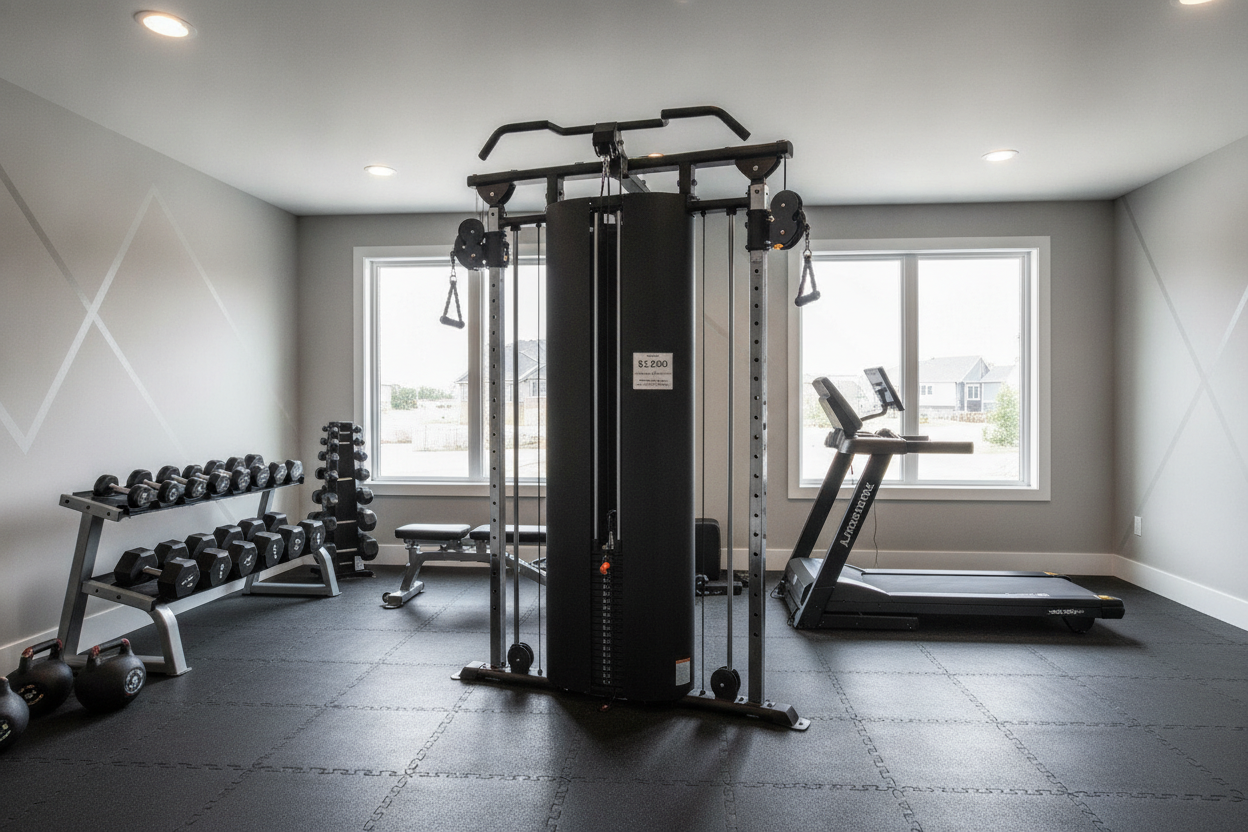
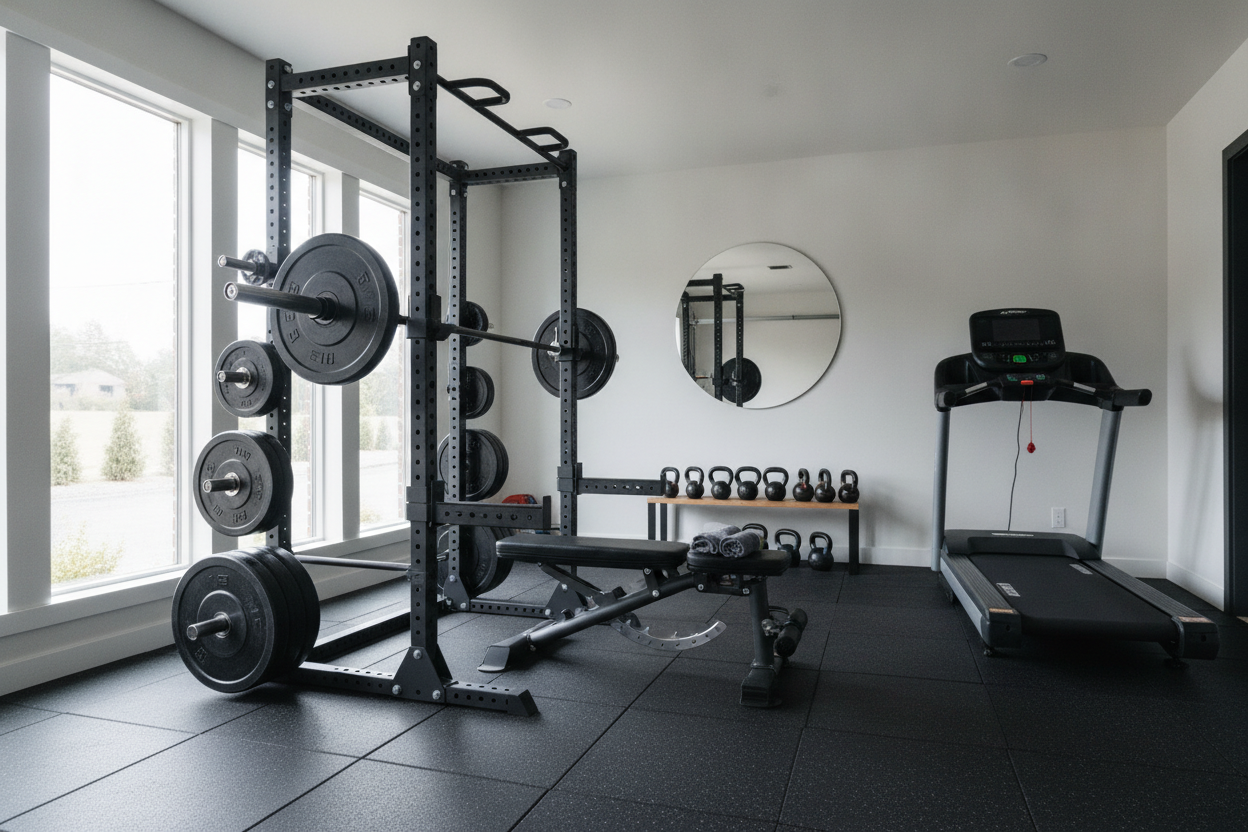
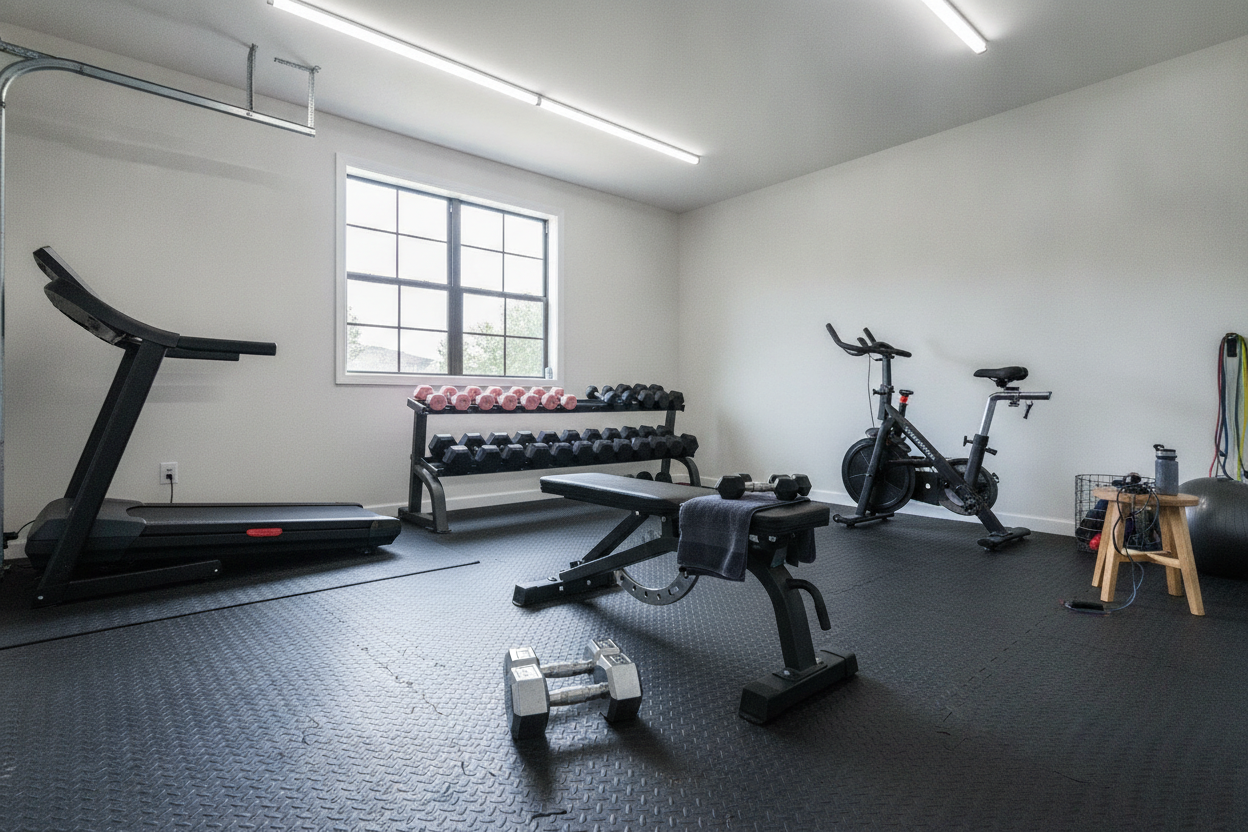
You need a real landing zone. A dedicated 6X8Ft Exercise Mat Yoga Mat Gym Flooring For Home Workout is the best investment you can make for this style of training. It absorbs the shock that would otherwise go into your ankles and prevents your dumbbells from bounce-rolling into your drywall. If you're training on bare concrete, you're playing a dangerous game with your gear and your joints.
The 'No-Fluff' Dumbbell HIIT Workout for Beginners
If you're looking for a dumbbell hiit workout for beginners, stop overcomplicating it. You don't need fancy rotational lunges or complex flows. You need high-effort, low-skill movements. Here is a 15-minute 'Welcome to the Suck' circuit: perform each move for 40 seconds, rest for 20, and repeat for three rounds.
- Goblet Squats: Keep the weight tight to your chest. No half-reps.
- Dumbbell Push Press: Use your legs to drive the weight overhead.
- Renegade Rows: Hold a plank on the dumbbells and pull one to your hip at a time.
- Dumbbell Swings: Like a kettlebell swing, but holding the head of a single dumbbell.
- Thrusters: A full squat into an overhead press. This is where you'll want to quit.
This hiit workout with dumbbell basics ensures you don't snap something when you get tired. Keep the weights moderate—about 50% of what you'd usually use for a set of 10.
Scaling Up: High Intensity Workouts With Dumbbells for Vets
Once you stop seeing stars during the beginner circuit, it’s time to add power movements. We're talking dumbbell cleans, snatches, and devils presses. These moves require total body coordination. For example, if you've already hit your heavy bench session for the week, you can use a high-rep upper body circuit to Build A Powerful Chest With This Dumbbell Workout Routine by focusing on explosive speed and minimal rest.
On the flip side, if your wheels are feeling fresh, you can learn How To Build Massive Legs With Just A Dumbbell Lower Body Workout by integrating weighted lunges and Bulgarian split squats into your intervals. The goal isn't just to move fast; it's to move heavy weight fast. That is the secret to that 'hard' look that bodyweight athletes rarely achieve.
Where to Fit This Into Your Weekly Garage Gym Split
Don't be the guy who tries to do this six days a week. You'll burn out your central nervous system before the end of the month. I treat these sessions as finishers or standalone conditioning days. If you're following a standard strength program, two of these sessions per week is plenty. Check out the Workout Hub to see how to layer these intervals between your heavy barbell days without wrecking your recovery.
Dumbbell HIIT FAQ
What weight dumbbells should I use for HIIT?
Choose a weight you can overhead press for 15 reps while fresh. For most men, that's a pair of 25s or 35s. For women, 10s or 15s. The goal is speed and heart rate, not a 1-rep max.
How long should a dumbbell HIIT session last?
If you're going longer than 25 minutes, you aren't working hard enough. 15 to 20 minutes of true high-intensity work is more than enough to trigger the adaptation you want.
Can I do this if I have bad knees?
Yes, but swap the high-impact moves. Instead of jumping lunges, do heavy weighted step-ups. The dumbbells provide the intensity so you don't have to rely on jumping.