Your 6-Move Gym Plan Beginner Routine Is Destroying Your Motivation
I remember my first time in a commercial gym. I had a printout with eight different exercises, three sets each, and absolutely zero clue. I spent forty minutes just trying to find the right cable attachment while some guy in a stringer tank top stared me down. Most gym plan beginner routines are designed by people who forgot what it is like to be lost; they give you a grocery list of movements when you really just need a snack.
- Stop trying to learn six new movements in one hour.
- Focus on one 'push' and one 'pull' per session to avoid burnout.
- Master the mechanics at home before you touch a barbell.
- Consistency beats complexity every single time.
Why We Need to Talk About 'Workout Bloat'
Most gym workout programs for beginners look like a CVS receipt. They want you to squat, bench, row, overhead press, and then finish with three types of bicep curls. It is too much. Your brain hits a cognitive wall before your muscles even get warm. You are trying to remember if your elbows should be tucked or flared while your heart rate is spiking and the gym is loud. It is a recipe for quitting by week three.
This 'bloat' is why people quit. Learning a barbell squat is a skill, like playing the guitar. You would not try to learn six songs on day one. When you overcomplicate the start, you spend more time checking your phone for instructions than actually moving weight. It is exhausting and, frankly, unnecessary for seeing results. You do not need a 300-lb weight capacity rack on day one; you need a brain that is not overwhelmed.
The Two-Movement Solution
A solid gym beginner plan should be dead simple. I am talking about two movements. That is the minimal effective dose. One primary compound push and one primary compound pull. By stripping away the fluff, you can actually focus on your form. You are not rushing to finish a 90-minute marathon; you are spending 20 minutes getting really good at two specific patterns.
This approach minimizes form breakdown. When you are only focused on two things, you can notice if your heels are lifting during a squat or if your back is rounding during a row. You build a foundation of quality movement rather than just 'surviving' a long list of exercises. It is about intensity and focus, not just checking boxes. If you can master a 52.5-lb dumbbell row with a flat back, you are ahead of 90% of the people in that gym.
The A/B Micro-Workout Blueprint
Here is how it works. You have two workouts: Day A and Day B. On Day A, you do a lower-body push, like a goblet squat, and an upper-body pull, like a dumbbell row. On Day B, you flip it: an upper-body push, like a floor press, and a lower-body pull, like a kettlebell deadlift. That is it. Three sets of 8-10 reps for each, and you are out the door.
This is incredibly efficient if you are training in a crowded gym. You can even run a one bench beginner workout plan if you want to stay in one spot. Grab a pair of dumbbells and a bench, and stay there. I prefer a bench with a 12-inch pad width—it gives your shoulder blades enough support without being so wide it restricts your movement. You avoid the 'gym wander' where you lose your equipment to someone else the moment you turn your back to grab water.
Practicing Your Reps Off the Gym Floor
Do not wait until you are under the bright lights of a commercial gym to learn how to move. I tell everyone to practice their hinge and squat patterns barefoot in their living room first. This builds the mind-muscle connection without the pressure of people watching you. It is about building the habit in a low-stakes environment before you ever step foot on a gym floor.
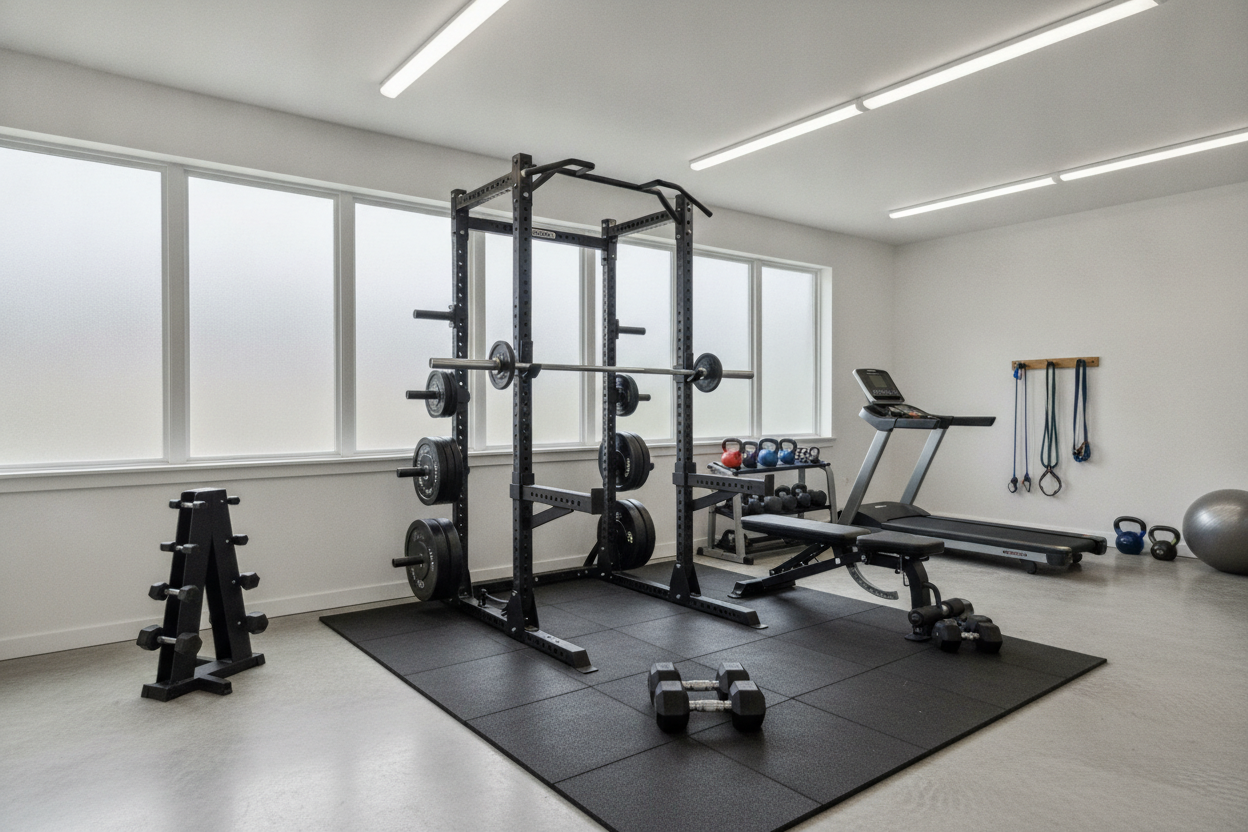
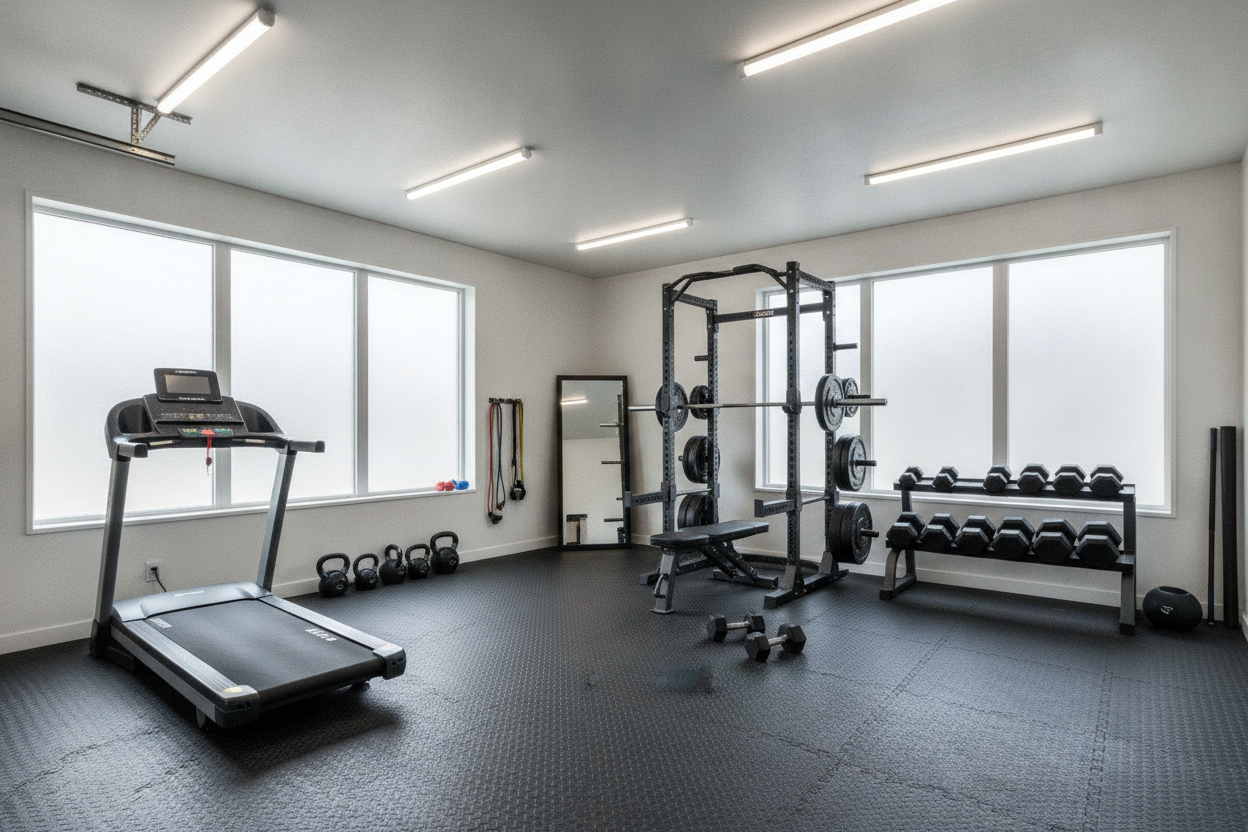
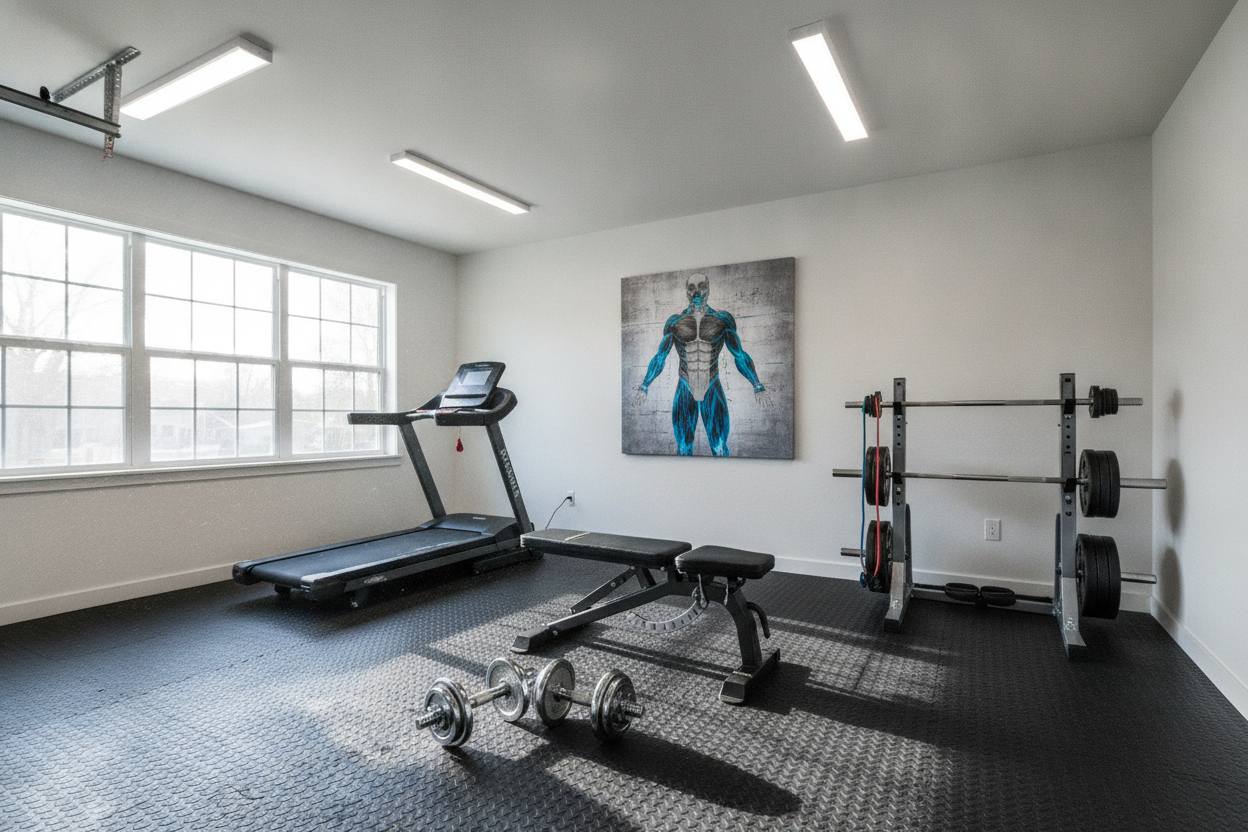
I suggest setting up a dedicated, comfortable space at home. Get a large exercise mat for home gym use so you are not slipping on hardwood or carpet. A 6mm thick mat is the sweet spot; anything thinner and your knees will complain during lunges, anything thicker and you lose stability on your squats. If you cannot do a perfect bodyweight squat without falling over, adding a 45-pound bar at the gym is not going to help.
A Realistic Calendar for the Chronically Busy
Forget the six-day 'grind' you see on social media. A sustainable gym schedule beginner lifters can actually stick to is just two or three days a week. Alternate between Day A and Day B. If you miss a Tuesday, just go Wednesday. The goal is the long game, not a perfect week followed by a month of burnout. Most people fail because they set a bar they cannot possibly clear.
This schedule respects your time. Most people quit because they set an impossible standard for their lifestyle. If you want to scale this up later, you can look into a home gym blueprint beginner plan to see how to build a full system once the habit is locked in. For now, just show up, do your two moves, and go home. That is how you build a body that lasts.
Personal Experience: My High-Volume Mistake
Early in my training, I fell for the 'more is better' trap. I was doing a high-volume bodybuilding split I found in a magazine. I was doing 12 sets for chest on Mondays alone. By week four, my shoulders were trashed because my form was garbage—I was simply too tired to maintain proper mechanics. I was chasing a pump but losing my joints.
I switched to a minimalist A/B routine out of necessity, thinking I would lose my progress. Instead, my strength actually went up. I was not constantly recovering from 'junk volume.' I could put 100% of my energy into a few heavy sets instead of 50% into ten mediocre ones. It was a lesson in ego: the simplest plan is usually the one that actually works.
How long should these workouts take?
If you are focused, you can be done in 25 to 30 minutes. That includes a quick warm-up. It is designed to fit into a lunch break or a busy morning without taking over your life.
Can I do this with just dumbbells?
Absolutely. In fact, I prefer dumbbells for beginners. They allow for a more natural range of motion and help identify strength imbalances between your left and right sides that a barbell might hide.
When do I add more exercises?
Wait until you have hit your target reps with perfect form for three weeks straight. Once the two-move habit is automatic, you can add one 'accessory' move like a plank or a bicep curl.