Why Your Random Mix of Weights Isn't a Complete Home Gym
I remember the day I realized my 'gym' was actually just a graveyard for mismatched Craigslist finds. I had a wobbly bench from the 90s, a bar that felt like a pool noodle, and three different brands of plates that didn't even slide onto the sleeves without a fight. Building a complete home gym isn't about hoarding every piece of plastic you see on social media; it's about building a workflow that doesn't make you want to quit before the first set.
Quick Takeaways
- Flooring is your first purchase, not an afterthought.
- The rack is the command center—spend 50% of your budget here.
- Mismatched gear kills momentum; buy into a unified system.
- Cables are great, but free weights build the foundation.
The 'Frankenstein' Gym Mistake (And Why It Costs You)
Most people build their space piece by piece based on what's on sale. This is how you end up with a 'Frankenstein' gym. You buy a rack from one brand and a bench from another, only to realize the bench is too tall for you to get a proper leg drive while inside the cage. It's a disjointed mess that makes your 90-minute workout take two hours because you're constantly moving clutter.
When you look for complete home gym equipment, you should think about how the pieces interact. A unified system means your J-cups fit the uprights perfectly, your safety bars actually catch the weight, and your floor space isn't eaten up by three different stands for things that should have been integrated from the start.
The Real Foundation of a Personal Home Gym
Concrete is the enemy of your gear. If you're lifting on bare garage floors, you are one heavy deadlift away from a cracked slab and a bent barbell. I've seen guys ruin $800 bars because they thought they didn't need mats. You need a high-density surface that can absorb the shock of a 400-pound drop without bouncing it back into your shins.
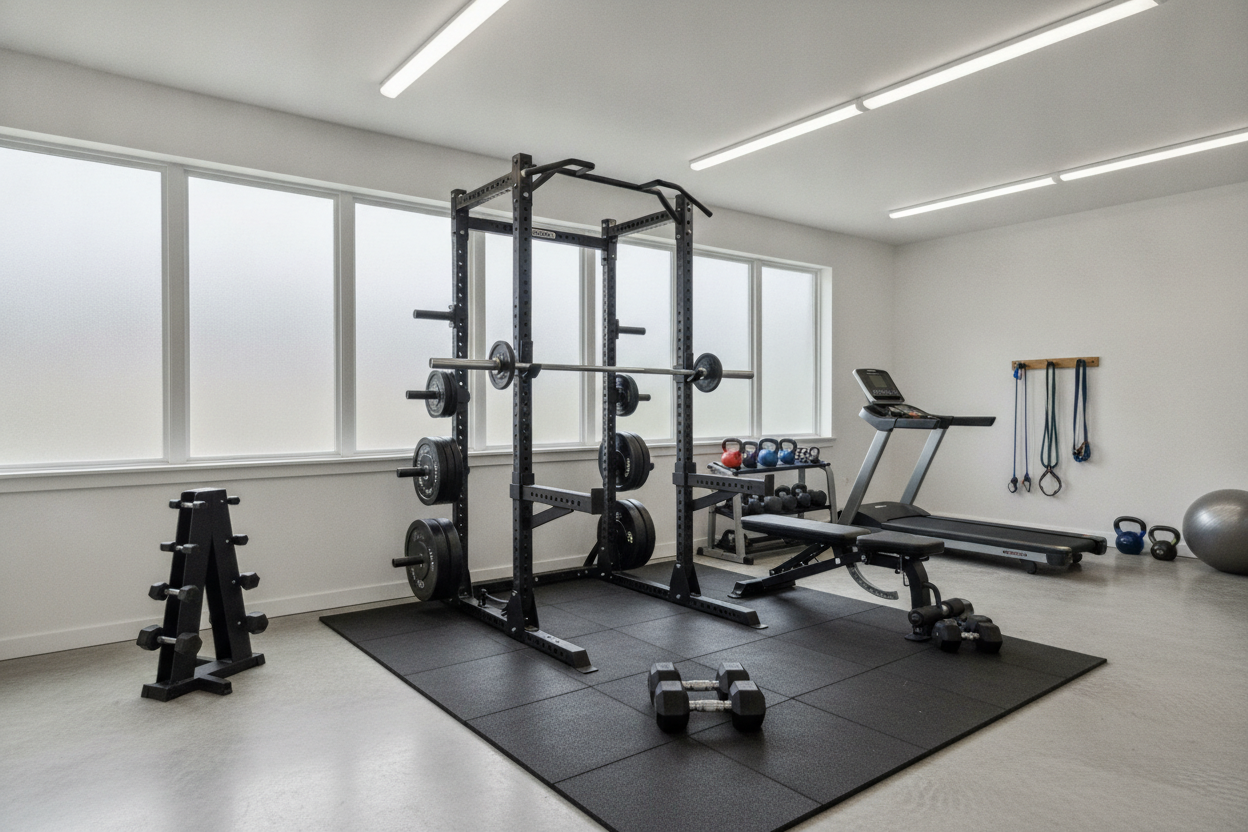
For most lifters, a 6x8ft exercise mat gym flooring setup is the absolute minimum footprint required. It gives you enough room to center a rack and still have a safe 'drop zone' for your plates. Don't even think about bolting a rack down until you've sorted the floor. Your joints (and your landlord) will thank you.
The Anchor Piece: Where Your Budget Actually Belongs
If the floor is the foundation, the rack is the heart of any at home full gym. This is the one place where you cannot afford to be cheap. A flimsy rack feels like a cage of toothpicks when you're under a heavy squat. You want 11-gauge or 14-gauge steel that doesn't sway when you rack the weight.
I often point people toward the Proform Carbon Strength Power Rack XL because it hits that sweet spot of being sturdy enough for heavy triples while offering the versatility of a complete home gym system. It’s the centerpiece that dictates how the rest of your room flows. If your rack is solid, everything else—from your pull-ups to your bench press—feels safer and more professional.
Selecting Home Gym Solutions That Actually Scale
You need to buy for the lifter you want to be in three years, not the one you are today. That means choosing home gym solutions that can handle progressive overload. A set of fixed dumbbells is a waste of space for most people. Instead, look for a heavy-duty adjustable bench and a barbell that has a minimum 1,000-lb capacity.
When searching for the best home gym equipment for strength training, focus on the 'Big Three' compatibility. Your bar, plates, and bench are your workhorses. If you're running a program like 5/3/1 or Starting Strength, you need iron that stays put and a bench that doesn't slide across the floor when you're trying to set your arch.
Do You Really Need Cable Gym Systems for Home?
I love a good lat pulldown as much as anyone, but gym systems for home that rely entirely on cables can be a trap. They take up a massive amount of floor space and often have a 'mushy' feel compared to commercial grade pulleys. If you have the room, a functional trainer is a luxury addition. If you're tight on space, stick to your rack and a set of resistance bands.
For a home gym for strength training, cables should be the 'finisher,' not the main event. I’ve found that a simple plate-loaded pulley attached to your power rack gives you 90% of the benefit of a standalone machine for about 10% of the cost and footprint.
Pulling It All Together Without Wasting Space
The final step in creating a personal home gym is organization. A room full of plates on the floor isn't a gym; it's an obstacle course. Use vertical storage for your weights and wall-mounted racks for your bars. You want enough clear floor space to move around your rack without tripping over a 45-lb plate.
I once made the mistake of buying a cheap 'all-in-one' station that promised everything but did nothing well. The leg developer hit my shins wrong, and the bench wasn't adjustable. I ended up tearing it apart and starting over with a simple rack and quality iron. Don't repeat my mistakes. Build it right the first time.
FAQ
How much space do I really need?
A standard 10x10 foot area is the 'goldilocks' zone. It’s enough for a full rack, a bench, and a bit of room to move around the bar without hitting the walls.
Should I buy iron or bumper plates?
If you're doing Olympic lifts (cleans, snatches) or deadlifting on a floor you care about, get bumpers. If you just want to get strong and love the sound of clanging metal, iron is cheaper and takes up less room on the bar.
What is the most underrated piece of gear?
A quality barbell. People spend thousands on a rack and then buy a $50 bar. Your hands only touch the bar—don't skimp on the knurling or the sleeve spin.