I Missed Training in the Gym Until I Actually Went Back
I recently renewed my membership at a local big-box facility. I’d spent three years in my garage and convinced myself I missed the energy, the rows of iron, and the 'vibe.' I thought training in the gym would spark a new level of intensity that my solitary rack couldn't provide. I was wrong. It was a month of frustration, terrible lighting, and waiting for a squat rack while a teenager scrolled through TikTok.
Quick Takeaways
- Commercial gyms waste an average of 20-30 minutes per session on logistics.
- Atmosphere is often just distraction in disguise.
- Versatility beats variety every single time for home setups.
- A solid floor is the most underrated part of a professional-feeling gym.
The 'Commercial Gym Atmosphere' is a Massive Illusion
People love to talk about the 'energy' of being surrounded by others. In reality, that energy is usually just sensory overload. Between the over-compressed EDM blasting from ceiling speakers and the constant clanging of people ego-lifting on machines they don't understand, it’s hard to find a flow state. A focused beginner strength training gym routine requires concentration, not a background of three different conversations and a dropped phone.
When you're at home, the atmosphere is whatever you need it to be. If you need silence to focus on your bracing, you get it. If you need to blast 90s thrash metal, nobody is complaining to management. The idea that you need a crowd to push yourself is a myth; the best sets usually happen when it’s just you and the bar, no witnesses required.
Why Your Gym Weight Workout Takes Twice as Long
The math of a gym weight workout is depressing. I tracked my time for a week. Between the five-minute hunt for a matching pair of 35-lb dumbbells and the seven minutes spent waiting for the only functional cable station, I was losing nearly half my 'training' time to logistics. In a garage, the transition from a bench press to a row takes exactly ten seconds.
Then there’s the 'influencer' factor. Nothing kills a workout faster than seeing a tripod set up in the middle of the walkway. You end up navigating around people instead of focusing on your weights at the gym for beginners. In a home gym, there is zero friction. You walk ten feet, grab the bar, and you’re moving. That efficiency is the difference between a 45-minute session and a 90-minute ordeal.
You Don't Need 50 Different Machines to Get Strong
Commercial gyms sell memberships based on the sheer volume of equipment. They want you to see 100 different stations and think 'this is where I’ll get fit.' But strength training for beginners at gym facilities often gets bogged down by these single-use machines. Most weight lifting machines in big-box gyms are space-fillers that isolate muscles you could hit more effectively with a barbell or a multi-functional cable unit.
Mastering the big compound movements—squats, presses, and pulls—is vastly superior to jumping between 15 different selectorized stations. For those doing gym weight training for beginners, the complexity of a commercial floor is actually a hurdle. You don't need a specific machine for every body part; you need a few high-quality tools that allow for heavy, progressive loading.
How to Replicate the Best Parts of the Gym at Home
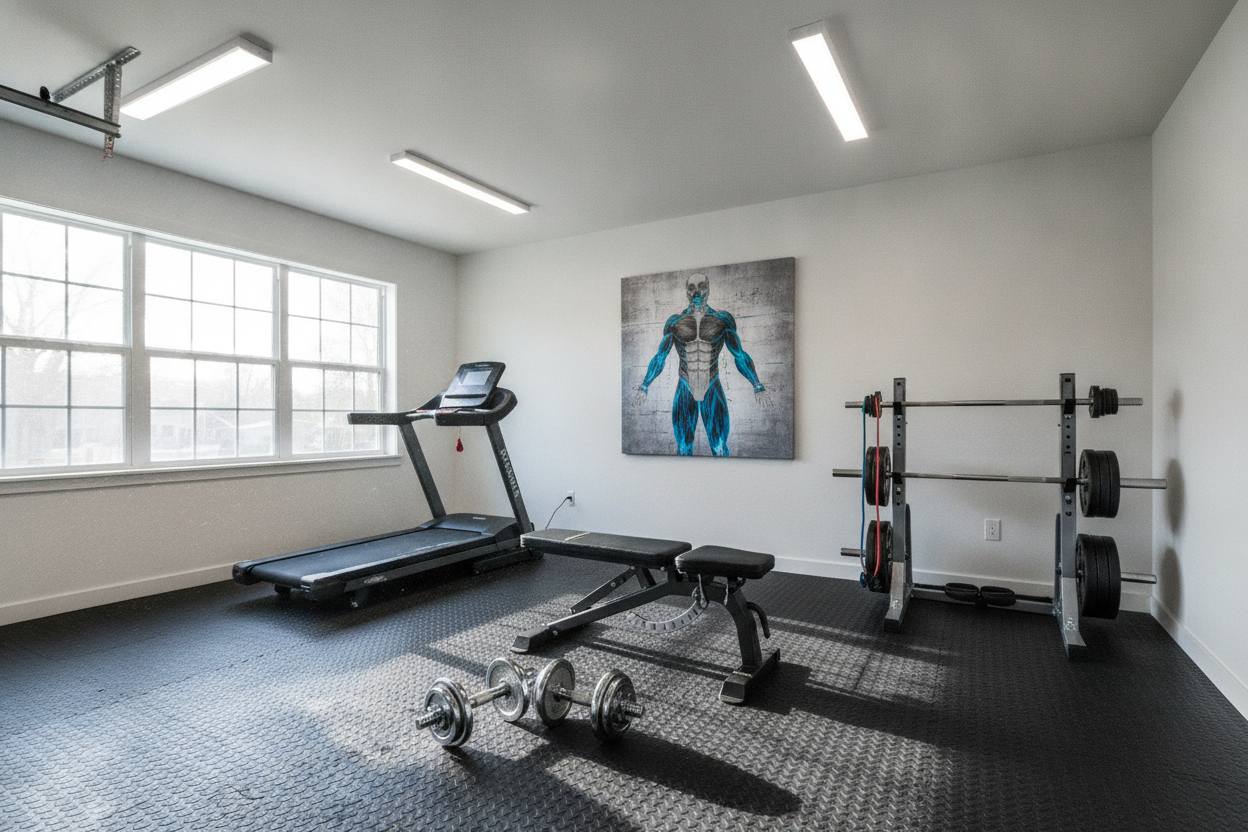
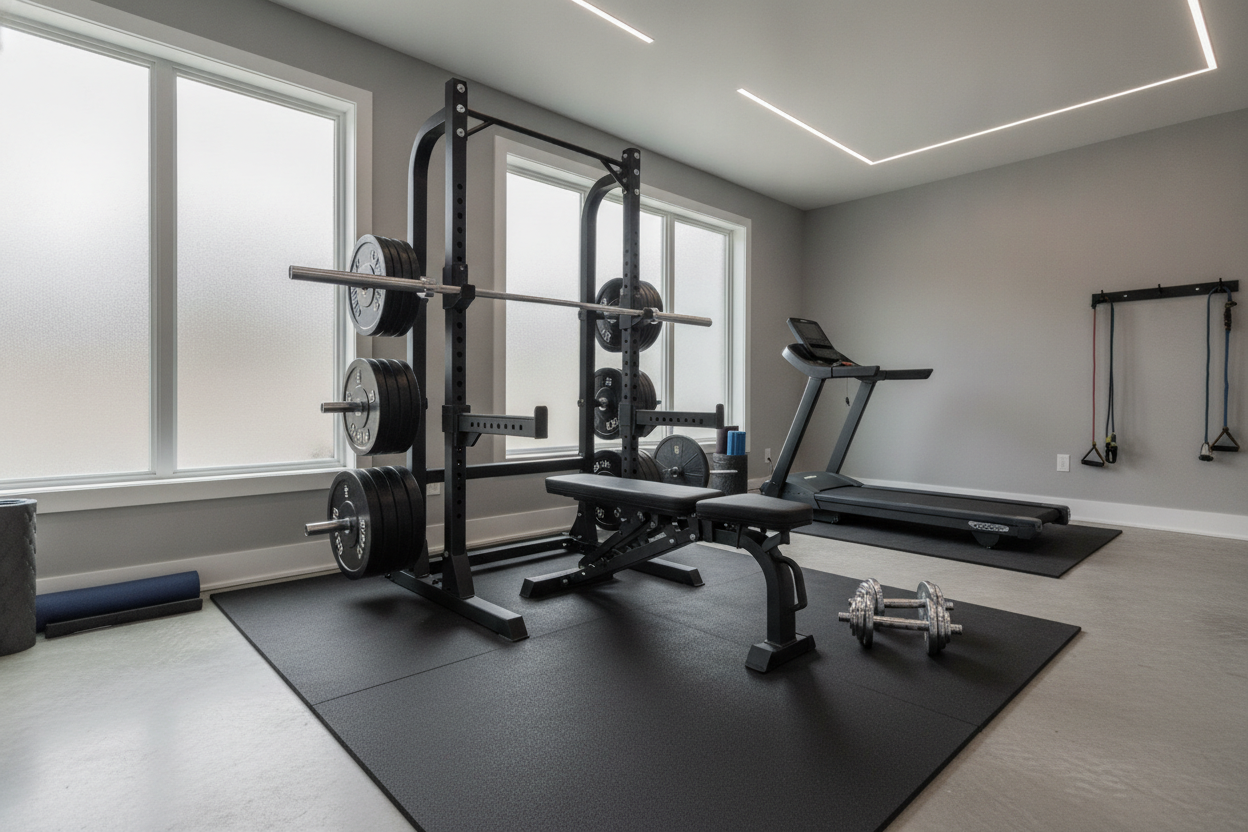
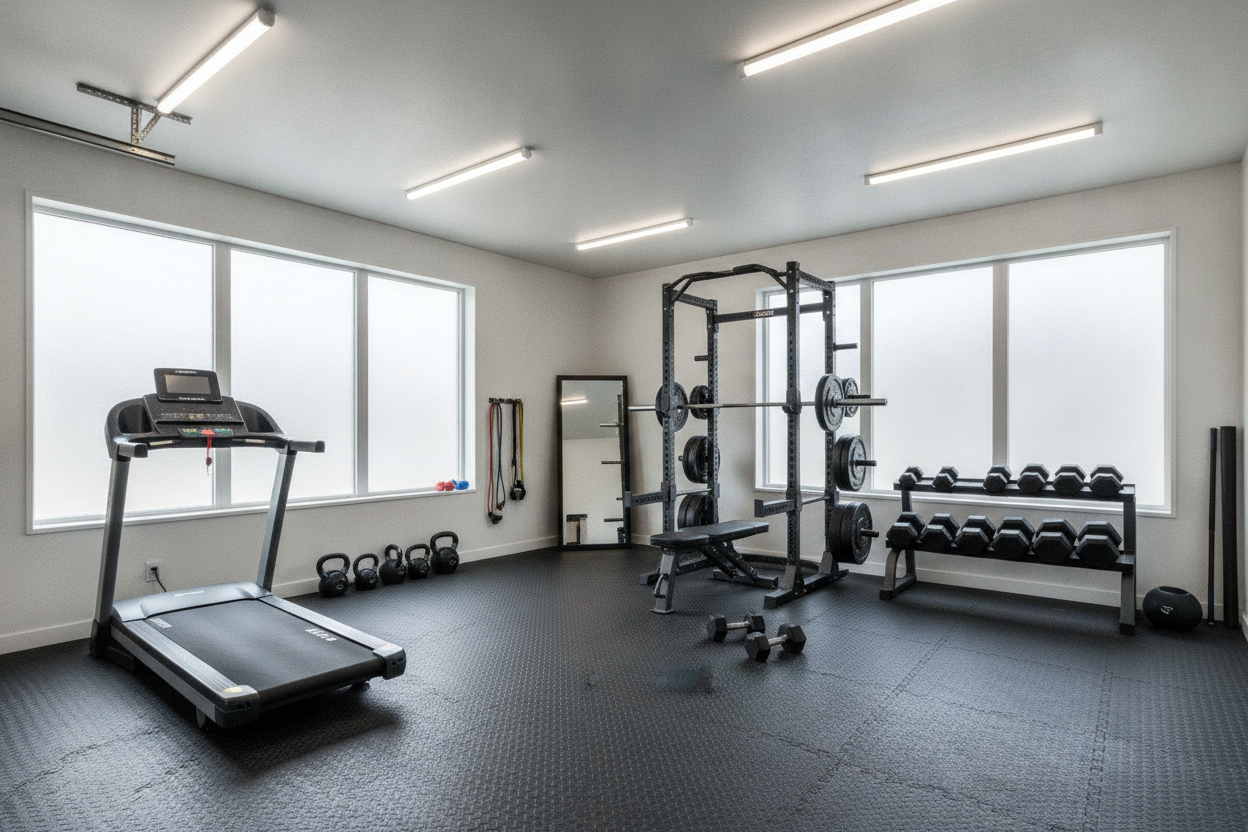
The only thing I truly missed from the commercial spot was the feeling of heavy-duty stability. But you don't need 5,000 square feet to get that. You can capture that solid, 'pro' feel in a two-car garage or even a spare room if you prioritize the right things. It’s about the foundation and the high-yield pieces that actually provide a commercial-grade stimulus.
Start With the Floor (Literally)
If your home setup feels 'cheap,' check your floor. Lifting on bare concrete or thin, squishy foam tiles feels unstable and dangerous. Proper gym flooring for home workout setups provides the traction you need for heavy squats and protects your equipment from impact. When the floor is solid, the whole room feels more professional, and your brain stops worrying about slipping mid-set.
Invest in One Heavy, Multi-Use Station
You don't need an 8-stack cable jungle. If you miss the smooth pull of a commercial cable machine, look for one versatile piece that does it all. When researching the best weight training machines for home use, look for functional trainers or rack-mounted pulley systems. These give you that smooth, constant tension without taking up half your floor space.
The Biggest Mistake Ex-Gym Goers Make
The fastest way to ruin a home gym is to try and recreate the exact layout of a commercial club. You have to stop buying weight training equipment for home like you're outfitting a franchise. I’ve seen people buy five different bench variants and three types of leg machines, only to realize they have no room left to actually move.
Focus on a high-quality rack, a versatile bar, and a solid set of plates. If you're looking at weights at the gym for beginners, you’ll notice they mostly use the same five things. Buy those five things for yourself, but buy the best versions you can afford. Quality over quantity is the mantra for a home setup that actually gets used.
FAQ
Is a home gym cheaper than a membership?
In the long run, yes. A decent setup pays for itself in 2-3 years when you factor in membership fees, gas, and the value of your time. Plus, the resale value on high-quality gym gear is surprisingly high.
Can I really get a good workout with just a few pieces of equipment?
Absolutely. Some of the strongest people in the world train in small garages with nothing but a rack and a barbell. Weight training for beginners at gym facilities often masks the fact that basic movements do 90% of the work.
What is the most important piece of equipment for a beginner?
A sturdy power rack with safety spotters. It allows you to push yourself on heavy lifts like squats and bench presses without needing a partner to bail you out.