Don't Run Starting Strength Over 60 Like a 20-Year-Old
I remember the first time I realized my recovery wasn't what it used to be. I was in my garage, staring at a barbell loaded for a set of five that I’d crushed just two days prior. My joints felt like they were filled with crushed glass, and my motivation was non-existent. If you are looking into starting strength over 60, you have probably already noticed that the 'standard' advice often ignores the reality of aging joints and slower recovery cycles.
The Starting Strength program is the gold standard for building raw power, but following the book's original prescriptions to the letter when you're in your sixties is a fast track to the physical therapist's office. You can get incredibly strong, but you have to be smarter than the 20-year-old kid drinking a gallon of milk a day.
Quick Takeaways
- Recovery is your primary constraint, not your effort in the gym.
- Switch to a two-day-a-week lifting schedule to manage systemic fatigue.
- Fractional plates are non-negotiable for consistent upper-body progress.
- Swap the power clean for the barbell row to protect your shoulders and wrists.
- Invest in a high-quality power rack with internal safety arms.
The Texas Method Meets Father Time
The core philosophy of Starting Strength—linear progression—is the most effective way to build bone density and muscle mass. For older adults, this is a literal fountain of youth. However, the original program was designed for young men with high testosterone and zero 'mileage' on their bodies. When you're starting strength training at 60, your connective tissue is less elastic and your hormonal profile is different. You can still lift heavy, but you cannot redline the engine every 48 hours without something snapping.
Instead of chasing a 5-lb jump every single session, your focus must shift to 'minimum effective dose.' You want to do just enough work to trigger an adaptation, but not so much that you're still sore when the next session rolls around. The goal is to stay in the game, not to win a local powerlifting meet in your first six months.
Why You Must Ditch the 3-Day-A-Week Grind
The biggest mistake I see is the 'warrior' mentality where lifters refuse to adjust their frequency. If you lift heavy on Monday, Wednesday, and Friday, your central nervous system is under constant assault. By week four, most lifters over 60 are dealing with chronic inflammation that feels like a permanent flu. Shifting to a two-day-a-week schedule—say, Tuesday and Friday—gives your body the 72-hour window it actually needs to rebuild tissue.
This isn't 'taking it easy.' It's being tactical. Whether we are talking about men or strength training for women over 60, the biological reality is the same: the stimulus needs to be heavy, but the rest periods must be longer. If you can't recover, you aren't getting stronger; you're just wearing yourself down.
Micro-Loading: Your New Best Friend
Standard Olympic plates start at 2.5 lbs, meaning the smallest jump you can make is 5 lbs. That works for a while on squats, but it’s a death sentence for the overhead press and bench press. Your shoulders are smaller muscle groups, and a 5-lb jump represents a massive percentage increase as you get closer to your limit. I tell every older lifter I know to grab some strength training accessories like a set of fractional plates.
Being able to add 1 lb or 1.5 lbs to the bar keeps the linear progression alive for months longer than 5-lb jumps. It keeps the ego in check and the progress consistent. If you try to force a 5-lb jump when you aren't ready, your form will break down, and that’s when you'll feel that familiar, unwelcome 'pop' in your rotator cuff.
Swapping the Power Clean (Without Feeling Guilty)
The Starting Strength book insists on the power clean for 'explosiveness.' In my opinion, for a 60-year-old training in their garage, the risk-to-reward ratio is garbage. The catch phase of a power clean puts immense stress on the wrists, elbows, and shoulders. One mistimed rep can lead to a bicep tendon tear or a nasty case of golfer's elbow that sidelines you for three months.
Swap the power clean for the barbell row or lat pulldowns. You still get the posterior chain work and the upper back thickness, but without the ballistic impact. You aren't training for the NFL; you're training to stay capable and strong. Don't let a dogmatic adherence to a lift list ruin your long-term health.
Setting Up Your Garage Rack for Safety
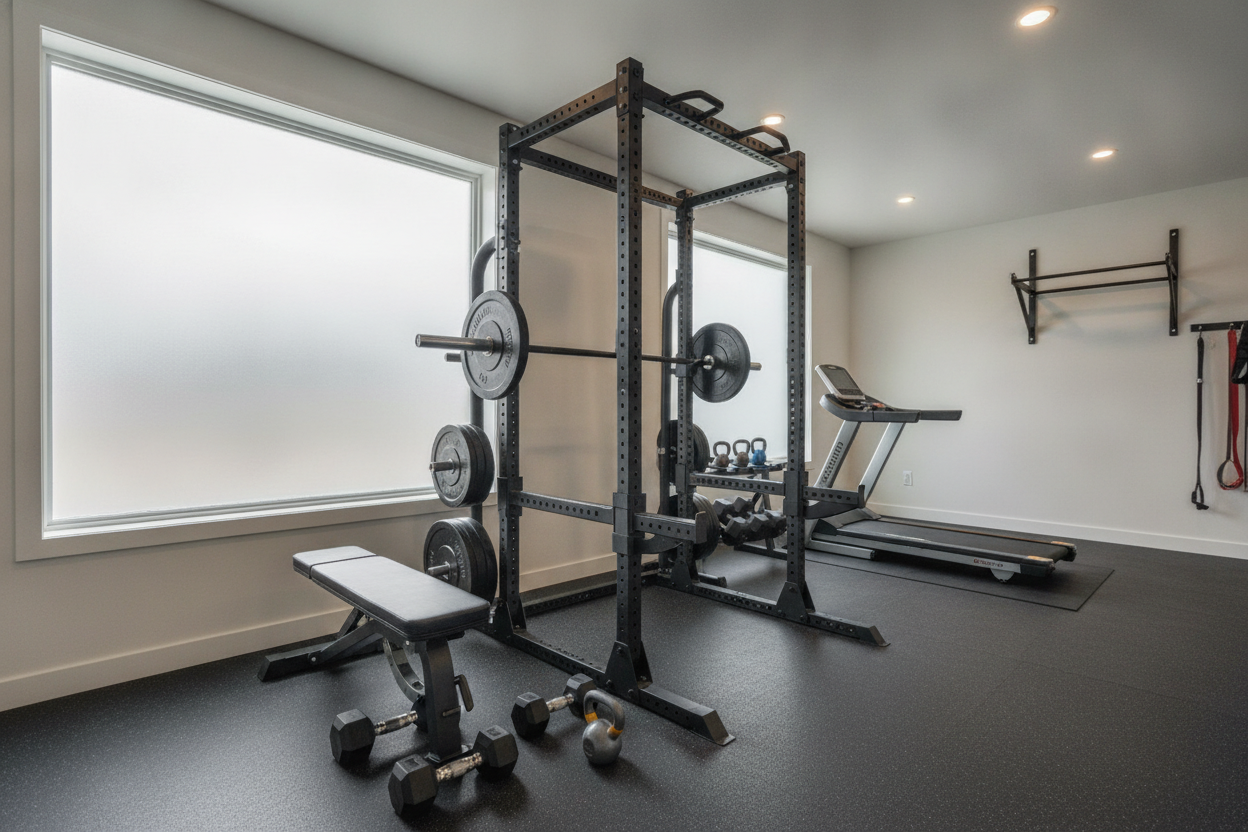
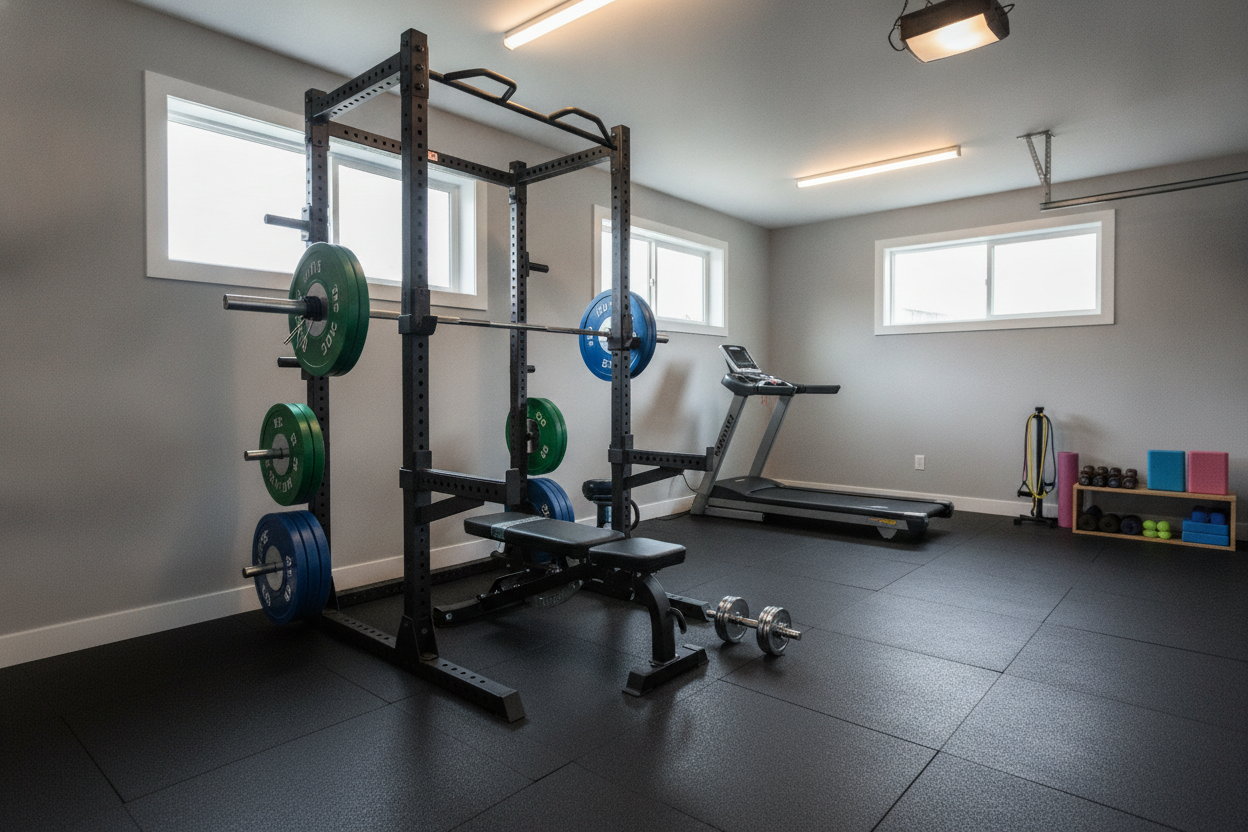
If you're training alone, your equipment is your only spotter. You need a rack that doesn't wobble when you re-rack a heavy squat. I’ve seen too many guys try to save money by buying 'economy' stands that look like they're made of toothpicks. When you're buying strength equipment, look for 3x3 inch steel tubing and high-quality safety pins or straps.
Set your safeties just an inch below your squat depth. If you hit a sticking point and can't get back up, you should be able to simply sink down and let the rack take the weight. No drama, no injury. Also, ditch the running shoes. You need a solid, hard-soled lifting shoe or a dedicated weightlifting shoe with a slight heel to keep your base stable. Squatting in squishy foam shoes is a recipe for an unstable ankle and a bad day.
Personal Experience: The Ego Trap
A few years back, I tried to run a standard 3-day LP because I thought I was 'built different.' I ignored a nagging pain in my left hip for three weeks because I wanted to hit a 315-lb squat. I hit the number, but I also ended up with a hip impingement that took six months of boring physical therapy to fix. Now, I lift twice a week, I use my fractional plates, and I feel better at 275 lbs than I ever did at 315. Listen to the dull aches before they become sharp pains.
FAQ
Do I need to eat as much as the book says?
No. Do not do 'GOMAD' (Gallon of Milk a Day). You don't have the metabolic rate of a teenager. Focus on high protein—around 1 gram per pound of body weight—and keep your calories at a slight surplus or maintenance.
What if I miss a workout?
Don't try to 'make it up' by lifting back-to-back days. Just pick up where you left off. Consistency over a year matters way more than a single missed session in October.
Is the deadlift safe for my back?
If your form is correct, the deadlift is the best thing you can do for back health. It strengthens the spinal erectors and teaches you how to hinge properly. Start light, film your sets, and don't let your ego dictate the weight.