The 3-Second Rule That Makes Body Exercises at Home Brutal
I remember the day I quit my $150-a-month 'luxury' gym. I thought I would just bang out some push-ups in the living room and stay jacked. Two weeks later, I was doing 60 reps a set, barely breaking a sweat, and losing my mind from boredom. Doing body exercises at home should not feel like a hobbyist aerobics class. If you are not shaking by the tenth rep, you are not training; you are just moving.
Quick Takeaways
- Slow down the eccentric (lowering) phase to a strict 3-second count.
- Add a 1-second pause at the bottom to kill momentum and the stretch reflex.
- Focus on leverage and tension rather than chasing high rep numbers.
- Invest in a grippy surface to prevent force leakage from sliding feet.
Why Your Living Room Workouts Just Feel Like Endless Cardio
Most people fall into the 'junk volume' trap. They see 50 push-ups on a whiteboard and race to finish them as fast as possible. That is great for your heart, but it is garbage for your chest. When you move fast, you are using gravity and the stretch reflex in your tendons to bounce back up. You are testing your lungs, not your muscle fibers. You end up doing 200 reps of good body exercise at home but seeing zero physical changes because the intensity is too low.
The Mechanics of Tension: Why Slower is Always Harder
Time Under Tension (TUT) is the only currency that matters when you do not have a 45-lb plate to add to the bar. By adopting a 3-second eccentric rule—counting 'one-one-thousand, two-one-thousand, three-one-thousand' on the way down—you are forcing the muscle to stay engaged through the entire range of motion. It makes your body weight feel significantly heavier because you have removed the 'free' part of the rep. This turns a simple body exercise into a legitimate hypertrophy tool.
Transforming a Simple Body Exercise Into a Muscle Builder
A simple body exercise like a squat or push-up is only as easy as you allow it to be. If you pause for one full second at the bottom of a rep, you eliminate the 'bounce.' This forces your muscles to generate force from a dead stop. When you combine this tempo with compound movements, you create the best exercise for full body at home by maximizing the demand on your central nervous system. It is about making the movement mechanically disadvantaged so your muscles have to work overtime.
The 3-1-X Push-Up (Chest & Triceps)
Lower yourself for 3 seconds. Hover your chest one inch off the floor for a 1-second count. Then, drive up as fast as possible (the 'X' stands for explosive). Ten of these will crush your triceps harder than twenty 'standard' reps ever could. Keep your elbows tucked at a 45-degree angle to protect your shoulders.
The Deficit Split Squat (Legs & Glutes)
Find two thick textbooks or a sturdy 2-inch block. Place your front foot on it. By increasing the range of motion, you are stretching the glute and quad under load more than a flat-ground squat allows. Use that 3-second descent here, and your legs will be on fire without needing a squat rack.
Why Slipping Ruins Tension (And How to Fix Your Floor)
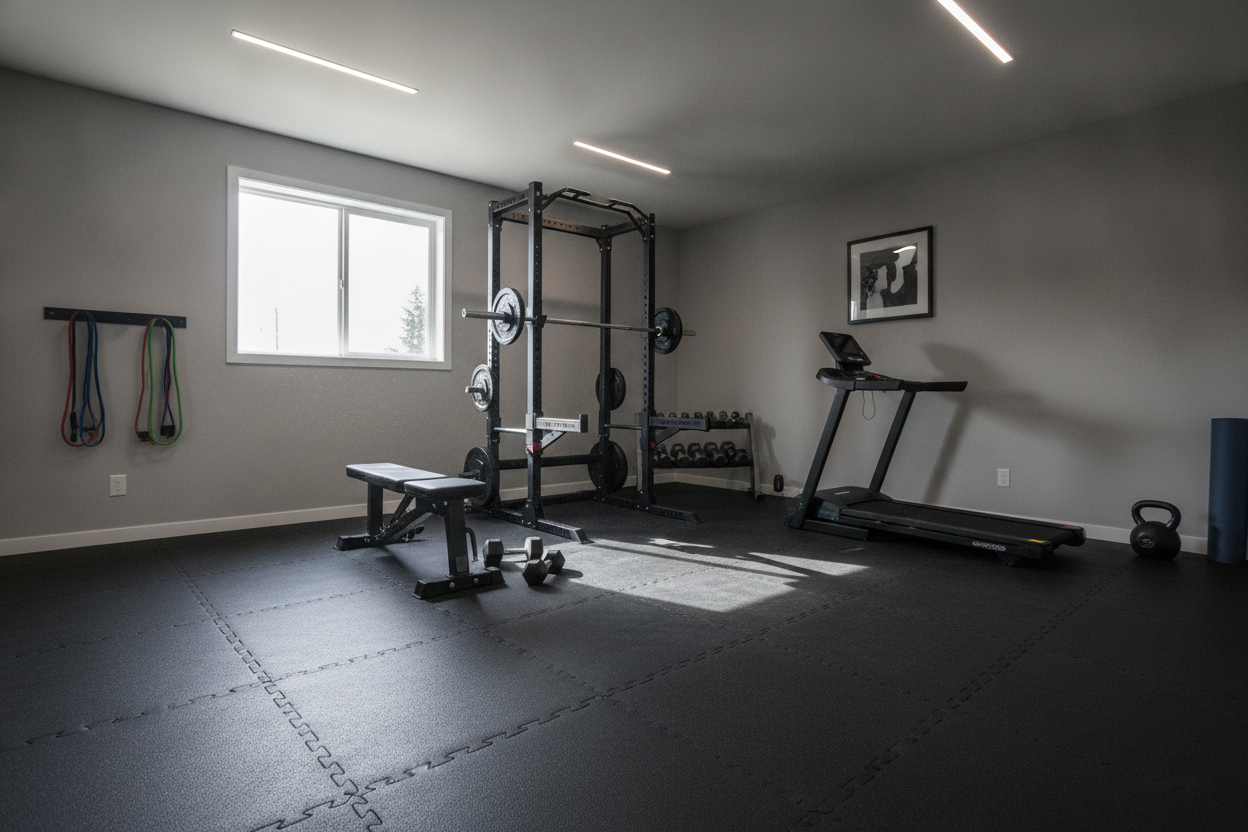
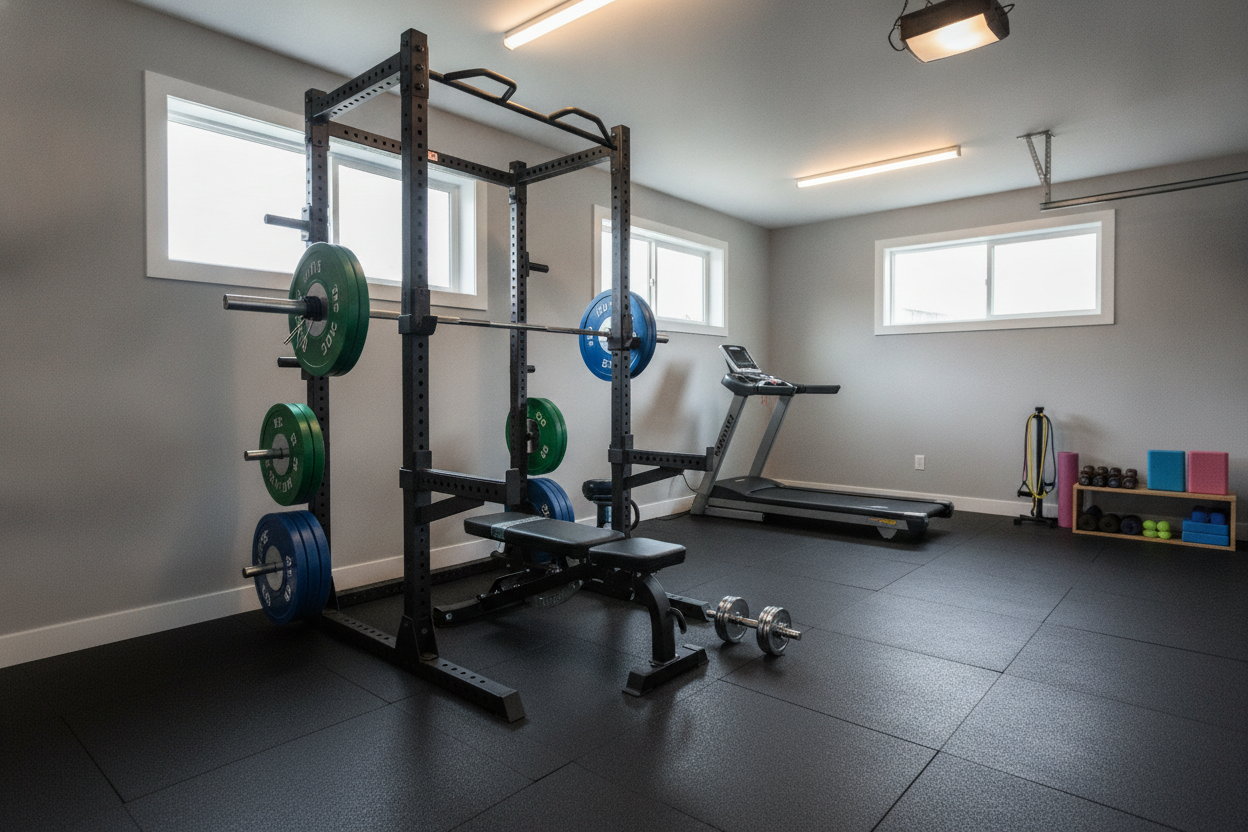
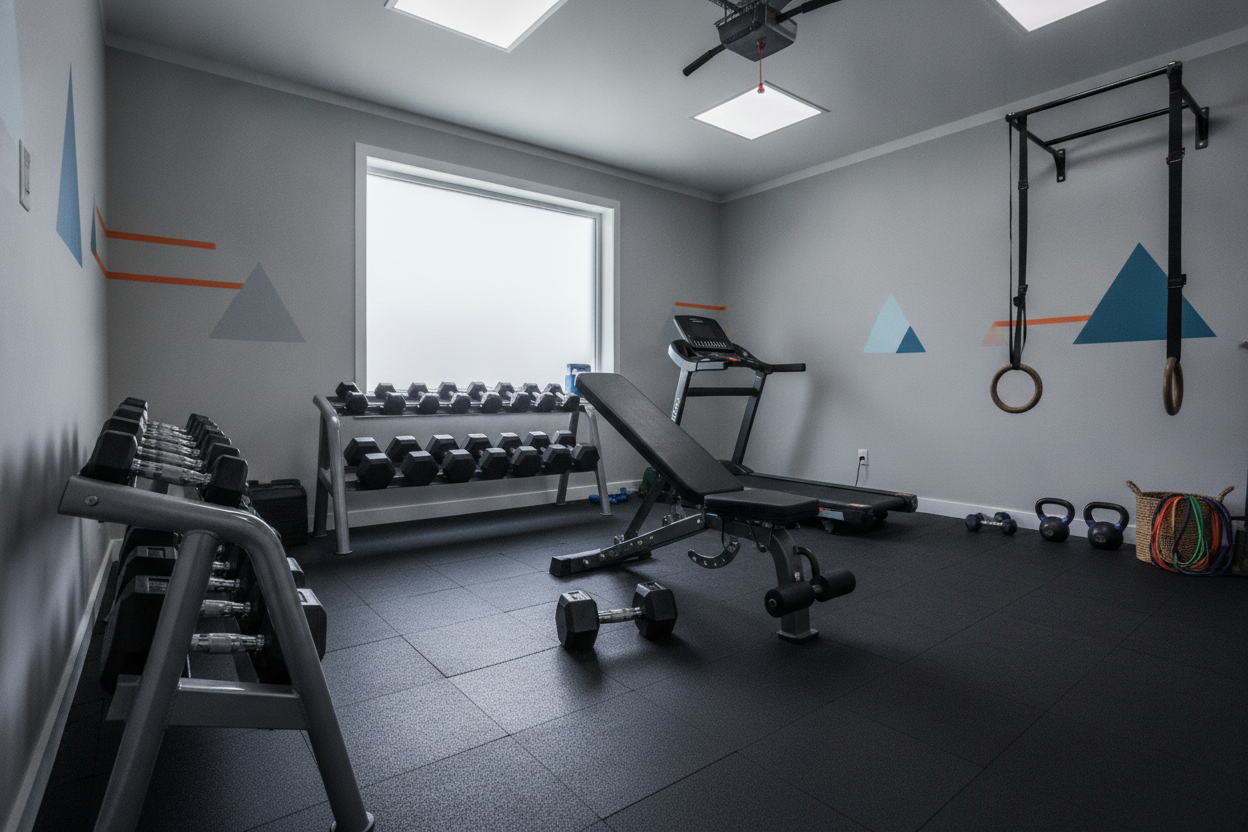
You cannot create tension if your feet are sliding on hardwood. I have tried training in socks on tile; it is a recipe for a groin strain and zero power output. To actually drive force into the ground, you need a stable, high-friction surface. I finally bit the bullet and put down a large exercise mat for home gym use, and it changed everything. Suddenly, I could push into the floor without my feet migrating six inches during a set of slow-tempo lunges. If your floor is slippery, your nervous system will 'brake' your strength to keep you from falling.
Putting It Together: A Good Body Exercise at Home Routine
A good body exercise at home routine does not need to be fancy. Try an Upper/Lower split. Monday and Thursday focus on 3-1-X push-ups and pike presses. Tuesday and Friday focus on deficit split squats and Nordic curl regressions. If counting seconds every single rep makes you want to quit, you might be better off looking at the best at home exercise machines to get that resistance without the mental math. But for those of us who like the purity of bodyweight, tempo is the only way to grow.
Personal Experience: The Humbling Power of Tempo
I used to ego-train my bodyweight stuff. I would tell people I could do 80 push-ups in a row. Then I filmed myself. My 'reps' were half-range, bouncy garbage. I switched to the 3-second rule and could not even hit 12. It was humbling, but my shoulders actually started growing for the first time in years. The downside? You will be incredibly sore in ways you did not think were possible from just standing in your living room.
FAQ
How many days a week should I do this?
Start with 3 or 4 days. The muscle damage from slow eccentrics is much higher than standard reps, so you will need the recovery time.
Do I need any equipment at all?
Technically no, but a grippy mat is non-negotiable for safety, and a sturdy chair or books help increase the range of motion.
Is this better than lifting weights?
It is different. Weights are better for absolute strength, but tempo-based bodyweight training is superior for joint health and mastering body control.