Why Your Plan to Gain Muscles in One Month Needs a Reality Check
I’ve seen the '30-day transformation' thumbnails on YouTube. You know the ones—the guy goes from a stick to a superhero in four weeks. It’s usually lighting, a heavy pump, and a generous dose of Photoshop. If you’re trying to gain muscles in one month, I’m not here to sell you a dream; I’m here to tell you what’s actually possible when you stop chasing shortcuts and start moving heavy iron in your garage.
We have all been there, scrolling through equipment reviews at midnight, wondering if a new set of dumbbells will finally be the thing that changes our physique. The truth is that 30 days is a blink of an eye in biological terms. But it is enough time to set a foundation that makes the next six months actually count.
Quick Takeaways
- Muscle growth is a slow biological process; don't expect a 10lb gain in pure tissue.
- Initial strength jumps are mostly your brain learning how to fire your muscles.
- Nutrition and recovery are non-negotiable if you want to see any change.
- Your environment—especially your floor and rack stability—dictates how hard you can push.
What Actually Happens During 1 Month of Muscle Growth?
When people ask 'can i gain muscle in a month,' the answer is a frustrating 'yes and no.' In those first 30 days of 1 month muscle growth, your body is in a state of shock. You aren't necessarily building massive amounts of new myofibrillar protein yet. Instead, your Central Nervous System (CNS) is having a wake-up call.
Your brain is learning how to recruit motor units more efficiently. This is why you might see your bench press jump 15 pounds in three weeks while your chest looks exactly the same in the mirror. You aren't bigger; you're just better at the movement. This neurological adaptation is the 'free lunch' of the lifting world, but it isn't true hypertrophy.
Actual tissue growth—the kind that stays when you stop training for a week—takes longer. During this first month, your muscles will also start storing more glycogen and water. This 'sarcoplasmic' swell makes you look fuller and tighter, which is great for the ego, but don't mistake it for permanent muscle fiber quite yet. You are essentially priming the pump for the months to come.
The Scale Lies: How Much Lean Mass Can You Gain in a Month?
If you step on the scale and see a 10-pound increase in 30 days, I hate to be the bearer of bad news: it isn't 10 pounds of muscle. Even with perfect genetics and a 'newbie gain' advantage, most natural lifters should only expect a specific amount of growth. So, how many pound of muscle per month is realistic? For most, it’s about 1 to 2 pounds of actual lean tissue.
The rest of that scale weight? It's water, it's the extra carbs you're eating, and it's probably a little bit of fat if you're in a massive caloric surplus. I see guys get discouraged because they didn't 'get huge' in four weeks, but Why Asking How Much Muscle Can You Gain a Month Is a Trap explains exactly why that mindset leads to burnout. You have to look at the long game.
Focus on how your clothes fit and how your recovery feels. If you're gaining 2 pounds a week, you're likely just getting soft. Real lean mass is hard-earned and slow-growing. If you can walk away from month one with 1.5 pounds of new muscle and a significantly better understanding of your squat form, you’ve won.
How to Get Stronger in a Month (Without Faking It)
If you want to know how to get stronger in a month, you need to stop playing with isolation cables and start hugging the heavy stuff. Strength is the prerequisite for size. You can't build a massive back if you're rowng 20-pound dumbbells forever. You need tension, and you need a lot of it.
My advice? Stick to the 'Big Five': Squats, Deadlifts, Overhead Press, Bench, and Rows. These movements recruit the most muscle fibers and trigger the biggest hormonal response. In your first 30 days, you should be adding weight to the bar every single session. Even if it's just 2.5-pound micro-plates, that linear progression is what builds the 'strength base' that eventually turns into a 'size base.'
However, safety is a factor when you're training alone in a garage. If your back is feeling fried from deadlifts but you still need to hammer your legs, using a lower body strength machine can be a lifesaver. It allows you to push your quads to absolute failure without worrying about a barbell pinning you to the floor. It’s about being smart with your intensity.
Your Home Gym Setup Dictates Your Success
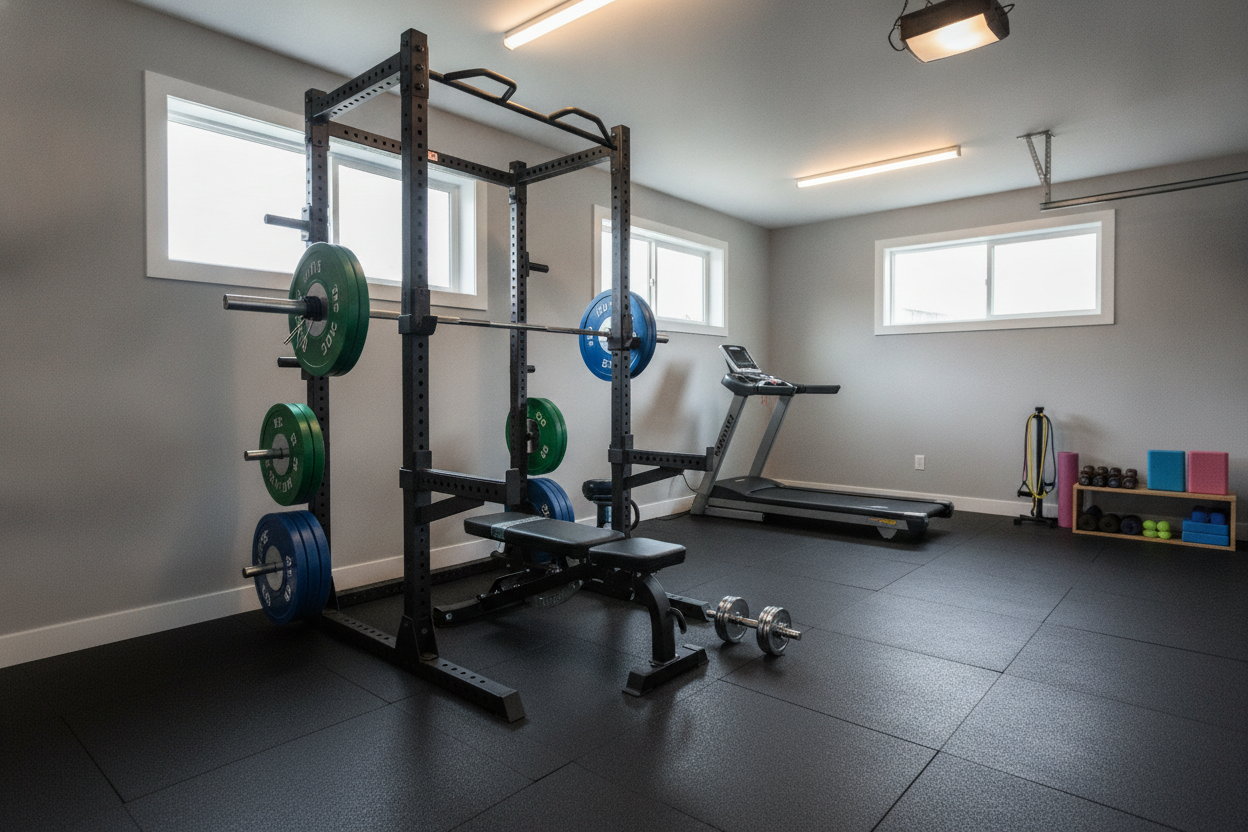
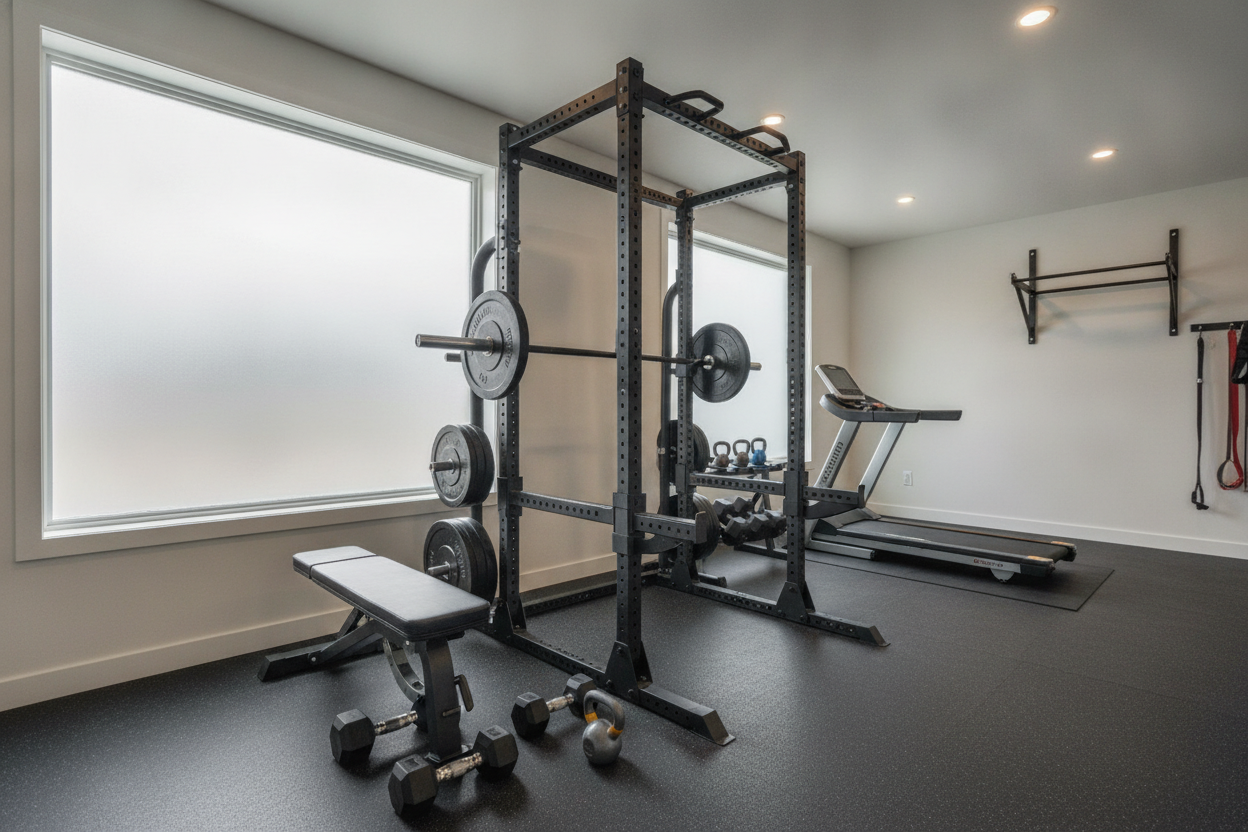
I’ve tried lifting heavy on bare concrete and cheap, slippery foam tiles. It’s a recipe for a blown-out knee. If you don't feel stable, your brain will literally 'brake' your strength output to protect you. You need a solid foundation to push against if you want to see real gains.
I always tell people to invest in a high-quality large exercise mat before they buy fancy gadgets. A dense, non-slip surface allows you to dig your heels in during a heavy squat or bench press. If your feet are sliding, you're losing force. That lost force is lost muscle. Don't let a $50 floor problem ruin a $500 workout program.
Looking Ahead: Can You Gain Muscle in 2 Months?
Once you hit the 30-day mark, the 'honeymoon phase' of neurological gains starts to taper off, and the real work begins. If you're asking 'can you gain muscle in 2 months,' the answer is a resounding yes—and this is usually where the visible changes actually start to show up. By day 60, that water weight has stabilized, and the actual muscle fibers have had time to repair and thicken.
To understand how to get big body in 2 months, you have to realize that month two is an extension of month one's consistency. You can't change the program every two weeks because you saw a new TikTok trend. You stay the course. I’ve seen more progress from guys who did the same five exercises for eight weeks than from guys who tried eighty exercises in the same timeframe.
I actually documented this process myself to see if the hype was real. In I Tracked How To Build Muscle in a Month (And Kept the Receipts), I break down the day-by-day reality of what my body actually did. Spoilers: I didn't look like Arnold, but I felt like a tank. That feeling is what keeps you coming back for month three.
Personal Experience: My First 'Fake' Bulk
When I first started my home gym, I was obsessed with the scale. I wanted to gain muscle so badly that I ate everything in sight for 30 days. I gained 12 pounds. I thought I was a genius until I realized my 'new' muscle was mostly just a bloated stomach and a face that looked like a thumb. I was moving more weight, sure, but I wasn't any more muscular—I just had more mass to throw behind the bar.
The biggest mistake I made was ignoring my recovery. I thought more was better. I was hitting heavy sets six days a week. By week four, my elbows were screaming, and my sleep was trash. I learned the hard way that muscle doesn't grow in the gym; it grows while you're passed out on the couch. Don't make my mistake. Hit it hard, then get out of the gym and eat some steak.
FAQ
How much lean mass can you gain in a month?
Realistically? About 1 to 2 pounds of actual muscle tissue for a beginner. Anything more is likely water, glycogen, or fat. Don't let the scale fool you into thinking you've turned into a pro bodybuilder overnight.
Can I see a difference in my body in 30 days?
You’ll likely see a difference in 'muscle tone' or fullness due to increased blood flow and glycogen storage. You’ll definitely feel a difference in your strength and energy levels, but significant visual changes usually take 8 to 12 weeks.
Is it better to use machines or free weights for fast muscle growth?
Free weights are king for building a foundation and functional strength. However, machines are incredible for safely pushing a specific muscle to failure once your stabilizers are tired. A mix of both is usually the fastest path to growth.