You Can't Fire a Cannon From a Canoe: Natural Ways to Build Muscle Fast
I spent three years wondering why my bench press stalled at 225 lbs while I was eating enough chicken and rice to sustain a small village. I was following the programs, hitting the macros, and buying the 'anabolic' recovery powders. But every time I got under the bar, I felt like I was balancing on a surfboard in a hurricane. I was looking for natural ways to build muscle fast, but I was ignoring the most basic law of physics: you cannot produce maximum force from an unstable base.
- Stability is the prerequisite for intensity.
- Energy leaks in your feet and core kill your nervous system's output.
- High-traction flooring is more important than fancy supplements.
- Total body tension turns a 'shaky' lift into a rock-solid PR.
You're Leaking Power (And Losing Out on Gains)
Think about trying to jump as high as you can while standing on a mattress. You can't do it because the surface absorbs the force you're trying to drive into the ground. Most home gym lifters are doing the equivalent of this every day. If you're lifting on slick concrete or thin, squishy foam tiles from a big-box store, your nervous system is constantly 'braking' your muscles to prevent you from slipping and snapping something.
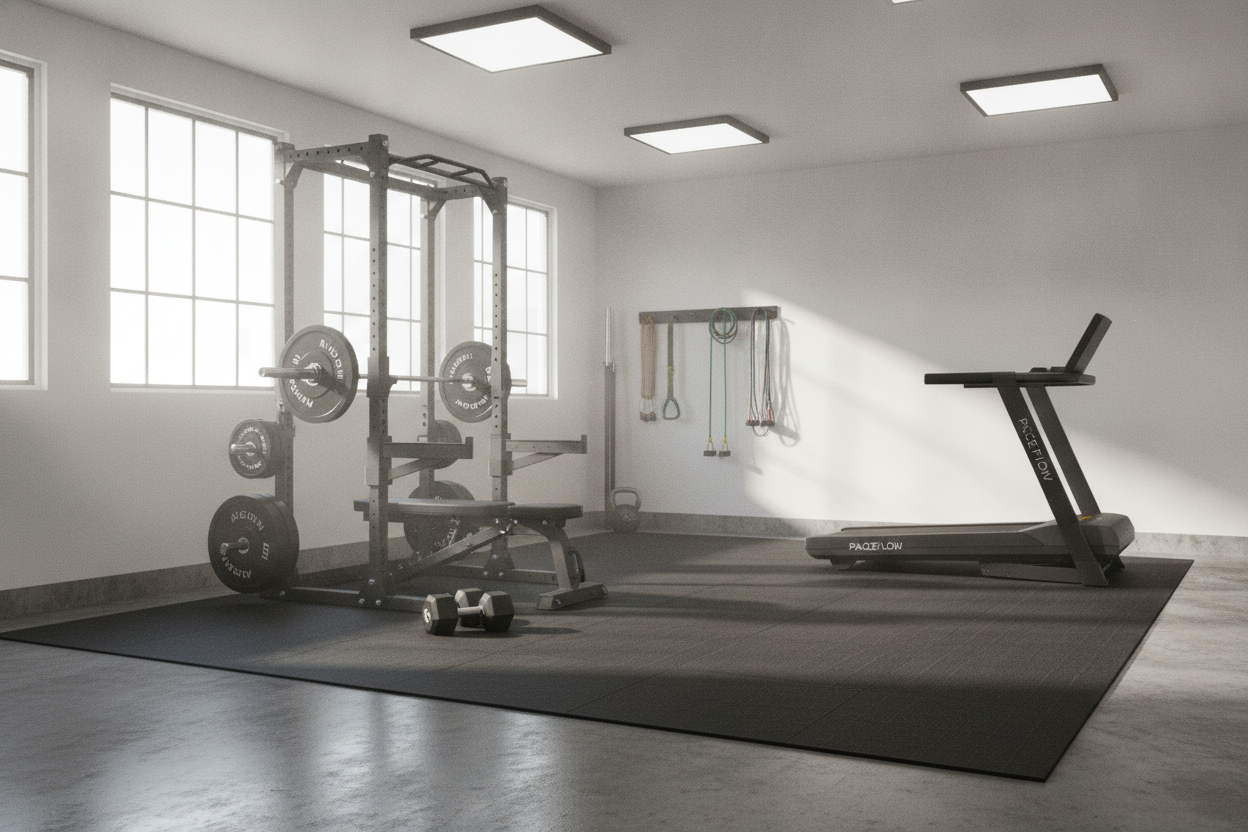
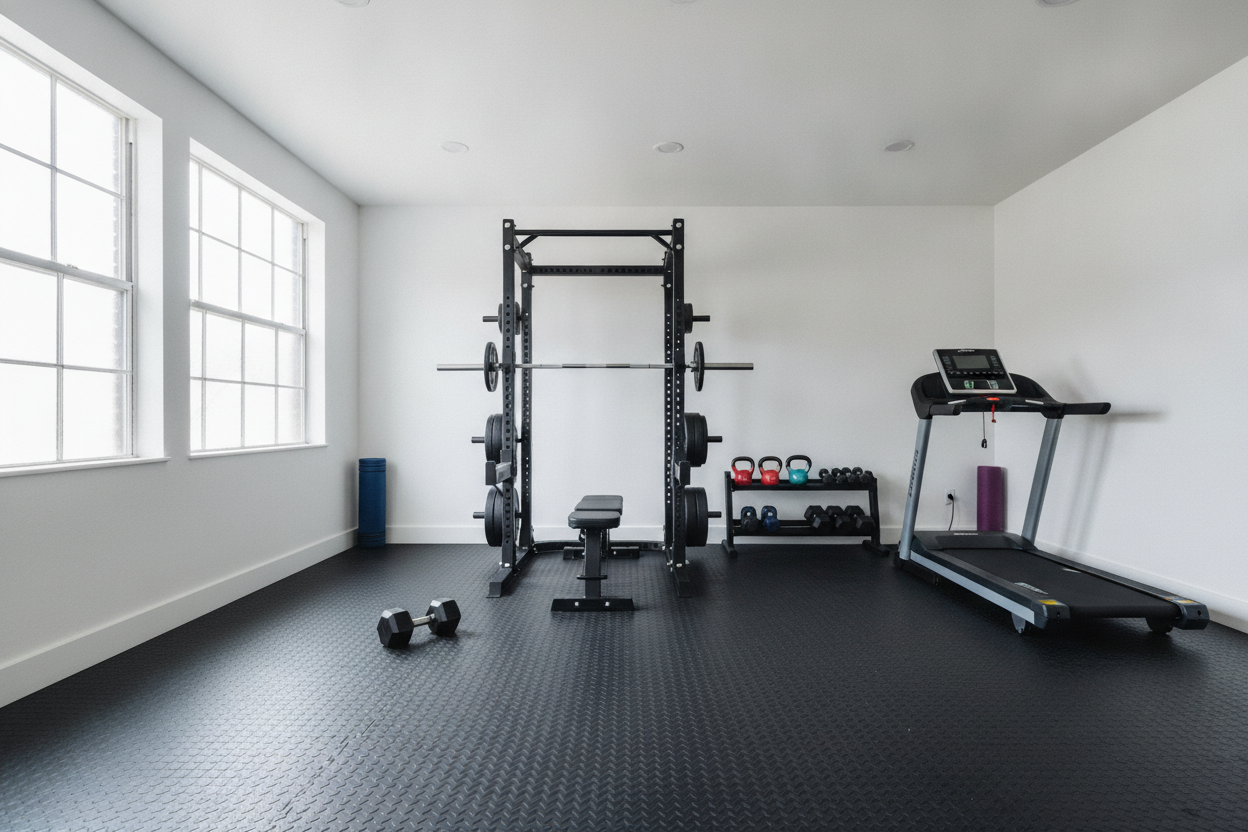
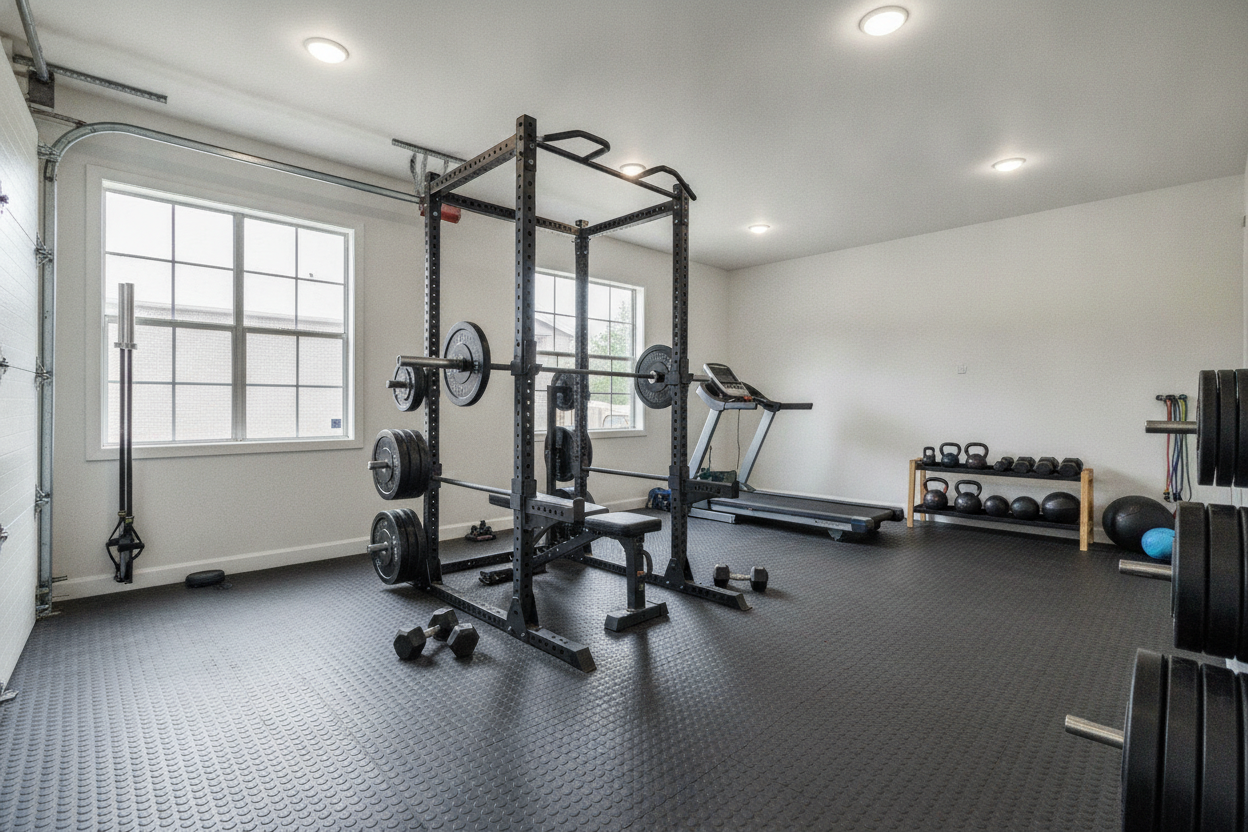
These are called energy leaks. When your feet shift even a millimeter during a heavy squat, your brain registers a threat. It immediately downregulates the amount of force your quads and glutes are allowed to produce. You think you've hit failure, but you've actually just hit a safety ceiling. I finally stopped the slide by upgrading to extra wide exercise mats that actually bite back when you drive your heels in. That 7x10 foot footprint gives you enough room to set your stance without half your foot hanging off onto the cold garage floor.
A solid base allows you to push to true mechanical failure. Without it, you're just practicing balance. If you want to move 315 lbs, your floor needs to handle the pressure without compressing or sliding. It's the least 'sexy' part of a home gym, but it's the foundation of every pound of muscle you'll ever grow.
The Ground-Up Hack: A Natural Way to Build Muscle Fast
Rooting your feet isn't just a technical cue; it's a natural way to build muscle fast because it maximizes mechanical tension. When you 'screw' your feet into the floor, you're creating external rotation at the hip. This pre-tensions the glutes and hamstrings before the bar even leaves the rack. This stability is exactly how athletes build leg muscle female fast—by creating a safe environment where the body feels 'allowed' to move heavy loads.
Mechanical tension is the primary driver of hypertrophy. If you can't create tension because you're worried about your footing, you're leaving 30% of your gains on the table. I've seen lifters add 20 lbs to their squat in a single session just by switching from squishy running shoes to a flat, hard sole and a high-traction mat. It’s not magic; it’s just physics. You’re finally firing the cannon from a concrete pier instead of a canoe.
Upper Body Tension: Why Your Press Feels Shaky
The 'canoe' metaphor applies to your upper body too. If you're benching with your feet dancing on the floor and your back flat as a pancake, you're leaking power. You need to pull your shoulder blades together and down into the bench. Grip the bar so hard your forearms start to burn. This 'irradiation' sends a signal to your triceps and chest to fire harder.
Apply this level of 'white-knuckle' tension to your chest exercises to build strength and you'll notice the weight feels lighter. It isn't actually lighter, but your body is more efficient at moving it. When you create a rigid bridge from your hands to your feet, the bar moves in a straight line. No more wobbling. No more 'grinding' through sticking points that shouldn't be there.
Putting It Together: Natural Ways to Build Muscle Mass Fast
If you are serious about natural ways to build muscle mass fast, your next workout needs a checklist. First, ditch the air-cushioned running shoes for something flat. Second, ensure your lifting surface has enough grip that you couldn't slide your foot if you tried. Third, brace your core like someone is about to drop a 45-lb plate on your stomach. Finally, move the weight with the intention of breaking the floor or the bar.
I spent years chasing 'the pump' while standing on a slippery floor in $150 running shoes. It was a waste of time. The moment I treated my floor and my foot-rooting as part of the lift, my numbers exploded. Muscle growth is a response to stress. If you can't safely apply that stress because your base is weak, you'll never grow. Stop looking for a new supplement and start looking at what's under your feet.
My Experience: The Day I Almost Trashed My Knee
A few years back, I was squatting 315 in a pair of old foam-soled sneakers on a dusty concrete garage floor. On my third rep, my right heel slid outward about two inches. My knee buckled inward, and I had to dump the bar on the safeties. I didn't tear anything, but I couldn't walk right for a week. That was the day I realized that my 'budget' floor setup was actually costing me months of progress. I bought a high-density rubber mat the next day and never looked back. Don't be the guy who learns this through a physical therapy bill.
FAQ
Do I really need a special mat for lifting?
If you're lifting on concrete, yes. Concrete gets dusty and slick, and it has zero shock absorption. A high-density mat protects your joints, your weights, and ensures your feet stay exactly where you put them.
Why do my shoes matter for building muscle?
Running shoes are designed to absorb impact. When you lift, you want the opposite: you want to drive force into the ground. Squishy soles are like lifting while standing on a bowl of marshmallows.
How do I 'root' my feet properly?
Imagine your foot is a tripod (heel, big toe, pinky toe). Grip the floor with your toes and try to 'rotate' your feet outward without actually moving them. You'll feel your hips tighten immediately.