Stop Blaming Your Routine: How to Add Muscle Without a Spotter
I remember the first time I almost pinned myself in my garage. It was 6:30 AM, mid-February, and I was trying to squeeze out one last rep on a heavy bench press. My arms shook, the bar stalled halfway up, and suddenly I was staring at 225 pounds of cold steel sinking toward my neck. No spotter. No safety pins. Just me and a very bad decision. If you want to know how to add muscle without becoming a local news headline, you have to stop training like you're in a commercial gym with a dozen people watching your back.
Quick Takeaways
- Most home lifters fail to grow because they subconsciously stop 3-4 reps short of true failure due to safety fears.
- Mechanical tension—not just the 'pump'—is the primary driver for how to improve muscle mass.
- Safe failure requires specific gear: a rock-solid bench and flooring that allows you to dump weights without a second thought.
- Swap high-risk barbell movements for high-reward dumbbell and floor-based variations.
- Mass gain muscle requires a caloric surplus; you cannot out-train a 1,500-calorie-a-day diet.
The Home Gym Intensity Trap (Why You're Not Growing)
The biggest hurdle to figuring out how to increase mass muscle isn't your programming; it's your lizard brain. When you're lifting alone in a basement or garage, your brain has a built-in survival mechanism. It knows there is no one to pull the bar off your chest if you fail. Because of this, most solo lifters leave significant gains on the table by stopping sets way too early. You think you're working hard, but you're actually training at a 'perceived' effort that is miles away from the mechanical tension needed to trigger hypertrophy.
I spent years stuck at the same body weight because I was terrified of failing a squat. I'd hit eight reps, feel a slight burn, and rack the weight. In reality, I had five more reps in the tank. Those last five reps are where the magic happens. This is how I gain muscle mass in my garage: by creating an environment where failure isn't a disaster, but a data point. To gain muscles mass, you have to bridge the gap between 'this is heavy' and 'my muscles physically cannot move this weight another inch.'
If you're constantly racking the bar while you're still breathing through your nose, you aren't training for growth. You're just exercising. To truly understand how gain body mass, you have to embrace the grit of the final, grinding reps. That requires a shift in both your mindset and your equipment setup.
The Biological Reality of How to Improve Muscle Mass
Let's talk science for a second, minus the lab coat. To gain mass and muscle, you need to recruit high-threshold motor units. These are the muscle fibers that only show up to work when things get incredibly difficult. If you stop a set when it starts to 'burn,' you're mostly hitting the endurance-based fibers. They don't grow much. To pack on real size, you need mechanical tension—the kind that happens when the bar speed slows down involuntarily despite your best effort to move it fast.
This is the secret to how gain mass in body. Your body is an adaptive machine; it doesn't want to carry extra muscle because muscle is metabolically expensive. It will only add that weight if you give it a reason to believe it will die if it doesn't get stronger. When you push a set to near-failure, you're sending a chemical signal that the current muscle structure is inadequate. That’s how gain mass in the body happens—through a cycle of extreme stress and recovery.
Most people confuse 'fatigue' with 'stimulation.' Doing 50 jumping jacks makes you tired, but it won't help you how to gain mass in body. You need load. You need resistance that forces your muscle fibers to stretch and contract under significant tension. If you're wondering how to gain muscle mass and weight, start by tracking your 'reps in reserve' (RIR). If you aren't consistently hitting 0-1 RIR on your accessory lifts, you're just spinning your wheels in the driveway.
Setting Up Your Garage to Safely Fail
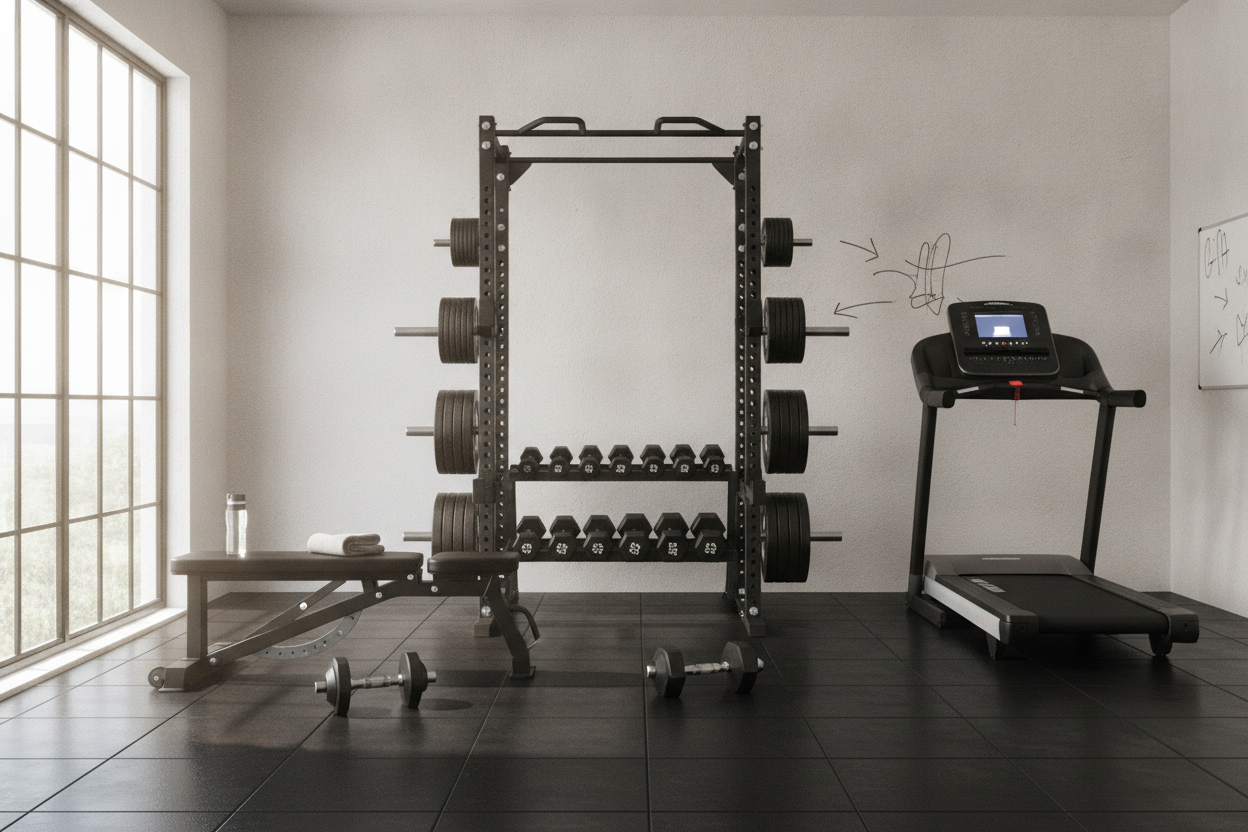
If you want to know how to increase mass in body without a spotter, you need to build a 'fail-safe' environment. You can't train to failure if you're worried about cracking your foundation or waking the neighbors. First, you need a bench that isn't a flimsy $50 piece of junk. I've used benches that felt like they were made of soda cans; when you're holding heavy dumbbells, you need something like the Gxmmat adjustable weight bench. It has a high weight capacity and a wide base, which is crucial when you're grinding out that last rep and your form starts to get a little shaky.
Next, let's talk about the floor. If you're doing dumbbell presses or heavy rows, you need to be able to drop the weights. If you're gingerly placing 80-pound dumbbells on the concrete, you're wasting energy you should be using for your sets. I recommend getting upgraded exercise mats extra wide. These aren't your typical thin yoga mats; they are dense enough to take the impact of a dropped weight and wide enough (up to 7x12 feet) to cover your entire lifting zone. This allows you to push to absolute failure, knowing you can just open your hands and let the weights fall safely.
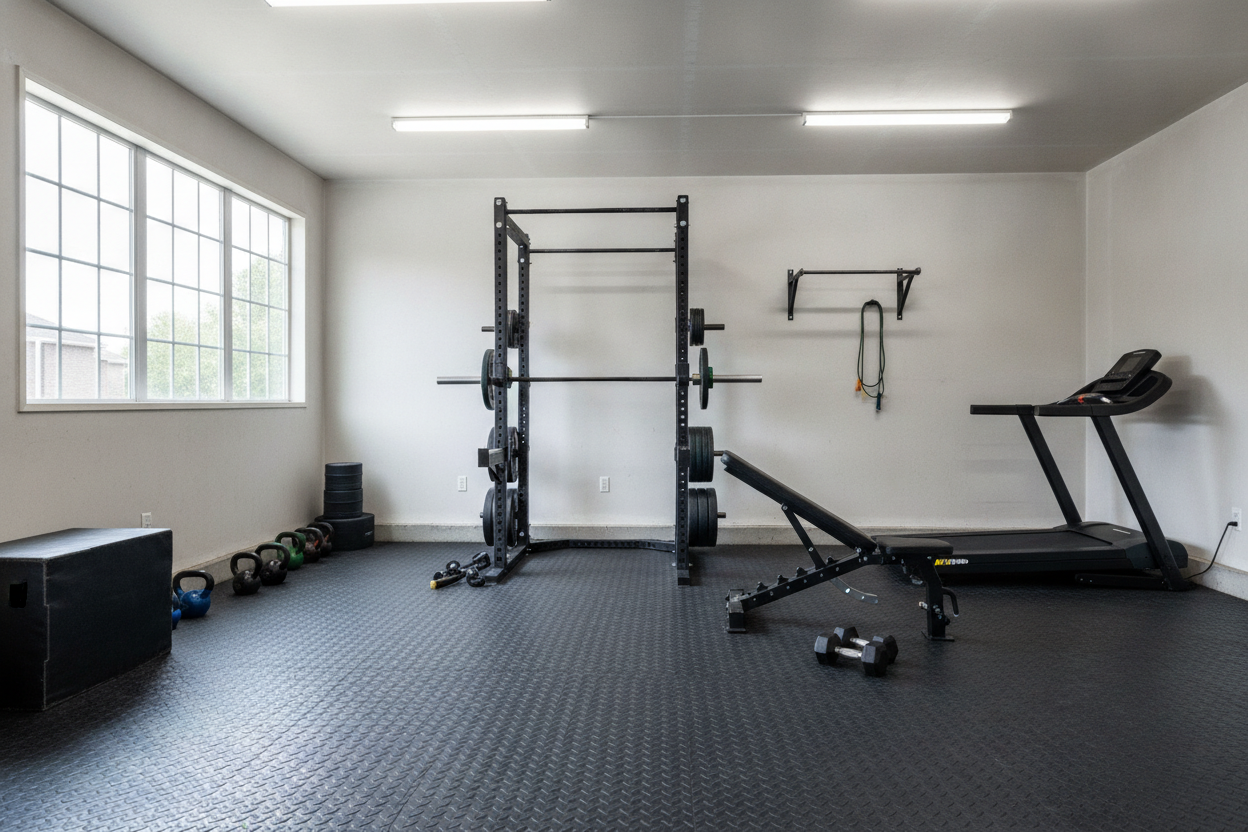
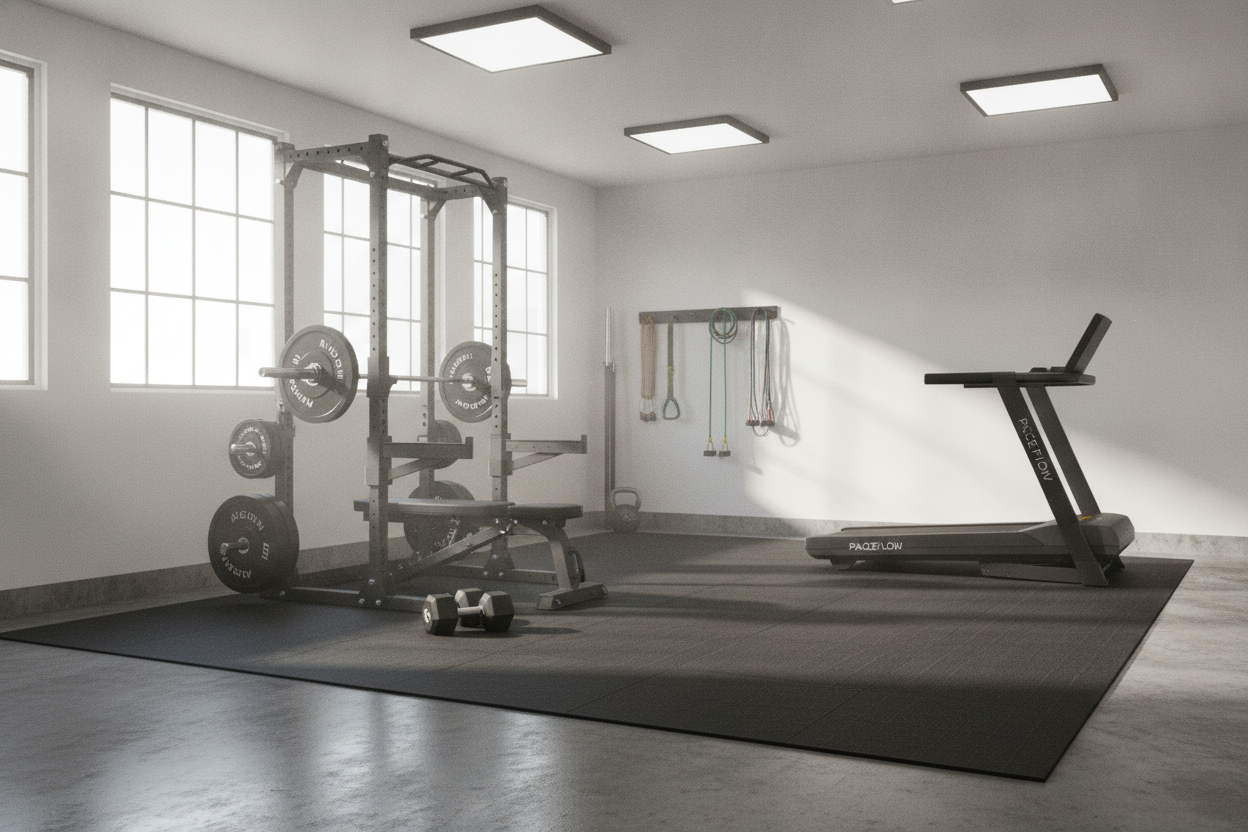
Finally, consider your space. A cramped gym is a dangerous gym. Clear the clutter. If you have to move a lawnmower just to do a set of curls, you're going to subconsciously hold back. Setting up a dedicated 8x10 foot space with proper mats and a sturdy bench is the first real step in how to pack on muscle mass. It turns your garage from a storage unit into a high-intensity laboratory for growth.
The Best Solo Lifts to Pack on Muscle Mass
The barbell back squat is the king of lifts, but in a solo home gym without a high-end power rack, it's a death trap. If you want to know how to gain mass in body safely, you need to pick exercises with a 'built-in' exit strategy. Instead of the traditional bench press, try the dumbbell floor press. By lying on the floor, the range of motion is slightly limited, which protects your shoulders, and if you fail, you just let the dumbbells roll to the side. No harm, no foul.
For legs, ditch the heavy back squats and move to Bulgarian Split Squats. They are absolutely brutal for building mass gain muscle, but because you're using dumbbells and one leg at a time, the absolute load on your spine is lower, and you can simply drop the weights if your leg gives out. To do these right, you need a reliable weight set and bench. A good adjustable bench allows you to find the perfect height for your rear foot, ensuring you're hitting the quads and glutes without straining your hip flexors.
Another solo favorite is the 'suicide' row (chest-supported rows). By leaning your chest against an inclined bench, you eliminate the temptation to use momentum. This forces the lats and traps to do all the work, which is essential for how to pack on muscle mass in the upper body. Since you're supported by the bench, there's zero risk of lower back injury if you hit failure. These variations allow you to redline your intensity without the fear of getting pinned or snapped in half.
Fueling the Machine: How to Gain Muscle Mass and Weight
Here is the brutal truth: you can have the most expensive gym in the world and train until you puke, but if you aren't eating, you won't grow. To successfully gain mass and muscle, you must be in a caloric surplus. Your body cannot build new tissue out of thin air. Most 'hard gainers' I talk to aren't actually hard gainers—they just eat like birds. You need to aim for at least 0.8 to 1 gram of protein per pound of body weight and enough carbs to fuel those high-intensity sessions.
Think of your body like a construction site. The training is the blueprint, but the food is the brick and mortar. If the delivery trucks don't show up, the house doesn't get built. When you're training to failure, your recovery demands skyrocket. This isn't the time for a 'cleanse' or a 'cut.' If your goal is how to gain muscle mass and weight, you need to be aggressive at the dinner table. Track your calories for a week; you'll likely be surprised by how little you're actually consuming. Eat big to get big—there's no way around it.
Personal Experience: My Greatest Fail
I once tried to hit a PR on a flat bench alone. No safeties. I got the weight down, but it wasn't coming back up. I had to perform the 'roll of shame,' where you roll a loaded barbell down your ribcage and stomach until it hits your thighs so you can sit up. I had bruises for three weeks and a very bruised ego. That was the day I realized that if I wanted to keep training at home, I had to stop being 'tough' and start being smart. I switched to heavy dumbbells and bought a bench that wouldn't tip over. My growth actually accelerated because I wasn't scared of the weight anymore.
FAQ
Is it possible to build muscle with just dumbbells?
Absolutely. Dumbbells actually allow for a greater range of motion and better muscle activation for many lifters. Plus, they are significantly safer for solo training since you can easily dump them if a set goes sideways.
How many days a week should I train for mass?
For most people, 3 to 5 days is the sweet spot. The key isn't how often you're in the gym, but how intense those sessions are. You need enough time between sessions for the muscle tissue to actually repair and grow.
Do I need supplements to add muscle?
Supplements are the 5% on top. Focus on real food first. Creatine and a good whey protein can help, but they won't make up for a lack of intensity in your training or a lack of calories in your diet.