Are You Losing Strength on Your Workout Routine for Bulking?
I have spent years in my garage, surrounded by 11-gauge steel and the smell of rubber mats, and I have made every mistake in the book. The most frustrating one? Gaining 15 pounds of body weight only to realize my bench press hadn't moved an inch. Most people think a workout routine for bulking is just an excuse to eat more and do high-rep sets until they can't feel their arms. But if you aren't careful, you’ll end up with 'soft' muscle that looks okay in a tank top but fails the second you try to move a heavy appliance or hit a new PR.
Quick Takeaways
- Prioritize heavy compound lifts (3-6 reps) to maintain central nervous system efficiency.
- Follow heavy work with high-volume accessories (8-15 reps) for maximum hypertrophy.
- Limit cardio to low-intensity steady state to preserve your caloric surplus.
- Invest in stable flooring and a solid rack to safely handle the heavier loads required for a true bulk.
Why Getting Bigger Shouldn't Mean Getting Weaker
The common trap lifters fall into when they switch to a bulk workout is completely abandoning the heavy stuff. They start chasing the pump like it's the only thing that matters. While getting blood into the muscle is vital for a bulk up exercise plan, you shouldn't ditch the sets of 3-5 reps. When you stop lifting heavy, your body loses the ability to recruit high-threshold motor units. You might be getting bigger, but your muscle density and raw power are actually taking a backseat to fluid retention and sarcoplasmic hypertrophy.
A real bulk up gym program needs to be built on a foundation of strength. If you're eating in a surplus, your recovery is at an all-time high—this is the exact time you should be pushing for new 5-rep maxes. If you just do 'fluff and buff' work for three months, you'll feel like a stranger to the barbell when you finally try to go heavy again. Your bulk up workout plan should make you look like a beast and perform like one, too.
The Problem With 'Pump Only' Mass Phases
Relying solely on a 4x12 rep scheme for every single lift detrains the central nervous system. I've seen guys who can crush 15 reps on a leg press but shake like a leaf under a 315-lb squat because their stabilizers and nervous system haven't been taxed in months. If you have been doing a workout without gym equipment, you already know that high reps only take you so far. To really bulk up workout style, you need the mechanical tension that only comes from heavy iron.
When you only chase the burn, you're mostly increasing the volume of the fluid inside your muscle cells. That’s why you look smaller the second you stop training for a week. A workout routine to bulk up needs to include heavy triples or fives to build the actual contractile tissue—the stuff that stays with you even when the pump fades. Don't let your bulk up routine turn you into a balloon that's easily popped.
How to Structure a Workout Program to Bulk Up
The best way to approach this is through 'Powerbuilding.' You start every session with a heavy, compound movement for 3 to 5 sets in the 4-6 rep range. This is your 'Power' work. Once that’s done, you move into your 'Building' work—3 to 4 accessory movements for 8-12 reps. This hybrid approach is the gold standard for a bulk up exercises strategy because it covers all the bases: strength, density, and volume.
For a weight training bulking up phase, I prefer an Upper/Lower split. It allows you to hit every muscle group twice a week, which is the sweet spot for protein synthesis. A 4-day split gives you three days of pure recovery, which is when the actual growing happens. Remember, you don't grow in the gym; you grow in bed and at the dinner table. Your bulk up workout should be the stimulus, not a test of endurance.
Pick the Best Exercises for Bulking (And Go Heavy)
Don't overcomplicate your bulk up workout program. You need the big five: Squat, Deadlift, Bench Press, Overhead Press, and Barbell Rows. These are the best exercises for bulking because they allow for the most progressive overload. You can easily add 2.5 to 5 pounds to a barbell every week for a long time. You can't do that with a lateral raise or a cable crossover.
These movements should always come first in your bulking up workout routine. I personally use a 28.5mm barbell with aggressive knurling because when the weights get heavy during a bulk, you don't want the bar slipping. If you're doing bulking up exercises and your grip is the limiting factor on a deadlift, you're failing the muscle you're trying to grow. Use chalk, use straps, and move the heavy weight.
Use Accessory Movements for Volume, Not Ego
Once the heavy lifting is done, it's time for the exercises for bulking up that focus on the 'squeeze.' This is where you use dumbbells, cables, and machines. Dumbbell presses, lunges, and face pulls in the 8-15 rep range are perfect here. The goal is to flush the muscle with blood and create metabolic stress without absolutely wrecking your joints. Save the ego for the barbell; use the accessories to target weak points and round out your physique.
A Sample Weight Lifting for Bulking Up Split
Here is a simple, effective 4-day split you can run in any garage gym. If you want more variety, you can check out our workout hub for different variations. This schedule is designed for maximum recovery and growth.
- Monday: Upper A - Bench Press (5x5), Barbell Rows (4x8), OHP (3x10), Pullups (3xMax).
- Tuesday: Lower A - Back Squat (5x5), Romanian Deadlift (3x10), Walking Lunges (3x12), Calf Raises (4x15).
- Thursday: Upper B - OHP (5x5), Weighted Chins (3x6-8), Incline Dumbbell Press (3x12), Face Pulls (4x15).
- Friday: Lower B - Deadlift (3x5), Front Squat (3x8), Leg Curls (3x12), Hanging Leg Raises (3x15).
This gym program for bulking up works because it balances the heavy 'lifting for bulk' with the necessary volume. On the days off, eat and sleep. If you're not gaining weight, you aren't eating enough. A workout plan for bulking up is only as good as the surplus fueling it.
Setting Up Your Space for Heavy Lifts
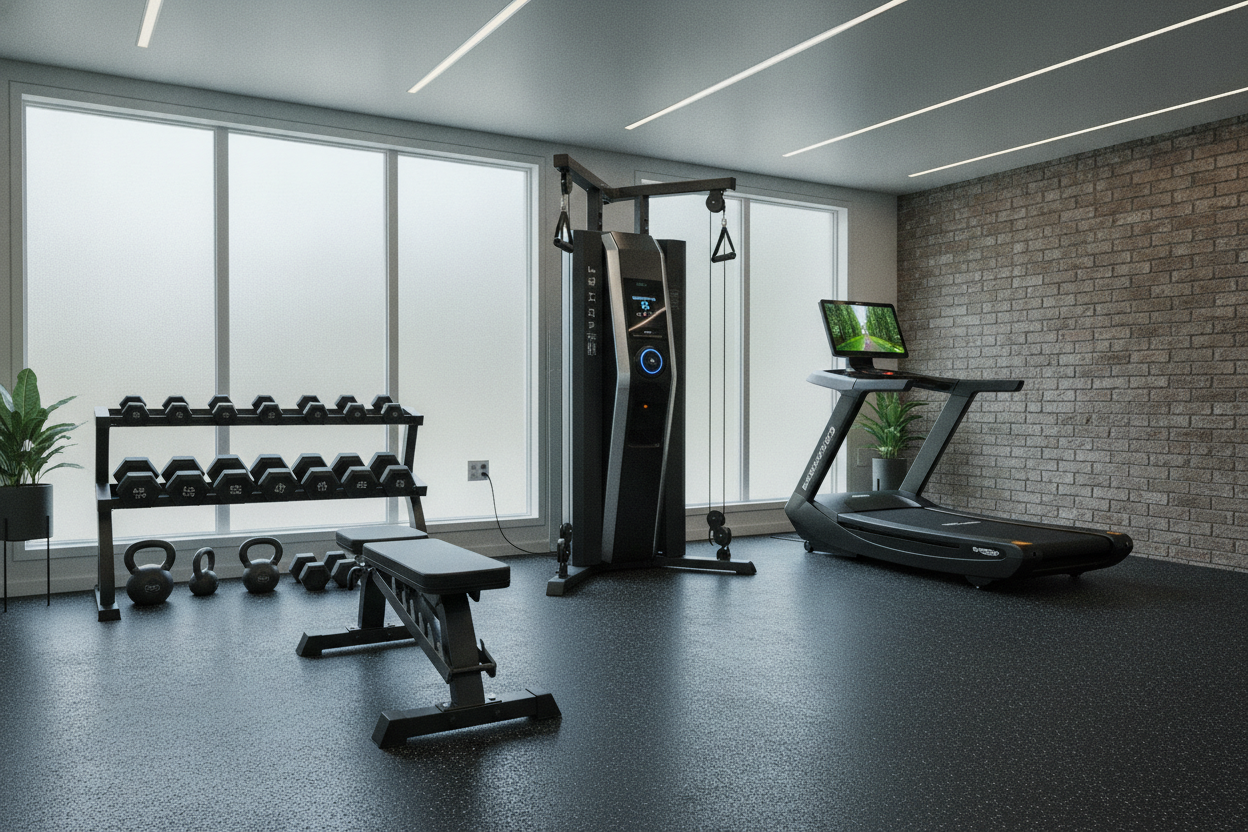
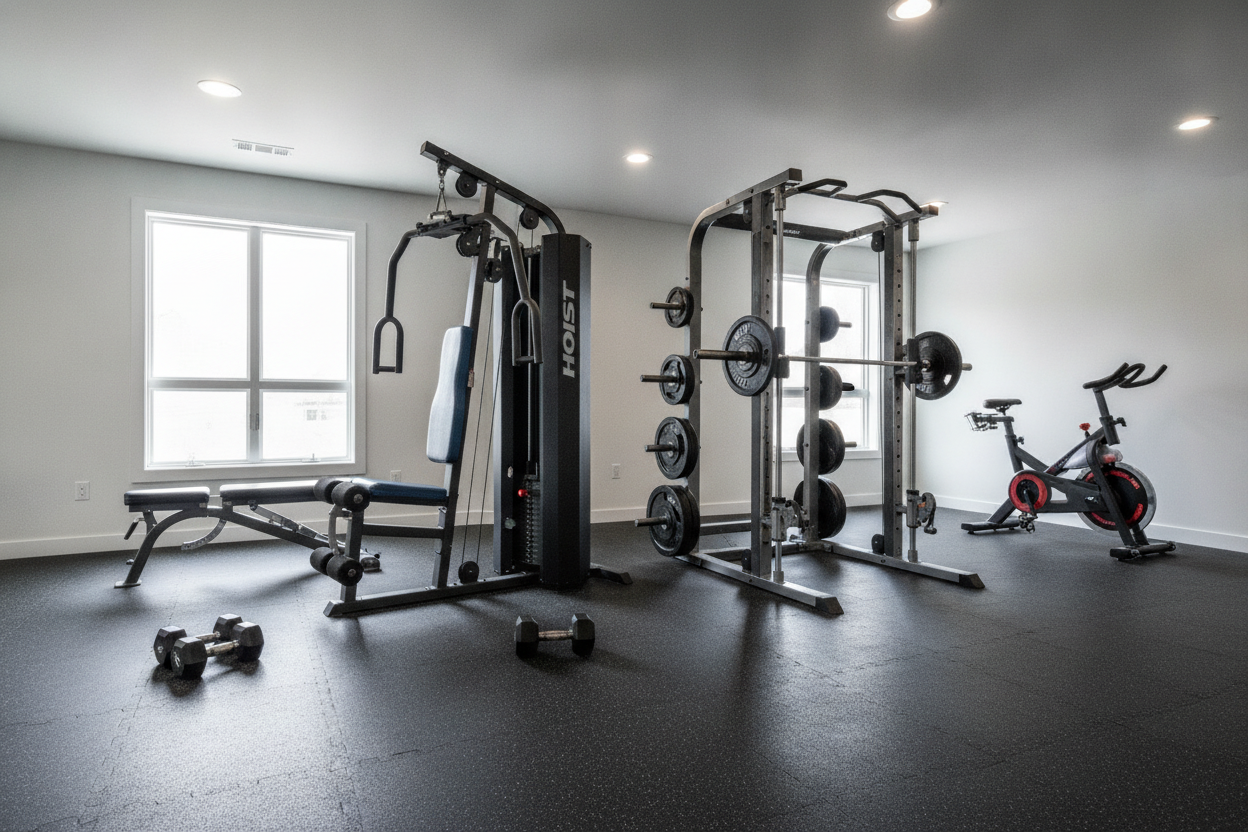
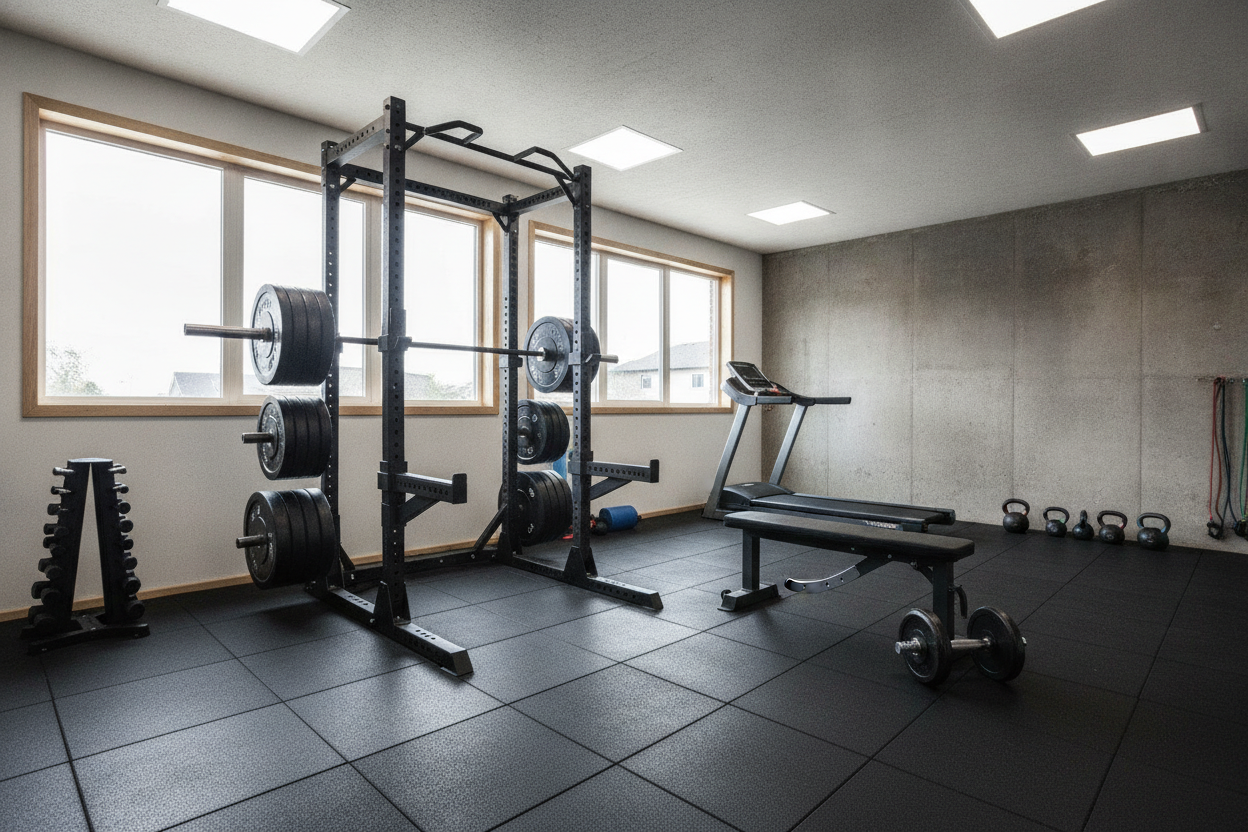
If you're serious about a workout routine for bulking up, you have to be able to fail safely. You cannot grind out a heavy set of squats if you're worried about your floor cracking or your rack tipping. To build a pro home gym, you need a power rack with safety spotters. I’ve had to bail on a 400-pound squat before, and those safety arms saved my spine and my concrete floor.
Speaking of floors, don't overlook your foundation. Standard thin yoga mats won't cut it when you're dropping 100-pound dumbbells or pulling heavy deadlifts. You need high-density gym flooring for home workout spaces. A 6x8ft area of thick rubber will give you the stability you need for heavy lifting and protect your equipment from the impact of heavy sets. Stable feet lead to bigger lifts.
My Personal Bulking Disaster
I once tried a 'men's bulking workout plan' that was 100% machines and high reps. I gained 12 pounds in two months, mostly in my midsection and face. When I finally went back to the barbell, my 5-rep max on bench had dropped from 225 to 205. I was 'bigger' but significantly weaker. I had to spend the next two months just getting my strength back to where it was before the bulk. Now, I never let my heavy sets drop below 80% of my max, even when I'm chasing a pump. It’s the only way to ensure the weight you gain is actual muscle.
FAQ
How many days a week should I lift to bulk?
Four days is usually the sweet spot for most people. It allows for an Upper/Lower or Push/Pull split with plenty of rest days for muscle repair. If you lift six days a week on a bulk, you often burn too many calories and struggle to stay in a surplus.
Should I do cardio while bulking?
Yes, but keep it low impact. A 20-minute walk or a light cycle is great for heart health and recovery. Avoid high-intensity interval training (HIIT) as it can interfere with your strength gains and eat into your caloric surplus.
What is the best rep range for bulking?
You need a mix. Use 3-6 reps for your heavy compound lifts to build strength and 8-12 reps for your accessory work to drive hypertrophy. This 'powerbuilding' approach ensures you get the best of both worlds.