Work Out Regimen for Beginners: Stop Counting Reps
I remember a client, Sarah, coming to my garage gym practically in tears because her shoulders were grinding. She had downloaded a generic PDF that demanded three sets of fifteen pushups. She could barely do five with good form, so she spent the remaining ten reps contorting her spine and shrugging her shoulders into her ears just to hit the magic number. If you are starting out, the absolute worst thing you can do is chase arbitrary rep counts. A safe, effective work out regimen for beginners throws the math out the window and focuses entirely on what your body is actually doing.
Quick Takeaways
- Stop counting reps: End your set the exact second your form breaks down.
- Technical failure prevents joint injuries and builds sustainable habits.
- Focus on push, pull, and anchor (lower body) movements to build a foundation.
- Invest in a proper floor surface to avoid premature technical failure from slipping.
Why Arbitrary Rep Counts Ruin Your Work Out Regimen for Beginners
The classic '3 sets of 10' mentality was born in bodybuilding, not beginner fitness. When you force a novice to hit ten reps no matter what, you are training them to survive, not to get stronger. I see it all the time with new clients trying to build a beginner's workout routine. By rep seven, their core collapses. By rep eight, they are using momentum to swing the weight up. By rep ten, the targeted muscle is barely working, and the joints are absorbing all the sheer force. This is a fast track to tendonitis and frustration.
Instead of moving dynamically with terrible form to hit a number, you might actually benefit from stripping movement away entirely. For example, if you are struggling with dynamic reps, an at home workout program for beginners that focuses on isometric holds can build that baseline strength without the joint wear and tear. The goal is tension, not an arbitrary tally mark in your logbook.
Understanding Technical Failure Over Muscle Failure
Muscle failure is when you literally cannot move the weight another inch, even if someone offered you a million dollars. Technical failure happens much earlier. It is the precise moment your posture shifts, your shoulders shrug, or you have to swing your hips to finish the movement. This simple beginner workout plan revolves entirely around stopping at technical failure. If your goal was eight reps, but your lower back arches dangerously on rep five—your set is over at five.
Learning this difference is crucial. When you stop at technical failure, your muscles still get enough stimulus to grow, but your joints stay safe. Sometimes, removing balance from the equation helps you safely find this limit. I often recommend a machine only workout program for beginners because the fixed path of the machine provides external stability. This allows you to safely push closer to technical failure without worrying about dropping a dumbbell on your toe or collapsing sideways.
Structuring Your Weekly Workouts for Beginners Around Form
A solid workout guide for beginners should never lock you into a rigid Monday-Wednesday-Friday split if your body hasn't recovered. Beginner workout plans need fluidity. When your central nervous system is fatigued, your technical failure point drops dramatically. You might hit ten perfect squats on Monday, but struggle to hit five with good form on Wednesday. That is completely normal.
Instead of planning your weekly workouts for beginners around specific days, plan them around recovery. If your form feels shaky during your warm-up, that is a sign to reduce the weight or take an active recovery day. Sustainable progress comes from accumulating high-quality, technically perfect reps over months, not grinding out sloppy reps because a calendar told you it was leg day.
The Push, Pull, and Anchor Framework
To keep things simple, any training program beginner setup should focus on three foundational movement patterns: a push, a pull, and a lower-body anchor. For a push (like a dumbbell press), technical failure looks like your shoulders rolling forward or your elbows flaring out wildly. For a pull (like a dumbbell row), it looks like twisting your torso or using your lower back to heave the weight up.
The anchor refers to lower body movements like squats or lunges. Here, technical failure is easy to spot: your heels lift off the floor, your knees cave inward, or your chest collapses toward your thighs. The second you feel any of these deviations, rack the weight. You have successfully completed the set.
Why Surface Stability Dictates Technical Failure
One of the most overlooked aspects of any workout program for beginners is the floor you are standing on. You can have the best intentions and focus intensely on your form, but if your feet are sliding apart during a goblet squat, you will hit premature technical failure. Your nervous system senses the instability and shuts down power production to protect your joints.
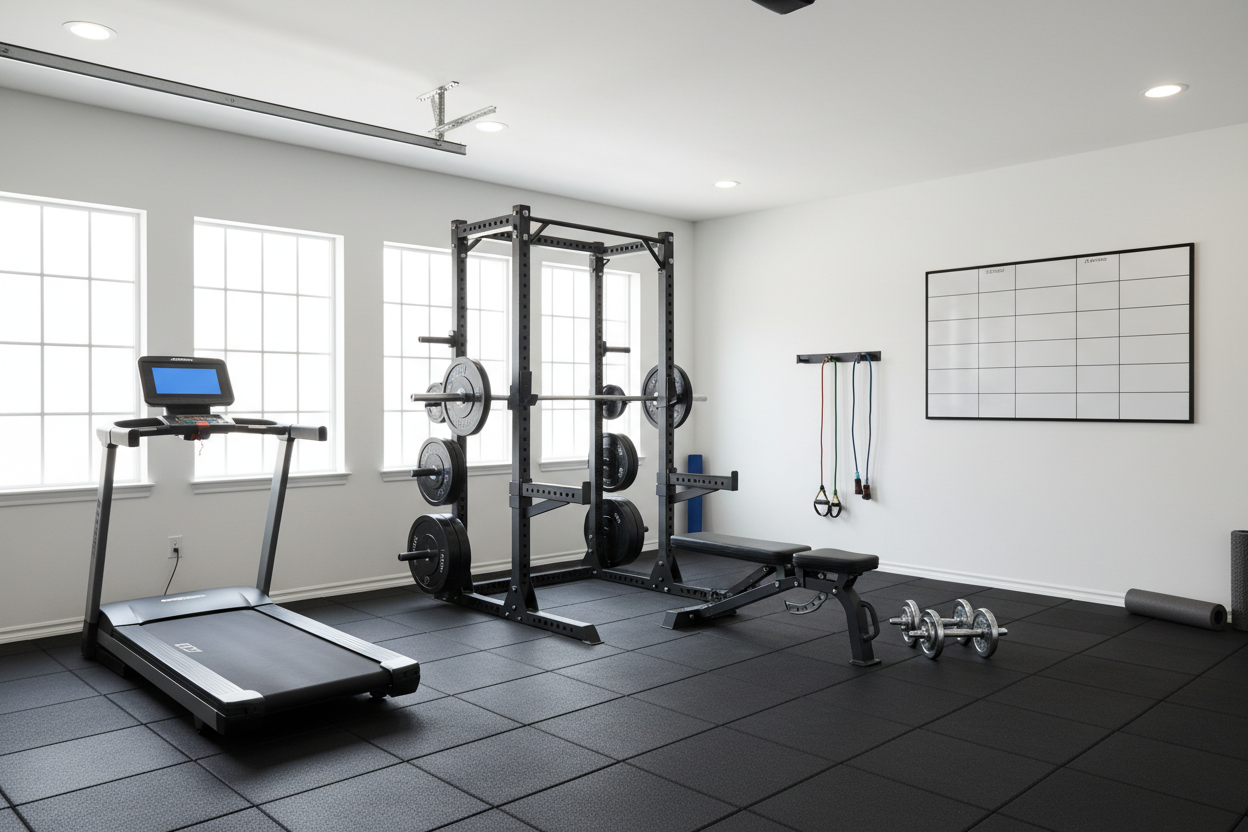
I have tested dozens of home setups, and cheap, squishy half-inch yoga mats are the worst offenders. They compress unevenly, throwing off your ankle alignment. You need a dense, non-slip surface. Investing in proper exercise mat gym flooring that spans at least a 6x6 foot area gives you the solid foundation required to actually test your muscles, rather than your balance on a slick hardwood floor.
When to Progress Your Beginners Workout Program
You do not add weight to the bar just because it is a new week. In a smart workout program beginner routine, progression is earned through technical mastery. You only add weight or reps when you can hit the top end of your target range with zero form degradation. If your goal is to do squats with a 20-pound dumbbell for 8 to 12 reps, and you can easily do 12 reps with perfect posture, it is time to grab the 25-pounder.
Once you learn how to listen to your body and respect technical failure, you will naturally outgrow the basics. When you find yourself easily hitting rep targets with heavy weights and strict form, it is time to move on. You can explore our workout hub to find the next level of programming that matches your new capabilities.
My Experience Testing Beginner Home Gym Setups
Over the last five years, I have built over thirty home gyms for my clients. I always test the gear myself. Recently, I put a popular set of 5-52.5 lb adjustable dumbbells through a brutal 1,000-rep stress test alongside a high-density 6x8 foot mat. The mat was incredible for locking in my feet during heavy lunges, completely eliminating the micro-slips I usually get on my garage epoxy floor. However, I will be honest about the dumbbells: their bulky length made them awkward for bicep curls, forcing my wrists into a slightly unnatural angle. As a trainer, I tell my clients to swap to resistance bands for those specific isolation movements if the dumbbell length compromises their technical form.
Frequently Asked Questions
How many days a week should a beginner work out?
Start with two to three days a week. Focus on full-body sessions using the push, pull, and anchor framework. This allows for 48 to 72 hours of recovery between sessions, which is vital for joint health.
What if I hit technical failure on my very first rep?
If your form breaks down immediately, the weight is simply too heavy or the movement is too complex. Drop the weight by 10 to 20 percent, or switch to an easier variation of the exercise.
Is it normal to feel sore after stopping at technical failure?
Yes, mild muscle soreness is completely normal, especially in the first few weeks. However, you should not feel sharp pain in your joints. Joint pain means you pushed past technical failure and compromised your form.