Flexible Training Fitness Programs to Prevent Home Burnout
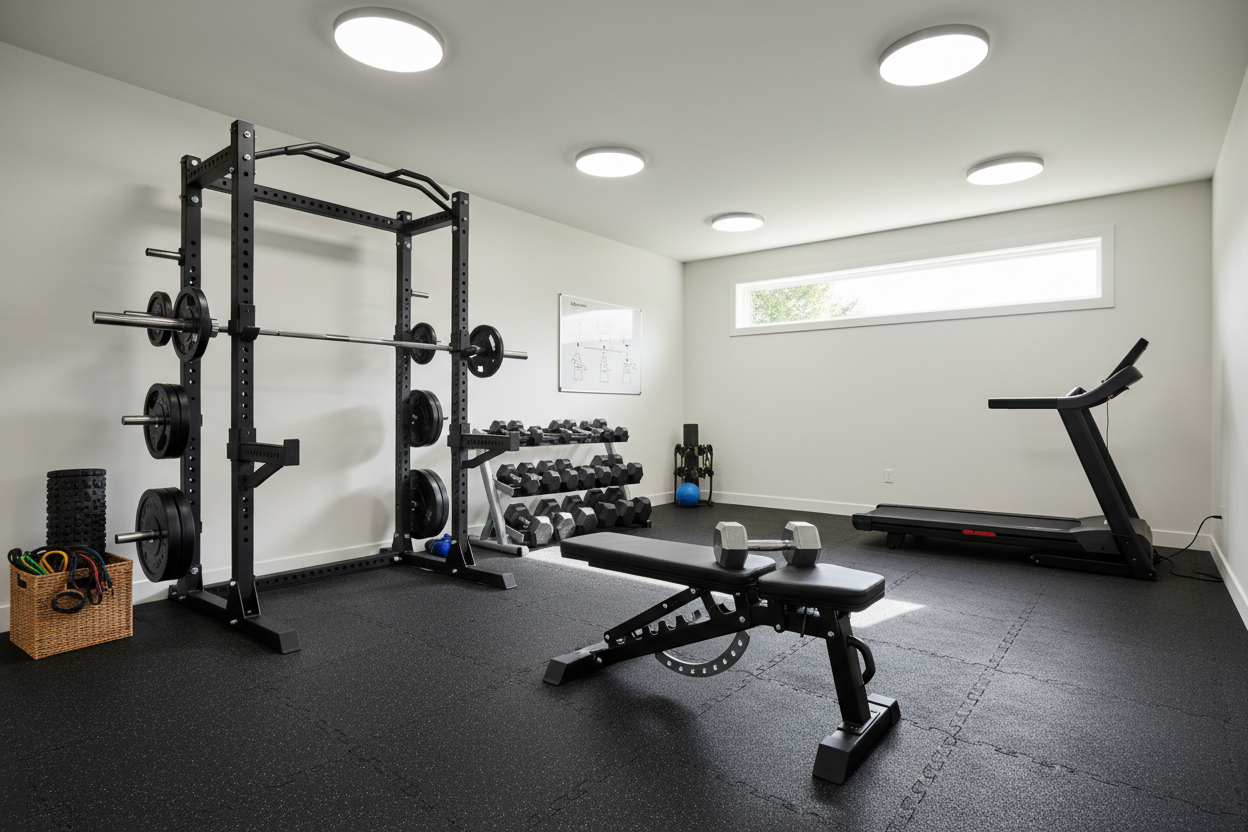
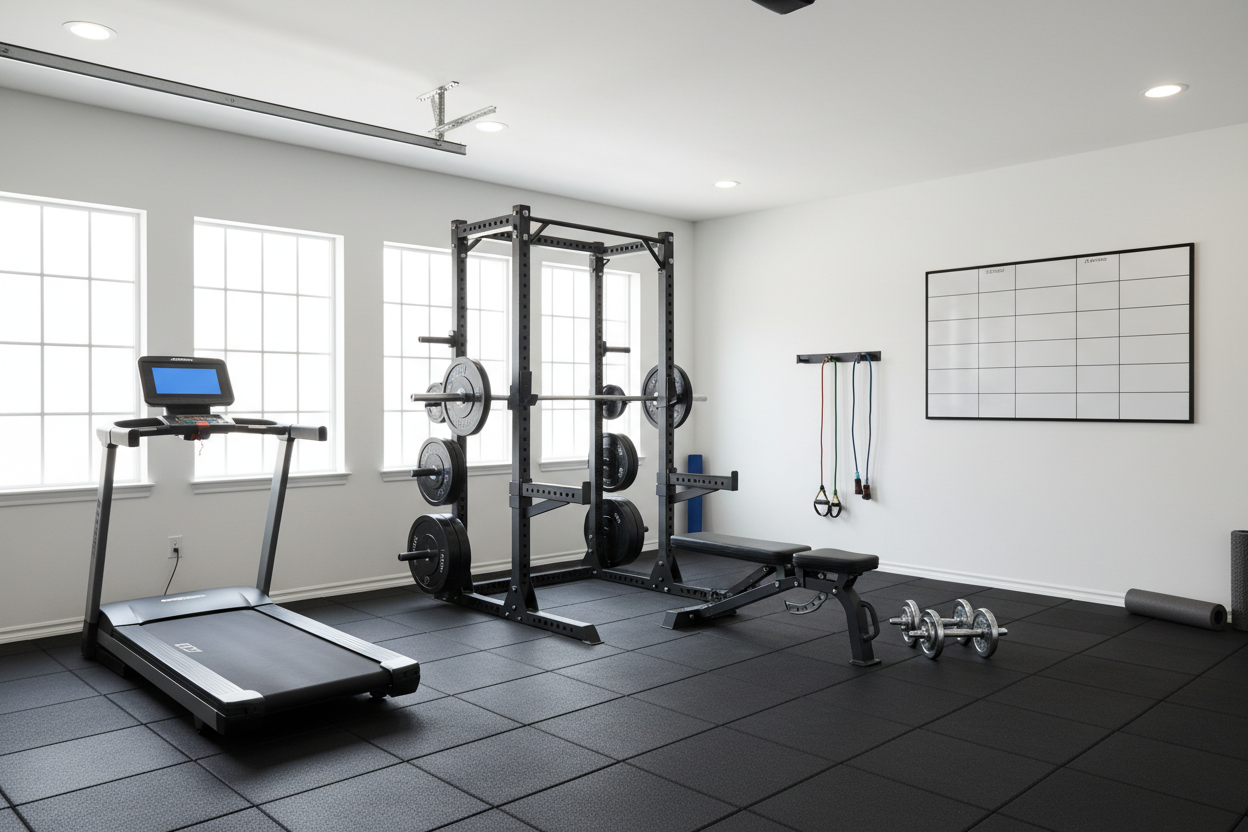
I remember staring at my squat stand in a cramped 400-square-foot apartment at 6 AM after sleeping maybe four hours. My strict spreadsheet told me it was heavy leg day, but my nervous system was screaming for rest. When your living room is also your gym, trying to force rigid training fitness programs down your own throat usually leads to one thing: complete burnout. I have built dozens of garage and spare-bedroom setups for clients, and the number one reason they fail isn't a lack of fancy equipment. It is a lack of flexibility.
Quick Takeaways
- Stop forcing 5-day splits when your sleep and stress fluctuate wildly throughout the week.
- Use autoregulation to match your daily workout intensity to your actual physical energy levels.
- Categorize your routines into Green (hard), Yellow (moderate), and Red (recovery) templates.
- Track your workout volume and progress over a 30-day macrocycle instead of a stressful 7-day microcycle.
The Problem with Rigid Training Fitness Programs at Home
Traditional 5-day splits work great in a commercial gym where the environment forces you into a specific mindset. You scan your tag, hear the clanking iron, and suddenly you are ready to lift. At home, that psychological trigger is completely missing. You are staring at the same walls where you just answered stressful work emails or folded laundry.
Trying to copy and paste commercial exercise training programs into your living space creates massive psychological friction. If Tuesday is supposed to be a heavy deadlift day, but you had a terrible night of sleep, skipping it feels like a failure. That guilt compounds quickly. Soon, the equipment in the corner of your room becomes a monument to your inconsistency.
I see this constantly with new home gym owners. They buy a power rack, a 300-pound barbell set, and a rigid PDF template. By week three, the barbell is collecting dust. The problem is not their discipline. The problem is expecting linear energy in a non-linear home environment. Your home routine needs to breathe and adapt to your daily life.
Understanding Autoregulation in Your Physical Training Program
Autoregulation is a sports science term for listening to your body and adjusting your volume or intensity on the fly. Instead of blindly following a spreadsheet, you assess three metrics before you even touch a weight: sleep quality, daily stress, and physical soreness. This dictates how hard you push.
If you look at the La Fitness Workout Plan A Complete Training Guide For 2025, you will see a highly structured commercial routine. That structure is brilliant when you have the dedicated time and environment to execute it. But a home-based physical training program demands adaptability.
When you autoregulate, you rate your daily readiness on a scale of 1 to 10. A score of 8 or higher means you push the pace. A score of 4 means you back off, drop the weight by 20 percent, and focus on technique. This is not an excuse to be lazy. It is a strategy to keep you moving without frying your central nervous system.
I teach my clients to do a simple grip test or a vertical jump when they walk into their garage gym. If your grip feels weak or your jump is sluggish, your nervous system is tapped out. That is your cue to pivot. Forcing a max effort squat session on those days is a fast track to injury.
Building the Three-Tier Flexible Fitness Training Program
To make autoregulation work, you need a system. I use a three-tier method with my clients. We categorize workouts into Green, Yellow, and Red days. You do not assign these to specific days of the week. You simply wake up, assess your readiness, and pick the template that matches your energy.
This fluid fitness training program guarantees that you do something productive every single day, even if it is just 15 minutes of mobility. To figure out which movements to plug into these tiers, you can reference the Fitness Exercise Workout The Complete Home Training Guide.
A typical week might end up looking like two Green days, three Yellow days, and two Red days. The beauty is that the schedule forms organically around your life. If your kid keeps you up all night on Wednesday, Thursday automatically becomes a Red day. No guilt, no missed workouts. Just a smart adjustment.
Structuring Your 'Green Days' for Progressive Overload
Green days are your money makers. You slept eight hours, your stress is low, and you feel strong. This is when you attack your heavy compound movements. Think 5x5 barbell squats, heavy Romanian deadlifts, and weighted pull-ups.
During these sessions, you want to push close to failure. Leave maybe one or two reps in the tank. Since you only get a few true Green days a week, you need to maximize the mechanical tension. Having the right Strength Training Accessories, like a sturdy lifting belt or fractional plates, allows you to safely push those upper limits at home.
I usually program 4 to 5 exercises maximum on a Green day. We hit the main lift hard, follow it with two heavy accessory movements, and finish with some core. You are in and out in 45 to 60 minutes, but the intensity is at its absolute peak.
'Red Days' and the Importance of Active Recovery Space
Red days are for survival. You are exhausted, sore, or mentally drained. Instead of skipping the workout entirely, you shift to active recovery. The goal here is blood flow and maintaining the habit of showing up to your workout space.
I learned this the hard way while testing a heavy 5-52.5 lb adjustable dumbbell set last year. I pushed too hard for six days straight. My elbows flared up, and I couldn't press a 10-pound weight without pain. The downside of having weights right in your bedroom is the temptation to overtrain. I had to force myself to implement Red days.
Now, my Red days consist of 90-90 hip sweeps, thoracic rotations, and dead bugs. You need a dedicated, comfortable space for this. Rolling out on a cold concrete garage floor isn't going to help your joints. Setting up a 6X8Ft Exercise Mat Yoga Mat Gym Flooring For Home Workout provides the exact cushion and grip you need to spend 20 minutes doing floor-based mobility work without bruising your knees.
Tracking Progress Across Fluid Fitness Workout Programs
The biggest fear people have with flexible routines is that they won't make progress. If you aren't doing the exact same thing every Monday, how do you know you are getting stronger? The answer is zooming out. Stop looking at your fitness workout programs in 7-day blocks.
Instead, track your total volume over a 30-day macrocycle. Keep a logbook on your bench. Every time you hit a Green day for legs, write down your top sets. Over the course of a month, you should see the weight or the reps creeping up.
Consistency over a month matters far more than hitting a specific lift on a specific Tuesday. By adapting to your body's signals, you actually accumulate more high-quality working sets over a 12-week period because you aren't sidelined by nagging injuries or mental burnout.
How do I know if I need a Red day or if I am just feeling lazy?
Do a 5-minute dynamic warmup. If your heart rate comes up and you start feeling energized, you were just unmotivated. Proceed with a Yellow or Green day. If your joints still ache and you feel lethargic after 5 minutes, switch to a Red day.
Can I build muscle without a rigid weekly schedule?
Absolutely. Muscle growth requires mechanical tension, adequate protein, and recovery. Your muscles do not know what day of the week it is. As long as you hit each muscle group with sufficient volume over a 10 to 14-day window, you will grow.
What is the minimum equipment needed for a flexible home routine?
A high-quality exercise mat, a set of adjustable dumbbells that go up to at least 50 lbs per hand, and a pull-up bar. This covers your heavy Green day lifts and provides the floor space for Red day mobility.