Why You're Rushing the best exercise for the upper body
I remember the first time I loaded my rack with 225 lbs for rows. I was bouncing the bar off my gut like a trampoline, feeling like a beast until I realized my back looked exactly the same three months later. Most garage gym lifters are chasing numbers on a whiteboard instead of tension on the muscle, especially when it comes to the best exercise for the upper body.
Quick Takeaways
- Bouncing reps uses physics and momentum, not muscle fibers.
- A strict 1-second pause at the peak of a lift increases motor unit recruitment.
- Pausing reveals your true strength—expect to drop your working weight by 15%.
- Proper floor grip is essential for maintaining the tension required for paused reps.
The Momentum Trap You Don't Realize You're In
When you're training alone in a garage, there's no coach to call out your 'half-reps.' You start dive-bombing the eccentric because it's easier to catch the bounce at the bottom. This habit is secretly wrecking your shoulders by creating massive joint shear at the bottom of a heavy press.
I've seen guys move 100-lb dumbbells with more body English than a salsa dancer. If the weight is moving because of a hip hinge rather than your lats or chest, you aren't getting a good workout for upper body gains—you're just practicing a dangerous dance move. Real growth happens when you kill the momentum and force the muscle to move the load from a dead stop.
Why the best exercise for the upper body Demands a Pause
Why does the best upper body exercise require a pause? Because momentum is a thief. By holding a strict one-second squeeze at the top of a row or the bottom of a floor press, you force the muscle to stabilize the load without help from elasticity. This is a top body workout secret that most people ignore because it's hard.
When you pause, you're maximizing time under tension. You're also ensuring that you aren't cheating with your legs or lower back. If you can't hold the weight for a full second at the peak contraction, the weight is too heavy. Period. It’s a humbling realization that usually leads to a 20-lb drop in your 'max,' but your sleeves will fill out faster because of it.
How to Build great workouts for upper body Using the Squeeze
To build great workouts for upper body development, you don't need a 12-piece cable crossover machine. Take your standard dumbbell press or barbell row and apply the 'Pause-and-Squeeze' framework. For every rep, count 'one-one-thousand' at the point of maximum contraction before lowering the weight under control.
This technique works for almost all full upper body exercises. If your form starts to go south because of the systemic fatigue, don't just start bouncing. You can always pivot to heavy walking movements to finish off your central nervous system without the technical demand of paused reps. This keeps the intensity high without sacrificing your joints.
Stop Slipping While You Squeeze
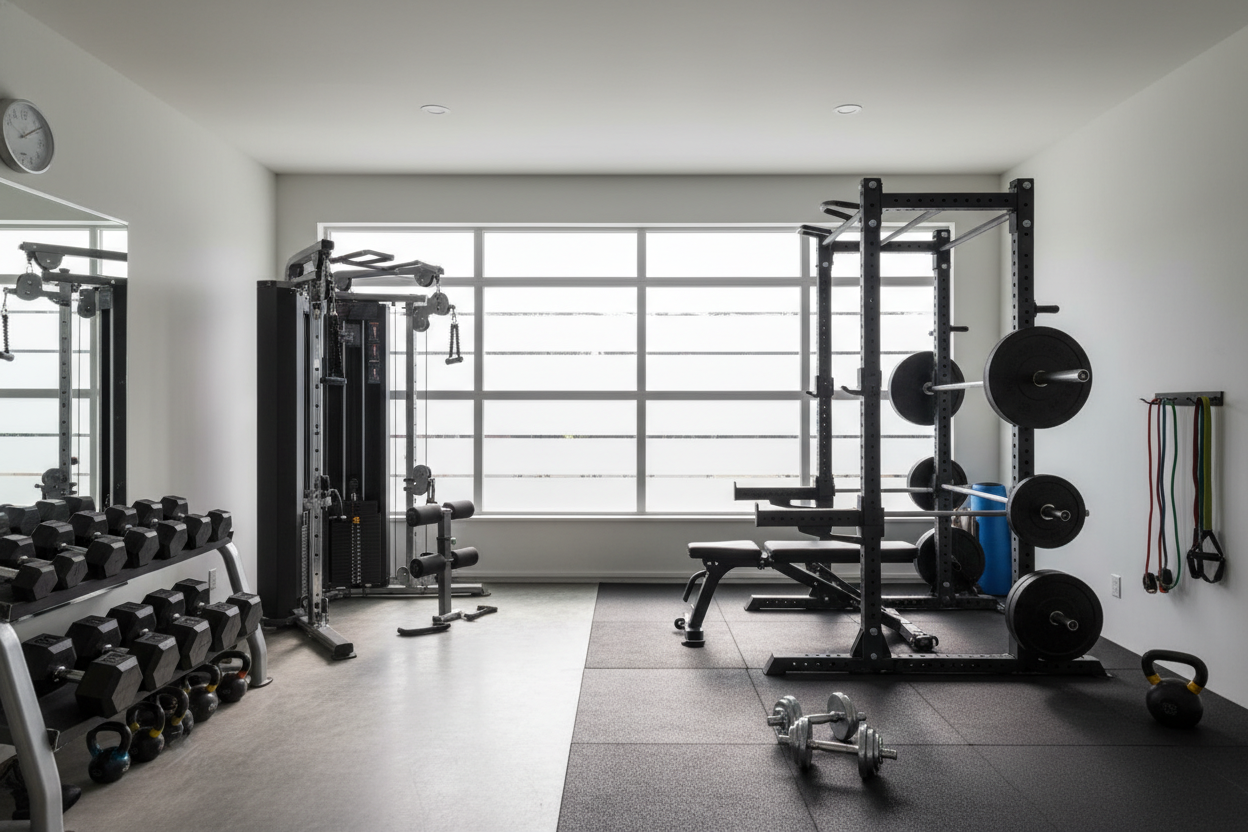
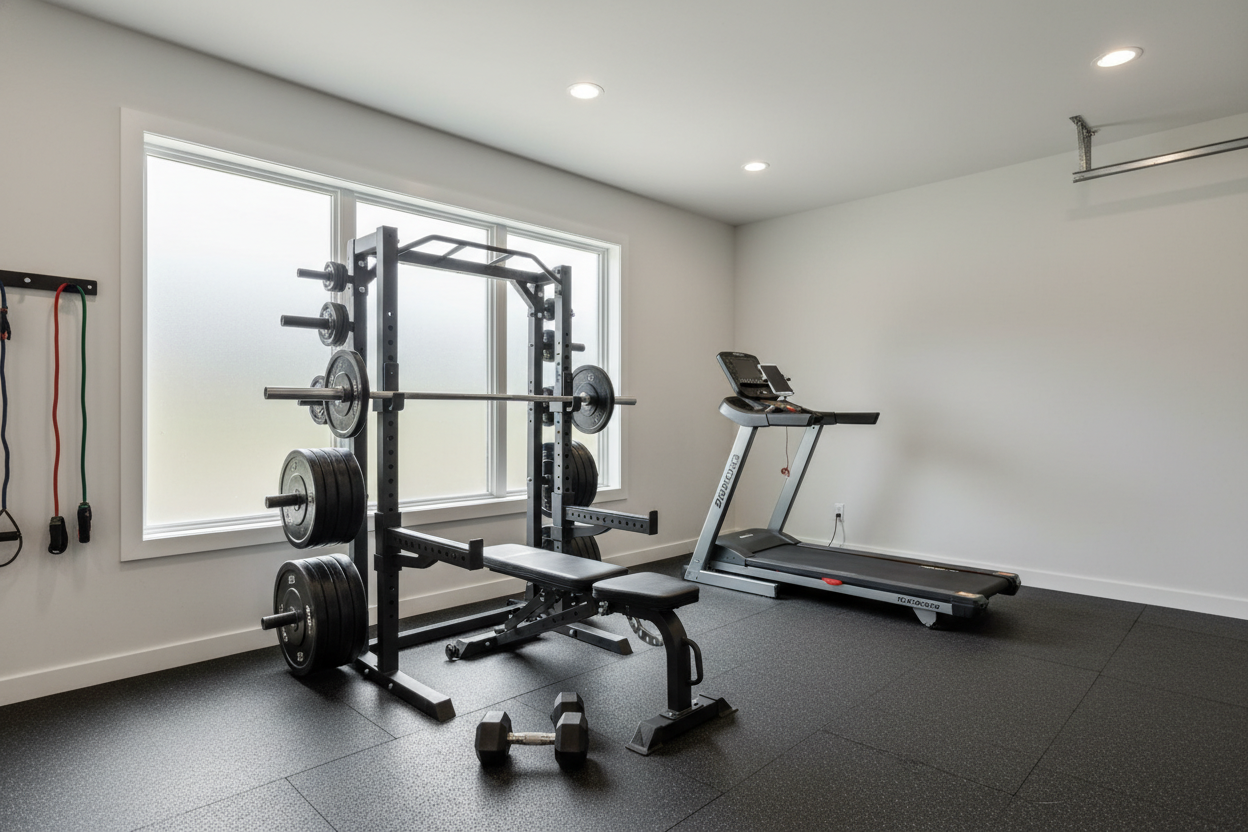
You can't squeeze what you can't stabilize. If you're trying to hold a heavy row on slick concrete or a dusty garage floor, your feet are going to slide. You need a large exercise mat that actually bites into the floor and provides enough friction for your shoes to anchor.
I've tried those cheap 1/4-inch foam tiles from the big-box stores, and they are absolute garbage. They pull apart the second you apply lateral force during a heavy press. A high-density mat allows you to drive your feet into the ground, creating the full-body tension necessary to hold a heavy isometric pause at the top of your lift.
What are the best upper body exercises to Pause?
So, what are the best upper body exercises to apply this to? Not every movement is a candidate, but these three are staples for any gym exercise for upper body days. First, the Dumbbell Row—pause with the weight at your hip, not your chest. Second, the Floor Press—pause when your triceps lightly touch the ground to kill the stretch reflex.
For the floor press specifically, I highly recommend using durable home gym flooring so you aren't grinding your elbows into raw concrete while trying to maintain that dead-stop. Third, the Pull-up—pause with your chin over the bar. If you can't hold it, you aren't actually strong enough for that rep count yet.
My Honest Mistake
I once tried to 'ego-pause' a 315-lb bench press in my early 20s without a spotter. I didn't have the internal bracing or the floor grip, and my right foot slipped on a patch of spilled chalk. I didn't get pinned, but I felt my ego deflate faster than a punctured stability ball. Now, I use 3/4-inch stall mats and focus on the squeeze, not the plate count. I'm lifting less weight than I did at 22, but I'm significantly bigger and my joints don't ache every morning.
FAQ
What are good upper body workouts for beginners?
Focus on the basics: push-ups, rows, and overhead presses. Don't worry about complexity; worry about the quality of the contraction. A paused push-up is harder and more effective than a sloppy bench press.
Should I pause on every single rep?
If you want maximum hypertrophy, yes. If you are training for pure powerlifting speed, you might use a faster tempo, but for 99% of home gym lifters, the pause is the superior growth stimulus.
How long should the pause actually be?
A true 'one-one-thousand' count. Most people's 'one second' is actually about 0.3 seconds. Use a clock or a metronome if you're a chronic rusher.