I Swapped 3 Upper Days for This arm shoulder and back workout
I spent years chasing the classic Monday chest, Tuesday back, Wednesday shoulders split. My garage was full of gear, but my schedule was empty of free time. I was hitting junk volume just to check boxes, and frankly, my delts weren't growing any faster for it. I was doing sixteen sets of isolation work at 9 PM on a Tuesday, dreading every second of it. I finally hit a wall and decided to condense the 'glamour muscles' and the 'engines' into one high-intensity session. This arm shoulder and back workout isn't just a time-saver; it’s a way to force your upper body to work as a unit rather than a collection of parts.
- Frequency over volume: Hit these muscles twice a week instead of once.
- Prioritize the big pulls to protect your shoulders.
- Antagonistic supersets are your best friend for saving time.
- Minimal gear needed: just dumbbells and a bench.
Why I Finally Killed the 5-Day Bro Split
The 5-day split is great if you're a pro bodybuilder with nothing but time and a pharmacy of 'supplements.' For the rest of us training in a garage between work calls and family dinners, it’s a trap. I found myself doing 'filler' exercises—like four different types of bicep curls—just because it was 'Arm Day.' My 52.5-lb adjustable dumbbells were getting plenty of use, but my actual strength was stagnant. I was tired, my joints felt like they were filled with sand, and I was spending six hours a week in the gym for results I could have achieved in three.
That's junk volume. It creates fatigue without stimulating new growth. When you combine your upper body into a single session, you're forced to pick the most effective movements. You can't afford to waste energy on three different lateral raise variations when you still have heavy rows and presses on the menu. I realized that my back and shoulders didn't need their own dedicated holidays; they needed high-intensity, heavy-load stimulus followed by actual recovery time. By killing the bro split, I freed up three hours a week and finally started seeing the scale move.
The Mechanics of a Proper back shoulder arm workout
The secret to a successful back shoulder arm workout is all in the sequencing. If you fry your triceps with heavy overhead presses first, your pulling power for rows and pull-ups will suffer. You need a strategy that lets you move the most weight while the central nervous system is fresh. I used to think I could just 'wing it' and start with whatever rack was open, but in a home gym, you are the master of the flow. You have to be intentional.
I found that pairing these muscle groups actually improved my aesthetics more than isolating them. When you build the 'frame'—the lats and the medial delts—simultaneously, the V-taper becomes much more pronounced. It’s about creating that wide, powerful silhouette. If you're looking for more specific aesthetic goals, check out this at-home back and shoulder workout for a deeper dive into that V-taper logic. Training this way also keeps your heart rate elevated, providing a metabolic demand that a standard bicep day just can't match.
The goal is to move from the largest muscles to the smallest. Your back can handle the most weight, followed by your shoulders, and finally your arms. If you reverse this, you're limiting your potential. I’ve seen guys try to hit heavy rows after doing five sets of curls, and their grip gives out before their lats even wake up. Don't be that guy. Use your energy where it yields the highest return on investment.
Always Pull Before You Press
I learned this the hard way after a nagging rotator cuff injury that kept me off the bench for three months. If you start with heavy pressing, your shoulder joint is often 'cold' and unstable. By starting with heavy rows or pull-ups, you pump blood into the lats, rhomboids, and rear delts. This creates a thick, stable 'shelf' of muscle for your shoulders to sit on when you move into overhead work.
It’s a biomechanical hack that makes 80-lb dumbbells feel lighter and safer. My shoulders have never felt more stable than when I started 'greasing the groove' with pulls first. It’s the difference between pressing off a mattress and pressing off a concrete floor. You want that solid foundation. Plus, the rows act as a natural warm-up for the elbow joints, which can be finicky during heavy overhead extensions later in the session.
The Exact shoulder arm and back workout I Do Now
This is the meat of the session. I run this routine twice a week with at least two days of rest in between. I use a pair of adjustable dumbbells and a sturdy bench. No fluff, no waiting for a cable machine. I focus on explosive concentric movements and controlled eccentrics. If you aren't sweating by the second superset, you aren't moving heavy enough weight.
- One-Arm Dumbbell Rows: 4 sets of 8-10 reps. Go heavy here. This is your primary builder.
- Seated Dumbbell Overhead Press: 3 sets of 10-12 reps. Keep the bench at a slight incline (about 85 degrees) to save your lower back.
- Weighted Chin-Ups: 3 sets to failure. If you can't do weighted, do bodyweight with a slow 3-second descent.
- Dumbbell Lateral Raises: 3 sets of 15. Lean slightly forward to hit the side delt, not the traps.
I pair the rows and the presses as a superset. Do a set of rows, rest 60 seconds, do a set of presses, rest 60 seconds, and repeat. This shoulder arm and back workout keeps the heart rate up and gets me out of the garage in under 45 minutes. The lateral raises should be treated as a 'pump' exercise—don't ego lift here. Use a weight you can control with zero momentum.
I’ve tracked my progress on this for six months. My overhead press went from 55-lb dumbbells to 75-lb dumbbells, and my back thickness is noticeably better. The key was the consistency. Because the workout is shorter, I actually show up for it. I don't skip it because 'I don't have time for a two-hour session.' I always have 45 minutes.
The 10-Minute Arm Finisher
By the time you get to the end, your arms are already pre-exhausted from the rows and presses. You don't need an hour of curls. I finish with an antagonistic superset of Dumbbell Hammer Curls and Overhead Tricep Extensions. This targets the long head of the tricep and the brachialis, which adds that 'thickness' to the arm when viewed from the side.
I do 3 sets of 12-15 reps with zero rest between the bicep and tricep movements. The pump is intense because the blood is already in the area. It’s efficient, brutal, and it actually works better than the 'marathon' arm days I used to do. I use the same dumbbells for both, which keeps the transition time at zero. If you can still pick up your water bottle easily after this, you didn't go hard enough.
Garage Gym Setup: What You Actually Need
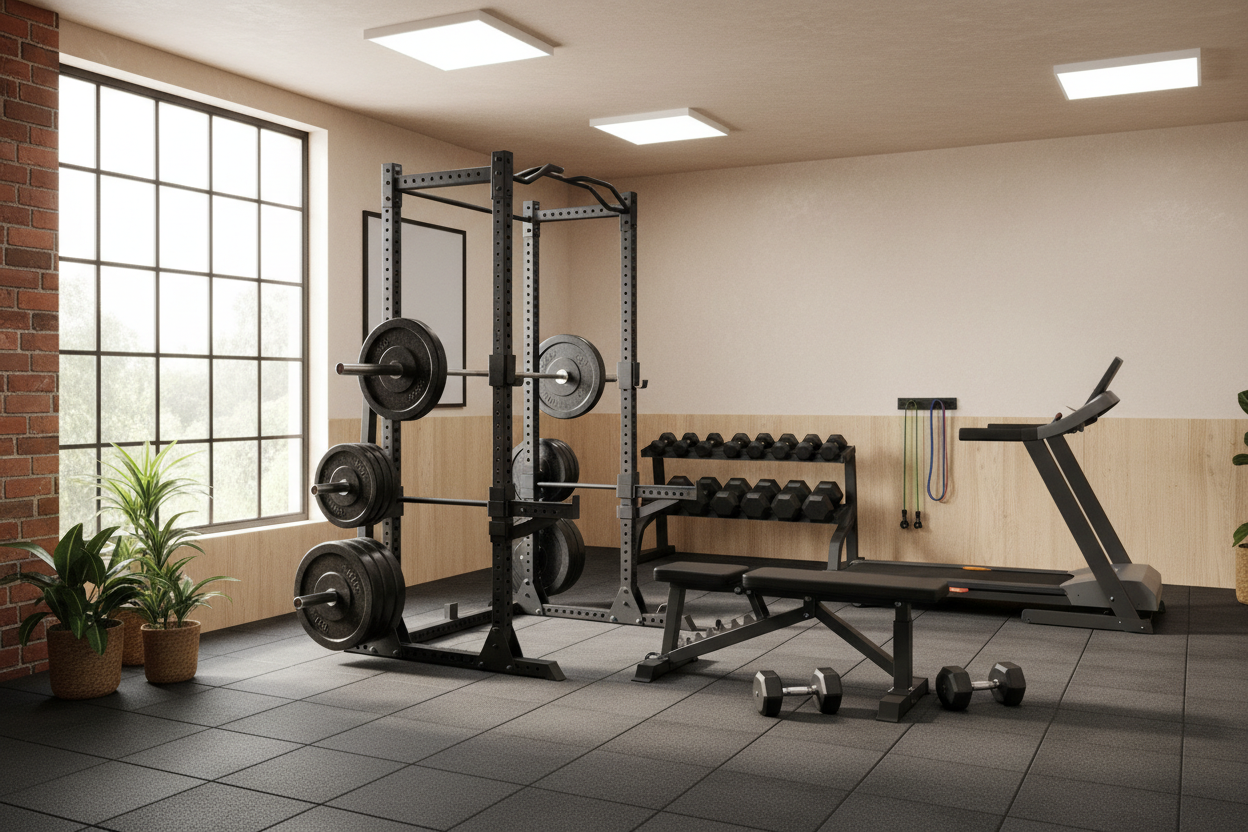
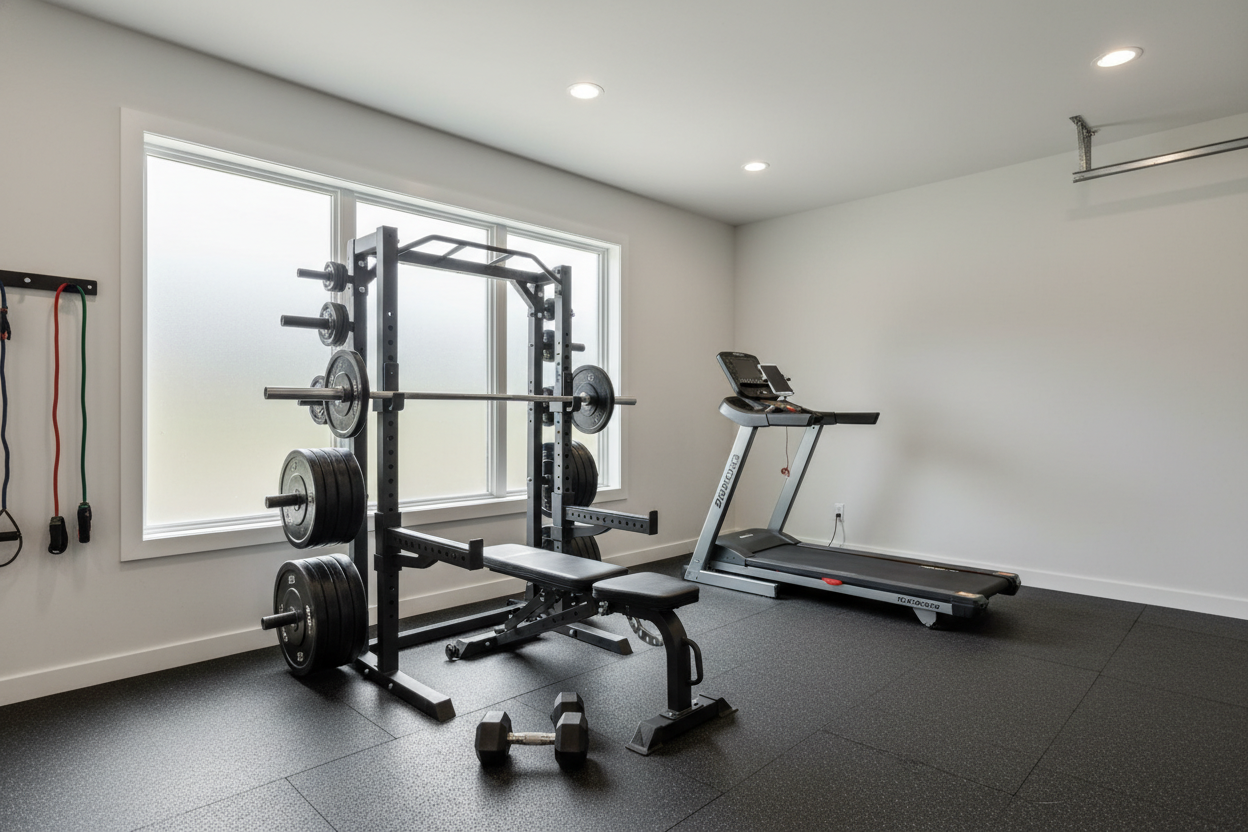
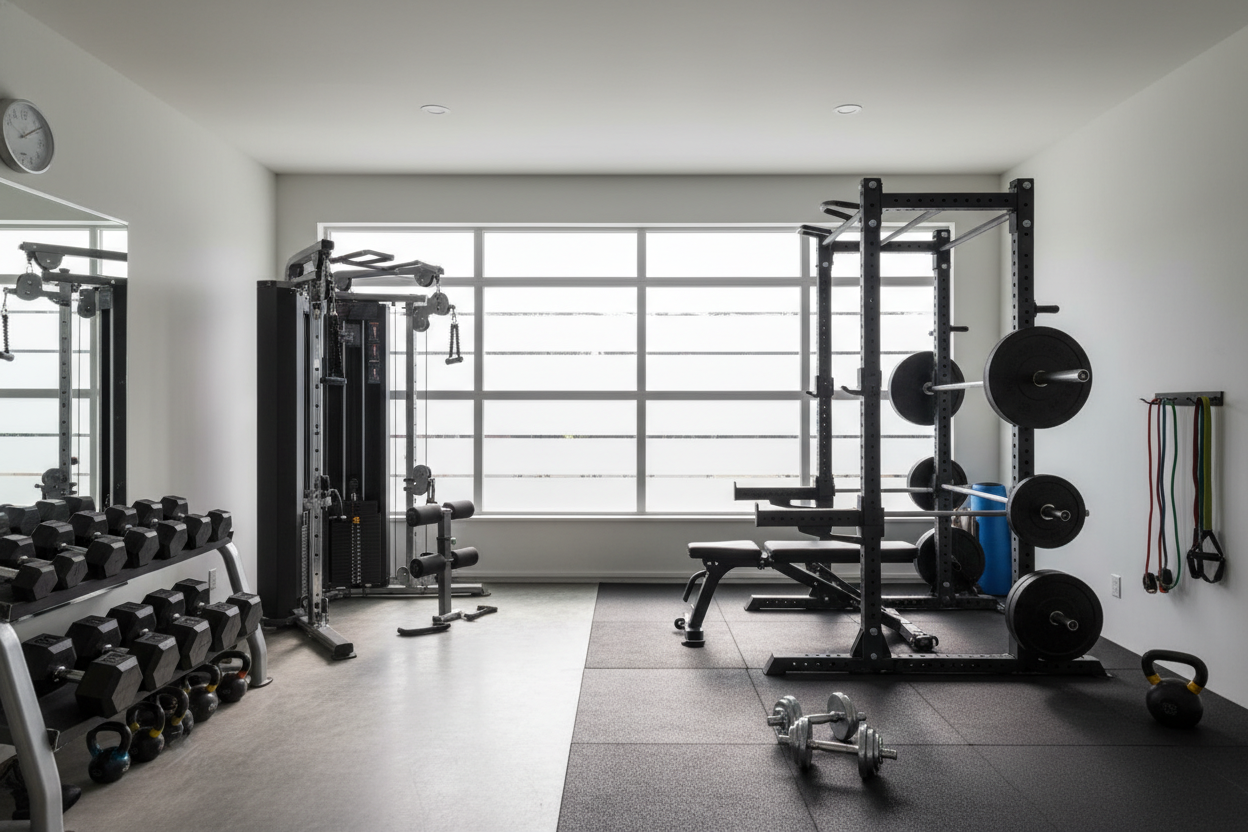
You don't need a $5,000 functional trainer for this. I do 90% of this routine with a solid set of dumbbells and an adjustable bench that doesn't wobble. However, stability is non-negotiable. If you're doing heavy standing presses or rows, you need a surface that isn't going to slip or compress under your feet. I've seen too many guys try to lift on cheap foam tiles that shift the moment they exert real force.
I've trained on bare concrete and it's a recipe for joint pain and slipped feet. Investing in high-quality gym flooring for home workouts made a massive difference in my confidence during heavy sets. It dampens the noise when I drop the 50s and gives that essential grip for my stance. A 6x8 ft space is all you really need to execute this entire session perfectly. If your floor is slippery, your brain will subconsciously limit your power output to keep you from falling. Don't let your flooring be the bottleneck for your gains.
Is One workout for arms shoulders and back Enough?
If you hit this workout for arms shoulders and back once a week, you'll maintain. If you hit it twice, you'll grow. The key is the recovery. Because you're hitting several large muscle groups at once, you need to fuel up and sleep. You can't run this on four hours of sleep and a cup of coffee and expect to hit PRs. I tried that for a month and ended up with a strained lat and a bad attitude.
I usually run this on Mondays and Thursdays, leaving Tuesdays and Fridays for legs and core. This allows for 48-72 hours of recovery between upper body sessions. If you need help rounding out the rest of your week, you can find more specialized routines in our complete workout hub. Don't overcomplicate it. Pick heavy weights, move them with intent, and get back to your life. The garage gym is about freedom, not being a slave to a spreadsheet.
FAQ
Can I do this with resistance bands?
You can, but it's harder to track progressive overload. For the back and shoulders, you really want the consistent tension of iron or heavy dumbbells. Bands are better as a finisher than a primary driver for the heavy compounds.
What if my shoulders hurt during presses?
Swap the barbell for dumbbells and use a neutral grip (palms facing each other). This opens up the shoulder joint and usually eliminates that 'pinching' feeling. Also, don't skip the rows—they are your insurance policy for shoulder health.
How long should I rest between sets?
For the big compound movements like rows, take 90-120 seconds. For the arm finisher, keep it under 45 seconds. The goal is density, not sitting around scrolling on your phone between sets of curls.