Why Your Weightlifting Workout Plan Feels Like a Part-Time Job
I remember sitting on my weight bench at 11:00 PM, staring at a spreadsheet that called for 24 sets of chest and triceps. I had just finished a ten-hour shift and finally got the kids to sleep. I felt like a total failure because I couldn't finish the session without literally falling asleep on the floor. The truth is, most weightlifting workout plan templates you find online are designed for people whose only job is to look good for a camera.
Quick Takeaways
- Three days a week is the sweet spot for most garage gym lifters with jobs and families.
- Compound movements like squats, deadlifts, and presses should make up 80% of your training.
- Stop chasing a 'pump' with isolation moves and start chasing weight on the bar.
- If you cannot recover from your volume, the volume is useless.
The Influencer Volume Trap Destroying Your Recovery
Most of the six-day 'bro splits' you see on social media are a trap. They are built for twenty-somethings with zero responsibilities, high testosterone, and perhaps a bit of 'pharmaceutical help.' When you try to run that kind of weightlifting workout plan while managing a career and a household, you aren't building muscle—you are digging a recovery hole you'll never climb out of.
I have seen guys in their 40s trying to do 30 sets of chest on a Monday night. By Wednesday, their central nervous system is fried, their joints ache, and they are dreading their next session. That is not training; that is self-flagellation. Your muscles grow when you rest, not when you're grinding out your fifth variation of a cable flye at midnight. High volume requires high recovery. If you aren't sleeping nine hours a day and eating 4,000 clean calories, you don't need more sets; you need more intensity on fewer movements.
What a Realistic Weight Lifting Training Plan Actually Looks Like
A realistic weight lifting training plan focuses on what actually moves the needle. For most of us, that means a three-day, full-body approach. You hit the gym, you work hard on three or four big movements, and you get out. This allows for 48 hours of recovery between sessions, which is where the actual growth happens. I stopped trying to mimic professional bodybuilders and started training like an athlete who has a life.
You don't need a massive commercial gym setup to see progress. In fact, you can even start lifting without a barbell if you are just getting your feet wet or working with limited space. The key is progressive overload—doing slightly more than you did last time. Whether that is an extra five pounds or one more rep, that is the only metric that matters. I spent years thinking I needed a specialized machine for every muscle head. I was wrong. I needed to get better at the basics.
A three-day plan usually revolves around a 'Push, Pull, Legs' or an 'A/B' full-body split. You spend your time on things like overhead presses, weighted pull-ups, and squats. These movements recruit the most muscle fibers and trigger the biggest hormonal response. If you only have four hours a week to train, why would you spend one of those hours doing bicep curls?
The Power of the 3-Day Framework
The A/B split is my personal favorite for the garage gym. Workout A might be Squat, Bench Press, and Rows. Workout B might be Deadlift, Overhead Press, and Pull-ups. You alternate these every other day. It is simple, it is brutal, and it works. It hits every major muscle group at least twice every eight days, which is the gold standard for hypertrophy and strength for the natural lifter.
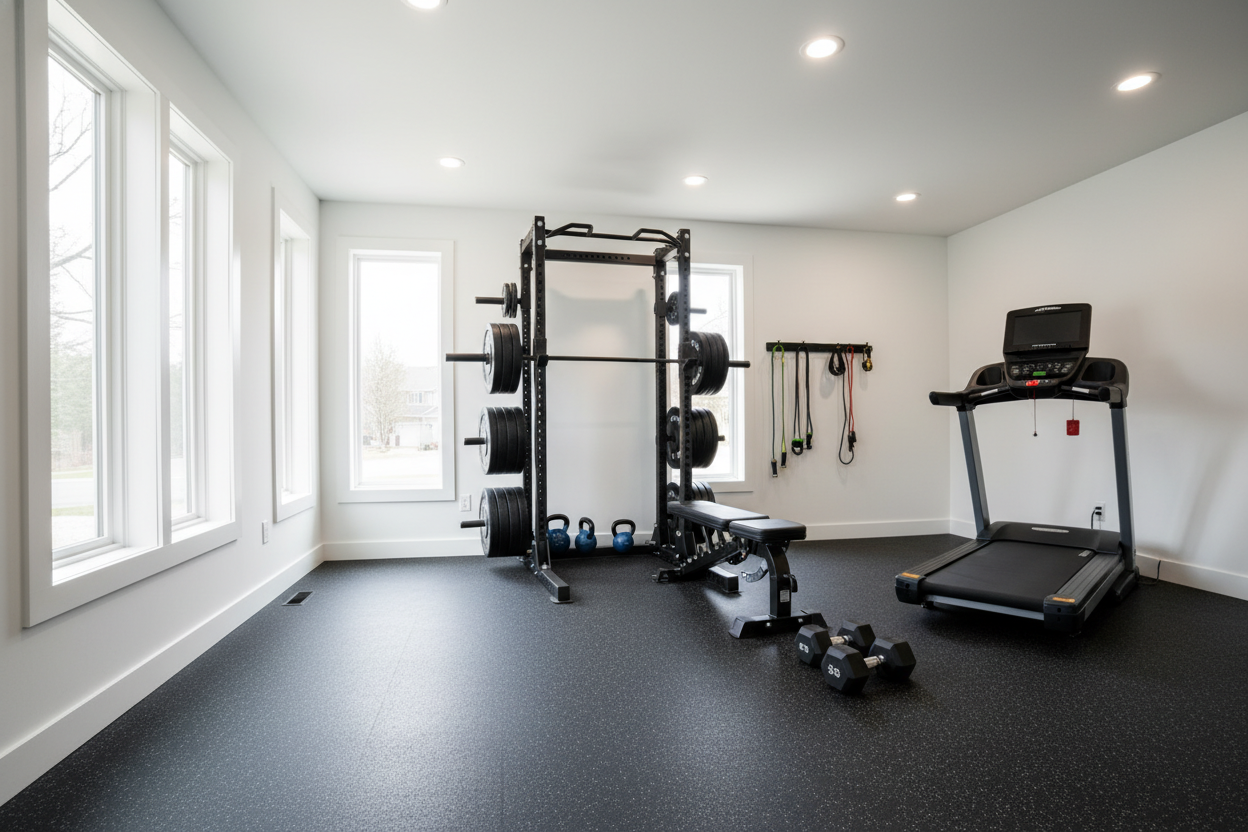
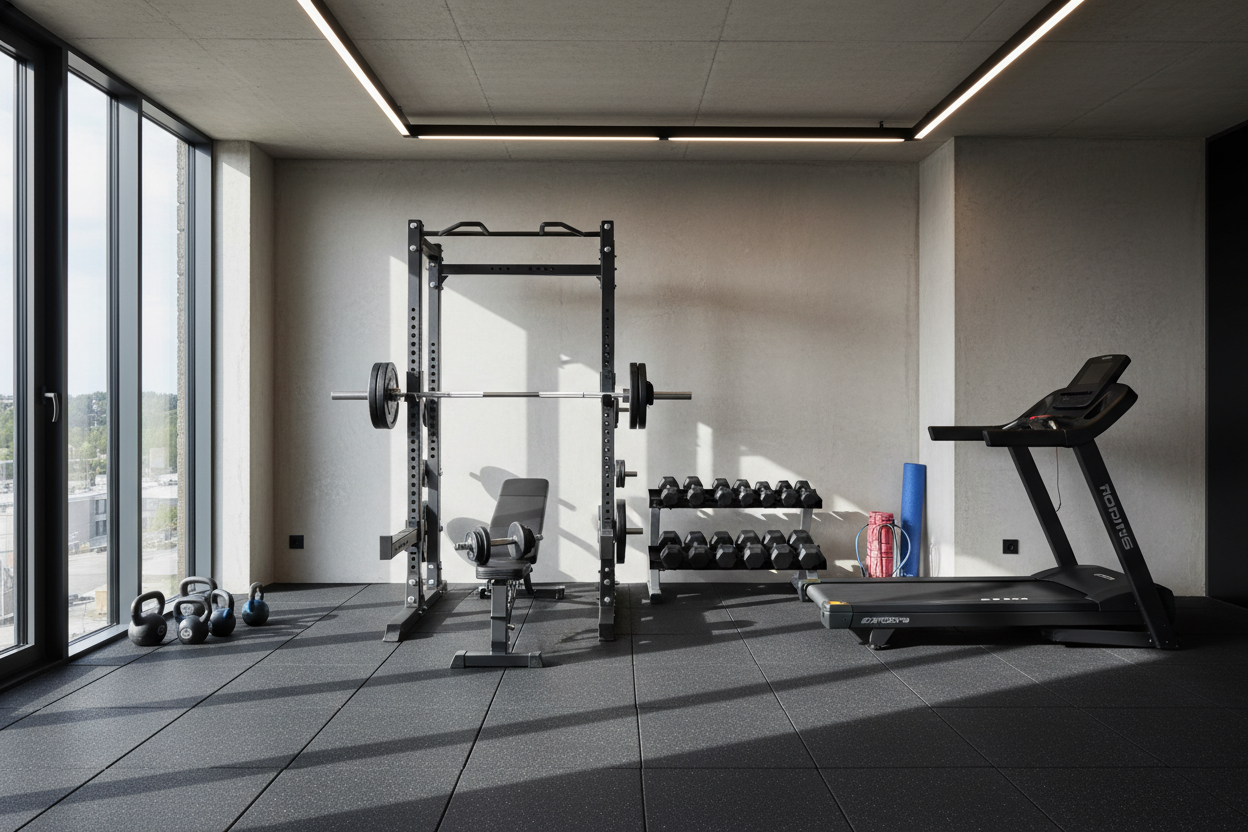
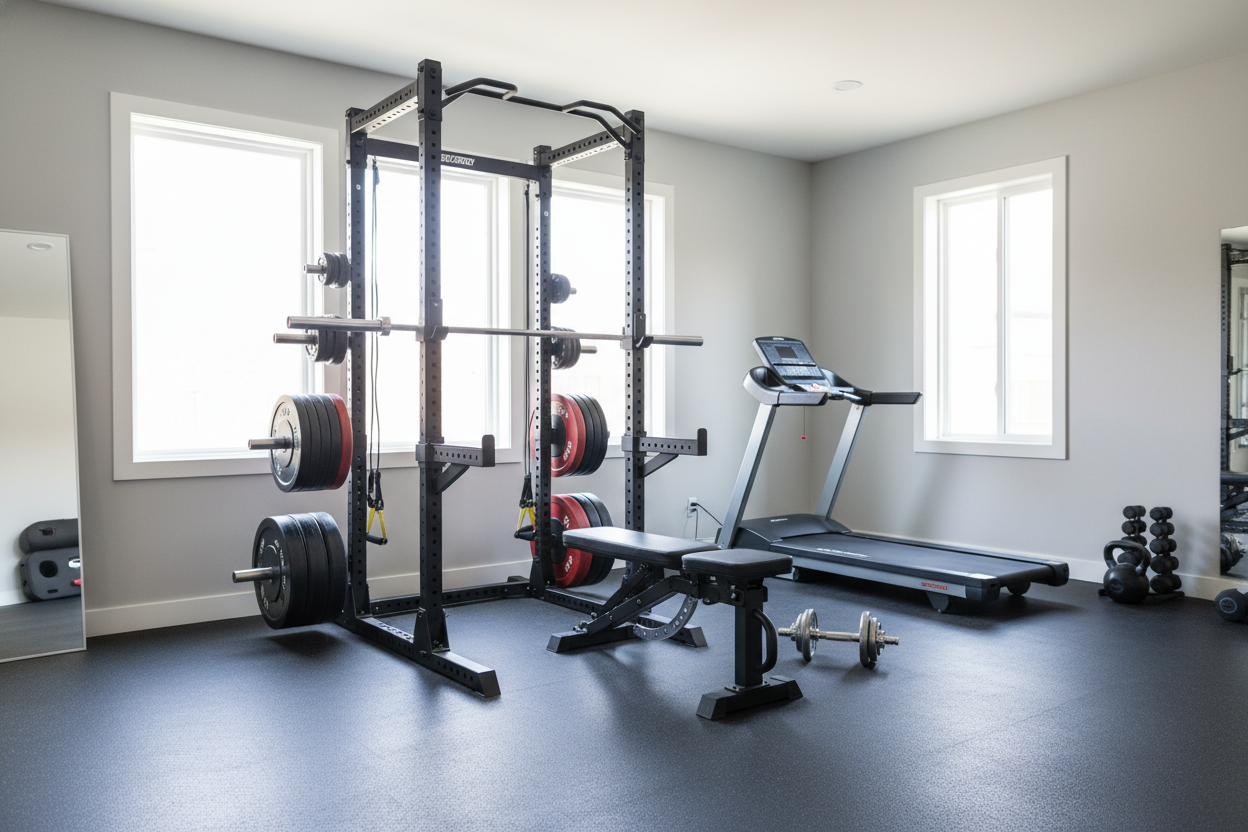
To execute this safely at home, especially if you are training alone, you need gear that won't fail you. I've tested a lot of budget racks that felt like they were made of soda cans. The Gxmmat X6 Power Rack Weight Bench Package is a solid example of an all-in-one footprint that lets you go heavy on these big movements without needing a spotter. It gives you the safety of a power rack with the versatility of a bench, which is essential when you're trying to cram a pro-level workout into a 3-day window.
Stop Doing Junk Exercises Just to Feel Sore
Soreness is not a badge of honor; it is often just a sign of inflammation from 'junk volume.' Doing twenty minutes of triceps kickbacks or front raises is a waste of your precious garage gym time. These are low-tension exercises that provide very little mechanical stimulus compared to big compound moves. Mechanical tension—lifting heavy stuff through a full range of motion—is the primary driver of growth.
If you want bigger arms and a thicker chest, stop doing six different flye variations. Instead, get a sturdy adjustable weight bench and focus on heavy incline presses and close-grip bench work. An incline press at 30 or 45 degrees hits the upper pecs and shoulders far more effectively than any isolation 'finisher' ever will. I used to spend 15 minutes at the end of every workout doing 'burnouts.' Now, I just add an extra set of heavy rows. My back got wider, and I finished my workout 20 minutes earlier.
Where to Start if You Are Completely Overwhelmed
If your current routine feels like a second job, fire yourself. Seriously. Take a week off, let your joints heal, and come back with a minimalist mindset. You won't lose your gains in seven days; in fact, you'll probably come back stronger because your nervous system finally caught up. Transitioning to a stripped-down routine is about quality over quantity.
If you're ready to hit the reset button but don't know which exercises to pair together, I usually point people toward a weight lifting for dummies plan that I've refined over the years. It strips away the fluff and focuses on the big five movements. You don't need a PhD in kinesiology to get strong; you just need a plan that respects your time and your biology.
My Biggest Mistake
I once tried to run a high-volume Bulgarian squat program while also training for a 10k. I thought I was 'built different.' I wasn't. Within three weeks, my knees felt like they were filled with crushed glass and I was snapping at my wife over breakfast because I was so chronically fatigued. I learned the hard way that you can't out-train a lack of recovery. Now, I lift heavy three days a week, and I've never been stronger or happier.
FAQ
Do I need to change my routine every few weeks to 'confuse' my muscles?
No. Muscle confusion is a myth. Muscles respond to tension and overload. Pick five or six big moves and stay with them for months. The only thing you should change is the weight on the bar.
Is 45 minutes enough time for a good workout?
Absolutely. If you are focused and keep your rest periods to 90-120 seconds, you can easily fit 15-20 hard sets into 45 minutes. That is more than enough to trigger growth if the intensity is high.
Can I build muscle with just three days a week?
Yes. Some of the strongest people in the world train three days a week. It allows you to put 100% effort into every session rather than 70% effort into six sessions.