Why Your Rear Delt Fly Weight Should Be Embarrassingly Light
I remember watching a guy in my old commercial gym flinging 50-pound dumbbells around like he was trying to take flight. His back was arched, his traps were up to his ears, and his rear delts were doing absolutely nothing. I realized then that most people have no idea what their actual rear delt fly weight should be. Most of us are just moving weight for the sake of moving it, rather than actually training the muscle we're targeting.
- Your rear delts are tiny; treat them that way.
- If you can't pause at the top for a full second, the weight is too heavy.
- Traps and rhomboids will always try to steal the work.
- High reps (15-25) are the sweet spot for posterior shoulder hypertrophy.
The Ego Lifting Trap on Back Day
The posterior deltoid is probably the most neglected and abused muscle in the upper body. Because it is located on the back, people assume they should load it like a row. I have seen guys with 400-pound deadlifts struggle to properly isolate this muscle with 10-pound dumbbells. It is a humbling reality.
When you pick a reverse fly weight that exceeds your actual strength, your body finds a way to move it. Usually, this involves a massive amount of momentum from the hips and a violent shrug of the shoulders. You might feel like a beast moving the 40-pounders, but your rear delts are essentially on vacation while your lower back and traps do the heavy lifting.
What Happens When Your Reverse Fly Weight Is Too Heavy
Biomechanically, the rear delt is designed to pull the arm back and out. It is a small muscle with a short lever. The second you go too heavy, your brain recruits the big players: the rhomboids and the upper traps. These muscles are much stronger and will gladly take over the movement to protect your shoulder joint.
I noticed this shift in my own training years ago. I dropped my delt raise weight by more than fifty percent and focused entirely on keeping my shoulder blades depressed. The burn was immediate and localized. If you feel the 'pump' between your shoulder blades rather than on the very back of your shoulder, your load is too high.
How to Find Your True Isolation Load
To find your real starting point, grab a pair of dumbbells that feel like toys—maybe 5 or 10 pounds. Stand with your torso parallel to the floor. Perform a fly and try to hold the dumbbells at the peak of the contraction for a two-count. If your arms drop or you have to 'jerk' to get there, you are still too heavy.
Strict form requires keeping a slight bend in the elbows and focusing on pushing the weights 'out' toward the walls rather than just 'up' toward the ceiling. This cues the rear delt to fire without letting the shoulder blades retract too early. If you can do 20 reps with a dead stop at the bottom and a pause at the top, you've found your working weight.
The Chest-Supported Reality Check
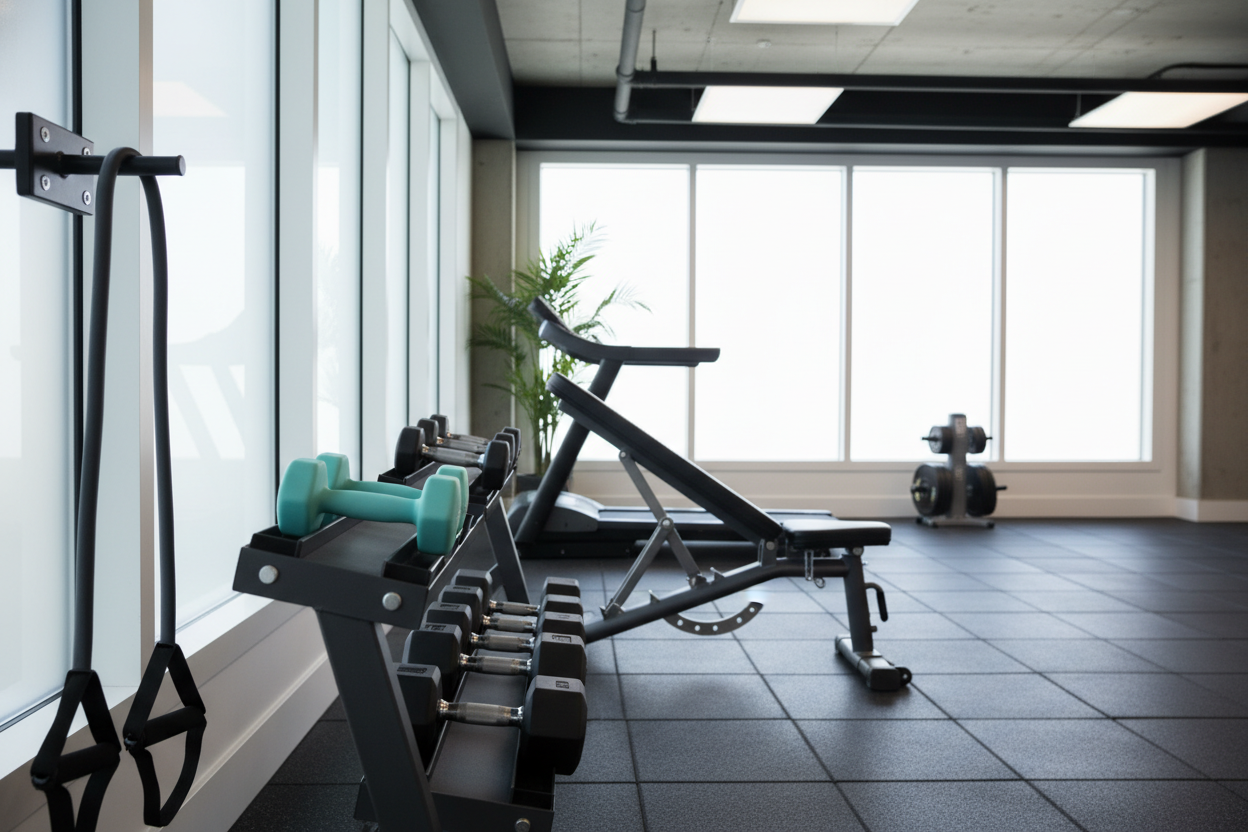
If you find it impossible to stop swinging, you need external stabilization. Set your Gxmmat adjustable weight bench to a 45-degree incline and lie face down on it. This setup is the ultimate lie detector because it removes your legs and lower back from the equation entirely.
With your chest glued to the pad, you can't use 'body english' to cheat the dumbbells up. You will likely find that the weight you thought was your 'warm-up' is actually your 'max effort' load when your form is finally honest. It’s a frustrating realization, but it’s the only way to build that 3D shoulder look.
When Is It Actually Time to Go Heavier?
Progression for small isolation muscles doesn't work like the bench press. You won't be adding 5 pounds every week. In fact, jumping from 10-pound dumbbells to 15s is a 50% increase in load—that is a massive jump for a tiny muscle. You are better off increasing your reps or slowing down your eccentric (lowering) phase.
I often suggest that lifters look at weight lifting machines or cable crossovers for rear delt work if they feel stuck between dumbbell sizes. Cables provide constant tension and often allow for micro-loading with 1.25-lb or 2.5-lb plates. Master the 15-to-25 rep range with perfect pauses before you even think about touching the next set of dumbbells on the rack.
Building a Smarter Posterior Chain
We spend so much time looking in the mirror and training what we can see—chest, bis, and front delts. This leads to that 'hunched' look and eventual rotator cuff issues. Treating your rear delts with precision is about more than just aesthetics; it is about shoulder longevity and posture.
I have completely changed my philosophy, and now I prioritize upper body weight training exercises in reverse, often starting my sessions with rear delt and upper back work. It warms up the joint and ensures I actually have the energy to perform these high-rep isolation sets with the focus they require.
Personal Experience: The 35-Pound Mistake
Early in my lifting days, I was determined to use the 35-pound dumbbells for everything. I thought using the 'pink' weights made me look weak. I spent six months doing 'heavy' rear delt flies and saw zero growth. My traps got huge, and my neck was constantly stiff. The day I swallowed my pride and went back to the 12.5-pounders was the day my shoulders actually started to change shape. Don't let your ego stall your progress for half a year like I did.
FAQ
Is it better to use dumbbells or cables for rear delts?
Cables are generally superior because they provide constant tension throughout the entire range of motion, whereas dumbbells lose tension at the bottom of the movement.
How many sets of rear delt flies should I do?
Because the rear delts recover quickly, you can hit them 2-3 times a week. Aim for 3-4 sets of 15-20 reps per session.
Should my palms face down or face each other?
Try both. A 'neutral' grip (palms facing each other) is often more comfortable for people with shoulder impingement, while a 'pronated' grip (palms facing back) can sometimes help isolate the delt better.