A Brutal Back of Shoulder Muscle Workout If You Bench Too Much
I spent three years chasing a 315-lb bench press only to realize I looked like a caveman in my progress photos. My shoulders were rolled forward, my upper back was flat as a board, and my bench progress eventually stalled because my stabilizers were non-existent. If you are spending four days a week pressing but zero time on a dedicated back of shoulder muscle workout, you are building a massive house on a swampy foundation.
Quick Takeaways
- Heavy barbell rows often fail to isolate the posterior deltoid because the lats and rhomboids take over.
- Rear delts require high-volume isolation with a focus on 'sweeping' rather than 'pulling.'
- External rotation is the missing link for shoulder health and bench press stability.
- A stable flooring setup is non-negotiable for heavy chest-supported movements.
The Epidemic of the 'Presser's Posture'
Most garage gym owners I know suffer from what I call 'Presser's Posture.' We love the big lifts—bench, overhead press, and dips. These movements hammer the anterior (front) deltoid. Over time, that muscle gets hyper-responsive and tight, literally pulling your humerus forward in the socket. This doesn't just make you look like a hunchback; it creates a mechanical disadvantage that eventually leads to impingement and tears.
To fix this, you have to intentionally exercise back shoulder muscles to create a 'counter-tension' that pulls the shoulder blades down and back. It is about more than just aesthetics, though having that 3D look is a nice perk. When your rear delts are thick and strong, they provide a massive, stable shelf for you to lay on during a bench press. How To Build 3D Delts With The Right Shoulder Workout Exercise covers how true 3D shoulders require this exact balance between the front, lateral, and rear heads. Without that posterior volume, you are leaving pounds on the bar and years of health off your joints.
I used to think my heavy deadlifts were enough to balance out my chest days. I was wrong. The rear delt is a small muscle that needs direct, high-frequency attention. You can't just hope it grows as a byproduct of heavy compound pulling. You need to isolate it until it burns, then do ten more reps.
Why Your Heavy Rows Are Not Doing the Job
I see guys in commercial gyms and garage setups alike cranking out 225-lb barbell rows, thinking they are hitting their rear delts. They aren't. The moment you start using momentum or a 'heaving' motion, the lats and rhomboids—which are significantly larger and stronger—take over the movement. The posterior deltoid is a stabilizer and a secondary mover in those big lifts; it rarely gets the stimulus it needs to actually hypertrophy.
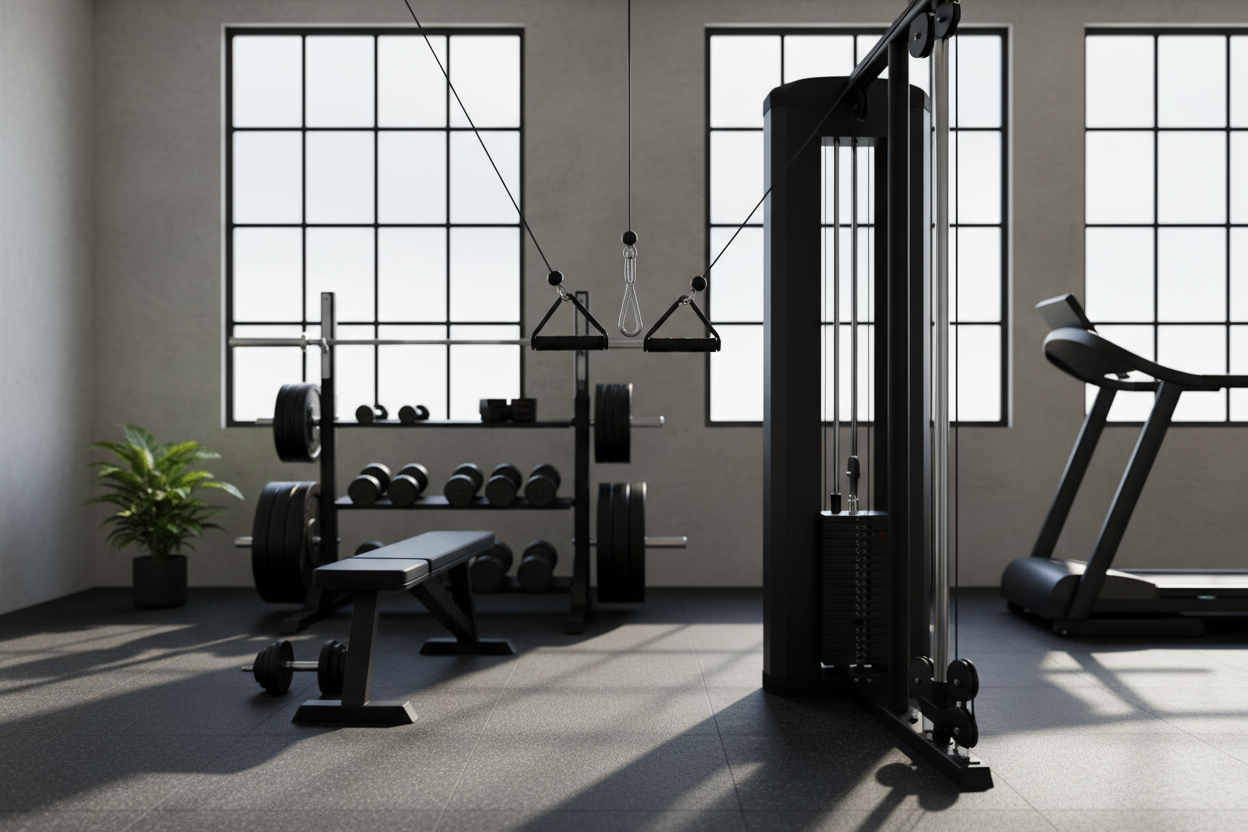
When you perform a heavy row, the angle of pull usually favors the mid-back. To truly target the rear delt, you need a wider arm path and a focus on horizontal abduction. This is where isolation becomes your best friend. While I love free weights, sometimes a machine can help you lock in that mind-muscle connection without your lower back giving out first. If you want to Build A Massive V Taper With This Back Shoulder Exercise Machine, you'll see how mechanical tension can be directed specifically to the upper-back and rear-shoulder complex more effectively than a sloppy barbell row.
The goal isn't to move the most weight possible; it's to move the weight with the specific muscle you're trying to grow. If you feel your lats 'pumping up' during your rear delt work, you're doing it wrong. You need to lighten the load, flare the elbows, and focus on the back of the shoulder doing 100% of the work. It’s a humbling realization when you have to drop from 50-lb dumbbells to 15s, but your shoulders will thank you.
The Exact Back of Shoulder Muscle Workout I Use
This is my go-to 'finisher' or standalone accessory circuit. I run this twice a week, usually after a heavy pressing session or on a dedicated 'pull' day. The goal here is metabolic stress—high reps, short rests, and zero ego. We are chasing a pump that makes it hard to put your shirt back on. This circuit targets the posterior deltoid from two different angles to ensure no fibers are left untouched.
Movement 1: Chest-Supported Dumbbell Sweeps
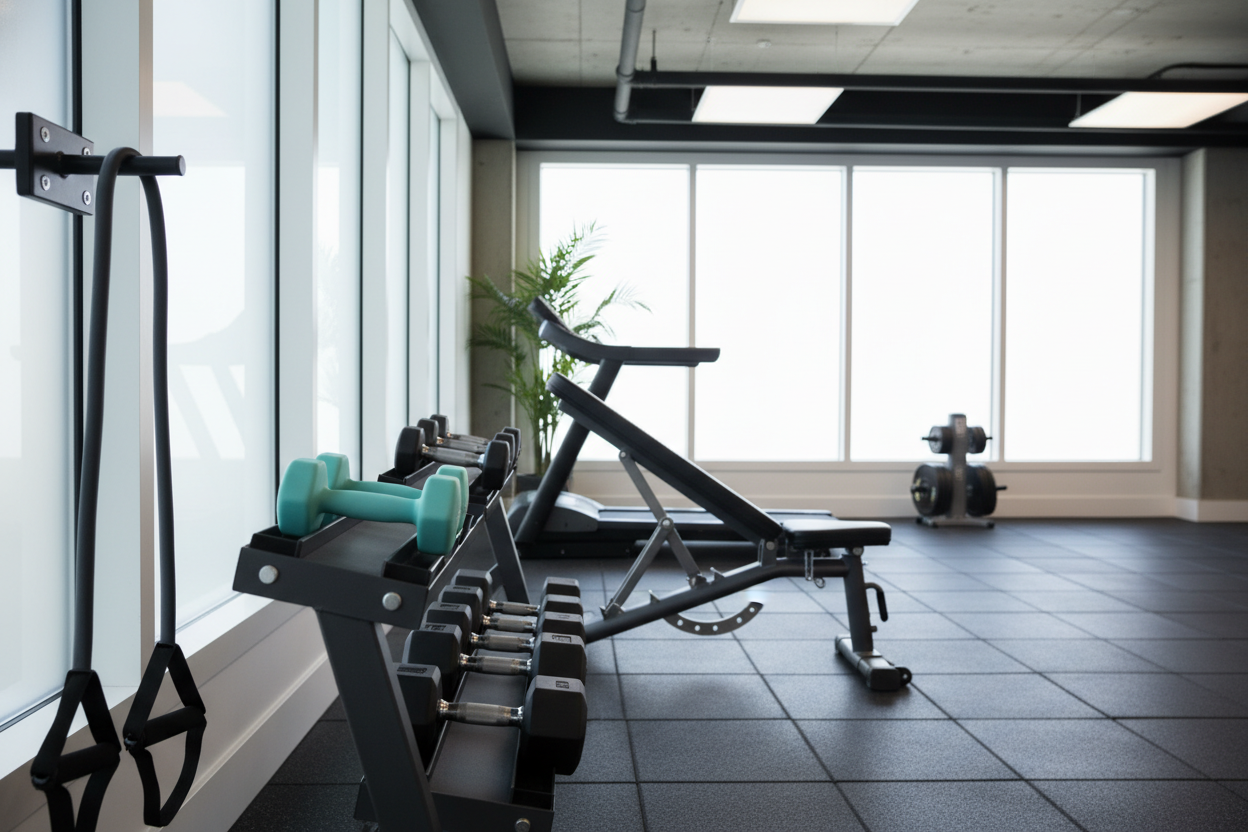
Set your incline bench to about 30 or 45 degrees. Lay face down with your chest firmly against the pad. Let your arms hang straight down with a pair of light dumbbells—I usually grab my 15s or 20s. Instead of 'rowing' the weight up, I want you to 'sweep' the weights out to the side in a wide arc. Keep a slight bend in the elbows, but do not let them tuck into your ribs.
The beauty of this back shoulder muscles exercise is that the bench eliminates all momentum. You can't leg-drive or hip-hinge the weight up. By sweeping the weights back toward your hips slightly rather than straight out to the side, you maximize the tension on the posterior delt. I aim for 3 sets of 15-20 reps. If you aren't grimacing by rep 12, you're either a beast or you need to slow down the eccentric phase. Focus on the squeeze at the top of every single rep.
Movement 2: The Garage Gym Banded Face Pull
Cable machines are great, but in a garage gym, a heavy-duty resistance band looped around your power rack is just as effective. Grab the band with an overhand grip, step back until there's significant tension, and pull the band toward your forehead. The 'secret' here is the finish: as the band nears your face, pull your hands apart and rotate your knuckles back so they face the wall behind you.
This external rotation is the 'money' part of the movement. Most people just pull the band to their nose and stop. By adding that rotation, you engage the infraspinatus and teres minor alongside the rear delt. This strengthens the rotator cuff and builds that thick, 'knotted' look on the back of the shoulder. I do these for high volume—think 4 sets of 25 reps. It's more of a corrective exercise than a mass builder, but the stability it provides for your bench press is immediate.
Setting Up Your Space for Heavy Dumbbell Work
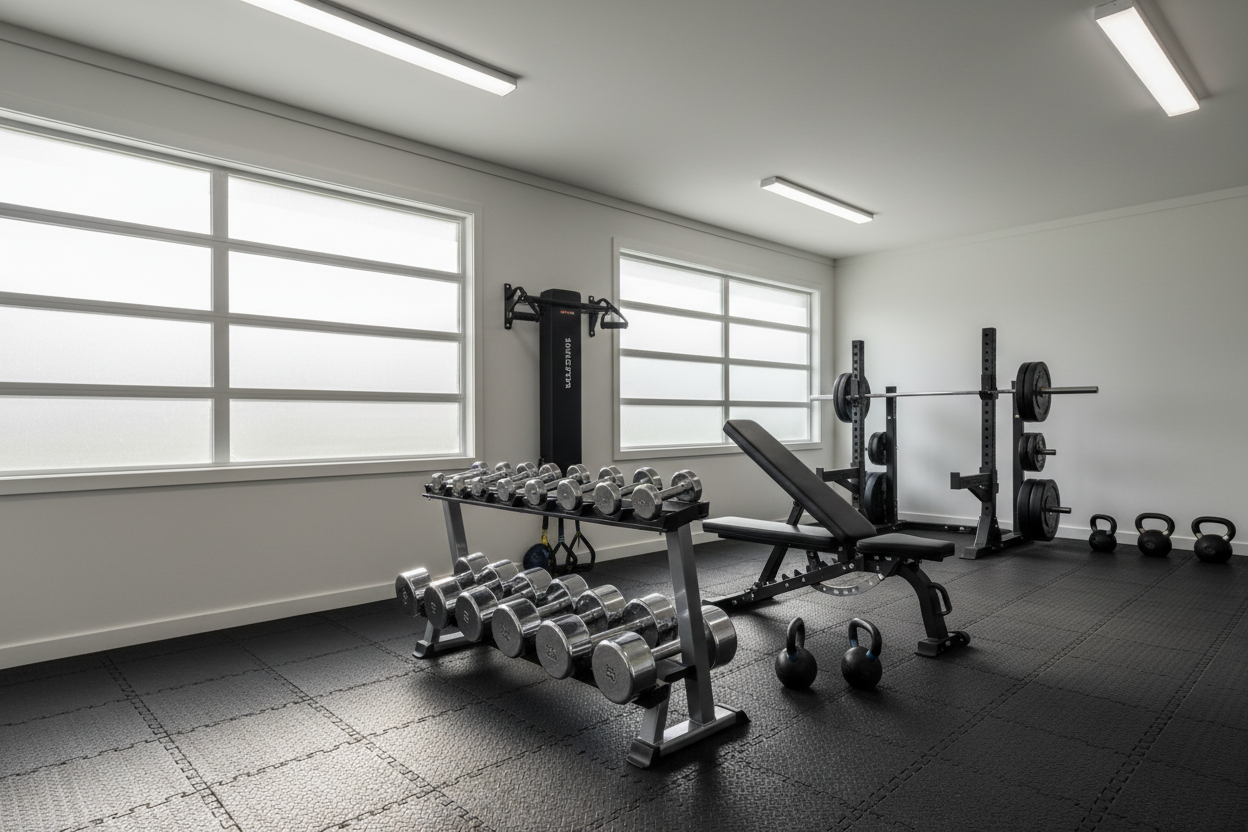
If you're doing chest-supported work or bent-over rows, stability is everything. There is nothing worse than your bench sliding across a slick concrete floor while you're mid-set with a pair of 80s. I've had a bench kick out from under me once; it’s a mistake you only make once. You need a surface that grips both your shoes and the feet of your bench.
I recommend laying down a high-density mat specifically where your bench sits. Something like the 6X4Ft Yoga Mat Exercise Mat Gym Flooring For Home Workout is perfect for this. It provides enough 'bite' to keep your adjustable bench from wandering, and it saves your dumbbells from getting beat up when you drop them after a set of sweeps. Plus, having a designated 6x4 space helps keep your garage gym organized so you aren't tripping over plates while trying to hit your rear delts.
Personal Experience: My Shoulder Wake-Up Call
About two years ago, I was hitting chest twice a week and 'back' once a week. My 'back' day was mostly lat pulndowns and heavy deadlifts. I started getting this sharp pain in my right shoulder every time I tucked my elbows to bench. I went to a PT, and he told me my rear delts were so underdeveloped that my humerus was literally rattling around in the socket because there was nothing to hold it in place. I felt like an idiot. I spent six months doing nothing but face pulls and rear delt flies before I could bench pain-free again. Now, I never skip the rear delt work. It’s the 'insurance policy' for my heavy lifting.
FAQ
How many times a week should I train rear delts?
Since they are a smaller muscle group and recover quickly, you can hit them 2-3 times a week. I like to tack them onto the end of every upper body session as a 'pre-hab' move.
Can I just do face pulls?
Face pulls are great for health, but for actual muscle growth, you need a variety of angles. Combining a 'sweep' or fly movement with a face pull covers both the hypertrophy and the structural stability needs of the shoulder.
What weight should I use for rear delt flies?
Light. Much lighter than you think. If you usually curl 40s, you'll probably need 15s or 20s for proper rear delt flies. If you go too heavy, your traps will take over and you'll miss the target muscle entirely.